FiiO's discrete Class A desktop headphone amplifier
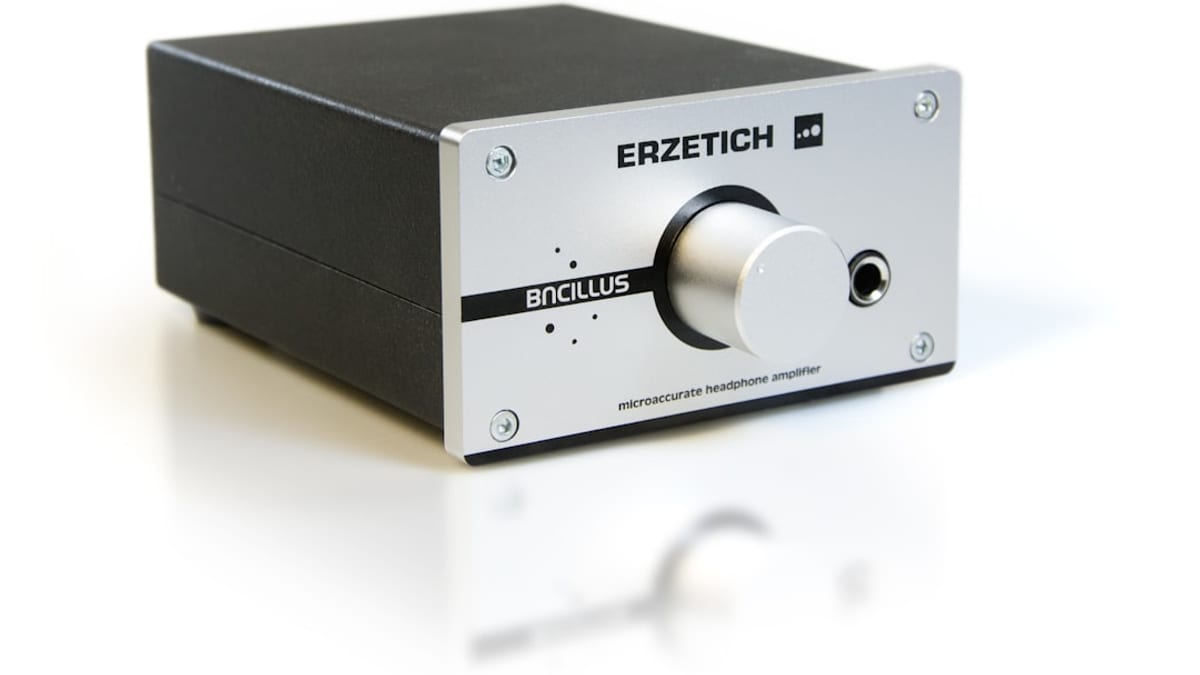
FiiO goes all-in on a Class A desktop headphone amplifier
Something shifted quietly in May 2026. FiiO, a brand Australians have long associated with affordable portable DACs, dongles and entry-level desktop gear, teased a product that sits in genuinely different territory: a fully discrete-transistor, pure Class A desktop headphone amplifier delivering 1000mW per channel into both channels simultaneously. Full specifications, global pricing and release details were held back for the Vienna High End show on 4 June 2026, and that deliberate build-up tells you something about how seriously FiiO is positioning this thing. If you want the wider picture of that event, our piece on HIGH END Vienna 2026 and its sold-out debut covers it.
Honestly, the teaser is hard to ignore. FiiO has been steadily climbing the ladder (the K9 Pro, the R9 desktop player, the HiFi Rose-rivalling streamers), but a pure Class A design with a custom 60W toroidal transformer and a fully discrete regulated power supply is a meaningful engineering statement. This isn't a marketing badge. Pure Class A means the output transistors are conducting current continuously throughout the entire audio waveform cycle, which has real, measurable consequences for the way a headphone amplifier sounds and behaves. Those consequences are very relevant to the kinds of headphones Australians are increasingly spending serious money on.
What "pure Class A" actually means in this context
Let's be precise, because the term gets abused. Amplifier class describes the conduction angle of the output stage, meaning the proportion of the signal cycle during which the output devices are active. In a conventional Class AB amplifier (the topology you'll find in the vast majority of headphone amplifiers at any price), the output devices hand off the signal between them around the zero-crossing point. Done well, the crossover distortion is vanishingly small. Done less well, or when the amplifier is asked to swing into awkward loads, that handoff introduces artefacts that some listeners find grating over long sessions.
Pure Class A eliminates the crossover entirely. Both output devices, or the full set of discrete transistors in a more complex output stage, remain conducting at all times. The penalty is heat and inefficiency: a significant portion of the power drawn from the supply is dissipated as thermal energy rather than converted to audio output, which is the defining trait of any Class A amplifier. That's why the 60W custom toroidal transformer matters here. A 1000mW-per-channel Class A output stage isn't running off a wall-wart and a couple of smoothing capacitors. It needs a serious, regulated, low-noise power supply to keep the operating point stable and the noise floor where it needs to be for high-resolution listening. The toroidal form factor is relevant too. A toroid leaks less electromagnetic flux into the surrounding circuit than an EI-core transformer, which is directly beneficial in a high-gain audio topology where mains-frequency interference can be audible as hum.
The fully discrete regulated power supply is the other half of that story. Integrated circuit voltage regulators are convenient and often excellent, but discrete regulation allows the designer to optimise every parameter (transient response, noise rejection, output impedance) for the specific demands of a Class A audio output stage. It's more complex, more expensive and harder to get right, but when it's executed well the audible benefit in terms of dynamic stability and low-level resolution can be substantial. We go deeper on this in our explainer on power supply topology in high-end amplifiers.
1000mW + 1000mW: is that actually a lot?
For a headphone amplifier, yes, and the answer is more nuanced than the raw number suggests. The question of whether 1000mW is adequate, excessive or exactly right depends entirely on what you're plugging into those outputs. Our guide to headphone impedance and power output explains why the load matters more than the headline wattage.
Modern planar magnetic headphones, such as the Audeze LCD series, HiFi MAN's Arya and HE1000 line and Dan Clark Audio's STEALTH, typically present low impedance loads (often 20–50 ohms) with relatively poor sensitivity. They can absorb substantial current without complaint, and they tend to sound measurably better (tighter bass, more authoritative dynamics) when driven from an amplifier with real current delivery behind it. 1000mW into a 50-ohm planar is not the same as 1000mW into a 300-ohm dynamic driver; the current demands are different, and a discrete Class A output stage with a proper power supply is much better placed to handle the former than a chip-amp with a budget power section.
At the other end, high-impedance dynamic drivers, such as the Sennheiser HD 800 S, Beyerdynamic T1 and Sennheiser HD 660S2 (check price), are relatively easy loads from a current perspective but demand voltage swing. A 300-ohm headphone at 103dB/mW sensitivity needs roughly 0.5mW for comfortable listening levels, but the amplifier still needs to maintain low output impedance and stable biasing across the full audio bandwidth. Pure Class A handles this gracefully because the operating point doesn't shift with signal level the way it does in Class AB designs.
Five gain levels add another dimension of flexibility that's easy to underestimate. The practical problem with high-output headphone amplifiers is that they frequently pair badly with sensitive in-ear monitors, giving you channel imbalance at the bottom of the volume pot and audible noise even at low listening levels. Five discrete gain steps allow the user to drop the maximum output well down when running sensitive IEMs, then step back up for power-hungry planars, without compromising the amplifier's operating point at any setting. It's a thoughtful design choice that suggests FiiO is targeting a broad spectrum of transducers rather than optimising for a single use case.
The output socket configuration
Three headphone outputs (3.5mm SE, 4.4mm balanced Pentaconn and XLR balanced) give this amplifier genuine versatility across the current Australian high-end headphone market. The 4.4mm Pentaconn standard has effectively won the balanced portable and desktop war at this price tier; virtually every serious aftermarket headphone cable available locally is now offered in 4.4mm termination. The XLR output (presumably 4-pin, the standard for balanced desktop headphone use) services the older premium cable ecosystem and the full-size flagship headphone market where 4-pin XLR remains common.
Running open-back headphones in balanced mode from a properly designed discrete amplifier at this power level is a genuinely different experience from single-ended operation at equivalent volume. That's not because balanced magically doubles the watts (though it does double the voltage swing into the load when done correctly), but because the common-mode noise rejection of a balanced output stage can meaningfully lower the noise floor and improve channel separation in high-gain configurations. Whether FiiO's implementation delivers on that promise fully is something we'll be able to evaluate when review samples arrive, but the architecture is correct.
Context: where does this sit in the desktop amplifier market?
The standalone desktop headphone amplifier market is a crowded and occasionally confusing space for Australian buyers. At the mid-to-upper tier, you're weighing everything from Topping's measurement-champion solid-state designs to the valve-assisted topology of products from Cayin and Feliks Audio, up through the discrete balanced designs from Benchmark, Violectric, and SPL. Pure Class A discrete designs at accessible pricing have been relatively thin on the ground. The engineering overhead pushes costs up, and most manufacturers either cut corners on the power supply or move to Class AB for thermal and cost management reasons. If you're still deciding between topologies, our guide to valve, solid-state or Class D amplifier topology lays out the trade-offs.
FiiO's teaser positions this amplifier at a point where it will be competing seriously with established names in the $1,000–$2,500 AUD bracket, pricing we'll only know definitively post-Vienna. That's a bracket where buyers are likely pairing their amplifier with a quality DAC (worth reading our guide on the best DACs and network streamers if you're building a desktop chain from scratch) and may already own premium headphones. If the execution is tight, FiiO's manufacturing scale gives them a structural cost advantage that could make this a genuinely disruptive product at that tier.
It's also worth considering the broader context of FiiO's trajectory. The brand has been consistently iterating upward in quality and ambition over the past several years, and the engineering decisions evident in this teaser (custom toroidal transformer, discrete regulation, pure Class A topology, five-step gain switching) reflect a level of design sophistication that goes well beyond rebadging reference designs. The gain structure implementation in particular suggests someone on the team understands real-world system matching in a way that not every budget-heritage brand does.
What the Vienna High End reveal should tell us
Vienna High End, held annually in Austria, has become one of the more important events on the international high-end audio calendar for product launches and positioning statements. FiiO choosing this platform, rather than, say, a social media drop or a CES announcement, signals deliberate alignment with a European and global audiophile audience rather than just the enthusiast tech community. That matters for how the brand wants this product perceived and, consequently, how it's likely to be priced and distributed.
The details we need from the 4 June reveal: final retail pricing in AUD (and whether distribution through Australian retailers is confirmed at launch), output impedance figures (important for IEM compatibility, since anything above 1 ohm starts to interact with low-impedance balanced-armature drivers), total harmonic distortion and noise measurements at various loads, and the physical dimensions and thermal management approach. A pure Class A amplifier at this power level will run warm; chassis design and ventilation are not cosmetic choices. Output impedance is the figure most buyers skip, which is why we wrote about the output impedance spec nobody checks.
I'd also want to know whether there's a line output for use as a preamplifier stage. That feature significantly extends the versatility of a desktop headphone amplifier in a combined desktop system, particularly if you're running near-field monitors alongside your headphone rig.
Why Australian buyers should pay attention now
The local headphone amplifier market has historically been well-served at the entry and mid-range by FiiO's own product line, and at the upper end by brands that carry significant import premiums. A discrete Class A product from a manufacturer with FiiO's supply chain, if priced aggressively against the local competition, could represent meaningful value, particularly for listeners who have invested in quality headphones but are currently driving them from DAC/amp combos that don't fully exploit their capabilities.
If you're currently using something like the Chord Electronics Mojo 2 (check price) as your primary desktop amplifier (excellent as it is for its intended portable/semi-portable role) and you're running full-size open-back headphones for extended listening sessions, a purpose-designed discrete Class A desktop stage is a meaningful step up in operating philosophy. The Mojo 2's Class AB output stage is well-engineered, but it isn't designed to sit on a desk and drive demanding planars at reference levels for hours. That's not its job. FiiO's new amplifier, if it delivers what the teaser implies, is designed for exactly that use case.
Understanding the fundamentals of gain structure in your desktop chain becomes particularly important when you're adding a dedicated high-power amplifier stage. Getting the level matching right between your DAC's output voltage and the amplifier's input sensitivity at each gain step will determine whether you're getting quiet operation at the volume control positions you actually use, or fighting noise and channel imbalance at low levels. Our guide to pairing headphones with amplifiers walks through power, impedance and topology together.
Verdict on the teaser: promising, with appropriate caveats
FiiO has announced a product that ticks the right engineering boxes on paper: pure Class A topology, fully discrete signal path, serious power supply hardware, flexible output configuration and sensible gain management. These aren't aspirational marketing claims. They're verifiable design choices that have predictable, positive consequences when executed well.
The caveats are the ones that always apply pre-measurement: we don't know the noise floor, we don't know the output impedance, we don't know how the gain stages are implemented or whether the balanced output is truly differential from input to output or converted at the output stage. These details matter enormously in practice. A pure Class A amplifier with a high output impedance is worse than a competently designed Class AB amplifier with a near-zero output impedance for most real-world headphone loads.
Vienna on 4 June will give us the numbers and the price. At that point, I'll have a much clearer view of whether this is genuinely disruptive or merely a well-executed product in a crowded field. Either way, FiiO putting serious discrete Class A engineering into the desktop headphone amplifier conversation at this price tier is good for the market and good for Australian listeners who want quality amplification without paying European boutique margins.
We'll have full coverage from Vienna High End 2026 and will update this article with confirmed specifications and Australian pricing as soon as they're available. If you're building a desktop headphone system from the ground up, our guide to the best DACs and network streamers is a sensible starting point for the source end of the chain.
Common questions
- What is pure Class A and why does it matter for headphone amplifiers?
- In a pure Class A amplifier, the output transistors conduct current continuously throughout the entire audio waveform cycle — there is no crossover point where signal transitions between devices. This eliminates crossover distortion entirely and produces a stable operating point regardless of signal level or load impedance. For headphone listening, particularly with high-resolution source material and demanding transducers like planar magnetics or high-impedance dynamic drivers, this translates to lower distortion at realistic listening levels and more consistent dynamic behaviour. The trade-off is heat generation and lower efficiency, which is why a serious Class A headphone amplifier requires a substantial power supply — in FiiO's case, a custom 60W toroidal transformer with a fully discrete regulated supply.
- Is 1000mW per channel enough for planar magnetic headphones?
- For most planar magnetic headphones currently available, 1000mW per channel from a discrete Class A output stage with a proper regulated power supply is more than adequate. Planar magnetics typically present low-impedance loads (often 20–50 ohms) with moderate sensitivity, meaning they demand current delivery rather than voltage swing. A pure Class A discrete output stage excels at this. The more relevant question is output impedance — a low output impedance (ideally well under 1 ohm) ensures the amplifier's output doesn't interact with the headphone's impedance curve and alter the frequency response. FiiO has not yet confirmed this figure; it will be one of the key specifications to examine when full details are released at Vienna High End on 4 June 2026.
- Why does FiiO offer five gain levels on a headphone amplifier?
- Gain flexibility is critical for amplifiers intended to drive a wide range of headphones. High-sensitivity in-ear monitors can require less than 1mW for comfortable listening, while power-hungry planar magnetics may need several hundred milliwatts. Without gain adjustment, a high-output amplifier used with sensitive IEMs will exhibit channel imbalance at the bottom of the volume control range and may add audible noise. Five discrete gain levels allow the user to select an appropriate operating range for each headphone type, keeping the volume control in its optimal range and the amplifier operating at a sensible signal level relative to its noise floor. It is a practical and acoustically meaningful feature in a serious desktop design.
- When will FiiO's discrete Class A headphone amplifier be available in Australia and what will it cost?
- FiiO has confirmed that full global release details and final pricing will be announced at the Vienna High End show on 4 June 2026. Australian retail pricing and local distribution arrangements have not been confirmed as of the time of writing. Sound Technology will update coverage with Australian pricing and availability details as soon as they are released.

I'm Marcus, and I'll be honest up front: I trust a measurement before I trust my own ears, because my ears lie to me daily. I spent fifteen years designing audio electronics before I started writing about them, so when a brand tells me a number, I want to see the graph. That doesn't make me cold about this hobby — I love a system that disappears as much as anyone — it just means I'll tell you when an expensive box is selling you confidence rather than performance.
Former audio electronics engineer; objectivist; runs the test bench
More from Marcus Vale
 Why your turntable's earth wire isn't optionalTurntable earthing fixes most phono hum problems. Here's how grounding actually works, why it fails, and how to track down a noisy connection.
 Why your AVR runs cool on music but throttles on AtmosAVR thermal throttling explained: why nine-channel Atmos mixes push receivers into protection mode that two-channel music never triggers.
- Subwoofer delay settings: why your AVR's number is a guessAVR auto-calibration estimates subwoofer delay from distance, not timing. Here's how to measure and correct it properly for tighter bass.
- AVR auto-calibration: what Audyssey, YPAO and Dirac actually measureAudyssey, YPAO and Dirac Live all run a mic sweep and spit out numbers, but they're not measuring the same things or fixing the same problems. Here's what's actually happening.
- Cartridge break-in: what actually changes in the first 40 hoursDoes a new cartridge really need 40 hours to "open up"? I measured one to find out what's mechanical fact and what's audiophile folklore.
- DAC output stages: what the chip doesn't tell youThe DAC chip gets all the marketing attention, but the analogue output stage after it does most of the work shaping what you actually hear.