Building a home cinema budget: the spending order that actually pays off
Last month I sat in a media room in Chermside where the owner had dropped nineteen grand on a projector and a Dolby Atmos speaker package, and the room sounded worse than a mate's setup two suburbs over that cost a third of that. Same rough footprint, both rectangular brick rooms with a slab floor. The difference wasn't the gear. It was that nobody had touched the room, and nobody had thought about spending order before the invoices started arriving.
This comes up on nearly every consult I do now, even the ones where I'm just there for an hour of advice rather than a full install. Someone has a number in their head — fifteen grand, thirty grand, whatever — and they want to know what to buy first. The honest answer isn't a shopping list. It's a sequence, and the sequence matters more than any individual item on it, because get the order wrong and you end up paying twice.
Why home cinema budgets get spent backwards
The retail experience trains people to buy the exciting thing first. You walk into a shop, or you're scrolling forums at midnight, and the projector or the big Atmos speaker package is what lights people up. Nobody gets excited about acoustic panels or a second subwoofer. So the projector gets bought, then the receiver, then the speakers, and the room — the actual box the sound has to survive inside — gets whatever's left in the budget. Usually nothing.
I've built theatres in every kind of shell you can imagine, from a Queenslander with stumps and a suspended timber floor to a fully poured slab in a new-build in Springfield Lakes. The acoustic behaviour of those two rooms is wildly different before a single speaker goes in. A timber floor with an air gap underneath resonates and reinforces certain bass frequencies; a slab-on-ground room with hard parallel walls gives you flutter echo and standing waves that no amount of amplifier will fix. Ignore that and you're building a house on sand — dressing it up with better gear just makes the underlying problem more audible, not less.
The order that actually works
My spending sequence, refined over a lot of jobs where the client changed their mind halfway through, looks like this: room treatment and layout first, subwoofer and bass management second, main speakers third, then the electronics (AVR or processor plus amps), and the display or projector last. I know that's the reverse of how most people plan a build, and I'll cop the argument that a good projector is the emotional centrepiece of a cinema room. Fair enough — it usually is. But visual quality degrades gracefully. A slightly underpowered projector still gives you a watchable picture. Bad room acoustics don't degrade gracefully; they actively work against every dollar you spend on speakers.
Room work doesn't need to mean a full acoustic fit-out with diffusers and a vapour barrier. For most domestic budgets it means first reflection point treatment, a rug if you've got a hard floor, curtains that aren't purely decorative, and getting the seating position and speaker placement right relative to the room's dimensions. That's often a few hundred dollars and an afternoon, and it does more for perceived clarity than upgrading a receiver by a full model tier.
Bass is the cheapest big win in the whole build
If there's one part of this order I'd fight for, it's putting subwoofer strategy ahead of the main speakers. Bass is the frequency range most affected by room dimensions and boundary reinforcement, and it's also the range where a second, cheaper subwoofer beats one expensive one almost every time — not because of raw output, but because two subs in different positions smooth out the room's standing wave pattern in a way a single unit physically cannot. We've covered this properly in one subwoofer or two: why a second sub fixes what EQ never will if you want the deeper explanation, but the short version for budget purposes is: a pair of modest subs, positioned with some care, will outperform a single flagship unit stuffed in a corner for the same total spend.
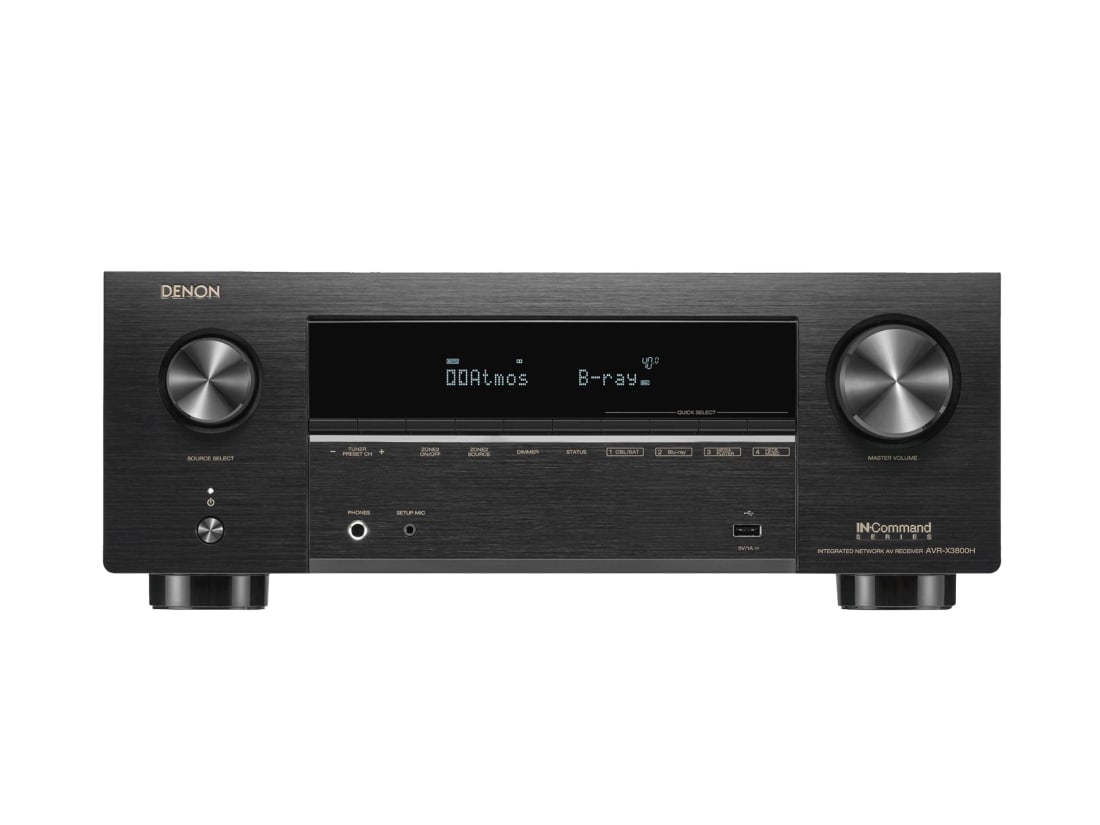
The SVS SB-3000 is a good reference point here — genuinely capable on its own, and it becomes a different animal in a room once you add a second one and run proper bass management through a receiver like the Denon AVR-X3800H (check price). That combination, sub placement plus a receiver that lets you set individual delay and level per sub, will get you further than spending the difference on a fancier centre channel.
Main speakers: where diminishing returns actually start
Once the room and bass are sorted, main speakers are where I see the most defensible spending, because speaker quality is one of the few things in this chain that scales fairly linearly with price up to a point. That point, in my experience, sits somewhere around the upper-mid tier for most domestic rooms — think the Bowers & Wilkins 705 S3 (check price) or KEF R3 Meta (check price) territory for fronts, or a well-built standmount if the room and listening distance suit it. For guidance on that decision, our piece on the best standmount speakers for serious listening covers the trade-offs against floorstanders in typical Australian living and media rooms.
Beyond that upper-mid tier, you're paying for refinement rather than fixing problems, and in a home cinema context — where dialogue clarity and dynamic slam matter more than the last few percent of tonal purity you'd chase in a dedicated two-channel room — the returns thin out fast. I'd rather see someone spend on five matched speakers of good-not-flagship quality than three excellent fronts and two mismatched surrounds bought later on discount. Timbre matching across the array does more for the Atmos experience than any single speaker's resolution.
Electronics: buy the platform, not the badge
The AVR or processor is the nervous system of the build and it's also where people either overspend early or underspend and regret it within eighteen months as they add speakers. My rule of thumb: buy enough processing and amplification headroom for the system you'll actually build in three years, not the one you're installing this weekend. That doesn't mean buying the most expensive box on day one — it means checking channel count, pre-outs, and room correction capability before committing.
If you're already running separates or want to keep that option open, our explainer on building a home cinema: the core components walks through when an AVR is genuinely enough and when stepping up to a processor plus power amps starts to make sense. For most rooms under fifty square metres with a realistic budget, a good AVR like the X3800H covers it. I've had clients insist on separates for a room where the extra channels and power were never going to be used, and that money would have bought a lot more acoustic treatment or a second sub instead.
Projector last, and that's not a criticism of projectors
Putting the display last in the spending order isn't me saying picture quality doesn't matter — it's that picture quality is more forgiving of budget constraints than acoustics is. A mid-tier projector like the Sony VPL-XW5000ES (check price) in a properly light-controlled room will look excellent. The same projector in a room with ambient light bleed and a poorly chosen screen material will look mediocre regardless of price, which is really a room and control problem again, not a projector problem. Light control — blockout curtains, matching screen gain to ambient light, correct throw distance — is a fraction of the projector's cost and determines more of the final image than the panel technology inside the unit.
Where I'd actually stop spending
Every build has a point of diminishing returns, and it's rarely where people think. In my experience the curve flattens hardest on speaker cable and exotic interconnects — genuinely negligible difference in a home cinema context once you're past a competently gauged cable run — and on chasing 4K laser projectors when the room still has an untreated glass sliding door letting in afternoon light. I'd rather see the last two thousand dollars of a twenty-thousand-dollar budget go into a proper acoustic consult and a second sub than into a projector upgrade that a light leak will undermine anyway. That's a mildly unpopular opinion in this trade because projectors sell the dream, but the rooms tell a different story every time I measure them.
None of this is about being tight with money. It's about sequencing so each dollar isn't fighting the one before it. Treat the room, get the bass right, buy speakers that scale to the room, choose electronics with headroom, and let the display be the last, well-earned purchase rather than the first impulsive one.
The Australian Building Codes Board's guidance on residential acoustic performance is a useful starting reference if you're doing structural work alongside a cinema fit-out, and CEDIA's design resources are worth a look if you want to understand how professional installers actually sequence a build rather than relying on retail advice.
Common questions
- What percentage of a home cinema budget should go to acoustic treatment?
- There's no fixed rule, but on a mid-range build I'd budget somewhere between five and ten per cent for treatment and room prep before speakers and electronics, more if the room has hard parallel walls or a suspended timber floor with resonance issues.
- Is it worth buying a cheaper projector to afford better speakers?
- Usually yes, within reason. Picture quality degrades gracefully with budget; acoustic problems compound every dollar spent on speakers. A mid-tier projector in a well-treated room will often look and sound better as a whole system than a flagship projector in an untreated one.
- Should I buy my AVR or my speakers first?
- Speakers first if you're on a strict budget, because speaker quality scales more predictably with price. But check the AVR's channel count and pre-outs before buying speakers, so you don't end up with more speaker channels than the receiver can drive.
- How much difference does a second subwoofer really make compared to spending on one better sub?
- In most rooms, a genuinely meaningful difference. Two modestly priced subs in different positions smooth out room modes far more effectively than a single premium unit, because the problem being solved is about room interaction, not raw output capability.

G'day, Jonno here. I spent the better part of twelve years as a custom installer building theatres — everything from a media room squeezed into a Queenslander to a fully blacked-out, acoustically-treated cinema with a hundred grand of gear behind the screen. The thing nobody tells you is that the room matters more than the boxes, and I'll bang on about acoustics until you're sick of me. If you're planning a theatre, talk to me before you spend a cent on speakers.
Ex CEDIA-trained installer; dedicated-theatre and Atmos specialist
More from Jonno Fraser
 Guest Wi-Fi and audio: why visitor networks break multiroomGuest Wi-Fi networks isolate devices by design, which quietly breaks multiroom audio. Here's why it happens and how to fix it properly.
- Ceiling speakers vs upfiring Atmos modules: what actually worksCeiling speakers vs upfiring Atmos modules compared for real rooms: when in-ceiling wins, when upfiring is the better call, and why.
- Why your home cinema amp runs hotter on movies than musicFilm soundtracks push amplifier channels harder and longer than stereo music ever does. Here's why that matters for topology, power supplies and what actually fails.
- Screen-wall speaker placement: building around a UST projector properlyUltra short throw projectors sit right where your centre channel wants to be. Here's how I actually solve that in real theatre builds, not in theory.
 Headphone isolation vs room noise: why your desk setup fights youOpen-back headphones and a noisy home office don't mix. Here's how to actually diagnose room noise before you blame the gear.
 Toe-in and rake: the free speaker tuning most owners never touchToe-in angle and cabinet rake cost nothing but change tonal balance and imaging more than most upgrades. Here's how I set both on site.