JBL Summit Everest: a 237kg, $160,000 statement floorstander tops the Summit range
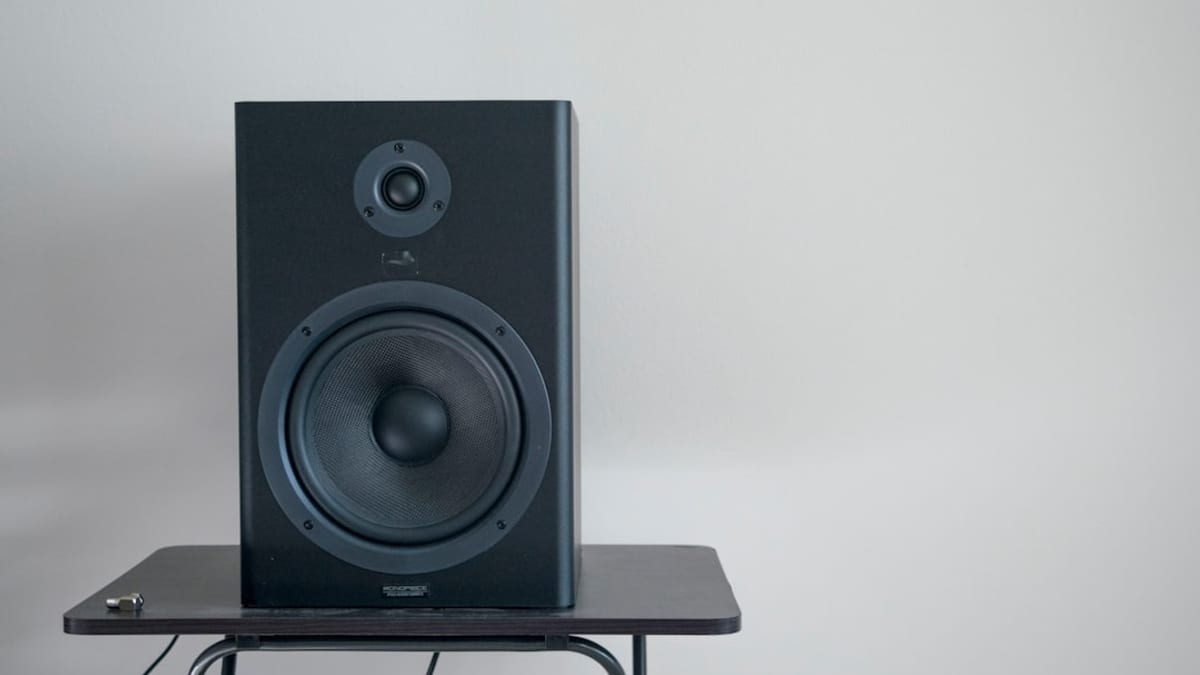
JBL's 80th anniversary arrives with a mountainous statement
There are loudspeakers, there are flagship loudspeakers, and then there is the JBL Summit Everest. Unveiled at High End Vienna in June 2026, this range-topping floorstander represents the completion of JBL's Summit Series — a collection that has been building toward this moment with the kind of deliberate, almost theatrical patience you'd expect from a brand marking its 80th year in business. The timing is not accidental. JBL has chosen its anniversary to plant its flag at the very summit of what it believes a loudspeaker can be, and the Everest name is doing exactly the work the marketing team intended.
The numbers are difficult to ignore. Each speaker weighs 237.2 kilograms. The pair is priced at US$159,990 — that's approximately £139,998 in the UK and €159,998 in Europe, with Australian pricing yet to be formally confirmed at the time of writing. Global availability is expected later in 2026. Whatever the final landed price here, factor in GST, freight, and the kind of white-glove delivery that moving nearly half a tonne of speaker across the country demands, and you are firmly in life-changing-purchase territory. These are not speakers you audition on a whim. They are speakers you audition after your accountant has signed off on something.
And yet the question worth asking — the question that separates genuine analysis from breathless press release regurgitation — is whether the Everest represents a meaningful engineering achievement or simply an exercise in conspicuous audio consumption. Having spent time with the specifications and the context of JBL's professional and consumer heritage, I lean firmly toward the former, with some important caveats that any prospective Australian buyer should understand before entertaining the idea seriously.
What JBL has actually built
The Summit Everest is a 3.5-way design, which is a configuration that deserves some unpacking. The "3.5" designation indicates that the speaker uses a conventional three-way crossover topology but with an additional woofer section that operates over a restricted bandwidth rather than running full-range alongside its partner driver. In the Everest's case, you are getting dual 15-inch woofers handling the lowest frequencies, dual 10-inch mid-bass drivers, and then — most distinctively — a trio of D2820 two-inch compression drivers mounted on a Sonoglass HDI (High Definition Imaging) horn for the upper midrange and treble.
The compression driver configuration is where JBL's professional audio lineage is most apparent, and most important. Compression drivers are the technology that has powered JBL's studio monitor and cinema speaker business for decades. They are fundamentally different in their operating principle from the dome tweeters and ribbon tweeters you'll find on most high-end domestic speakers. A compression driver uses a diaphragm operating against a very small volume of air — the "compression chamber" — before that energy is released through a horn. The result is extraordinarily high efficiency, controlled directivity, and the ability to produce very high sound pressure levels with minimal distortion at the driver itself.
Using three of them in a stacked configuration on a single horn is a sophisticated approach to achieving both the sensitivity and the power handling that a speaker of this ambition demands. The Sonoglass horn material — a glass-loaded composite — is chosen for its combination of rigidity and damping properties, resisting the resonances that plague simpler plastic or aluminium horn bodies. This is not decorative engineering. Every element of the high-frequency section reflects JBL's decades of work in professional cinema and touring sound, translated into a domestic context with — one presumes — considerably more attention to listening-room aesthetics than a Meyer Sound rig at the Sydney Opera House.
The sensitivity and impedance picture
At 96dB sensitivity, the Summit Everest sits in rarefied company among domestic loudspeakers. To understand why this matters, sensitivity is measured as the sound pressure level a speaker produces at one metre with one watt of input power. A typical quality floorstander in the $5,000–$20,000 bracket might measure 87–90dB. The difference between 87dB and 96dB is nine decibels — which, in practical terms, means the Everest will produce the same volume with roughly eight times less power. That has profound implications for amplifier matching.
The nominal impedance is 4 ohms, which is common enough at this level. The minimum impedance of 2.7 ohms is where things become more demanding — a dip that will tax amplifiers with marginal power supply designs. The apparent paradox of a highly sensitive speaker that also presents a challenging minimum impedance is not unusual in complex multi-driver systems, and it actually narrows your amplifier choices rather than broadening them. You need an amplifier that can both operate at low gain (to avoid overdriving a 96dB-sensitive speaker) and deliver stable current into sub-3-ohm loads. That combination points squarely toward high-quality valve amplifiers with appropriate output transformer taps, or well-engineered solid-state designs with genuinely robust power supplies. Understanding impedance behaviour across the frequency range is essential homework before you even think about amplifier pairing here.
The frequency response specification of 20Hz to 23kHz-plus is exactly what you would expect from a design of this scale and complexity. Twenty hertz is the theoretical lower limit of human hearing — achieving genuine, usable output at that frequency from a passive speaker without a dedicated subwoofer is a meaningful engineering accomplishment, made possible by the twin 15-inch woofer array and, presumably, a cabinet of considerable internal volume. At 237 kilograms per speaker, there is clearly a great deal of structure and internal bracing contributing to that mass, which will help control cabinet resonance and provide the foundation that truly deep bass reproduction requires.
The Summit Series context and the K2
High End Vienna 2026 saw JBL debut not just the Everest but also the Summit K2, completing the Summit Series lineup. JBL has not provided detailed specifications for the K2 at time of writing, but the K2 name carries significant heritage weight: the original K2 designation has been part of JBL's statement speaker vocabulary for decades, most famously in the K2 S9900 and its predecessors. The Summit Series appears to position these as successors in spirit to that lineage, updated with contemporary materials and manufacturing techniques while preserving the compression driver-based high-frequency philosophy that has always defined JBL's most ambitious domestic work.
The 80th anniversary timing gives JBL's marketing team an obvious narrative hook, but it would be reductive to dismiss the Summit Series as a birthday celebration exercise. The engineering investment required to develop triple-driver compression horn assemblies, source or manufacture 15-inch woofers of the quality required for a speaker at this price point, and design a 237-kilogram cabinet structure that is acoustically inert and aesthetically credible — that is not something you spin up in twelve months for a party. This has the hallmarks of a genuine multi-year development programme that happens to align fortuitously with a round-number anniversary.
Room requirements and the Australian context
Let us be honest about something that the European press coverage will likely gloss over: the Summit Everest is a speaker that most listening rooms — including many very expensive ones — cannot accommodate properly. A speaker with 96dB sensitivity and twin 15-inch woofers reaching to 20Hz will energise a room in ways that smaller speakers simply cannot. That is the point. But it also means that acoustic treatment is not optional; it is absolutely mandatory. A pair of Everests in an undertreated room will sound worse than a pair of quality standmounts in a well-treated medium-sized space. The physics are unforgiving.
Australian homes present specific challenges here. Our love of open-plan living — the combined kitchen, dining, and living spaces that have dominated residential architecture for the past two decades — is genuinely problematic for full-range speaker performance. A 15-inch woofer producing real 20Hz energy in an open-plan space will result in standing waves and room modes that no amount of listening seat placement can fully address. These speakers want a dedicated listening room of substantial volume, ideally purpose-built or at minimum purpose-treated. If you are investing US$159,990 in a pair of loudspeakers, you should be budgeting a meaningful additional sum for acoustic architecture. Similarly, room correction via a high-quality DSP processor might offer some assistance at the frequency extremes, though purists will debate how appropriate that approach is in a system at this level.
Delivery and installation logistics are also genuinely non-trivial in Australia. At 237.2 kilograms each, you are looking at specialised freight, potentially crane access for upper-floor rooms, and professional installation by people who understand both the physical handling requirements and the acoustic positioning principles that govern where a speaker of this design performs best. Budget accordingly, and engage your Australian distributor — likely through Harman's local operation — early in the conversation.
What does $160,000 buy you in 2026?
This is, inevitably, the question. The statement loudspeaker market has become genuinely crowded in the past five years, with European manufacturers in particular pushing into price territories that would have seemed absurd even a decade ago. Wilson Audio, Magico, Focal's Grande Utopia, Sonus faber's Aida II, YG Acoustics — the Everest is entering a competitive landscape populated by speakers with their own passionate advocates and formidable engineering credentials.
What the Everest brings that few of those competitors can claim is the compression driver horn heritage. If your musical priorities run toward large-scale orchestral recordings, jazz at realistic concert volumes, or the kind of dynamic headroom that makes a symphonic climax feel genuinely physical rather than merely loud, the JBL approach — rooted in professional cinema and live sound technology — offers something qualitatively different from a conventional dome tweeter design, however expertly executed. The soundstage and imaging characteristics of a well-designed horn system are also distinctive: typically wider and with a more stable sweet spot than similarly priced conventional designs, though this varies considerably with room interaction.
That said, the smoothness and ultimate refinement that the best European dome-tweeter designs achieve at the top of the frequency range remains a genuine benchmark. Compression drivers, for all their dynamic capability, require careful crossover work to integrate cleanly with the midrange below them, and the transition between the horn-loaded high-frequency section and the direct-radiating mid-bass drivers is an area where lesser implementations have historically come unstuck. Whether JBL's engineering team has solved this convincingly will require extended critical listening, which I hope to undertake when Australian demonstration opportunities present themselves.
Amplifier pairing considerations
Given the sensitivity and impedance characteristics described above, the amplifier conversation for Everest owners is fascinating. At 96dB, even a modestly powered single-ended triode valve amplifier — something in the 8–15 watt range — could theoretically drive the Everest to reference levels in a medium-sized room. This is one of the genuinely exciting implications of high-efficiency speaker design: it opens the door to amplifier topologies that are simply incompatible with the 85–88dB speakers that dominate the market. A quality SET amplifier partnered with the Everest could offer a combination of tonal colour, midrange transparency, and dynamic naturalness that no transistor amplifier, however powerful, fully replicates.
However, the 2.7-ohm minimum impedance complicates the SET picture, since most single-ended designs prefer loads that stay above 4 ohms throughout. Push-pull valve designs with 2 or 4-ohm output transformer taps — a well-implemented Audio Research, VAC, or VTL product at the appropriate power level — might represent a more reliable partnership. On the solid-state side, class-A designs from Pass Labs or Gryphon, which offer excellent current delivery at low impedances without sacrificing the harmonic structure that high-efficiency speakers tend to reveal so unforgivingly, would be strong contenders. Understanding amplifier classes and their respective characteristics is useful background here, particularly if you are approaching this from a digital or streaming-centric system perspective.
The verdict on a speaker not yet heard
I want to be clear about the epistemological position any reviewer is in with a speaker like this: the Summit Everest has debuted at a trade show in Vienna, where demonstration conditions are never ideal, and Australian press have not yet had the opportunity to conduct formal extended listening evaluations. What I can assess is the credibility of the engineering approach, the appropriateness of the specification for the claimed performance targets, and the context of JBL's heritage that underpins the design philosophy.
On all three counts, the Summit Everest looks serious. JBL's compression driver expertise is not marketing mythology — it is a documented, decades-long engineering tradition with real-world deployment in some of the world's most demanding acoustic environments. The decision to use triple D2820 drivers on a Sonoglass horn rather than simply scaling up a dome tweeter reflects a genuine engineering philosophy, not an arbitrary complexity exercise. The mass and scale of the cabinet suggest a commitment to controlling the physical environment in which those drivers operate. And at 96dB sensitivity with 20Hz extension, the specification reflects what this class of speaker ought to achieve.
For the very small number of Australian audio enthusiasts with the room, the budget, and the amplifier system to do these speakers justice, the Summit Everest belongs firmly on the audition list when Australian demonstration becomes available. For the rest of us, it serves as a fascinating window into what JBL believes a loudspeaker can be at the outer limits of domestic audio ambition — and as a reminder that the most interesting engineering in this industry is rarely found in the products most of us will actually own. The contrast with something like the standmount versus floorstander trade-offs that govern most buying decisions could not be more stark: the Everest exists in a category where those everyday compromises simply do not apply.
JBL's 80th year has produced something genuinely extraordinary. Whether it is $160,000 worth of extraordinary is a question only sustained critical listening can answer.
Common questions
- What is the JBL Summit Everest and when will it be available in Australia?
- The JBL Summit Everest is a 3.5-way statement floorstander that sits at the top of JBL's Summit Series, debuted at High End Vienna in June 2026. It is priced at US$159,990 per pair (approximately £139,998 / €159,998), with global availability expected later in 2026. Australian pricing had not been formally confirmed at time of publication — contact Harman's local distributor for the most current information on landed price and availability.
- What amplifier do I need to drive the JBL Summit Everest?
- The Everest's 96dB sensitivity means it can achieve high volume levels with relatively modest power, making it theoretically compatible with quality valve amplifiers including push-pull tube designs. However, its minimum impedance of 2.7 ohms demands an amplifier that can deliver stable current at low loads. Push-pull valve amplifiers with 2 or 4-ohm output taps, or high-quality class-A solid-state designs with robust power supplies, are likely the best starting points. Understanding the speaker's full impedance curve is essential before committing to an amplifier pairing.
- How much space does the JBL Summit Everest require?
- At 237.2kg per speaker with dual 15-inch woofers capable of producing genuine output to 20Hz, the Summit Everest requires a large, dedicated listening room with proper acoustic treatment. Open-plan living spaces common in Australian homes are not suitable — standing waves and room modes at low frequencies will significantly compromise performance. A purpose-built or extensively treated dedicated listening room is strongly recommended, and professional room acoustic consultation should be considered part of the overall investment.
- How does the JBL Summit Everest's compression driver design differ from conventional high-end speakers?
- Most high-end domestic loudspeakers use dome or ribbon tweeters for high-frequency reproduction. The Summit Everest instead uses three D2820 two-inch compression drivers on a Sonoglass HDI horn — technology derived from JBL's professional cinema and touring sound heritage. Compression drivers operate against a small compression chamber before releasing energy through a horn, resulting in very high efficiency, controlled directivity, and exceptional dynamic headroom. This approach tends to produce a wider, more stable sweet spot and greater dynamic ease at realistic listening levels, but requires careful crossover design to integrate smoothly with the direct-radiating drivers below.

I'm Sofia, and I get to play with the silly stuff — the statement amplifiers, the reference loudspeakers, the cost-no-object systems that most of us will only ever hear at a show. Someone has to, and I take it seriously: at this level the price stops mapping to performance and starts mapping to engineering, craft and ego, and part of my job is telling you which is which. I love the extreme end of this hobby, but I'm not dazzled by a big number on a price tag.
Covers flagship and cost-no-object reference systems
More from Sofia Laurent
 Six-figure DACs: what the money actually buys over a good $2,000 boxI've compared statement DACs costing more than a car against a good $2,000 unit. Here's where the extra money genuinely goes, and where it doesn't.
 Diffusion vs absorption: the treatment decision statement rooms get wrongSix-figure speakers, dead-flat frequency response, and a room that still sounds wrong. The fix is usually a diffusion problem, not an absorption one.
- Statement turntables: what six figures of vinyl front-end actually buysFrom air-bearing platters to outboard motor pods, what separates a reference turntable from a very good one, and why the gains get smaller as the price climbs.
- Acoustic treatment at the statement level: what six figures of speaker buys you in a bad roomEven reference loudspeakers can't out-engineer a bad room. Here's what serious acoustic treatment actually buys a statement system, and where the money should go first.
- The last ten per cent: where statement systems actually spend their moneyPast a certain point, extra dollars buy engineering headroom and craft, not more sound. Here's how to tell the difference in a statement system.
 What a statement headphone system actually buys you over a good oneA look at what genuinely changes when you push a headphone system into cost-no-object territory, and what you're really paying for once the sound has stopped improving.