Lumin X2: The Flagship Streamer With a Discrete DAC
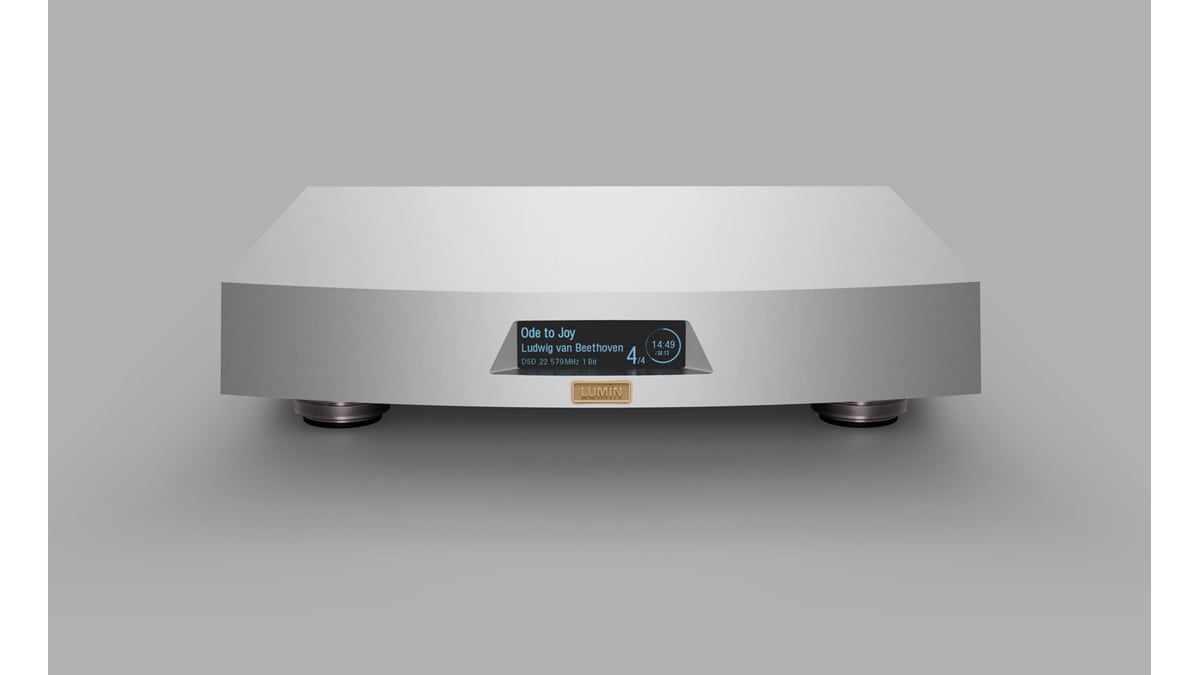
What the Lumin X2 changes, and why it matters
In November 2025, Lumin quietly announced something that the digital audio world had not quite seen from them before. The Lumin X2, successor to the long-running X1 and the new flagship of the entire Lumin range, would not rely on an off-the-shelf DAC chipset. Instead, the Hong Kong-based company built their conversion stage component by component, from the ground up, using a fully discrete architecture. Units began shipping into early 2026, and Australian pricing has settled at around A$28,000 (approximately US$16,800 / EUR 15,800 / £12,995).
That is a significant number by any measure, but the more significant story is the engineering philosophy behind it. For years, even some of the most respected names in high-end digital audio (dCS, Chord Electronics, Bricasti, MSB) have differentiated themselves partly through how they handle the conversion stage. Some licence proprietary FPGA implementations. Some, like Chord, run entirely custom algorithms on programmable logic. But Lumin, until now, built its reputation on exceptional streaming integration, software maturity, and careful system-level engineering around established DAC chipsets. The X2 marks a clear line in the sand: Lumin is now competing at the very top of the discrete conversion conversation.
For Australian buyers, this arrives at a moment when the local high-end streaming market is genuinely mature. The question is no longer whether to stream. It is which streaming source component deserves a place at the top of a serious system. At A$28,000, the X2 is pitching itself against some formidable company, and the decision to go discrete is the centrepiece of that pitch.
A brief history of the X1 and what Lumin was known for
To understand what the X2 represents, it helps to understand what the X1 meant to the brand. The X1 was, for several years, the definitive answer to the question of what an uncompromised Lumin network player looked like. It offered balanced analogue outputs, a linear power supply, comprehensive streaming protocol support, and the Lumin app, widely regarded as one of the most polished control interfaces in the category. It was the unit that serious dealers pointed to when a customer walked in wanting everything in one elegant, network-connected box.
The X1 earned its place in reference systems not because it was flashy or full of marketing gimmicks, but because the software was genuinely excellent and the analogue output stage was carefully engineered. It also functioned as a preamplifier, meaning it could drive a power amplifier directly without an intervening line stage. That matters enormously in a minimalist high-end chain.
The X2 retains that core identity, with streamer, DAC and preamp in a single chassis, but the conversion engine underneath has been completely reconceived. That is the pivotal change, and it deserves close examination.
What does "fully discrete DAC" actually mean?
This is worth unpacking properly, because the phrase gets thrown around with varying degrees of rigour. A conventional DAC design, including many excellent, expensive ones, uses a dedicated DAC integrated circuit from a manufacturer like ESS Technology (makers of the Sabre series), AKM (Asahi Kasei Microelectronics), or Burr-Brown. These chips contain the core conversion logic, delta-sigma modulators, digital filters, and often some analogue output circuitry, all integrated onto a single piece of silicon. The job of the audio engineer is then to build a quality power supply, output stage, and overall circuit environment around that chip. The general principle is covered well in Wikipedia's entry on the digital-to-analogue converter.
A discrete DAC, by contrast, does not use a monolithic conversion chip for the core function. Instead, the designer builds the conversion circuitry from individual components (transistors, resistors, capacitors) assembled on a PCB. This is far more expensive and time-consuming to engineer correctly. It also means the designer has complete control over every parameter of the conversion process: the filtering characteristics, the noise floor, the output impedance, the linearity at low levels. There are no compromises forced by the chip manufacturer's design decisions, and there is no dependency on a supplier who might discontinue a part.
If you want a deeper grounding in what conversion actually involves, our Bit Depth & Sample Rate explainer covers the fundamentals clearly. The short version: getting from digital samples back to a continuous analogue waveform with maximum fidelity is genuinely hard, and the quality of that process has an audible impact on everything downstream. Our piece on DAC chips versus DAC engineering looks at what you are really paying for in each approach.
The risk of going discrete is real. Done poorly, a discrete DAC can introduce distortions, matching errors between channels, and thermal instability that a well-designed chip-based solution avoids almost by definition. Done well, as MSB, dCS in their ring DAC topology, and Chord with their FPGA-driven approach demonstrate, the results can be extraordinary. Lumin is now claiming membership of that club. Whether the X2 delivers on that claim is the central question any serious reviewer must address.
The integrated architecture: streamer, DAC, preamp
One of the most practically important things about the X2 is what it is not: it is not just a DAC. It is a network streamer with its own Roon-ready endpoint, support for the major high-resolution streaming services, and UPnP/DLNA compatibility for local library playback. The Lumin app remains the primary control interface, and given how well Lumin has maintained that software over the years, with regular updates, responsive bug fixes, and genuine feature additions, this matters as much as the hardware spec sheet. If you are weighing the app against the alternatives, our look at which control layer is worth building around is a useful companion.
The preamp functionality means the X2 can sit directly ahead of a power amplifier. In a high-end two-channel system, this is a compelling proposition: you eliminate one set of interconnects, one power supply, and one set of gain stages. Fewer boxes, fewer variables, potentially a cleaner signal path. The digital volume control in Lumin's implementation has historically been done with care, operating at high word-length resolution to minimise the quantisation distortion that plagues lesser implementations. With the X2's discrete output stage, the quality of that volume control path should be more transparent still. We cover the trade-offs in digital versus analogue volume control.
For context on how the X2 sits within the broader landscape of all-in-one streaming solutions, it is worth reading through our guide to the best DACs and network streamers, which covers the category from the more accessible end up to serious reference territory. The X2 sits firmly in the latter.
The Australian context: who is this for?
At A$28,000, the Lumin X2 is not a casual purchase. Let us be direct about that. This is a component for a buyer who has already resolved the fundamentals (a serious amplifier, quality loudspeakers, treated or at least considered room acoustics) and is now looking to elevate the source. In Australian terms, we are talking about a system total that likely starts north of A$50,000 and goes well beyond.
The buyer profile is someone who previously might have paired a dedicated streaming transport with a separate high-end DAC and preamp. The X2 makes a case that you can collapse those functions without sonic penalty, and with genuine gains in terms of digital integration quality. That is a credible argument in 2026, in a way it was not quite in 2016.
There is also an important practical point for Australian buyers specifically. High-end audio support and warranty service in this country can be patchy, and Lumin has generally been well-served by its local distribution. Software updates, which matter for a streaming device in a way they simply do not for a turntable or a valve amplifier, have historically been delivered consistently. In a category where a competitor's firmware roadmap can make or break the long-term value of a purchase, Lumin's track record here is genuinely reassuring.
A$28,000 also positions the X2 interestingly relative to the broader high-end streaming ecosystem. A comparable separates approach, with a quality network transport, a discrete or FPGA-based DAC, and a line-level preamp, could easily exceed that figure with the right components. If the X2's discrete conversion holds up under serious listening, the integration case becomes compelling purely on financial grounds, before you even consider the system-simplification benefits.
What the discrete conversion stage should deliver
Without full measurement data from an independent laboratory and extended listening time in a controlled reference system, it would be irresponsible to make categorical sonic claims. What I can do is explain what a well-executed discrete DAC architecture is capable of, and why Lumin's decision to go down this path signals a particular set of priorities.
Discrete conversion, when done correctly, tends to offer exceptional channel matching, because the designer can select and match individual components to tight tolerances. It also offers the potential for very low noise floors, since the designer is not constrained by the noise characteristics of a chip's internal reference circuitry. Linearity at low signal levels, often where chip-based designs show their weaknesses, can be superior, which translates to better low-level detail retrieval, more convincing soundstage and imaging, and a more natural rendering of dynamic gradations.
These are not abstract audiophile concepts. They translate to whether a piano note decays naturally into silence or truncates slightly too early. They translate to whether the space between instruments feels credible or slightly flat. In a system at this level, with amplification and loudspeakers capable of resolving these differences, the quality of the conversion stage is genuinely audible.
Lumin's choice to go discrete rather than FPGA-based (as Chord does) or ring-DAC (as dCS does) is interesting. It suggests a commitment to pure analogue circuit quality at the conversion point, rather than digital signal processing as the primary differentiator. This is a more traditional high-end approach, and one that aligns the X2 philosophically with the classic high-end DAC tradition, think early Audio Research and Theta Digital discrete designs, rather than the more algorithmically driven school of thought.
Replacing the X1: evolution or revolution?
The X1 set a high bar. Replacing it is not something Lumin would have done without significant confidence in the X2's ability to exceed it. The discrete DAC is the obvious headline, but the surrounding architecture (the power supply design, the analogue output stage, the chassis construction and shielding, the clocking) all feeds into the final result. Lumin's engineering team in Hong Kong has consistently shown rigour in these areas, and the X2 represents their most ambitious statement of that rigour to date.
For X1 owners, the X2 represents a meaningful upgrade path, not a lateral move. The conversion architecture alone is a generational step. Whether that step is worth the price difference from a current X1 purchase will depend on the resolution of the rest of the system, which is always the honest answer in high-end audio.
For those entering the Lumin ecosystem for the first time at this level, the X2 offers everything the X1 was loved for, with a more ambitious and potentially more rewarding conversion stage at its heart.
Practical considerations before you buy
A few things are worth thinking through if the X2 is on your shortlist:
- Network infrastructure matters. At this price point, your home network should be up to the task. A wired Ethernet connection is always preferable to Wi-Fi for critical listening. If your router or switch introduces jitter or packet loss, no amount of discrete DAC artistry will fully compensate. Our explainer on network audio clocking and jitter goes further.
- The preamp function only makes sense if your power amplifier is a good match. Think carefully about input sensitivity and gain structure. Our gain structure explainer covers why this matters in a direct-drive topology.
- Roon versus Lumin app. If you are a committed Roon user, the X2 is Roon Ready, and that integration is smooth. If you prefer the native Lumin app, it remains one of the best in the category. Either way, you are not compromising.
- Audition in your own system if at all possible. At A$28,000, a home demonstration should be a non-negotiable expectation from your dealer. Any reputable Australian retailer handling Lumin at this level should accommodate that request.
- Consider the full system context. The X2 will reveal everything that comes after it. If your amplification and loudspeakers are not up to the resolution required to expose the differences between a discrete and a chip-based DAC, you may not hear what you are paying for. This is a component that rewards an equally serious downstream chain.
Where the Lumin X2 lands
The Lumin X2 is a genuinely significant product, not because of the price tag, but because of what the discrete DAC architecture represents for the brand. Lumin has spent years building an impeccable reputation in streaming integration and software quality. With the X2, they are now making an equally serious statement about analogue conversion. That is a harder claim to make and a harder one to sustain, because the competition at this level is ferocious and the ears of the buyers are unforgiving.
If the execution matches the ambition, and Lumin's track record gives reasonable grounds for optimism, the X2 should be a landmark product in the network streaming category. At A$28,000, it asks a great deal. But it offers something genuinely new from a brand that has earned considerable trust: a flagship that no longer borrows its heart from anyone else.
We will have a full extended listening review with measurements when a retail unit reaches our Sydney listening room. Watch this space.
Common questions
- What makes the Lumin X2 different from the X1 it replaces?
- The headline difference is the DAC architecture. The X1 used an off-the-shelf DAC chipset, as most network players do — including many excellent, expensive ones. The X2 uses a fully discrete conversion stage built component by component, giving Lumin's engineers complete control over the conversion circuit rather than working within the constraints of a third-party chip. The X2 also represents Lumin's most ambitious engineering statement to date, while retaining the combined streamer, DAC, and preamp functionality that made the X1 popular.
- How much does the Lumin X2 cost in Australia?
- The Lumin X2 is priced at approximately A$28,000 in the Australian market. International pricing is around US$16,800, EUR 15,800, and £12,995. It began shipping in early 2026 following its announcement in November 2025.
- Can the Lumin X2 be used without a separate preamplifier?
- Yes. The X2, like its predecessor the X1, combines streamer, DAC, and preamplifier functions in a single chassis. It can drive a power amplifier directly using its variable analogue output, which is attractive for those wanting to minimise the number of components in the signal path. However, it is worth considering the gain structure and input sensitivity of your power amplifier before going direct — a mismatch can cause practical problems with volume control range.
- Is the Lumin X2 compatible with Roon?
- Yes, the Lumin X2 is Roon Ready, meaning it functions as a Roon endpoint and integrates fully with the Roon ecosystem. It also supports the native Lumin app, which remains one of the most polished control interfaces in the network streaming category, as well as UPnP/DLNA for local library playback.

Theo here. By day I write software, by night I argue with people on forums about whether bit-perfect playback is "solved" (it mostly is, and then it isn't). I cover the digital end — DACs, streamers, servers, the whole messy ecosystem of getting a file to sound its best. My promise to you: I'll separate the genuine engineering from the audiophile folklore, and I'll never tell you a $500 streaming bridge sounds "blacker" unless I can explain why.
Software engineer; network-audio and DAC specialist
More from Theo Mensah
 Dongle DAC power limits: when a phone can't drive headphonesDongle DACs are brilliant until they aren't. Here's how to work out whether your phone-and-dongle rig actually has the current to drive your headphones.
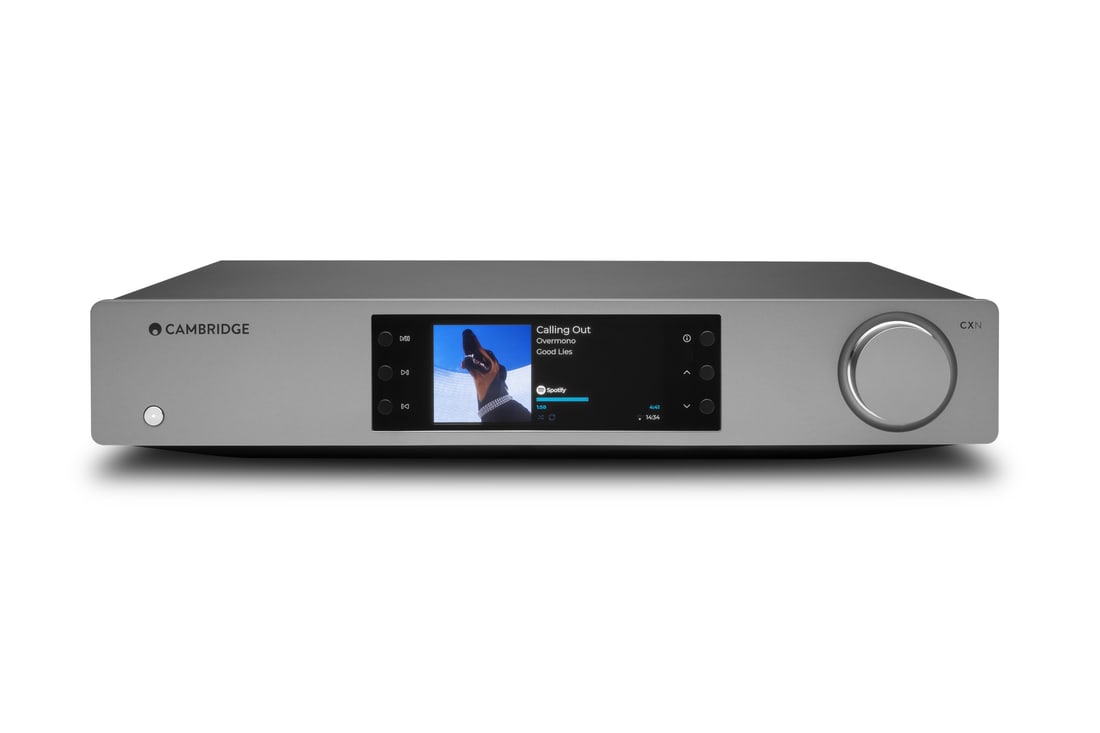 DNS and multiroom: why your streamer drops out at the worst timeMultiroom dropouts are rarely your Wi-Fi. Here's why DNS resolution quietly breaks streaming apps, and how to fix it for good.
- Parallel vs series IEM crossovers: why multi-driver in-ears sound so differentWhy do two IEMs with the same driver count sound nothing alike? The crossover topology is doing more work than the drivers themselves.
- Streaming a subwoofer's EQ filters: why your network player might be the bottleneckYour sub's miniDSP or app-based EQ can only act on a signal your streamer hasn't already mangled. Here's where network audio and bass management actually interact.
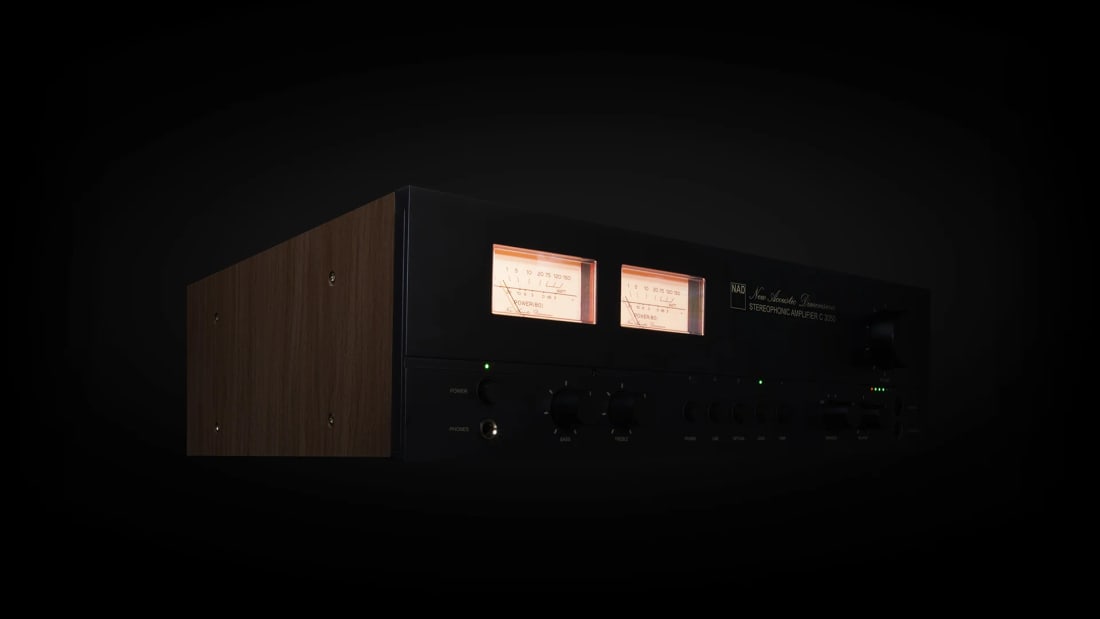 Amplifier gain structure: the setting that decides your noise floorGain mismatches between DAC, preamp and power stage quietly wreck dynamic range. Here's how to actually set gain structure instead of guessing at the volume knob.
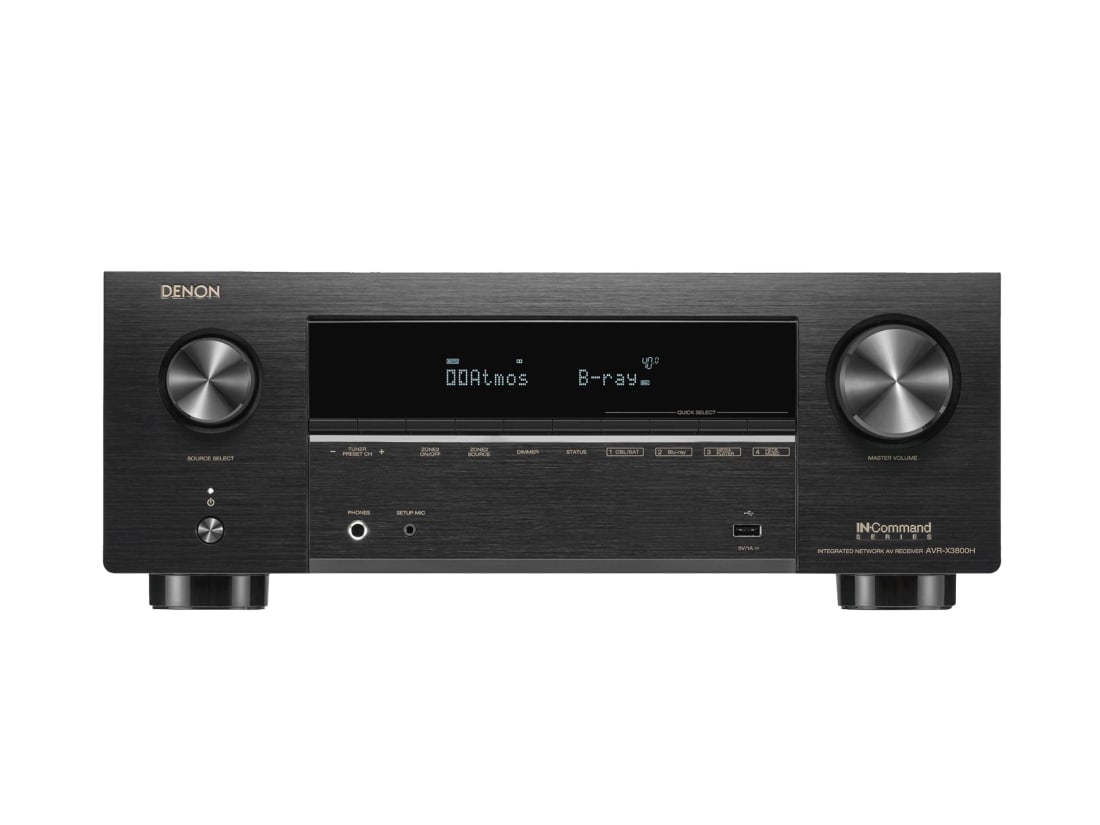 Bass management by the numbers: what your AVR's crossover and slope actually doCrossover frequency gets all the attention, but slope, distance settings and speaker size flags quietly decide whether your bass management works or fights itself.