Bass management over network audio: why your streamer's DSP matters for subs
I had a WiiM Ultra on the bench a few months back, running a stereo pair plus a single sub, and I noticed something that took me a minute to figure out: the crossover slope wasn't behaving like the analogue high-pass filters I'm used to reading about in AVR manuals. It was doing something cleaner, and it was doing it entirely in the digital domain before the signal ever hit a DAC chip. That's the bit nobody talks about when they're arguing over which streamer "sounds better" — some of these boxes are now doing bass management jobs that used to require a receiver, a separate processor, or an outboard active crossover.
The short version: bass management has quietly migrated out of the AV receiver and into the streamer, and that migration changes some of the practical decisions you make when you're setting up a subwoofer in a stereo (not home cinema) system. I want to walk through what's actually happening under the hood, because "the streamer does bass management now" gets thrown around as a marketing line and the engineering underneath deserves better than that.
Where bass management used to live, and why that mattered
In a traditional stereo setup with a sub, bass management was either analogue — a low-pass filter built into the subwoofer's own amp module, fed from a line-level output or high-level speaker taps — or it lived in an AV receiver's DSP, doing crossover, phase alignment and (if you were lucky) some room correction on top. Either way, the streamer or DAC's job stopped at delivering a clean analogue or digital signal. It had no idea a subwoofer existed downstream. That separation was tidy in one sense — everyone knew their lane — but it meant the crossover point, slope and phase relationship between main speakers and sub were set by whatever gear happened to be doing bass management, often with limited resolution and no measurement feedback loop. A lot of receivers still default to a fairly blunt 80Hz crossover with a fixed slope regardless of what your speakers or sub can actually do.
What's changed with DSP-capable streamers
Devices like the WiiM Ultra, and to a lesser extent some of the all-in-one streaming amps we've reviewed, now run digital crossover and EQ processing before the signal reaches the amplification stage. The WiiM Ultra specifically ships with a built-in measurement microphone and lets you set sub crossover frequency, slope, phase and level as part of its room correction routine — all done in the digital domain, at full resolution, before any D/A conversion happens for the main channel path. This matters for a few reasons. First, digital filters can be built with steeper, cleaner slopes than most analogue implementations without the phase smearing that a crude analogue crossover introduces. Second, because the measurement and the filtering live in the same device, you get an actual feedback loop — you measure, the software calculates a filter, you can re-measure and confirm it worked, rather than turning a dial on a sub's back panel and guessing. Third — and this is the one most people miss — doing it digitally means the crossover point can be genuinely tailored to your speakers' actual low-frequency roll-off rather than a generic 80Hz default. If you're running a pair of standmounts that are already down 3dB at 65Hz, an 80Hz crossover is doing something quite different to what it would do with a floorstander that's flat to 35Hz. I've said this before and I'll keep saying it: the crossover point is not a taste setting, it's an engineering decision that depends on what your specific speakers are doing at the bottom end, and treating it as one-size-fits-all is where a lot of stereo-plus-sub setups go wrong.
Sealed vs ported still matters, even with good DSP
None of this changes the fundamental behaviour of the subwoofer enclosure itself. A sealed sub like the SVS SB-3000 gives you a gentler low-frequency roll-off and generally tighter transient response, which plays nicely with steep digital high-pass filters because you're not fighting a resonant peak near the tuning frequency. A ported design gives you more output for less cone excursion and less amplifier strain, but that port resonance is a real physical event that a digital crossover upstream of the sub's own amp can't undo — it can only work around it by choosing a crossover point that sits clear of any port-related irregularities. DSP is very good at correcting frequency response anomalies that are minimum-phase in nature. It's considerably less good at un-ringing a port, and if your sub has a boomy character right at its tuning frequency, a parametric EQ cut from your streamer's room correction can flatten the amplitude response on a measurement sweep while leaving some of the time-domain mess behind. That's a genuine limitation, and it's worth knowing about before you assume DSP is a universal fix. If you want the fuller picture on which enclosure type suits which room and use case, we've covered that ground in our piece on DACs and streamers where crossover-capable devices increasingly overlap with what used to be separate categories, and in more depth in our subwoofer placement coverage.
What this means for a stereo listener without an AVR
The practical upshot for someone building a two-channel system with a sub, no home cinema processor in sight, is that you now have a genuinely useful bass management path that didn't really exist five years ago at this price point. Something like the WiiM Ultra or a streaming amp with built-in room correction can do crossover, phase alignment and basic EQ for well under the cost of adding a dedicated processor, and it does it with a measurement mic rather than a tone control mentality. I'll admit I was sceptical the first time I saw "room correction" on a sub-$1000 streamer's spec sheet — it read like marketing copy borrowed from a $5000 processor. Having actually measured before and after with a calibrated mic on a few different rooms, the correction is real, though it's not magic. It fixes what digital signal processing is good at fixing: frequency response smoothness, crossover integration, and phase alignment between sub and mains within the frequency band where they overlap. It does nothing for room modes below the crossover point that are really a physics problem, not a filtering problem — that's still a placement and, in stubborn rooms, an acoustic treatment job. One thing I'd push back on: some of the marketing around these features implies you can skip the subwoofer placement process entirely because "the DSP will sort it out." That's not been my experience. A sub crammed into a bad corner with a room mode reinforcing a 15dB peak at 45Hz is still going to need EQ correction so aggressive that you're throwing away headroom and potentially introducing group delay artefacts, compared with a sub that's in a reasonable spot to begin with. DSP is a correction tool, not a substitute for basic acoustics. Get the position right first, then let the room correction clean up what's left — that order of operations hasn't changed even though the tool doing the correcting has moved.
The signal chain question: where does this sit relative to your amp?
If your streamer is handling crossover and sending a full-range signal to your amplifier for the mains and a separate low-passed feed to your subwoofer, the practical wiring is usually straightforward — most of these devices offer a dedicated subwoofer output alongside the main stereo output, so the amp downstream never sees anything but its intended band. That's a cleaner arrangement than the older method of taking a speaker-level feed into a sub and hoping its internal crossover was decent. Where it gets slightly more interesting is with all-in-one streaming amplifiers — something like the Naim Uniti Atom (check price) or a device from our streaming amplifiers guide — where the DSP, DAC and amplification are all in the same chassis. In these, the bass management decision is baked in earlier in the chain, and you're relying on the manufacturer's implementation rather than assembling separates. That's not necessarily worse, but it's less flexible if you want to swap a sub or reposition later and re-tune independently.
A word on digital volume and gain staging with sub outputs
One practical wrinkle: when a streamer is managing both your main output level and a derived sub output, the gain structure needs to stay sane through the whole chain. I've seen setups where someone cranks the sub's own gain knob to compensate for a quiet-sounding crossover setting, then wonders why the low end sounds boomy and disconnected from the mains — they've effectively double-gained the bottom octave. The fix is boring but correct: set your streamer's sub output level using its own calibration routine or a measured SPL match, and leave the subwoofer's physical gain knob roughly in the middle, adjusted only in coarse steps. Treat the fine-grained level control as a digital-domain job, because that's genuinely where it's most accurate now.
Is this actually better, or just differently packaged?
I don't think the underlying maths of a crossover filter is meaningfully different whether it runs in a $3000 AV processor or a $700 streamer — a linkwitz-riley filter is a linkwitz-riley filter regardless of the silicon executing it. What's changed is accessibility and measurement integration. A decade ago, getting phase-correct sub integration with actual measured verification meant spending processor money. Now it's built into devices that were primarily bought for Spotify Connect and Tidal streaming, which is a genuinely good outcome for anyone assembling a modest two-channel-plus-sub system on a budget that doesn't stretch to a full home cinema stack. My contrarian take, for what it's worth: I think some manufacturers are over-promising on what their room correction can do for bass specifically, because bass problems are disproportionately about room physics rather than frequency response on paper. The correction is real and worth using. It's not a replacement for doing the subwoofer crawl, and anyone telling you otherwise is selling you the software, not explaining the room.
For background on the broader digital chain feeding all of this — bit-perfect playback, USB handling, where a DAC fits before or after these processing stages — our guide to DACs and network streamers covers the plumbing in more detail. And if you're assembling the amplification side of a stereo-plus-sub system rather than an all-in-one box, the RME ADI-2 DAC FS (check price) is one of the few devices in this space with genuinely deep digital filtering options if you want to go further than a consumer streamer's built-in routine allows.
Common questions
- Can a streamer's DSP replace a proper subwoofer crossover?
- For most stereo systems, yes — devices with built-in digital crossover and room correction, like the WiiM Ultra, do the job to a standard that used to require a dedicated AV processor. The filter maths is the same regardless of which box runs it.
- Does digital room correction fix boomy bass from a ported subwoofer?
- Partly. It can flatten the measured frequency response, but a port's time-domain behaviour near its tuning frequency isn't fully corrected by EQ. A sealed sub, such as the SVS SB-3000, is often easier to integrate cleanly with steep digital crossovers.
- Should I still do a subwoofer placement crawl if my streamer has room correction?
- Yes. Correction software works best on a sub that's already reasonably placed. Asking DSP to fix a sub stuck in a bad corner means aggressive EQ that can cost you headroom and introduce group delay.
- Where should I set the subwoofer's own gain knob if my streamer manages sub output level?
- Leave it at a moderate, fixed setting and do fine level matching digitally through the streamer's calibration or a measured SPL match. Adjusting both independently tends to cause double-gain issues in the bottom octave.

Theo here. By day I write software, by night I argue with people on forums about whether bit-perfect playback is "solved" (it mostly is, and then it isn't). I cover the digital end — DACs, streamers, servers, the whole messy ecosystem of getting a file to sound its best. My promise to you: I'll separate the genuine engineering from the audiophile folklore, and I'll never tell you a $500 streaming bridge sounds "blacker" unless I can explain why.
Software engineer; network-audio and DAC specialist
More from Theo Mensah
 Dongle DAC power limits: when a phone can't drive headphonesDongle DACs are brilliant until they aren't. Here's how to work out whether your phone-and-dongle rig actually has the current to drive your headphones.
- DNS and multiroom: why your streamer drops out at the worst timeMultiroom dropouts are rarely your Wi-Fi. Here's why DNS resolution quietly breaks streaming apps, and how to fix it for good.
- Parallel vs series IEM crossovers: why multi-driver in-ears sound so differentWhy do two IEMs with the same driver count sound nothing alike? The crossover topology is doing more work than the drivers themselves.
- Streaming a subwoofer's EQ filters: why your network player might be the bottleneckYour sub's miniDSP or app-based EQ can only act on a signal your streamer hasn't already mangled. Here's where network audio and bass management actually interact.
 Amplifier gain structure: the setting that decides your noise floorGain mismatches between DAC, preamp and power stage quietly wreck dynamic range. Here's how to actually set gain structure instead of guessing at the volume knob.
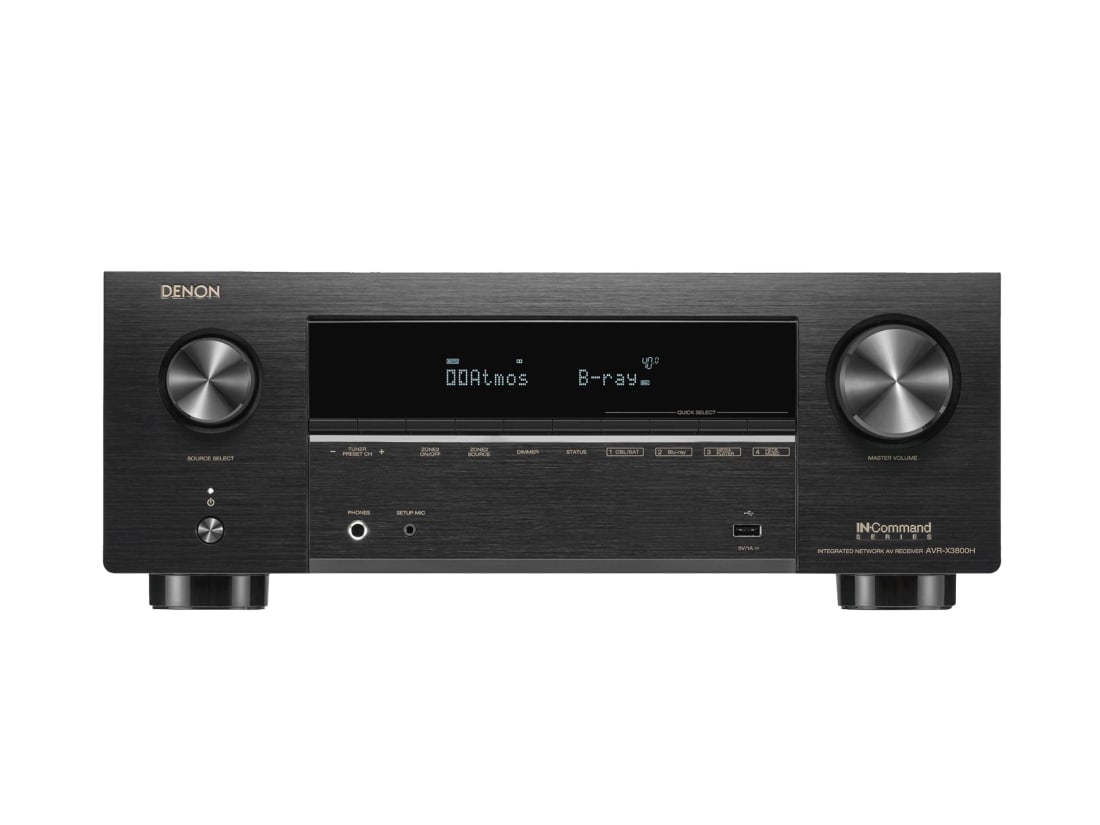 Bass management by the numbers: what your AVR's crossover and slope actually doCrossover frequency gets all the attention, but slope, distance settings and speaker size flags quietly decide whether your bass management works or fights itself.