Streamer output stage vs speaker sensitivity: matching the digital front end to your pair
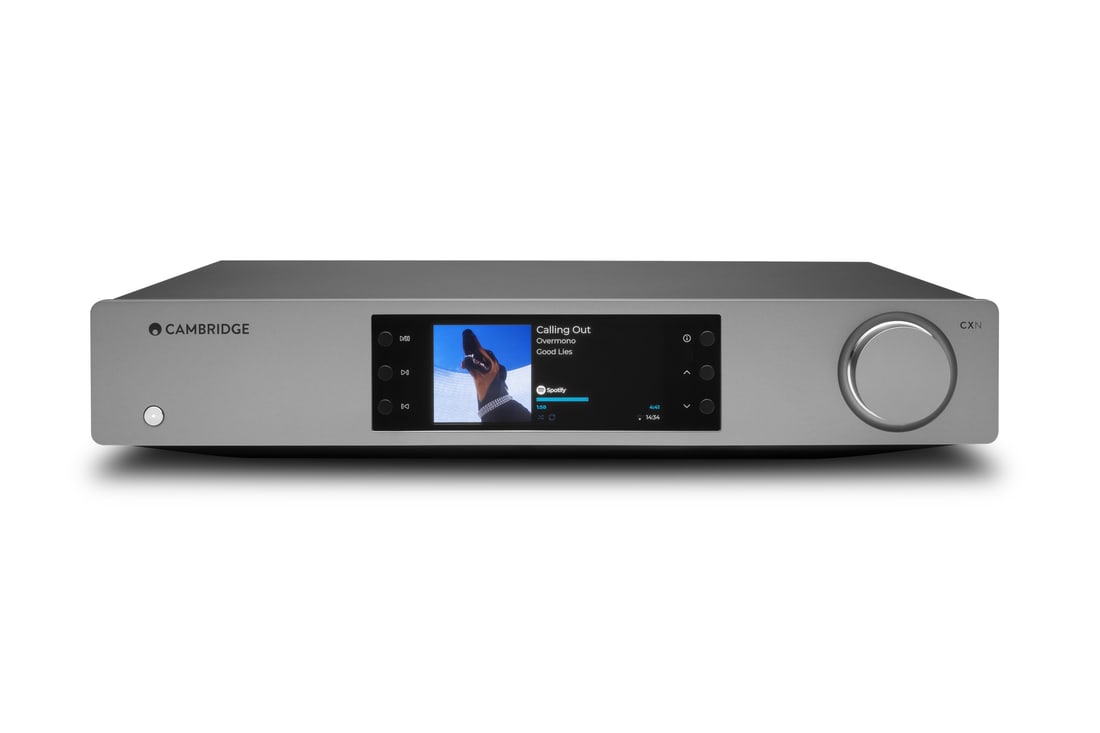
Last month a reader emailed me convinced his new streaming amp was "underpowered" because his 84dB-sensitivity standmounts sounded thin at anything past nine o'clock on the volume dial. He'd measured nothing. He'd just assumed watts were the problem. They weren't. The output stage of his source was interacting badly with an amp gain structure that didn't suit a low-sensitivity speaker, and no amount of extra wattage was going to fix that particular mismatch. This is the conversation nobody has properly, because it sits in the gap between two beats most reviews cover separately: the digital source and the speaker.
I write software for a living and I've spent a decade arguing on forums about bit-perfect playback, so I'm allergic to hand-waving explanations. But this one isn't folklore — it's basic signal chain arithmetic that gets skipped because "just buy good gear" is easier to say than "understand what your gear is actually doing to the signal before it reaches your speakers."
What speaker sensitivity actually tells you
Sensitivity is measured in dB at 1 watt at 1 metre, and it's one of the few speaker specs that genuinely predicts real-world behaviour rather than just looking good on a datasheet. A speaker rated at 88dB needs roughly double the power of one rated at 91dB to hit the same volume, all else being equal. That 3dB gap sounds trivial until you're running a modest streaming amplifier into a pair of low-sensitivity standmounts in a larger room, at which point you run out of clean headroom well before you run out of volume knob.
The trap is treating sensitivity as the whole story. It isn't. Impedance curves matter just as much, because a speaker that dips to 4 ohms or lower at certain frequencies is a harder load regardless of its headline sensitivity figure. I've seen 90dB speakers behave worse with an underpowered source than 86dB speakers with a benign, flat impedance curve. The two numbers have to be read together, and most retail spec sheets bury the impedance curve entirely, giving you only a nominal figure that tells you almost nothing about the awkward dip at 150Hz where the crossover hands off to the woofer.
Where the streamer's output stage actually enters this
Here's the bit that gets skipped. A network streamer or streaming amplifier isn't a passive pipe — it has its own output impedance, its own gain staging, and in the case of all-in-one units, its own amplifier topology feeding straight to the terminals. A high output impedance on a source, paired with a demanding speaker load, doesn't just cost you volume. It changes damping, it can soften bass control, and it interacts with cable length and gauge in ways that are individually small but compound.
I covered this from the amplifier side a while back — see damping factor and output impedance if you want the full electronics breakdown — but the short version for the digital chain specifically: streaming platforms with built-in DACs and preamp stages vary enormously in how they handle gain before the signal even reaches the power amp section. A unit like the WiiM Ultra (check price) used purely as a source into a separate amp behaves completely differently to something like the Naim Uniti Atom (check price) or the Devialet Phantom I 103 dB (check price), where the streaming, DAC and amplification are one integrated unit and the engineers have already made assumptions about what kind of speaker load they expect to see at the terminals.
That's the part audiophile folklore gets backwards. People assume any DAC-into-any-amp is basically interchangeable as long as the numbers on paper look fine. In practice, an all-in-one streaming amp has been voiced and gain-staged as a system, and pairing it with a speaker well outside the sensitivity and impedance range its designers assumed can leave real performance on the table, not because the unit is bad, but because it was never validated against that load.
Standmounts, floorstanders, and why the mismatch shows up differently
I'd point you to Hannah's piece on loudspeaker sensitivity and amplifier matching for the deeper amp-side numbers, but from the source end, the practical pattern I see over and over is this: standmounts, especially small two-way sealed or reflex-loaded designs like the KEF LS50 Meta (check price) or the Bowers & Wilkins 606 S3 (check price), tend to sit in the 84-88dB range and often present a trickier impedance dip than a comparable floorstander from the same range. Floorstanders generally trade some of that sensitivity headache for bigger cabinets and easier-to-drive woofer sections, though that's a generalisation with plenty of exceptions — the Focal Vestia No1 (check price) is a floorstander that still wants real current behind it.
When you're feeding a low-sensitivity standmount from an all-in-one streaming amp, the source's output stage is doing double duty: DAC, preamp gain, and power amp gain structure all in one small chassis, usually with a compact power supply. That's fine for an easy 90dB load. It gets audibly strained on an 84dB load in a room bigger than about 25 square metres, and the failure mode isn't distortion in the way you'd expect — it's a flattening of dynamics, a loss of the sense that the music has room to move, well before you'd call it clipping on a scope.
This is also why I keep coming back to matching speaker format to listening distance as a companion read — sensitivity and listening distance aren't separate decisions, they compound. A low-sensitivity standmount at near-field distance asks much less of your source than the same speaker at three or four metres in a lounge room.
The practical matching exercise
Before buying either component, I'd actually sit down and do the arithmetic rather than trust a showroom demo, because showroom demos are almost always run at sensible near-field distances with speakers the retailer knows will flatter the amp on the shelf next to it. Work out your realistic listening distance and typical peak SPL you actually want (most people wildly overestimate this — 85-95dB peaks covers the overwhelming majority of real listening). Cross-reference the speaker's sensitivity and minimum impedance against the source's rated output into that impedance, not just its 8-ohm figure. Most manufacturers publish 4-ohm figures somewhere in the fine print, and the gap between the 8-ohm and 4-ohm number tells you a lot about how much genuine current reserve is on tap.
If you're building a separates system — streamer or DAC feeding a standalone integrated amp — you get more flexibility here because you can choose the amp specifically for the speaker's load characteristics, independent of the source. A unit like the NAD C 3050 (check price) or McIntosh MA352 (check price) gives you that separation of concerns: pick the DAC/streamer for its digital performance, pick the amp for its current delivery into your specific speaker's impedance curve. Our best DACs and network streamers roundup is a reasonable starting point if you're going that route, and best integrated amplifiers covers the amp side properly.
All-in-one streaming amps compress that decision into one purchase, which is convenient but less forgiving if you get the speaker wrong. My honestly slightly contrarian view here: I think all-in-one streaming amps are undersold to buyers with demanding standmounts and oversold to buyers with easy, high-sensitivity floorstanders who'd genuinely never need the extra headroom anyway. The marketing doesn't discriminate, but the physics does.
A quick word on cable and terminal-level reality
None of this is fixed by expensive speaker cable, and I'll say that plainly because it's a rabbit hole this topic tends to fall into. If you want the honest cable answer, speaker cable gauge and length covers when it genuinely changes what you hear, and it's a shorter list of scenarios than the cable industry would like you to believe. The mismatch we're discussing here happens well upstream of the cable, in the gain structure and output impedance of the source itself, and no amount of cable spend addresses that.
What I'd actually do
If you already own the speakers and you're shopping for a streaming source, get the sensitivity and minimum impedance figures in front of you before you shortlist anything, then check the source's rated output into 4 ohms, not just its headline spec. If you already own the source, work backwards: know its actual current delivery under load, and pick a speaker whose sensitivity and impedance curve sit comfortably within that. I'll admit I got this wrong myself for years, running speakers I liked on paper into whatever amp I happened to have, and wondering why some pairings sounded alive and others sounded merely correct. It's rarely one dramatic failure. It's a dozen small compromises that add up to a system that measures fine and just doesn't move you the way it should.
The Bluetooth SIG and AES publish plenty on signal chain standards if you want to go deeper into the engineering side of gain staging, and Rod Elliott's ESP pages remain one of the more sober technical references on amplifier output behaviour under real speaker loads, for readers who want primary sources rather than my summary of them.
Common questions
- Does a higher-powered streaming amp automatically fix a low-sensitivity speaker?
- Not automatically. Raw power output matters, but so does the amp's behaviour into low impedance and its damping characteristics. Check the 4-ohm power figure and impedance curve together, not the 8-ohm number in isolation.
- Can I mix a high-sensitivity floorstander with any streaming amp safely?
- Generally yes, with more margin for error. High-sensitivity, benign-impedance speakers are forgiving of a wider range of source output stages, which is part of why they're a sensible choice for all-in-one streaming systems.
- Is this the same issue as amplifier wattage matching?
- Related but not identical. Wattage matching is one part of it. Output impedance, gain structure and how the source behaves into a dipping impedance curve are separate variables that a simple watts-per-channel spec doesn't capture.

Theo here. By day I write software, by night I argue with people on forums about whether bit-perfect playback is "solved" (it mostly is, and then it isn't). I cover the digital end — DACs, streamers, servers, the whole messy ecosystem of getting a file to sound its best. My promise to you: I'll separate the genuine engineering from the audiophile folklore, and I'll never tell you a $500 streaming bridge sounds "blacker" unless I can explain why.
Software engineer; network-audio and DAC specialist
More from Theo Mensah
 Dongle DAC power limits: when a phone can't drive headphonesDongle DACs are brilliant until they aren't. Here's how to work out whether your phone-and-dongle rig actually has the current to drive your headphones.
- DNS and multiroom: why your streamer drops out at the worst timeMultiroom dropouts are rarely your Wi-Fi. Here's why DNS resolution quietly breaks streaming apps, and how to fix it for good.
- Parallel vs series IEM crossovers: why multi-driver in-ears sound so differentWhy do two IEMs with the same driver count sound nothing alike? The crossover topology is doing more work than the drivers themselves.
- Streaming a subwoofer's EQ filters: why your network player might be the bottleneckYour sub's miniDSP or app-based EQ can only act on a signal your streamer hasn't already mangled. Here's where network audio and bass management actually interact.
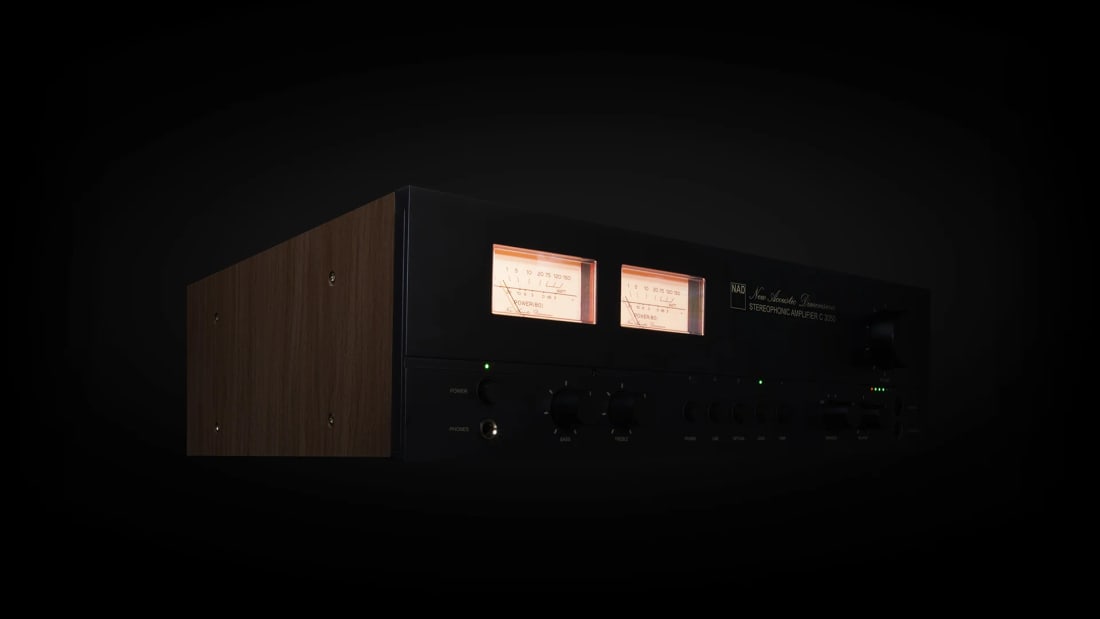 Amplifier gain structure: the setting that decides your noise floorGain mismatches between DAC, preamp and power stage quietly wreck dynamic range. Here's how to actually set gain structure instead of guessing at the volume knob.
 Bass management by the numbers: what your AVR's crossover and slope actually doCrossover frequency gets all the attention, but slope, distance settings and speaker size flags quietly decide whether your bass management works or fights itself.