Open-back headphones on a desk: why the "room" still matters
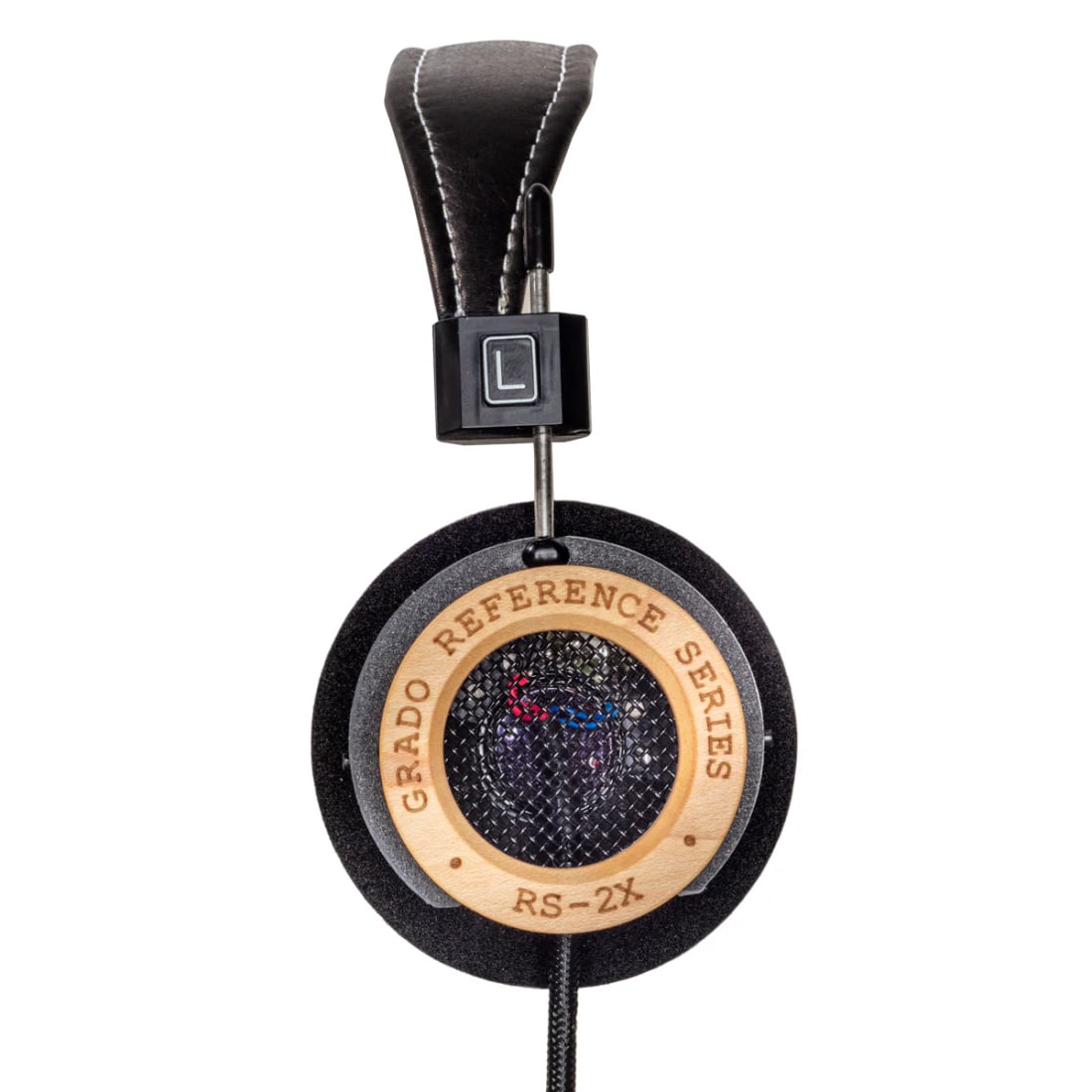
I get asked a version of this question at least once a fortnight: "I've gone open-back, so the room doesn't matter anymore, right?" Wrong, and it's a more interesting kind of wrong than most desktop audio myths. A sealed-can listener really is isolated from the room. An open-back listener is sitting in a small, weird acoustic space of their own making, and most people have no idea how much of what they're hearing is coming from the desk in front of them rather than the drivers on their head.
I do speakers and room acoustics for a living, not headphones, which is exactly why this topic interests me. Every time someone tells me their open-back cans "sound different at night" or "sound better with the desk lamp off" — genuine thing someone said to me at a hi-fi show in Melbourne last year, and no, it wasn't a joke — there's a physical reason. It's not in your head. It's in the fifteen centimetres of air between the earcup and whatever's sitting on your desk.
What "open-back" actually opens onto
An open-back design vents the rear of the driver deliberately. Sennheiser's HD 660S2, Focal's Clear MG, the Grado RS2x — these all use an open or semi-open rear chamber to let the driver move more freely and to avoid the pressure build-up that closed designs have to damp or tune around. The trade-off is that sound radiates outward from the back of the cup as well as forward into your ear, and — this is the bit people miss — some of that radiated sound reflects off nearby surfaces and re-enters the ear canal a few milliseconds later.
It's a much smaller-scale version of the first-reflection problem I deal with constantly on the loudspeaker side of this site. If you've read our piece on the best audiophile headphones, you'll have noticed that open-back designs dominate the higher end of that list. That's not an accident — manufacturers chase the more natural, "outside your head" presentation that an open rear chamber allows. But nobody puts a warning label on the box saying "results will vary depending on what's fifteen centimetres from your left ear."
The desk is doing more than you think
Most desktop headphone rigs sit the listener close to a hard, flat, reflective monitor screen, often flanked by a second monitor, with a hard desk surface below and frequently a wall directly behind the chair. That's three strong reflective boundaries within half a metre of an open-back driver that's actively radiating energy in all directions. Compare that to someone using the same headphones in an armchair in a living room, three metres from the nearest wall, and you'll get a measurably different tonal balance from identical hardware. I've done this comparison with a calibrated measurement mic and the same pair of HD 660S2s — not published data, just my own bench work — and the difference in the 2-6kHz region, where a lot of the "openness" character lives, was measurable and audible, if subtle. The mechanism is simple: high-frequency energy leaking from the rear of the cup bounces off a hard monitor bezel or glass screen and arrives back at the pinna slightly delayed, colouring the direct sound. It's the same comb-filtering effect that a poorly placed speaker gets from a nearby sidewall, just at a much smaller physical scale and a correspondingly higher frequency range.
Why closed-back doesn't have this problem (and what it trades away)
A closed-back design — something like the Beyerdynamic DT 1990 PRO MK II in its closed sibling models, or most studio monitoring headphones — seals the driver's rear chamber. There's nowhere for the backwave to go except into carefully engineered damping material inside the cup. Whatever leaves that chamber and reaches your ear canal is far less influenced by what's happening outside the cup. That's precisely why closed-backs are the standard choice for tracking vocals in a live room or monitoring in a shared studio: predictable isolation, predictable tonal balance, room be damned.
The cost is the sound itself. Closed designs tend to have more resonance inside the cup, since the trapped air and reflected energy have to go somewhere, and many listeners describe a slightly more "boxed-in" presentation compared with a good open design. This is exactly the kind of trade-off I'd want a reader to make with eyes open rather than by default. If you share a house and need genuine isolation, closed-back is the honest answer regardless of what it does to the presentation — our piece on open-back headphones and a shared house territory covers the isolation angle in more depth, but the acoustic mechanism described here is the flip side of that same coin.
What actually helps, without turning your desk into a studio
You don't need bass traps under your keyboard tray. A few genuinely useful, low-cost interventions:
Get some distance and some softness between your head and the nearest hard vertical surface. A monitor arm that lets you push the screen back ten or fifteen centimetres further than the factory stand does more for headphone tonal consistency than most people would guess. If you can, angle the monitor very slightly rather than having it dead flat and perpendicular to your face; a small angle scatters reflections rather than sending them straight back at your ear.
A soft desk mat or a folded towel behind the monitor, or a bookshelf immediately behind your chair rather than a bare painted wall, both reduce the amount of hard, parallel reflective surface close to your head. I know this sounds like the kind of advice I'd give for a listening room, scaled down absurdly, and that's exactly what it is — the physics doesn't care that the "room" in question is forty centimetres wide.
If you're chasing a specific reference tonal balance for critical listening or mixing, it's worth doing the comparison in more than one physical position at your desk — headphones on, moved ten centimetres left, ten centimetres back — before you conclude a headphone "is bright" or "is dark." Sometimes it's the monitor, not the driver.
Amping and source matter here too, but differently
None of this replaces getting the amplification right. Open-back designs like the HD 660S2 and Focal Clear MG are typically less current-hungry than something like the Audeze LCD-X, but they still reward a clean, low-output-impedance source rather than a phone dongle pushed to its limit. We've written separately about why output impedance matters more than raw wattage for headphones, and that's a real, measurable factor sitting alongside the room effect I'm describing here, not a substitute for it. A good desktop DAC/amp — something from our best desktop DAC/amps guide, or a dedicated unit like the iFi Audio ZEN DAC 3 or RME ADI-2 DAC FS — sorts out the electrical side of the chain. The room sorts out, or ruins, everything downstream of the driver.
A small, deliberately unfashionable opinion
Here's the bit where I'll get pushback from the headphone crowd: I think a meaningful chunk of "this headphone sounds different to the reviews" complaints are actually desk-acoustics complaints in disguise, not manufacturing variance or burn-in mythology. Burn-in gets blamed constantly and I remain unconvinced it does much of anything measurable to a modern dynamic driver; a hard monitor bezel eight centimetres from your ear canal, on the other hand, is a completely mundane and measurable physical mechanism that nobody bothers to control for. If I had to bet on which effect is real, it's not the one people spend forums arguing about.
Testing it yourself
You don't need lab gear to hear this. Put your open-back headphones on, sit at your normal desk position, and play something with sustained upper-mid content — solo piano or acoustic guitar works well. Note the tonal impression. Now stand up, walk to the middle of the room, away from any wall or furniture, and listen to the same passage again. If the presentation opens up or the upper-mids soften even slightly, that's your desk talking, not your headphones. It's a genuinely useful diagnostic before you spend money chasing a different pair of cans to fix a problem your monitor arm caused.
None of this is an argument against open-back headphones at a desk — I use them at mine, most days, sitting entirely too close to two monitors I really should push further back. It's an argument for knowing what you're actually listening to when you sit down and put them on.
— Hannah Reid, Loudspeakers & Acoustics Editor
Common questions
- Does the room really change the sound of open-back headphones that much?
- For most listeners it's subtle rather than dramatic, but it's measurable and often audible, particularly in the 2-6kHz range where reflections off a nearby monitor or hard desk surface can colour the direct sound from the driver's rear chamber.
- Should I just switch to closed-back headphones to avoid this problem?
- Only if isolation is actually what you need. Closed-back designs avoid the room interaction but usually trade some of the open, natural presentation that makes open-back designs popular in the first place. Match the design to your actual listening situation rather than to this one side effect.
- Will a monitor arm or desk mat actually make an audible difference?
- In my own testing, yes, modestly. Pushing a hard monitor bezel ten to fifteen centimetres further from your head reduces the strength of near-field reflections reaching the ear canal. It won't transform a headphone, but it removes one variable that muddies comparisons.
- Is this the same effect as first reflections with loudspeakers?
- Mechanically, yes, just at a much smaller physical scale and correspondingly higher frequency range. The principle of a reflective boundary re-colouring direct sound is identical, whether the boundary is a lounge room wall or a monitor bezel.

Hi, I'm Hannah. Speakers are my thing — specifically, the conversation between a speaker and the room it's in, which is where most systems are won or lost. I did acoustics at uni and never quite got it out of my system. I'll measure your room's bass response and then gently break the news that the $20,000 speakers aren't the problem, the untreated wall behind your sofa is. Stand-mounts on good stands are criminally underrated and I will die on that hill.
Acoustics background; loudspeaker and room-treatment specialist
More from Hannah Reid
- Headphone stands and hooks: the desk accessory that changes your soundHeadphone stands aren't just tidy storage. How you park your cans between sessions affects driver life, cable strain and even headband fit.
 First reflections: finding them, and what to actually do about themThe mirror trick still finds first reflection points better than any app. Here's how to locate them and what treatment actually earns its keep.
- Headphone soundstage: why some pairs sound "wide" and others don'tSoundstage in headphones isn't magic or marketing. It comes from crossfeed, driver geometry and pad depth — here's what's actually happening and what you can change.
- Turntable wall shelves versus stands: what actually kills footfall bassFootfall bass in vinyl playback usually isn't the turntable's fault. It's the floor. Here's how to work out whether a wall shelf or a proper stand fixes it.
 Why your amplifier struggles below 4 ohms (and when to actually worry)Impedance dips scare buyers more than they should. Here's how to read a speaker's impedance curve and match it to an amp that won't run out of puff.
- Subwoofer placement: the crawl test still beats any appRoom-correction apps are handy, but the old carpet-crawl method still finds the seat-by-seat bass problems software glosses over.