Rega's Solis power amplifier debuts with the Mercury preamp
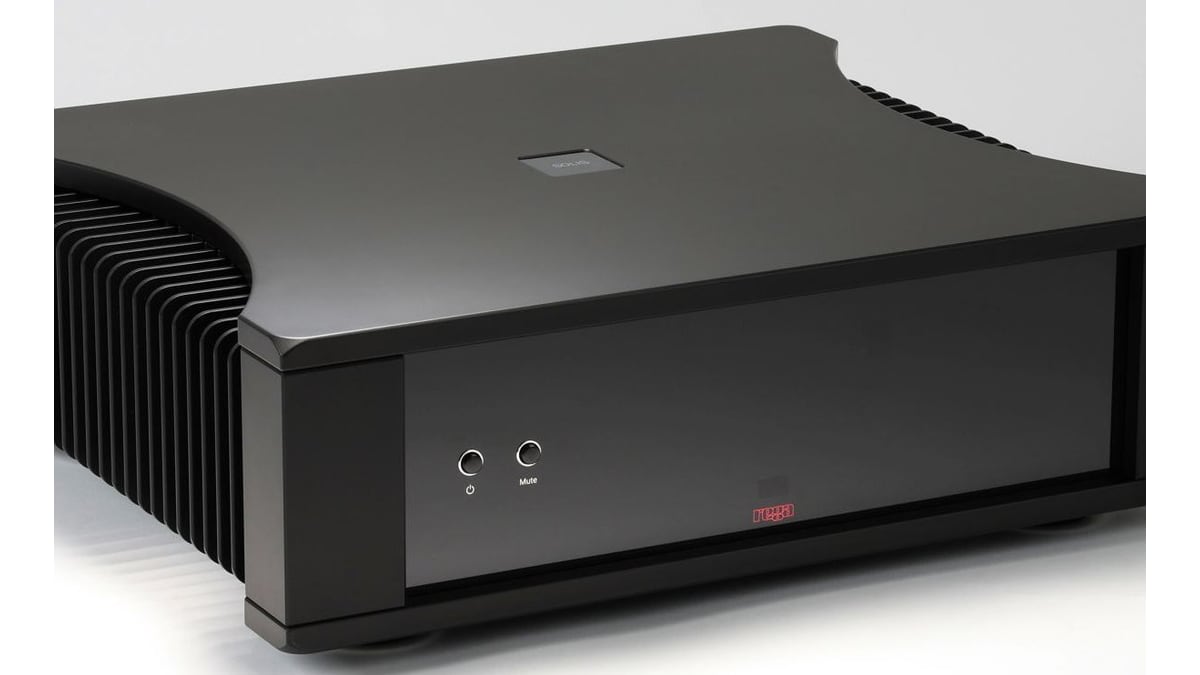
A significant moment for British amplification
It is not every year that a brand as historically important as Rega turns up at a consumer show with a genuinely new flagship amplifier. So when the Solis power amplifier and its partnering Mercury preamplifier made their public debut at the Bristol Hi-Fi Show in February 2026, the room paid attention, and rightly so. This is, by any measure, a significant event for the British high-end industry, and for Australian enthusiasts who have long respected Rega's engineering culture, it warrants a proper look at what the company has built and why it matters.
Rega has been making amplifiers for decades, but the brand's public identity has always been anchored most firmly in turntables. The Rega Planar 3 (check price) is arguably the most recognisable British turntable of the past forty years. The electronics (preamps, integrated amps and the occasional power amplifier) have always been respected by those paying attention, but they have rarely commanded the same conversation. The Solis and Mercury are a clear statement that Rega intends to change that dynamic. These are not budget-adjacent products dressed up in premium casework. They are, from everything we know, the result of a serious engineering effort, built to compete with the best separates money can buy. You can find the company's own range on the official Rega website.
What we know about the Solis power amplifier
Let's start with the hardware, because the specifications here are genuinely interesting rather than simply impressive on paper. The Solis is rated at 168 watts per channel into 8 ohms and 305 watts per channel into 4 ohms. That near-doubling of power as impedance halves is precisely what you want to see from a well-designed amplifier. It indicates a strong power supply and an output stage that can actually deliver current on demand rather than simply clipping politely when a loudspeaker asks for more than expected. If you want to see why those two figures are so often misread, our piece on amp power ratings into 8 vs 4 ohms covers the trap.
Understanding why that matters requires a moment on impedance. Real loudspeakers are not the simple resistive 8-ohm loads that specification sheets imply. A speaker's impedance curve fluctuates across the frequency range, often dipping to 3 or 4 ohms, or lower, in the bass region, precisely where the music demands the most current. An amplifier that cannot track that demand will soften, compress and ultimately compromise the presentation. The Solis's ability to nearly double its output as the load halves suggests a power supply and output stage designed with real-world loudspeaker behaviour firmly in mind. For the underlying physics, there is a useful Wikipedia explanation of electrical impedance.
The output stage itself is the detail I find most telling. Rega has specified twelve Sanken 130-watt output transistors arranged in what they describe as a triple high-current configuration. Sanken devices are well regarded in professional audio and serious hi-fi circles, and they are known for being linear and thermally stable under sustained load. Using twelve of them in a triple-configuration output stage is not the approach of an engineer trying to hit a wattage number for a brochure. It is the approach of someone trying to build an output stage with genuine reserves of current capability and thermal headroom, which translates directly to composure under difficult conditions.
The circuit architecture is fully symmetrical and fully discrete. That symmetrical, or balanced, topology means that from input to output, the signal travels through mirror-image positive and negative circuit paths simultaneously. The theoretical benefit is the cancellation of even-order harmonic distortions that are inherent to each individual signal path but cancel each other when the differential signal is recovered. Whether the sonic benefit of full symmetry is as dramatic in practice as theory suggests is a debate that occupies hi-fi engineers endlessly. Still, the choice to implement it throughout, rather than partially as some designs do, speaks to a commitment to the topology's underlying logic rather than its marketing value.
The fully discrete nature of the circuit means that Rega has avoided integrated operational amplifier chips in the signal path, instead building gain stages and driver circuitry from individual transistors. This gives the designer far greater freedom to optimise each stage for its specific role, bias conditions and thermal environment. It also makes the amplifier significantly more expensive and time-consuming to build, which is reflected in the price. How the power supply feeding such a stage is built matters just as much, and we look at that in power supply topology in high-end amplifiers.
Hand-built in England and what that means
Rega builds the Solis by hand at its factory in Southend-on-Sea, Essex. That is not a marketing flourish. Hand assembly at this level of complexity means that human technicians are placing, soldering and testing components individually, rather than a surface-mount production line placing components at high speed with automated reflow ovens. For a circuit with twelve output transistors, matched pairs across gain stages and the kind of point-to-point wiring choices that fully discrete designs often involve, that approach is both necessary and indicative of the production volumes the company expects. These will not be built in the thousands per month.
For Australian buyers, that matters in a different way. UK-built products at this price point tend to hold their value reasonably well in the secondhand market, and the presence of a genuine distributor network, which Rega has maintained in Australia for years, means that support and servicing are realistic rather than theoretical. When you are spending at this level, knowing that a faulty output transistor can actually be replaced by someone who knows the product is not a trivial consideration.
The Mercury preamplifier and the system picture
Rega has not yet released exhaustive technical details on the Mercury preamplifier, but the pairing with the Solis is clearly designed as a complete reference system. Together, the Mercury and Solis arrive at approximately AU$21,000 for the combination, with the Solis priced individually at AU$10,495 and the Mercury making up the remainder. That positions the pair in the company of some genuinely formidable competition. Boulder, Ayre, Pass Labs and the British contingent from Naim's Statement downward all occupy parts of this territory.
A preamplifier's role in a reference system is considerably more than a volume control with some inputs. The quality of the gain structure through the preamp (how it handles level, preserves dynamic range and presents a signal to the power amplifier) determines a great deal of what the power amplifier can ultimately do. A superbly capable power amplifier fed a compromised signal from a mediocre preamplifier will not deliver what its specification promises. Rega's decision to develop both components together, as an integrated design exercise, is sensible for exactly this reason.
If the Mercury shares the discrete, symmetrical philosophy evident in the Solis, the combination should present a consistent electrical interface between the two components, with matching impedances, appropriate gain and a signal path that does not introduce its own character in ways that undermine the amplifier's capabilities. We will need to spend time with the Mercury before drawing conclusions, but the architectural intent appears coherent.
Where the Solis sits in the market
At AU$10,495 for the power amplifier alone, the Solis is not a product for the casual enthusiast. But it is also not stratospheric by reference-class standards. Consider that a serious reference power amplifier from a brand like Pass Labs or Bryston occupies broadly similar territory once currency conversion and import costs are factored into Australian pricing. What Rega is offering is access to that level of engineering ambition from a brand with a long track record of delivering real-world performance rather than simply impressive data sheets. I'd argue that, on the information so far, the price is fairer than the badge-driven premiums seen elsewhere at this level.
The 168-watt output rating is also worth contextualising against loudspeaker sensitivity. Many high-end standmount designs, the kind of speaker an audiophile pairing with a AU$21,000 amplification system is likely to choose, have sensitivity figures in the 86–90 dB range. At listening distances of 3–4 metres in a typical Australian listening room, 168 watts into 8 ohms represents genuine headroom for realistic dynamic peaks, even with moderately insensitive loudspeakers. The 305-watt-into-4-ohm figure means that speakers like the Focal Kanta No.2 (check price), which present demanding impedance curves at certain frequencies, should be driven with authority rather than strain.
For reference, sensitivity and impedance interact to determine how much power a speaker actually requires for a given loudness level. A speaker with an 87 dB sensitivity at 1 watt/1 metre will produce roughly 107 dB at 1 metre with 100 watts, which is more than enough for realistic levels in most rooms, with some reserve for transient peaks. The Solis's output figures suggest it will not run out of composure before most loudspeakers run out of their own limits. If you want to run the sums for your own speakers, our guide to matching a speaker to an amplifier walks through it.
Who the Solis is for in Australia
The natural buyer for the Solis is someone who already has, or is planning to build, a serious two-channel system and who wants electronics that will not be the limiting factor for the foreseeable future. That probably means an existing Rega user who has been waiting for the brand to step up its amplification game to match its turntable reputation. It equally means someone coming from a different brand who appreciates the British-built, discrete-circuit approach and is attracted to the combination of genuine engineering substance and a brand with real service infrastructure in this country.
It is also worth considering the Solis for those currently running integrated amplifiers at lower price points who are ready to separate source, preamplification and power amplification for the first time. The step from an integrated to a proper pre/power combination is not always as dramatic as the price difference implies. At reference level, though, with properly matched components and well-chosen loudspeakers, the gains in control, bass authority and dynamic range are typically substantial and audible. Before committing, it is sensible to read where diminishing returns kick in across a high-end system, since the money may sometimes work harder elsewhere.
If you are in the process of assembling or refining a reference system, the question of what sources and loudspeakers will partner the Solis is immediately relevant. The amplifier's current capability and its power delivery into lower impedances mean it will drive a wide range of loudspeakers competently, from high-sensitivity designs that let you hear what a low-distortion amplifier can do at modest power levels, to lower-sensitivity floorstanders that demand sustained current delivery. Whether you are looking at the best standmount speakers for serious listening or considering a floorstander like the Kanta No.2, the Solis has the output headroom to serve either direction.
The Bristol show as a launchpad, and what happens next
The choice of Bristol as the venue for the Solis and Mercury's first public showing is fitting. The Bristol Hi-Fi Show has become one of the most important consumer audio events on the British calendar, attracting both domestic and international buyers and press in a way that gives a launch genuine reach. For a company as deliberate as Rega, choosing Bristol rather than a trade show like High End Munich suggests these products are intended to connect with real customers from the outset, not simply generate trade press.
What we do not yet have is an Australian availability date or a confirmed local distributor launch event. Given typical lead times between UK show debut and Australian retail availability, I would expect the Solis and Mercury to reach local dealers sometime in the second half of 2026, assuming production ramp-up proceeds smoothly. If you are seriously interested, the logical next step is to contact your preferred Rega dealer now, both to register interest and to get on a demonstration list when stock arrives.
The bigger question is what Rega's ambitions are beyond this launch. A reference pre/power combination is a statement of intent as much as a product. If the company is genuinely committing resources to high-end amplification at this level, there is reasonable expectation that future iterations, matching phono stages and possibly digital source components could follow the same engineering philosophy. Rega already has a strong reputation in phono stage design from its Fono and Aria products, and whether a reference phono stage emerges to partner the Mercury is a question I expect the company has already considered.
What the Solis says about Rega's direction
The Solis power amplifier is, on the available evidence, the most technically ambitious amplifier Rega has built. A fully discrete, fully symmetrical circuit with twelve Sanken output transistors in a triple high-current stage, rated to 168 watts into 8 ohms with near-doubling into 4 ohms, built by hand in England: this is not a product that arrived by accident or compromise. It represents a genuine engineering effort, and the AU$10,495 price point, while significant, is not unreasonable for what appears to be on offer.
The Mercury preamplifier remains the element about which we know less, and it will ultimately determine whether the combination performs as a coherent reference system or simply as two competent components that happen to share a brand name. But Rega's track record of internal design coherence, the way its turntables, tonearms and cartridges are engineered to work together, gives reasonable grounds for confidence that the Mercury has been developed with the same rigour.
We will be seeking a review sample as soon as Australian stock is available. Until then, the Bristol debut of the Solis is the kind of news that deserves to be taken seriously, not as hype, but as a genuine development in British high-end amplification from a company that has earned the right to be heard at this level.
Common questions
- How much does the Rega Solis power amplifier cost in Australia?
- The Rega Solis is priced at AU$10,495. Paired with the partnering Mercury preamplifier, the complete pre/power combination arrives at approximately AU$21,000.
- What output power does the Rega Solis deliver?
- The Solis is rated at 168 watts per channel into 8 ohms and 305 watts per channel into 4 ohms. The near-doubling of power as impedance halves indicates a robust power supply and output stage designed for real-world loudspeaker loads.
- Where is the Rega Solis manufactured?
- The Solis is hand-built in England at Rega's factory in Southend-on-Sea, Essex. It made its first public appearance at the Bristol Hi-Fi Show in February 2026.
- What type of output transistors does the Rega Solis use?
- The Solis uses twelve Sanken 130-watt output transistors arranged in a triple high-current output stage. The circuit is fully discrete and fully symmetrical from input to output.

I'm Marcus, and I'll be honest up front: I trust a measurement before I trust my own ears, because my ears lie to me daily. I spent fifteen years designing audio electronics before I started writing about them, so when a brand tells me a number, I want to see the graph. That doesn't make me cold about this hobby — I love a system that disappears as much as anyone — it just means I'll tell you when an expensive box is selling you confidence rather than performance.
Former audio electronics engineer; objectivist; runs the test bench
More from Marcus Vale
 Why your turntable's earth wire isn't optionalTurntable earthing fixes most phono hum problems. Here's how grounding actually works, why it fails, and how to track down a noisy connection.
 Why your AVR runs cool on music but throttles on AtmosAVR thermal throttling explained: why nine-channel Atmos mixes push receivers into protection mode that two-channel music never triggers.
- Subwoofer delay settings: why your AVR's number is a guessAVR auto-calibration estimates subwoofer delay from distance, not timing. Here's how to measure and correct it properly for tighter bass.
- AVR auto-calibration: what Audyssey, YPAO and Dirac actually measureAudyssey, YPAO and Dirac Live all run a mic sweep and spit out numbers, but they're not measuring the same things or fixing the same problems. Here's what's actually happening.
- Cartridge break-in: what actually changes in the first 40 hoursDoes a new cartridge really need 40 hours to "open up"? I measured one to find out what's mechanical fact and what's audiophile folklore.
- DAC output stages: what the chip doesn't tell youThe DAC chip gets all the marketing attention, but the analogue output stage after it does most of the work shaping what you actually hear.