REL Acoustics Planar: The Wall-Mounting Sub That Could Change the Game for Constrained Spaces
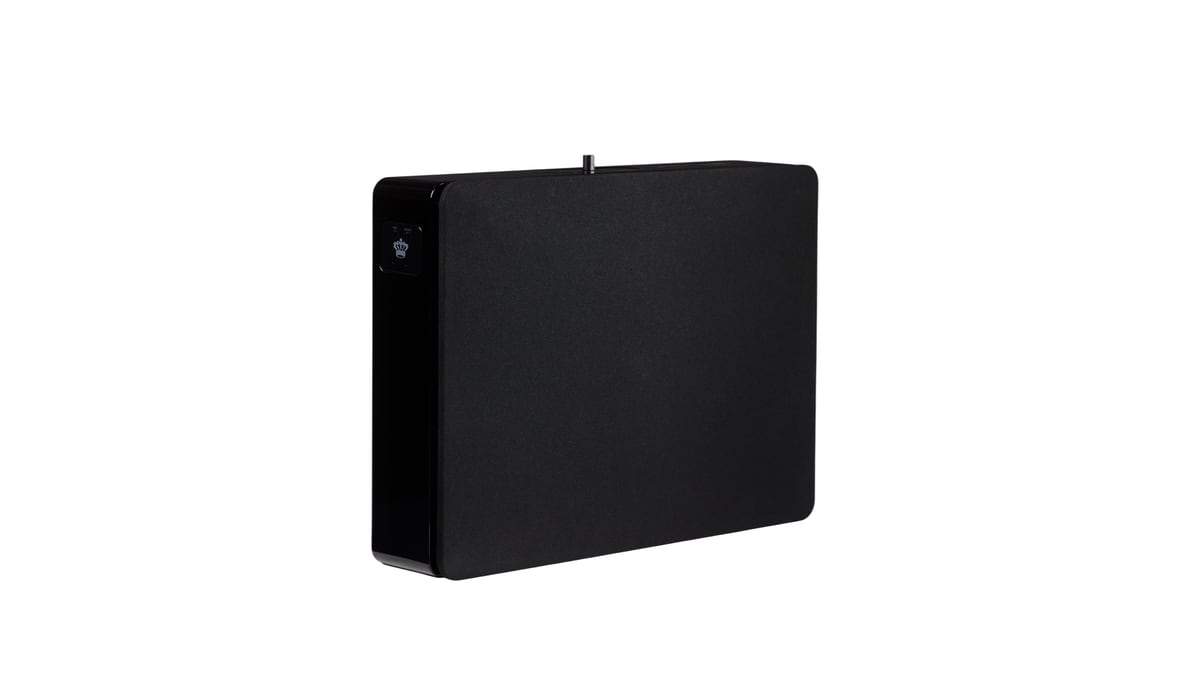
REL Does Something It Has Never Done Before
If you follow subwoofer design at all, you know that REL Acoustics has spent decades building its reputation on a very particular philosophy: substantial enclosures, long-throw drivers, and a tuning approach that blends seamlessly with full-range loudspeakers rather than simply adding boom to a home cinema system. The company's products — from the entry-level HT/1003 right up to the monumental Carbon Special — have always occupied real estate on your floor, and plenty of it. That's precisely what makes the announcement of the Planar series so striking.
In May 2026, REL unveiled the Planar range: two models, the PL-1 and PL-2, both engineered to mount on a wall at just 5.7 inches (roughly 145 mm) in depth. This is not a cosmetic reskin of an existing product. It represents a genuine departure in driver geometry, enclosure thinking, and the audiences REL is trying to reach. For Australian buyers who have wanted serious low-frequency reinforcement but live in the compact apartments, architect-designed homes, or strict-body-corporate environments that define so much of our urban landscape, this is worth paying close attention to.
The Two Models: What REL Has Built
PL-1: The Dual-Driver Approach
The PL-1 takes a configuration that feels more closely related to traditional REL thinking. It pairs two active 6.5-inch cones in the same shallow enclosure, supplemented by a 10-inch passive radiator. If you're unfamiliar with passive radiators, they are essentially unpowered drivers — no voice coil connected to an amplifier — that are tuned to resonate at a specific frequency and extend the apparent bass output of a sealed or ported design without requiring a port that would add depth to the cabinet. For a slim, wall-mounted form factor, they are an obvious and sensible tool.
REL rates the PL-1 at -6 dB at 31 Hz in-room. That is a meaningful number. In-room measurements inherently benefit from room gain — the natural reinforcement of low frequencies that occurs as a room's boundaries reflect energy back toward the listening position — so real-world extension will vary with your space and mounting position. But 31 Hz as a -6 dB point is not embarrassing for any subwoofer; for a unit that sits 5.7 inches out from your wall, it's genuinely impressive. The PL-1 weighs 18.9 kg, which tells you there's real material in that shallow enclosure — this is not a lightweight product in any sense beyond its depth.
PL-2: The FlatPiston Driver
The PL-2 is the more technically adventurous of the two, and arguably the one that signals where REL's engineering focus has gone in developing this range. Rather than conventional cone drivers, the PL-2 employs a single 8-inch FlatPiston active driver — REL's term for what appears to be a planar or flat-diaphragm driver architecture — paired again with a 10-inch passive radiator.
The rationale for a flat-piston driver in a slim enclosure is straightforward: a conventional cone driver requires excursion depth — the cone has to move forward and backward through a meaningful arc to displace air. That excursion depth eats into cabinet depth. A flat or near-flat diaphragm can, in principle, achieve its displacement through a different mechanical arrangement, allowing for the kind of shallow profile that the Planar series demands. The tradeoff historically has been cost, complexity, and managing break-up modes at the edges of the diaphragm — all challenges that REL, with its decades of transducer experience, presumably has solutions for, though the company has not published detailed engineering papers at this stage.
The payoff is audible in the specifications: the PL-2 extends to -6 dB at 24 Hz in-room. That is a genuinely deep number, moving into territory where you feel bass as much as hear it — the registers of large pipe organs, synthesiser sub-bass, and the low-frequency effects channels in well-mixed film soundtracks. The PL-2 is also the heavier unit at 20.25 kg, which is consistent with the additional engineering required for that driver architecture. Both models became available from 20 May 2026, though REL had not announced Australian pricing at the time of reveal.
Why This Matters: The Acoustics of Mounting a Subwoofer on a Wall
Before we discuss who these are for and what you might expect from them, it's worth addressing the elephant in the room — or rather, the subwoofer on the wall. Conventional subwoofer placement wisdom holds that low-frequency sources are largely omnidirectional at the frequencies we're discussing (below roughly 80–100 Hz), which means you have considerable flexibility in where you put them. Corner placement reinforces output; placing a subwoofer against a single wall gives you boundary reinforcement on one plane; placement in the room's null zones can cause problems that no amount of level adjustment will fully cure.
Wall mounting changes this calculus. A flush or near-flush wall-mounted subwoofer has two room boundaries in close proximity: the wall it's mounted to and, depending on corner proximity, potentially a second wall. This can meaningfully increase in-room bass output — the boundary effect adds gain — which is partly why REL can claim the extension figures it does in-room. It also means you need to be thoughtful about room correction and how the Planar integrates with your system's crossover and bass management settings.
If you're running a processor with DSP-based room correction — something like Dirac Live or Audyssey XT32 — that boundary gain can be measured and compensated for. If you're running a purely analogue system with no measurement tools, you may find that wall mounting delivers a bass-heavy result that requires careful level trimming. It is not an insurmountable problem, but it is a real consideration. The good news is that REL's traditional crossover and gain controls give you meaningful flexibility to tame any excesses.
The Australian Context: Why Wall-Mounted Subs Make Sense Here
Australia's housing market — particularly in Sydney, Melbourne, and Brisbane — has pushed a significant portion of serious audiophiles and home-cinema enthusiasts into apartments, terrace houses, and architecturally constrained spaces where a traditional floor-standing subwoofer is either physically impractical or aesthetically unacceptable. I've visited listening rooms in Potts Point and South Yarra where the owner has made substantial investments in standmount speakers and high-quality amplification, but has simply never added a subwoofer because there is nowhere to put one that doesn't look absurd or trip a household veto.
The Planar addresses exactly this scenario. A unit that mounts on the wall — ideally positioned low, perhaps flanking a television or screen — takes up no floor space, presents a profile that's comparable in depth to a premium television, and can be finished or painted to suit the room. This is a real lifestyle solution, not merely a technical curiosity.
It's also relevant for home cinema applications specifically. If you're building a home cinema in a dedicated room and you want subwoofers at the front of the room without the physical intrusion of large enclosures behind a screen or flanking a projection setup, wall-mounted subs offer a tidy solution. Paired with a capable AV receiver — the kind of integrated system I'd normally point you toward when discussing Dolby Atmos setups — they could deliver serious LFE performance without dominating the room physically.
Stereo Subwoofers and the REL Philosophy
REL has long been an advocate for running subwoofers in stereo pairs rather than as a single mono LFE device. The argument, which the company makes persistently and with some technical justification, is that a pair of subwoofers — one flanking each main speaker — can convey spatial bass information, improve imaging solidity, and reduce room mode problems through the cancellation effects of two sources in different positions. If you've used REL's High Level input method, which taps the amplifier's speaker terminals to maintain the tonal character of your main system's amplification, you understand how seriously the company takes subwoofer-to-speaker integration.
The Planar series is clearly designed with stereo pairing in mind. Two units flanking a screen or sitting behind the listener in a surround configuration makes visual and acoustic sense. For those running standmount loudspeakers — which, by their nature, roll off early in the bass — adding a stereo pair of Planars could transform a compact speaker setup into something genuinely full-range. Think about a pair of KEF R3 Metas (check price) or similar precision standmounts: excellent midrange and treble resolution, but limited below 45–50 Hz in practice. A pair of PL-2s extending to 24 Hz in-room would be a formidable complement.
Comparing the Two Models: Which Should You Consider?
The choice between PL-1 and PL-2 hinges on a few practical factors, though without final Australian pricing it's impossible to make a definitive cost-versus-performance argument.
- Bass extension requirements: If you listen primarily to music — where 31 Hz covers the vast majority of programme material, including most acoustic bass, kick drum, and orchestral low strings — the PL-1 is likely sufficient. If you want to feel film soundtracks and electronic music sub-bass, or if you're targeting a full home cinema LFE experience, the PL-2's 24 Hz extension is the more appropriate choice.
- Driver technology curiosity: The FlatPiston driver in the PL-2 is genuinely novel in REL's lineup. For enthusiasts who want to experience what flat-diaphragm bass reproduction sounds like from a company with REL's tuning expertise, that alone is compelling.
- Weight and installation: Neither unit is light. At 18.9 kg and 20.25 kg respectively, wall mounting requires appropriate fixing — you are looking at solid masonry anchors or stud-wall fixings rated well above the unit's weight, ideally installed by a professional. Australian building standards apply, and I would not treat the installation as a weekend DIY project without proper assessment of your wall structure.
- Room size: In a smaller apartment living room of perhaps 25–30 square metres, the PL-1's output is likely more than adequate. For a dedicated home cinema or a larger open-plan space, the PL-2's additional extension and potentially greater output capability would be the sensible specification.
What We Don't Yet Know
It would be dishonest to write about the Planar series without acknowledging the significant gaps in the information REL has released so far. Amplifier power is unspecified — for a subwoofer, this matters enormously in terms of dynamic headroom and maximum output levels. The type of amplification (Class D being the logical choice for a slim unit, though REL uses various approaches across its range) has not been confirmed. Connection options — High Level, LFE, both — have not been detailed, nor has any mention been made of wireless connectivity or DSP features such as parametric EQ or room correction assistance built into the unit itself.
Australian pricing is the most practically important unknown. REL's traditional subwoofers sit at a premium price point in this market — you are not looking at budget product. If the Planar models are priced accordingly, the comparison set shifts from mass-market flat-panel subs to premium compact subwoofers from the likes of SVS and Rythmik, and the value proposition needs to be argued carefully. When we receive final pricing and ideally review samples, we will be in a much better position to advise. In the meantime, the specifications alone — particularly the PL-2's 24 Hz in-room extension from a 5.7-inch-deep enclosure — are genuinely remarkable on paper.
The Broader Significance: Where Subwoofer Design Is Heading
The Planar's arrival is part of a broader trend in subwoofer engineering toward form factors that work in real homes rather than idealised listening spaces. We've seen flat-pack designs, in-wall solutions, and cabinet-less transmission line concepts emerge from various manufacturers over the past decade. What gives the REL Planar particular credibility is the company's track record: this is not a brand experimenting with slim-line design as a marketing exercise. REL has earned its reputation through genuinely musical subwoofer performance, and that heritage carries weight when evaluating a product that, on specifications alone, sounds almost too good to be true.
For acoustic enthusiasts who have studied acoustic treatment principles and understand the relationship between bass wavelengths and room dimensions, a wall-mounted subwoofer also raises interesting questions about boundary reinforcement as a design parameter rather than a problem to manage. REL appears to have designed the Planar series with this in mind, quoting in-room figures that inherently include the boundary contribution. It is a philosophically consistent position: design the product for how it will actually be used.
Hannah's Take
I have been waiting for a product like this for years. Not because wall-mounted subwoofers are new — they exist in the custom installation market and have for some time — but because a brand with REL's acoustic sensibility and real-world bass tuning expertise has never attempted the form factor before. If the Planar series sounds half as good as the specifications suggest it might, it will open up serious high-fidelity bass reproduction to a large segment of the Australian market that has been locked out by physical constraints.
The PL-2 is the unit I'm most keen to hear. A flat-diaphragm active driver reaching 24 Hz from a box you could fit behind a canvas print — if REL has genuinely cracked that engineering challenge with the musical coherence the brand is known for, it's one of the more significant subwoofer launches in recent memory. We will be pursuing review samples as soon as they are available in Australia. Watch this space.
Common questions
- What is the difference between the REL Planar PL-1 and PL-2?
- The PL-1 uses two active 6.5-inch cone drivers plus a 10-inch passive radiator and reaches -6 dB at 31 Hz in-room, weighing 18.9 kg. The PL-2 uses a single 8-inch FlatPiston flat-diaphragm active driver plus a 10-inch passive radiator and extends deeper to -6 dB at 24 Hz in-room, weighing 20.25 kg. The PL-2 is the more technically advanced model with greater low-frequency extension.
- How deep are the REL Planar subwoofers, and can they really be wall-mounted?
- Both the PL-1 and PL-2 are just 5.7 inches (approximately 145 mm) deep, making them genuinely suitable for wall mounting. However, at 18.9 kg and 20.25 kg respectively, they require properly rated wall fixings — solid masonry anchors or well-assessed stud-wall mounts. Professional installation is strongly recommended to ensure both safety and optimal acoustic positioning.
- When are the REL Planar subwoofers available in Australia, and what do they cost?
- Both the PL-1 and PL-2 became available from 20 May 2026. REL had not announced Australian pricing at the time of the product reveal, so prospective buyers should contact Australian REL distributors directly for current local pricing and availability.
- Will wall mounting affect how the REL Planar subwoofers sound?
- Yes, and by design. Wall mounting places the subwoofer close to one or more room boundaries, which increases in-room bass output through boundary reinforcement — a form of natural gain. REL's stated extension figures are in-room measurements that account for this effect. The practical implication is that careful level-setting is important, and using a room correction system in your AV processor or preamplifier will help integrate the Planar smoothly with your main speakers.

Hi, I'm Hannah. Speakers are my thing — specifically, the conversation between a speaker and the room it's in, which is where most systems are won or lost. I did acoustics at uni and never quite got it out of my system. I'll measure your room's bass response and then gently break the news that the $20,000 speakers aren't the problem, the untreated wall behind your sofa is. Stand-mounts on good stands are criminally underrated and I will die on that hill.
Acoustics background; loudspeaker and room-treatment specialist
More from Hannah Reid
 Turntable isolation: why footfall and feedback matter more than the plinthSuspended floors, speaker vibration and footfall do more damage to vinyl playback than plinth material. Here's how to actually isolate a turntable.
 Why your streamer's output stage still shapes the sound at the speakerBits are bits, but the analogue stage after the DAC chip in your streamer still colours what your speakers do. Here's what actually matters.
- Subwoofer size versus number: why two small subs beat one big oneA 10-inch sub in two spots usually beats a 15-inch sub in one. Here's the room-mode maths behind why, and when a single big box still wins.
 Toe-in angle: the free speaker upgrade nobody bothers measuringToe-in angle changes your speakers' tonal balance and imaging more than most upgrades. Here's how to actually find the right angle for your room.
- Speaker stands and boundary distance: the invisible spec on your spec sheetStand height, mass and distance from walls change a standmount's measured bass and imaging more than most upgrades. Here's how to get it right.
- Where you put the DAC in the signal chain (and why it changes the sound)DAC before or after the preamp, streamer or separate box: where the conversion happens in your chain affects noise, volume control and cable runs more than the chip inside it.