Spotify Lossless finally arrives — eight years late and free
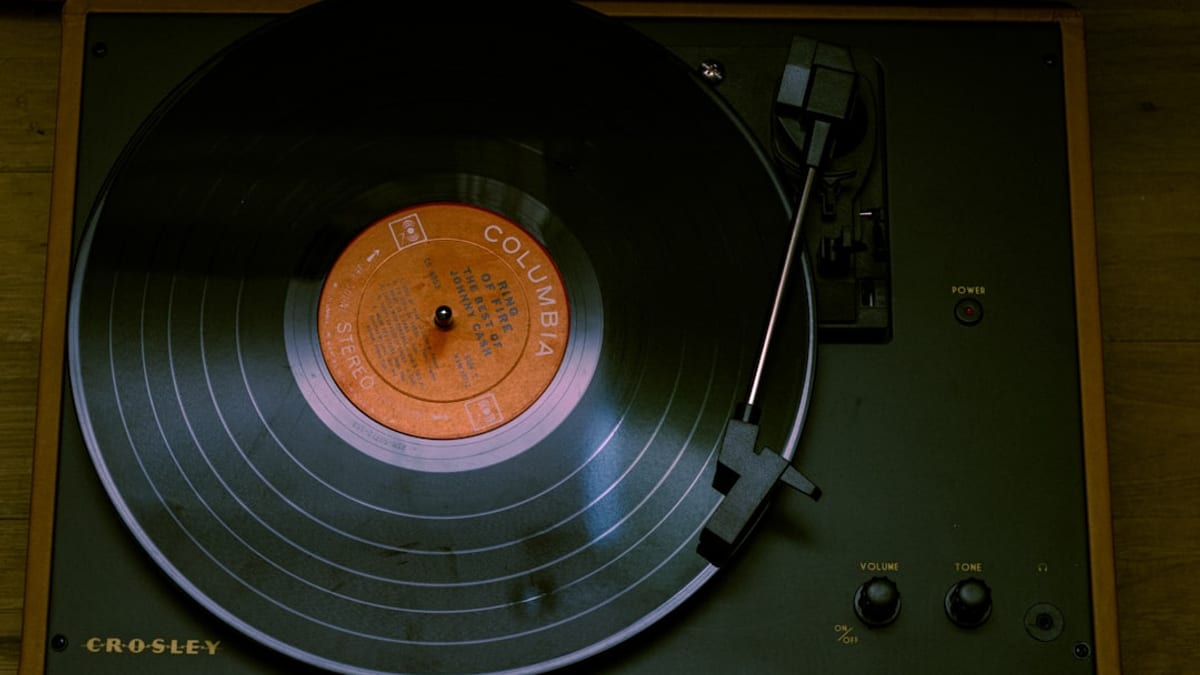
The wait is finally over — sort of
On the 10th of September, 2025, something happened that a great many of us had quietly stopped believing would ever come. Spotify — the platform that has, for better or worse, shaped how most of the world listens to recorded music — began rolling out lossless audio to its Premium subscribers. No price hike. No new tier. No catch buried in the terms of service. Just lossless, delivered as a free upgrade to the plan you already pay for.
Australia was among the initial launch markets, alongside the US, UK, Germany and Japan, with expansion to more than 50 countries in the months that followed. The format: up to 24-bit/44.1 kHz FLAC. The significance: enormous, complicated, and worth unpacking carefully — because the story here is not quite as triumphant as the headlines have suggested, and yet it is also genuinely, meaningfully important. Eight years in the making will do that to an announcement.
A brief, maddening history
Cast your mind back to February 2021. Spotify took the stage and announced "Spotify HiFi" — a lossless audio tier that would launch before the end of that year. The audiophile press cautiously welcomed it. Subscribers who cared about sound quality made hopeful noises. And then, month after month, the feature simply did not arrive. No formal explanation. No revised timeline. Just the occasional vague acknowledgement that it was "still in the works."
Meanwhile, every major competitor moved. Apple Music quietly upgraded its entire catalogue to Lossless and Apple Digital Masters — at no extra cost to subscribers — in mid-2021. Tidal had been offering its HiFi tier for years by that point, later pivoting through the MQA era and beyond. Amazon Music HD became Amazon Music Unlimited and brought lossless along for the ride. Qobuz, the service that serious listeners had quietly championed for years, continued to offer up to 24-bit/192 kHz hi-res streaming. YouTube Music, Deezer, even less obvious players made moves toward higher quality audio.
Spotify, the undisputed market leader with more paid subscribers than its nearest rivals combined, sat at 320 kbps Ogg Vorbis and said nothing useful. For those of us who care deeply about the integrity of a recording — who can tell you the matrix number on a first pressing of a Blue Note album, who agonise over cartridge loading, who have strong opinions about the audibility of jitter — this was a sustained, almost theatrical insult.
More than four years passed between that February 2021 promise and the September 2025 delivery. That is not a delay. That is a different era of the technology industry entirely. To put it in perspective: in that same period, the entire MQA ecosystem rose and then effectively collapsed, spatial audio became mainstream, and the world moved from streaming being a convenience to streaming being the primary way most people engage with music. Spotify let all of that happen while its paying subscribers listened to compressed audio that, in blind tests, is genuinely hard to distinguish from lossless on modest systems — but which is absolutely not lossless.
What you're actually getting
Let's be precise, because precision matters here. The upgrade is from lossy Ogg Vorbis at up to approximately 320 kbps to lossless FLAC at up to 24-bit/44.1 kHz. That is a substantial and real improvement in the information being delivered to your DAC. Where once the codec was discarding data deemed perceptually irrelevant — a process that is remarkably good at psychoacoustic trickery but is still, fundamentally, destructive — you are now receiving a bit-for-bit representation of the audio file as it exists on Spotify's servers.
The 24-bit depth is welcome. It provides headroom well beyond the theoretical noise floor of any real-world listening environment, and it means that the dynamic range of the recording is preserved without quantisation compromise. If you want to understand exactly what bit depth and sample rate mean for your listening experience, our Bit Depth & Sample Rate explainer covers the fundamentals in detail. The short version: more bits mean more dynamic range, and 24-bit is more than sufficient for any music you will ever play back in a domestic setting.
The 44.1 kHz sample rate is where things get more nuanced. This is CD resolution — the same standard that has existed since 1982. It is not hi-res by the industry's current working definition of that term. Apple Music streams content at up to 24-bit/192 kHz for titles mastered at that resolution. Qobuz does the same. Tidal offers similar. Spotify has chosen to cap at 44.1 kHz, which means that even if a recording exists in a higher-resolution master — and a great many do, particularly newer releases and reissues that were transferred from analogue tape at 96 kHz or 192 kHz — you will receive it downsampled to 44.1 kHz.
Does this matter in practice? That is a genuinely contested question. The scientific consensus, grounded in the Nyquist-Shannon theorem, holds that 44.1 kHz captures everything audible to human hearing — the frequency content up to roughly 20 kHz is preserved with full accuracy. Critics of hi-res audio point out, correctly, that most double-blind tests struggle to demonstrate reliable audibility of sample rates above 44.1 kHz on real-world programme material through real-world playback chains. Proponents argue that high-rate masters simply sound better because they were made more carefully, or because the conversion process has more to work with before the final output stage.
I will not adjudicate that debate here. What I will say is that for the vast majority of Spotify's listening base — and for a meaningful proportion of serious listeners — 24-bit/44.1 kHz FLAC is a genuine, audible improvement over 320 kbps Ogg Vorbis, and the absence of true hi-res support is a limitation worth noting rather than a reason to dismiss the upgrade entirely.
Why this matters for the streaming landscape in 2026
The arrival of Spotify Lossless does something that Apple Music, Tidal, and Qobuz could not do on their own: it makes lossless the baseline expectation for mainstream paid streaming. Spotify has somewhere in the vicinity of 250 million paid subscribers globally. Apple Music is substantial but smaller. Tidal and Qobuz are boutique by comparison. When Spotify moves, the centre of gravity of the entire industry moves with it.
This has downstream effects that go beyond bragging rights. Hardware manufacturers — the people making the DACs and network streamers that serious listeners rely on — now have a stronger commercial rationale for building lossless playback into mid-range and even entry-level products. The Spotify integration in network streamers and amplifiers is already ubiquitous via Spotify Connect; if that connection now carries lossless data, manufacturers who have been coasting on Connect's convenience without worrying about output quality will need to pay more attention to their DAC stages. Spotify Connect's architecture and whether it passes the lossless stream transparently is a detail worth watching as the rollout matures.
For Australian consumers specifically, this matters because our market has historically been underserved by some of the more audiophile-focused streaming services. Qobuz, which I have a lot of time for, has had a complicated relationship with the Australian market. Apple Music is well established here, but its integration with third-party hardware — particularly network streamers and non-Apple DACs — can be fussy. Spotify's near-universal hardware support means that lossless streaming is now available on an enormous range of devices that Australians already own, without reconfiguring their setup or changing services.
What your system actually needs to benefit
This is where I want to spend some time, because the internet discourse around lossless streaming has a tendency to treat the codec as the only variable that matters. It is not. A lossless stream decoded by a mediocre DAC, amplified by a noisy integrated, and played through speakers with serious room interaction problems will sound worse than a well-set-up modest system playing 320 kbps. The chain matters, and lossless is simply removing one lossy link from it.
Your Digital-to-Analogue Converter is the first thing to consider. If you are streaming Spotify Lossless from a phone directly into a Bluetooth speaker, you are discarding the lossless advantage the moment you hit Bluetooth's compression. A wired connection — USB, optical, or coaxial — into a capable DAC is necessary to realise any benefit. If you are using a streaming amplifier with a built-in DAC, or a dedicated network streamer feeding an external DAC, you are in a better position, but the quality of the converter stage still determines how much of the improvement you actually hear.
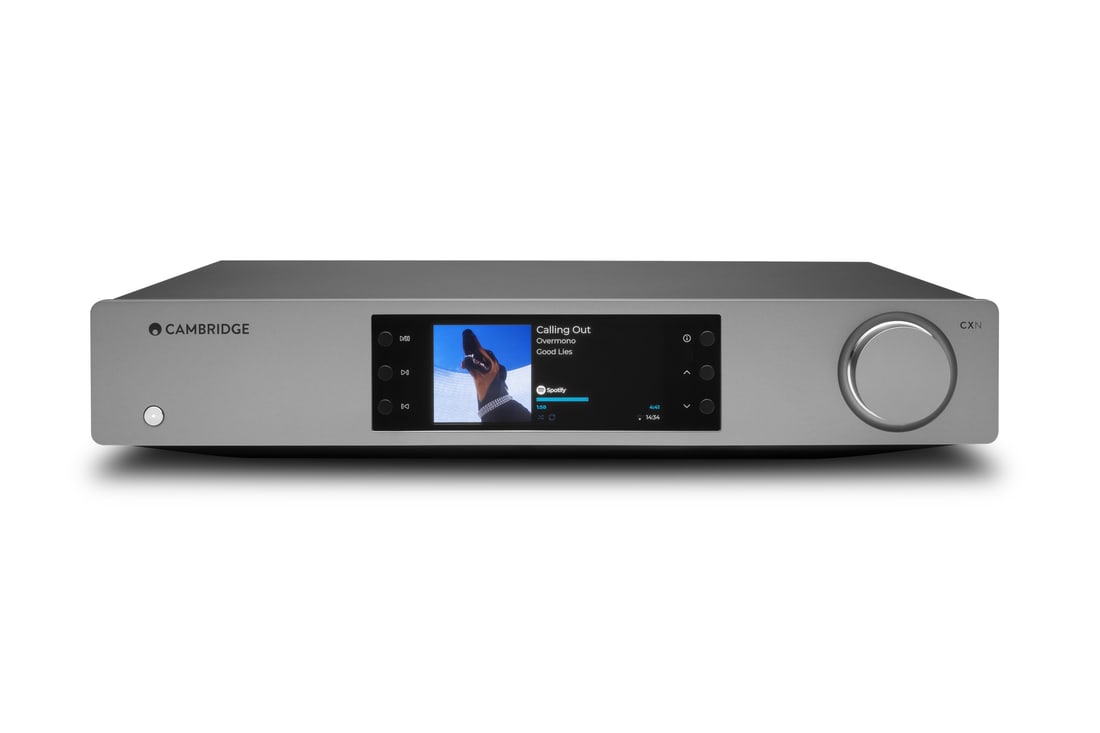
The good news for readers of this site is that the threshold for DAC quality where lossless starts to make a clearly audible difference is not as high as some would have you believe. A competent integrated with a decent DAC section — something like the Naim Uniti Atom, which we have reviewed in depth (check price), or the Cambridge Audio CXN100 — will resolve the difference between 320 kbps Ogg Vorbis and 24-bit FLAC on revealing programme material. You do not need to spend five figures. You do need a system that is not actively bottlenecked at the analogue output stage.
Beyond the DAC, your speakers and room will determine how much of the increased fidelity reaches your ears. A pair of genuinely resolving standmounts — and our guide to the best standmounts for serious listening covers the current field well — will expose differences that a budget bookshelf will simply smooth over. This is not a reason to defer the lossless upgrade until you can afford better speakers; it is a reason to appreciate that improving your source quality and improving your transducers are complementary investments, each making the other more worthwhile.
The vinyl editor's perspective
I should be honest about where I come from here, because my beat is vinyl and valves, and my instinct when Spotify announced HiFi in 2021 was a kind of amused indifference. The music I care most about — prestige jazz pressings, original UK folk rock, the kind of German progressive records that audiophiles trade at prices that would horrify any reasonable person — exists on physical media that streaming services will never faithfully reproduce, because the streaming versions are almost invariably mastered from different sources, at different levels, with different equalization decisions baked in. No codec choice resolves that.
But I also live in the real world, and in the real world I use streaming constantly. For discovery, for background listening, for checking whether a record I am considering buying actually sounds interesting before I commit forty dollars to a second-hand copy. For all of that, the quality of what Spotify was serving prior to September 2025 was genuinely frustrating. The difference between a clean 24-bit FLAC transfer of a well-mastered album and a 320 kbps encode of the same file is not imaginary. It is subtle on modest systems and on lossy headphone connections, but it is real, and on a system of even moderate ambition it is audible on complex, dynamically rich material.
What Spotify Lossless does not do is close the gap between streaming and a well-pressed, well-played vinyl record of the same album. That gap is not primarily a codec gap. It is a mastering gap, a dynamic range gap, a different-philosophy-of-recorded-music gap. But it does mean that Spotify is no longer the weakest link in a streaming chain by virtue of its format choice alone, and that is meaningful progress even for someone whose heart belongs to a Rega and a phono stage.
What to do about it now
If you are a Spotify Premium subscriber in Australia, the lossless option should either be available to you already or will be very shortly — the rollout has been ongoing since September 2025 and Australia was in the first wave of markets. Check your app settings under Audio Quality and enable the highest available option for your connection type (Wi-Fi and wired separately if your app allows it).
Ensure you are actually routing your audio through a path capable of delivering the improvement. Bluetooth is a bottleneck; use a wired or Wi-Fi network streamer connection where possible. If your current streaming setup is a phone into a Bluetooth speaker, the lossless tier will offer you essentially nothing — and that is a reasonable prompt to consider whether investing in a dedicated streaming solution makes sense for your listening. Our guide to streaming amplifiers and all-in-one systems is a sensible starting point for that conversation.
And if you are one of those people who has been holding back from Spotify because the audio quality was genuinely insufficient — and you are right that it was insufficient, and your position was entirely defensible — it is worth revisiting. The catalogue breadth remains unmatched, the interface is mature, and the discovery algorithms, whatever one thinks of their cultural effects, are genuinely effective at surfacing unfamiliar music. Spotify with lossless is a meaningfully different proposition to Spotify without it.
It is still not Qobuz. It is not Apple Music at 192 kHz. It is CD resolution, which is a ceiling with known characteristics and known limitations. But it is lossless, it is free on a plan most listeners already have, and it is available on more hardware in more homes than any competing service. Eight years late, and that still counts for something.
Common questions
- Is Spotify Lossless available in Australia, and do I need to pay extra?
- Yes. Australia was among the initial launch markets when Spotify began rolling out lossless audio on 10 September 2025. The upgrade is free to existing Premium subscribers — no new tier or price increase is required. Enable the highest quality setting in the app's Audio Quality menu to take advantage of it.
- How does Spotify Lossless compare to Apple Music or Qobuz?
- Spotify Lossless tops out at 24-bit/44.1 kHz FLAC, which is CD resolution. Apple Music and Qobuz both offer hi-res streaming at up to 24-bit/192 kHz for titles available in those formats. For most listeners on most systems the difference between 44.1 kHz and 192 kHz is subtle, but if hi-res catalogue access matters to you, Apple Music and Qobuz currently have the edge on maximum resolution.
- Do I need new equipment to hear the difference with Spotify Lossless?
- Not necessarily new equipment, but you do need a signal path that doesn't discard the lossless advantage before it reaches your ears. Bluetooth re-compresses the audio stream, so a wired or Wi-Fi network connection into a DAC — either standalone or built into a streaming amplifier — is required to benefit. Most current network streamers and streaming integrated amplifiers will handle the FLAC stream without issue.
- Why did Spotify take so long to deliver lossless audio after announcing it in 2021?
- Spotify announced 'Spotify HiFi' in February 2021 with an expected rollout before the end of that year, then delayed the feature for more than four years without providing a clear public explanation. The lossless tier finally arrived in September 2025, free to Premium subscribers, making Spotify the last major streaming service to reach lossless quality — well after Apple Music, Tidal, Amazon Music and Qobuz had all implemented comparable or higher-resolution options.

Hello — I'm Priya. I ran a second-hand record shop in Fitzroy for the better part of a decade, which is a polite way of saying I have three thousand records and nowhere to put them. I listen to vinyl through valve amplification because I like the ritual as much as the sound, and yes, I know the measurements aren't perfect — I don't care, and I'll explain why on the page. If you want someone to tell you a turntable is "just a motor and a bearing," I am not your person.
Record collector (3,000+); valve-amp enthusiast; ex record-shop owner
More from Priya Anand
 Turntable and subwoofer in the same room? Here's how to stop the feedback loopA subwoofer and a turntable sharing a room can turn a great pressing into mud. Here's how to place both so bass and vinyl actually get along.
 Turntable in the theatre room: why vinyl and Atmos rarely mix wellVinyl and a dedicated Atmos set-up can share a room, but rarely share a rack. Here's why, and what I'd actually do about it.
 MQA is dead. Here's what that actually means for your streaming serviceMQA's collapse left a lot of confused shelves of "Masters" tier subscriptions. Here's what actually changed, and what to do about it.
- Where a vinyl system's money actually goes: spending in the right orderA former record shop owner on the real spending order for a turntable system, and where extra dollars stop buying you anything.
- Sealed vs ported subs with a turntable in the room: what actually changesPorted subs and suspended timber floors don't always get along with a turntable. Here's how sealed vs ported bass actually behaves when vinyl is in the signal chain.
- Network streamers and vinyl: why I finally stopped fighting the digital sidePriya Anand spent years dismissing streamers as beside the point. Here's what changed her mind — and what a good digital source actually does for a valve-based system.