MQA is dead. Here's what that actually means for your streaming service
A customer walked into the shop — this was years ago now, when I still had the shop — clutching a printout about "unfolding" and asking whether his new DAC could "decode the master." He'd spent four hundred dollars on a streamer specifically for one little logo on the display. I didn't have the heart to tell him what I actually thought of the format at the time. I'll tell you now instead.
MQA, the compression-and-authentication scheme that Tidal built its "Masters" tier around, went into administration in 2023 and the assets were picked up piecemeal afterward. The Tidal Masters catalogue has been winding down since, hardware makers have quietly dropped MQA decoding from new products, and the little unfolding icon that used to light up on so many DAC displays is becoming a museum piece. If you bought into the format, or you're still seeing "MQA" printed on gear at Christmas time, it's worth understanding exactly what happened and why it doesn't actually cost you much.
What MQA was actually trying to do
The pitch, in fairness, wasn't stupid. MQA (Master Quality Authenticated) took a high-resolution file — say 24-bit/192kHz — and folded it down into something that streamed at roughly the bitrate of a 24/48 file, using a technique built around the idea that most of the information above 24/48 or so is inaudible "temporal blur" correction data that could be encoded more efficiently than brute-force PCM. Decoded and "unfolded" by an MQA-licensed DAC, it was meant to hand you back something closer to the studio master than a plain hi-res download, at a fraction of the streaming bandwidth.
The authentication side was the other half of the sell: a green or blue light told you the file had been verified against the master tape or session file, so you knew you weren't listening to a re-sampled MP3 dressed up in a hi-res wrapper. That part genuinely solved a real problem — file provenance in the download and streaming era has always been murky, and I've bought "24-bit" reissues off Bandcamp that were upsampled from a CD source and nobody flagged it.
Where it went sideways was licensing. Every step of the chain — the label doing the encode, the DAC chip doing the unfold, the software doing the render — paid MQA Ltd a fee. That's a lot of hands out for a format whose audible benefit, even MQA's own commissioned research struggled to demonstrate cleanly against a well-implemented plain hi-res or even redbook stream in blind conditions.
Why it collapsed, in plain terms
Two things killed it, and neither was really a conspiracy. First, Tidal itself moved on — it started offering FLAC hi-res streaming (branded HiFi Plus, effectively bypassing MQA) well before the company folded, which tells you what Tidal's own product team thought was the future. Second, the DAC manufacturers who'd paid licensing fees for years started quietly dropping MQA support from new releases because customers had stopped asking for it, and the ongoing royalty on every chip wasn't earning its keep against a plain, open, non-proprietary hi-res FLAC stream that needs no special decoder at all.
Once your two biggest streaming allies — the service and the hardware makers — stop actively pushing something, a proprietary codec doesn't survive on nostalgia. I'd argue the format was always more interesting as a business model than as an audio technology; the compression trick was clever engineering, but "clever" and "necessary" aren't the same thing, and in this case the necessary bit — getting a full-resolution file to a listener — was already solved by better internet connections and cheaper storage before MQA had properly launched.
Does this affect the music you already own?
No, and this is the bit that seems to worry people unnecessarily. If you bought MQA-encoded CDs or downloads over the years, those files still play. They'll just play as their "core" layer — the initial unfold, roughly redbook-equivalent quality — on any modern DAC, because the folded structure sits inside a standard container. You lose the final "authenticated" unfold and whatever marginal benefit that provided, but you were never going to lose access to the music. Nobody's files evaporated.
If you're still streaming through Tidal, check what tier you're actually on and what format it's serving. The service has been migrating people off Masters and onto its FLAC-based hi-res tier for a while now, and for most listeners that's a straightforward, audible non-event — arguably an improvement, since you're no longer relying on a specific decoder chip in your DAC to unlock the full file.
What actually matters now if you're buying a DAC or streamer
Ignore MQA compatibility entirely as a purchase criterion. It was never really the thing worth paying for, and now it's actively a dead feature — support for it in new hardware is disappearing, and even where it lingers it's decoding a shrinking catalogue. What you should actually be checking:
Format support that matters going forward is boring and that's the point — FLAC, ALAC, WAV, and DSD if you're into SACD rips, all handled without licensing drama because they're open or at least widely implemented without per-unit royalties. Network protocol support matters more day to day than any codec: does the unit do proper Roon endpoint duty, AirPlay, Chromecast built-in or UPnP, whatever ecosystem you're actually in. And bit-perfect playback through to a genuinely well-implemented DAC stage matters far more than any "hi-res" badge on the box — we've written about why the DAC chip on the spec sheet is mostly marketing in our piece on the best DACs and network streamers, and the short version carries over here: implementation beats acronym every time.
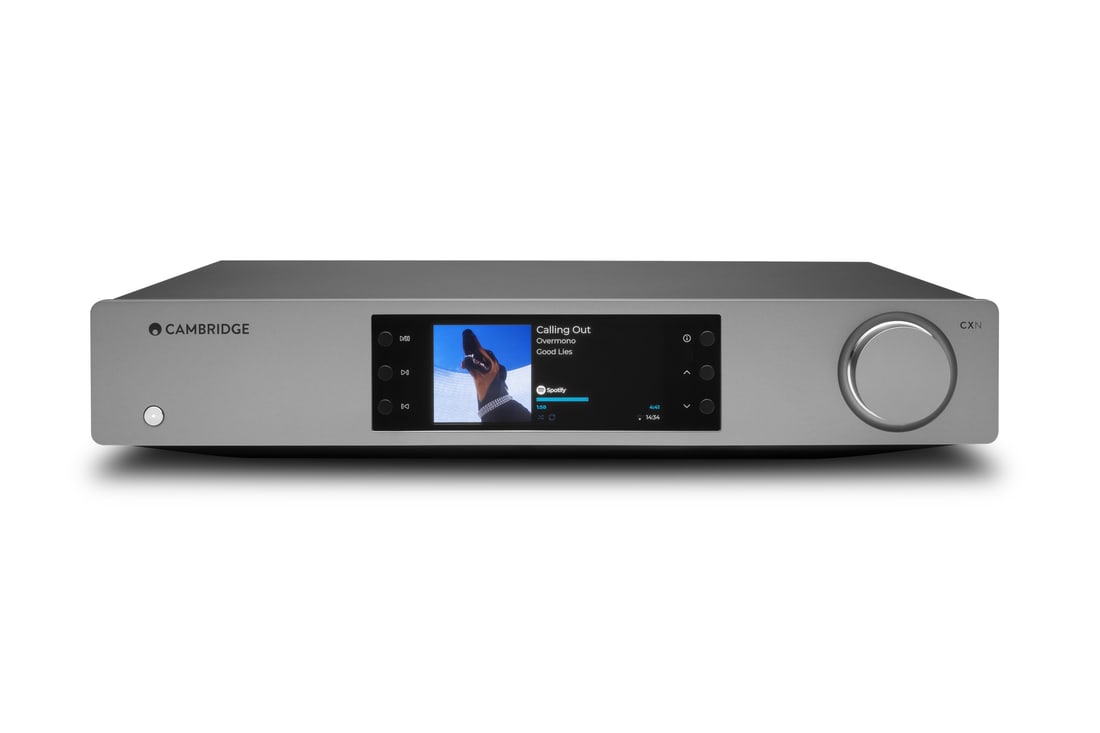
If you're shopping in this space right now, something like the WiiM Ultra (check price) or the Cambridge Audio CXN100 (check price) gets you full multi-format streaming without any MQA baggage one way or the other, and a desktop unit like the RME ADI-2 DAC FS (check price) was never in the MQA camp to begin with and hasn't suffered for it. None of these needed a licensed unfold to sound proper.
The hi-res myth that MQA leaves behind
The bigger, more useful lesson from all this isn't about MQA specifically, it's about hi-res marketing generally. The Audio Engineering Society and plenty of controlled listening research over the years have struggled to find reliable, consistent, blind-tested evidence that 24/192 files sound different from a well-mastered 16/44.1 file through the same DAC and system, at normal playback levels, on typical mastered pop and rock material. Where hi-res genuinely helps is in production headroom and in classical or acoustic recordings mastered without the loudness-war compression that's crushed a lot of mainstream mastering since the 90s — but that's a mastering-quality story, not strictly a sample-rate story, and MQA's whole authentication pitch traded on blurring that distinction.
I'll admit I fell for some of this myself for a couple of years — bought "hi-res" reissues of records I already owned on vinyl, told myself I could hear the extra top end, and eventually did an honest A/B on my own system and couldn't reliably pick it blind more than chance would predict. That was a useful, slightly deflating afternoon. It didn't make me love the records less. It just made me stop paying a premium for a number on a spec sheet.
What to actually do with your gear right now
If you own a DAC with an MQA light on the front, nothing changes today — use it exactly as you have been, it'll keep working on whatever's still encoded that way. Don't go buying a "future-proof" replacement out of panic; the file format graveyard is full of things people paniced about and then just... kept using for another decade. SACD's still spinning in plenty of lounge rooms.
If you're choosing a new streamer or DAC, spend the MQA-licensing-line-item you're no longer paying for on something that actually moves the needle: a better power supply, a proper volume control if you're running it direct into an amp, or just a unit from a brand with a track record of long-term firmware support, which matters more for longevity than any single codec ever did. The best desktop DAC/amps guide runs through several current options that never bothered with MQA licensing and sound none the worse for it.
And if you're building a whole front end around network audio rather than just a single box, it's worth reading how the control layer shapes the actual experience day to day — see our comparison of Roon, Linn Kazoo and Lumin-style ecosystems, because in practice you'll interact with that software more often than you'll ever think about which codec unfolded which file.
Where this leaves the format wars generally
MQA's collapse is a reasonably clean case study in what happens when a proprietary layer tries to insert itself into a chain that was already working fine without it. Redbook CD quality, properly mastered and played through a competent DAC, has never really been the bottleneck in most home systems — the room, the speakers, and frankly the quality of the original recording matter enormously more. That's not a nostalgic vinyl-lover's dig at digital, by the way; it's the same argument Marcus makes about amplifier measurements around here, and it holds up. The weak link is rarely the format.
I still spin records most nights, valve amp warming up, because I like the ritual and I've made peace with the tradeoffs. But my streaming setup for the nights I don't feel like flipping sides is just a straightforward FLAC-capable box feeding a DAC I bought because it measured well and sounded honest, not because a light on the front told me it was authenticated. That, in the end, is the whole lesson MQA leaves behind.
Common questions
- Will my old MQA files stop working now that the company has gone into administration?
- No. MQA-encoded files still play back — you'll get the base-layer quality (roughly CD-equivalent) rather than the full authenticated unfold, but nothing you've bought disappears or becomes unplayable.
- Should I avoid buying a DAC that still lists MQA support?
- It's not a dealbreaker either way, but don't pay a premium for it. Treat MQA decoding as a legacy feature rather than something to prioritise — judge the DAC on its actual implementation, format support and build quality instead.
- Is hi-res streaming still worth paying extra for without MQA?
- Often yes, but for the mastering quality that sometimes comes with hi-res releases rather than the sample rate itself. A well-mastered CD-quality FLAC will frequently sound better than a loudness-compressed hi-res file of the same track.
- What replaced MQA on Tidal?
- Tidal has been serving FLAC-based hi-res streaming (its HiFi Plus tier) which doesn't require a licensed decoder chip in your DAC, unlike MQA's folded format.

Hello — I'm Priya. I ran a second-hand record shop in Fitzroy for the better part of a decade, which is a polite way of saying I have three thousand records and nowhere to put them. I listen to vinyl through valve amplification because I like the ritual as much as the sound, and yes, I know the measurements aren't perfect — I don't care, and I'll explain why on the page. If you want someone to tell you a turntable is "just a motor and a bearing," I am not your person.
Record collector (3,000+); valve-amp enthusiast; ex record-shop owner
More from Priya Anand
- USB vs S/PDIF for DACs: does the digital input matter?USB, coaxial and optical into a DAC: which digital input actually changes the sound, and when the difference is real versus imagined.
- Qobuz vs Tidal for your record collection's digital halfQobuz vs Tidal compared for vinyl collectors who want a digital half that matches their records, not just a bigger catalogue.
 Why a subwoofer makes a valve system sound more honestAdding a subwoofer to a valve amp system can tighten bass, cut distortion and let low-power tubes sing. Here's how to do it properly.
- Tidal vs Qobuz vs Apple Music: which one actually suits a valve systemStreaming services aren't interchangeable once you're running valves. Here's how Tidal, Qobuz and Apple Music actually behave through a warm front end.
 Speaker matching to valve amps: sensitivity beats watts every timeWhy sensitivity, not power output, decides whether a valve amp and speaker pair actually works together — and how to read a spec sheet properly.
- Your phone's volume slider is quietly re-encoding your musicTurning your phone down before a Bluetooth speaker or DAC often re-processes the digital signal. Here's what's actually happening, and when it matters.