Network streamers and vinyl: why I finally stopped fighting the digital side
For a long time, my position on network streamers was simple: not my problem. I had a turntable, a phono stage, two valve amplifiers, and somewhere north of three thousand records stacked in a Fitzroy terrace. Digital was what happened when the shop closed and I needed background music on my phone. That was fine. I wasn't listening seriously.
Then I spent a week at a friend's place in Daylesford — her system is built around a good integrated valve amp and a pair of stand-mounts, vinyl front-end much like mine — and she had a WiiM Ultra feeding a separate DAC into the same chain. I sat down expecting to feel smug. I did not feel smug. The streaming source was genuinely, annoyingly good. Not "good for digital." Good.
So I started paying attention. And what I found is that the digital source question is much more interesting than I'd given it credit for — especially for people like me who care more about the analogue end but can't pretend streaming doesn't exist.
Why the source still matters (even into a valve amp)
There's a lazy version of the valve-audio worldview that goes: valves are so euphonically coloured that the source barely matters. Feed it anything, the output stage will smooth it out. I used to half-believe this. I was wrong.
Valve amplifiers — particularly single-ended triode designs and low-feedback push-pull amps — don't mask poor sources, they magnify them. The resolution at the output is only as good as what went in. A bright, digitally hard-sounding source stays bright and hard-sounding; the second harmonic colouration of a good 300B output stage adds its own thing on top, but it doesn't subtract the edge. What you end up with is layered distortion, not a cure.
Good digital sources matter into valve amps for the same reason good cartridges matter. The signal path is transparent enough — and the listening mode intense enough — that source quality is audible all the way to the end.
What a network streamer actually is (past the marketing)
Strip it back: a network streamer is a computer that receives audio data over your local network, handles the decoding and buffering, and outputs a digital signal (usually via coaxial, optical or USB) to a DAC — or, in integrated units, converts to analogue itself. The software layer handles service authentication (Tidal, Qobuz, Spotify, local NAS), decoding, and sometimes volume.
The variables that matter are the quality of the digital output (which comes down to clock quality and noise isolation from the device's internal power supply and processor), what DAC chip or conversion stage is used if it's integrated, and what software environment sits on top. That last one matters more than people expect — a jittery, poorly buffered software implementation can make a hardware chain sound worse than its components suggest.
There's a useful comparison of dedicated digital hardware in our guide to the best DACs and network streamers, which covers a broader range of budget and topology than I'll get into here. Worth reading alongside this if you're actively shopping.
The DAC question when you already have a valve preamp
Here's where it gets specific for valve system owners. A lot of people buy an all-in-one streamer/DAC, run it into their valve integrated's line input, and wonder why it sounds slightly digital and lean. Sometimes the issue is the DAC itself. Sometimes it's output impedance mismatch. But often it's the analogue output stage of the streamer unit — which is typically solid-state, sometimes opamp-based — colliding with a valve input stage that has expectations about source impedance and output voltage.
There are two clean solutions. First, a dedicated streamer (transport only) paired with a separate DAC whose analogue output stage you've chosen deliberately. Second, a streamer/DAC whose output stage is genuinely well-engineered — the RME ADI-2 DAC FS (check price) is a useful reference point here; its output impedance is low enough and its voltage swing flexible enough that it plays nicely into high-impedance valve inputs without drama.
The WiiM Ultra (check price) is interesting because it bridges the price gap — it offers RCA and coaxial output, and if you feed its coaxial output into a separate DAC rather than using its onboard conversion, you're getting a very capable transport for a modest outlay. That's the use case I ended up with at my friend's place in Daylesford, and it's hard to argue with the value.
Hi-res: what it actually changes and what it doesn't
I'll be honest — I was the wrong person to ask about hi-res for years because I assumed it was marketing designed to sell me something I already owned on vinyl. And partially, I was right. A lot of what gets sold as 24-bit/192kHz is either upsampled from a 16/44.1 master or sourced from a master that was recorded, edited and mixed at 24/48 for cinema, then presented as a pure audiophile artefact. The resolution isn't meaningless, but the numbers are frequently misleading.
That said — and this is genuinely something I had to update my view on — the difference between a well-mastered 24/96 file and its 16/44.1 equivalent isn't purely theoretical. The 24-bit depth gives more dynamic range headroom in the recording chain, and while 44.1kHz is theoretically sufficient for the 20Hz–20kHz range, higher sample rates push the noise floor of the conversion process further out of band. Whether that translates to audible improvement depends on the rest of your chain and, honestly, on the mastering.
Qobuz's library of high-resolution FLAC in Australia has grown substantially. I've compared the same album — particularly classical and jazz recordings where dynamic range tells you the most — in 16/44.1 versus 24/96 on the same chain, and the better masters do have more ease and space. But the biggest variable is always the master, not the resolution spec attached to it. A dynamically crushed 24/96 file sounds worse than a well-mastered 16/44.1. Every time.
The article streaming service audio quality settings covers what each platform actually sends to your DAC in more technical detail — worth checking if you're trying to work out what you're actually hearing versus what the marketing says.
Jitter, clocking and why people argue about this more than they should
Jitter — timing errors in the digital clock — was a genuine problem in early digital audio and in poorly implemented consumer gear. The short version is that DACs need a consistent clock to reconstruct the analogue signal accurately; jitter introduces a kind of phase noise that can manifest as a slightly smeared or gritty high-frequency quality.
Modern asynchronous USB DACs and well-implemented S/PDIF receivers largely solve this at the DAC end by re-clocking incoming data with their own master clock, regardless of what the source sends. This is why the "transport sound" debate has narrowed — if the DAC is re-clocking properly, the transport's clock quality matters less than it used to.
Where clock quality still matters is in systems that don't use async re-clocking, and in very high-end setups where word clock synchronisation across multiple devices is used. For most home systems feeding a single DAC via coaxial or USB, the DAC's own clock architecture is the dominant variable — not the streamer's. Choosing a DAC with a good, low-jitter internal clock (or an external clock input if you're going very deep) is more productive than obsessing over the transport.
Practical choices for a valve-forward system
My current answer, after more time with this than I intended to spend, is to keep the source simple and spend the money at the DAC end. A dedicated streaming transport in the $300–800 range fed into a genuinely good DAC — one whose analogue output stage is designed with care — will usually beat an all-in-one at the same total price. The WiiM Ultra as transport into something like the RME ADI-2 is a combination I'd recommend to anyone who wants to take streaming seriously without building a new system around it.
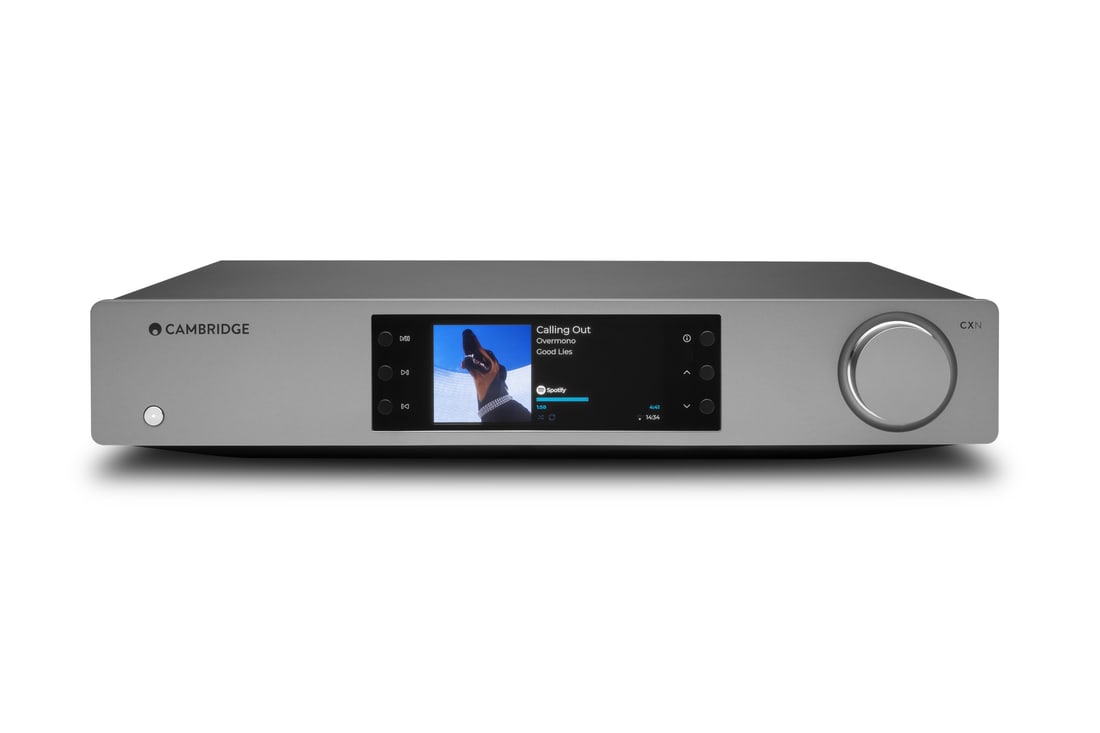
If you want to go further up the ladder, the Cambridge Audio CXN100 (check price) is a well-regarded integrated streamer/DAC that handles the analogue output with enough care to sit comfortably upstream of a valve integrated. I've spent a fair bit of time with it and it doesn't do the lean-and-digital thing that plagues cheaper all-in-ones.
For amplifiers with a DAC input already built in — and there are more of these than there used to be — something like the McIntosh MA352 (check price), which combines valve output stages with solid-state input circuitry and USB DAC capability, sidesteps the matching question neatly. It's expensive, but the topology is unusual enough to be worth understanding if that's the direction you're heading. Our hybrid amplifier coverage goes further into that if you're curious.
What I actually do now
The turntable is still the primary source. I'm not going to pretend otherwise, and I'd be suspicious of any version of me that did. But the streamer is in the rack, and it feeds a dedicated DAC, and when it's late and I don't want to get up and flip a record, I'm not listening to something worse. That matters.
The thing I'd push back on — gently — is the idea that taking streaming seriously is somehow a concession. My records sound better to me because I've learned what a well-implemented digital chain sounds like. The contrast is instructive. Knowing what digital does well (low noise floor, perfect channel tracking, no surface noise, consistent level) has made me more aware of what vinyl does well (timing, body, the particular harmonic envelope of a well-cut groove). They're complementary, not competing.
If you're building or extending a streaming side and want to understand the broader range of hardware options, our full guide covers a lot of ground. But the short version is: spend on the DAC, keep the transport sensible, and don't let anyone sell you on hi-res numbers until you've heard the mastering.
— Priya Anand, Vinyl & Valves Editor
Common questions
- Do I need a separate DAC if my streamer already has an analogue output?
- Not necessarily, but it depends on the quality of the streamer's built-in conversion stage. Many affordable all-in-one streamers use cost-reduced DAC chips and opamp output stages that can sound thin or bright into a high-quality downstream amplifier — particularly a valve integrated with a sensitive, high-impedance input. A dedicated DAC gives you more control over the analogue output stage and often sounds more cohesive. If budget is tight, using your streamer's digital output (coaxial or USB) into a better standalone DAC is often more effective than buying a more expensive all-in-one.
- Is hi-res streaming actually better than 16-bit/44.1kHz CD quality?
- Sometimes, but the mastering matters far more than the resolution spec. A well-mastered 24/96 file has genuine advantages — more dynamic range headroom in the recording chain, and the noise floor of the conversion process pushed further out of band. But a dynamically compressed or poorly mastered 24/192 file will sound worse than a well-mastered CD-resolution equivalent. When comparing hi-res and standard-res versions of the same release on streaming services, check whether they share the same master before attributing any difference to bit depth or sample rate.
- Does a network streamer sound different from playing the same files off a USB drive or NAS?
- In principle, no — digital is digital, and a well-implemented async USB DAC or S/PDIF receiver re-clocks incoming data regardless of the transport. In practice, differences people hear often trace back to software implementation (buffering, noise from a noisy PC USB bus, software volume applied somewhere in the chain) rather than anything fundamental about the network. A dedicated streaming transport is typically quieter electrically than a general-purpose computer, which can make a small but real difference in sensitive systems.

Hello — I'm Priya. I ran a second-hand record shop in Fitzroy for the better part of a decade, which is a polite way of saying I have three thousand records and nowhere to put them. I listen to vinyl through valve amplification because I like the ritual as much as the sound, and yes, I know the measurements aren't perfect — I don't care, and I'll explain why on the page. If you want someone to tell you a turntable is "just a motor and a bearing," I am not your person.
Record collector (3,000+); valve-amp enthusiast; ex record-shop owner
More from Priya Anand
- USB vs S/PDIF for DACs: does the digital input matter?USB, coaxial and optical into a DAC: which digital input actually changes the sound, and when the difference is real versus imagined.
- Qobuz vs Tidal for your record collection's digital halfQobuz vs Tidal compared for vinyl collectors who want a digital half that matches their records, not just a bigger catalogue.
 Why a subwoofer makes a valve system sound more honestAdding a subwoofer to a valve amp system can tighten bass, cut distortion and let low-power tubes sing. Here's how to do it properly.
- Tidal vs Qobuz vs Apple Music: which one actually suits a valve systemStreaming services aren't interchangeable once you're running valves. Here's how Tidal, Qobuz and Apple Music actually behave through a warm front end.
 Speaker matching to valve amps: sensitivity beats watts every timeWhy sensitivity, not power output, decides whether a valve amp and speaker pair actually works together — and how to read a spec sheet properly.
- Your phone's volume slider is quietly re-encoding your musicTurning your phone down before a Bluetooth speaker or DAC often re-processes the digital signal. Here's what's actually happening, and when it matters.