Streamers under $500: do you really need to spend more?
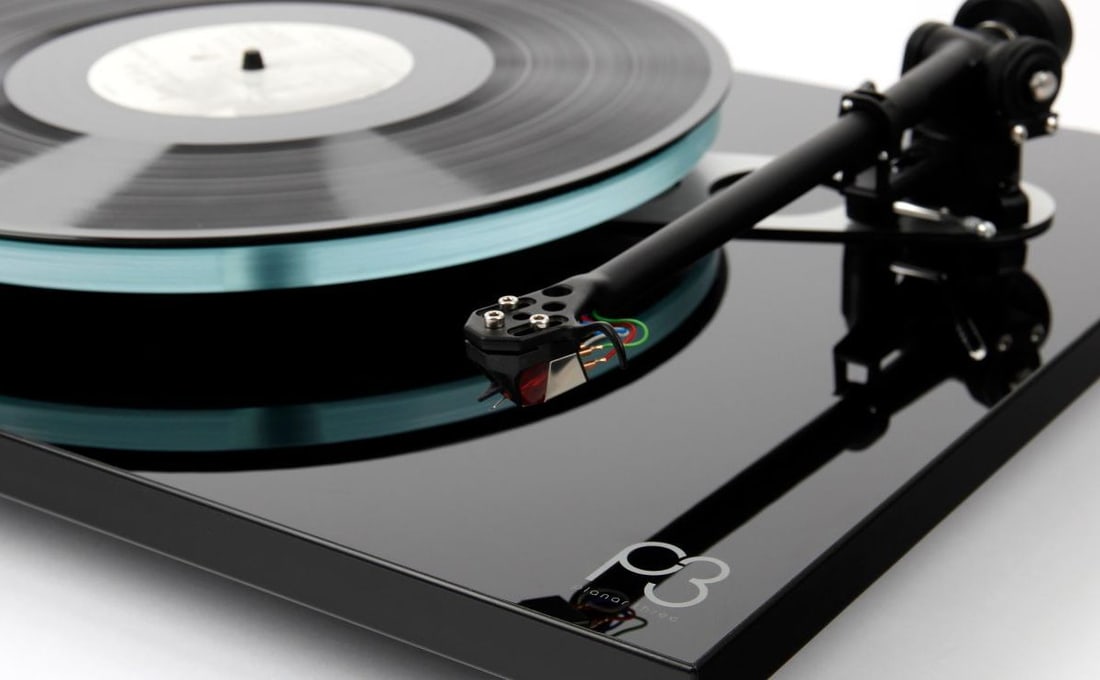
Last month I was at a mate's place in Burleigh Heads, sitting in front of a system that cost him north of $12,000, and the streamer feeding it was a $299 box he'd bought on a whim. He was slightly embarrassed about it. He shouldn't have been. It sounded excellent.
That scenario plays out constantly in the Australian market, and it raises an honest question: at what point does spending more on a network streamer actually buy you something you can hear? Because the gap between a $300 streamer and a $1,500 one is not the same gap as between a $300 DAC and a $1,500 DAC. The maths is different, and most of the high-end audio press won't tell you that plainly enough.
So let me have a crack at it.
What a network streamer actually does
Strip it back to basics: a streamer receives audio data over a network, decodes any container format (FLAC, AAC, whatever the streaming service is pushing), and passes the digital signal downstream — either via USB, coaxial, optical or AES/EBU — to a DAC, or converts it internally if it has one built in.
The actual act of receiving and decoding that data is, in 2024, cheap. Really cheap. The same system-on-chip families that power budget media players handle lossless FLAC, 24-bit/192kHz files and Tidal Connect without breaking a sweat. The silicon cost difference between a $250 streamer and a $2,000 streamer is probably $8.
So where does the money go as you climb the price ladder? Three places: the clock, the output stage, and the software. Sometimes a fourth: the case and the badge. Let's be honest about that fourth one too.
Clocking and jitter — the real technical argument for spending more
Here's the one area where I'll grant the expensive-streamer camp a genuine point. Jitter — timing irregularities in the digital output — is real, and a well-engineered clock makes a measurable difference to the signal leaving the box via S/PDIF or AES. Budget streamers often use cheaper oscillators with higher phase noise.
But — and this is the part the forum crowd skip over — if you're sending USB audio to a modern asynch DAC, the receiving DAC re-clocks the signal with its own master clock anyway. The incoming jitter is largely rejected. S/PDIF is a different story; that interface is more jitter-sensitive because the clock is embedded in the data stream itself.
The short version is: pair a cheap streamer with a competent DAC over USB and the clock in the streamer matters a lot less than the specs sheets suggest. Theo covered the USB async side of this in detail in our DACs and network streamers guide if you want the full picture.
The software question — and this is where budget gear can genuinely hurt you
I'll be straight: software is the biggest real-world problem with cheap streamers, and it's the thing that never shows up in a frequency response plot.
Budget streamers often ship with custom firmware that's halfway abandoned six months after launch. Tidal Connect works fine on day one, then a Tidal API change breaks it, and the manufacturer never pushes a fix. I've had this happen to me twice with sub-$300 boxes. It's infuriating, and it's a legitimate reason to be cautious about no-name Chinese hardware regardless of how good the specs look.
The streamers that hold their value — in usability, not just resale — tend to be from outfits with a track record of long-term firmware support. Cambridge Audio, WiiM, Bluesound and Volumio-based devices have all demonstrated reasonable commitment here. That's not a guarantee, but it's a better bet than an unknown brand shifting units through a grey-market distributor.
The Cambridge Audio CXN100 (check price) sits around the $1,500 mark in Australia and is, in my view, about as far as most people need to go for a dedicated streamer — and a lot of people don't need to go that far. The WiiM Pro Plus, at roughly a quarter of that price, supports Tidal Connect, Spotify Connect, AirPlay 2, Amazon Music and has a surprisingly capable built-in DAC. It's not perfect. The app is slightly clunky and the output stage is modest. But the data it fetches from the network and hands to your DAC? Fine. Genuinely fine.
Where the money goes above $500
I want to be fair to the pricier end here, because there are real engineering differences — I just want to be clear about which ones translate to audible improvements under real listening conditions.
Galvanic isolation between the network and audio circuitry is one thing that's done more carefully in mid-to-high-end streamers. Network interfaces carry noise — switching power supplies in routers, ground loops through Ethernet — and better-designed streamers invest in proper isolation transformers and separate power rails for the audio section. This matters more in some installations than others. If your router is three rooms away and your streamer runs on a linear PSU, it probably matters very little. If your rack is a mess of switching supplies sharing a power board, it matters more.
Better femtoclock oscillators — the kind you find in the Naim NDX 2, the Lumin range, or the network boards Rega uses — do produce cleaner S/PDIF output. If you're using coaxial or optical into an older or more jitter-sensitive DAC, this becomes more relevant.
And then there's the analogue output quality, which matters enormously if you're using the streamer's built-in DAC section rather than running digital out to a separate box. The gap between a $350 streamer's analogue output and a $1,500 unit's analogue output is often very real, because that's where the money genuinely goes — better op-amps, better filtering, better power supply decoupling on the output stage.
The use case that actually changes the calculus
Here's where I'll flip my own argument slightly. If you're running a streamer straight into an integrated amp with no separate DAC in the chain — using the unit's own analogue output — then the quality of the built-in conversion stage matters a lot. In that configuration, a $350 WiiM going into the analogue input of something like a Marantz Model 40n (check price) is leaving performance on the table that a better-specced unit would recover.
But if you've already got a quality external DAC — a Chord Mojo 2, a decent iFi unit, or anything better — then the streamer's job is just data transport. And data transport, as I said at the top, is cheap to do well in 2024.
All-in-one systems complicate this further. The Naim Uniti Atom (check price) is a streamer, DAC, preamp and power amp in one box, and at that level the engineering is genuinely integrated in a way that a bolt-together cheap-streamer-plus-mid-range-DAC system doesn't replicate. When the whole chain is designed together, with shared clock references and matched output stages, there are real benefits. It's just a very different purchase decision — you're buying a system, not a source component.
My honest shortlist for Australian buyers
Under $400: the WiiM Pro Plus. I'd use it with a separate DAC via USB or coaxial. The app has improved substantially over the last year and the ecosystem support — Tidal, Qobuz, Spotify, AirPlay 2, Roon Ready — is as complete as anything at twice the price. It's not romantic hardware. It looks like a broadband modem. I don't care.
$400–$800: the Bluesound Node (current generation). Better app, better build quality, multi-room integration via BluOS if you're running more than one zone. The built-in DAC is competent enough for most systems. Firmware support from Bluesound has been solid for years, which matters.
$800–$1,500: this is the zone where I'd be asking hard questions. You're often paying for aesthetics, brand cachet, and incremental refinements. Not nothing — but if the budget is tight, this is the range I'd skip. Put the extra $700 into the DAC or the speakers.
Above $1,500: if you're here, you probably already have a sense of what you're after. The Cambridge CXN100 is genuinely excellent. So are the Lumin U2 Mini and the Rega Network Player. These make real sense if you're running high-quality separates and want a streamer that won't be the limiting factor in any meaningful way.
The hi-res myth that won't die
One last thing, since we're here: the streamer you use doesn't unlock some special hi-res quality that a cheaper one locks away. If both units support 24-bit/96kHz output — and virtually all current streamers do — the difference in audio data delivered to your DAC is zero. The file is the file. A expensive streamer fetching a 24/96 FLAC from Qobuz is delivering exactly the same bits as a cheap one fetching the same file.
The audible differences, when they exist, come from jitter, noise, output stage quality and — most practically — software reliability. Not from some ineffable quality of the hardware that only reveals itself to $2,000 boxes.
For a deeper look at the hi-res claims specifically, Marcus covered the bit depth vs sample rate question properly in our streamers guide, and it's worth a read if you want the measurements behind the folklore.
The bottom line: a $299–$400 streamer feeding a decent DAC will get you somewhere around 90% of what a $2,000 streamer gets you, in most real-world systems. That remaining 10% is real, and if you've got the budget and the ears and the system to reveal it, go for it. But most people spending $300 on a WiiM and putting the rest into better speakers or a better DAC will end up with a better-sounding system overall. And that's always been the point.
— Dave Okafor, Value & Giant-Killers Contributor
Common questions
- Does an expensive network streamer sound better than a cheap one if I already have a good external DAC?
- Usually the difference is small. If you're running digital out (USB, coaxial or optical) to a competent external DAC that re-clocks the signal, the streamer's clock quality matters far less. The bigger practical differences are in software reliability, long-term firmware support, and output noise isolation — not in the audio data itself.
- What should I look for when buying a budget streamer in Australia?
- Prioritise streaming service compatibility (Tidal Connect, Spotify Connect, Qobuz, AirPlay 2), a track record of firmware updates from the manufacturer, and the output type that suits your system — USB if going to an async DAC, coaxial if your DAC prefers that. The WiiM Pro Plus and Bluesound Node are the two most consistently recommended options in the under-$800 range for Australian buyers.
- Is it worth buying a streamer with a built-in DAC?
- Depends on your system. If you're running straight into an analogue input on your amp, the built-in DAC quality matters a lot — and here cheaper units can show their limits. If you already own a good standalone DAC, the built-in conversion is irrelevant; use the digital output instead and save money on the streamer.
- Do budget streamers support hi-res audio like 24-bit/96kHz?
- Yes, virtually all current streamers — including units under $400 — support 24-bit/96kHz and most support 24-bit/192kHz. The audio data fetched from a streaming service or local NAS is identical regardless of whether the box cost $300 or $3,000. Audible differences come from clock noise, output stage quality and software reliability, not from hi-res capability.

I'm Dave, and I'm the cheapskate of the team — and proud of it. My whole thing is finding the gear that punches three times above its price, the so-called "giant-killers," because most people don't have forty grand for a system and shouldn't feel bad about it. I've heard the megabucks stuff, and a lot of it is gloriously good; I've also heard $800 setups that get you 85% of the way there. I'll always tell you where the law of diminishing returns kicks in.
Lifelong bargain-hunter; budget-to-midfi specialist
More from Dave Okafor
 Bridging stereo amps to mono: a giant-killer's real costBridging a stereo amp to mono can double your power for cheap, but impedance, current limits and heat change the maths. Here's the real cost.
 Matching speaker and amp cost: ignore the price-parity mythForget the old rule of matching speaker and amp cost dollar-for-dollar. Here's what actually decides a good pairing, and why it isn't price.
 Turntable mats and platters: what actually changes the soundFelt, rubber, cork or acrylic — turntable mats and platter materials change the sound more than most upgrades. Here's what actually works.
- Buying a demo unit: the giant-killer move retailers hateEx-demo hi-fi gear can save 20-40% with near-zero risk. Here's how to actually negotiate it, what to check, and when to walk away.
- Flutter echo: the room fault that sounds like nothing's wrongFlutter echo blurs detail in parallel-wall rooms without obvious boom. Here's how to find it cheaply and kill it without over-treating.
- Amp power ratings into 8 vs 4 ohms: the spec sheet trapWhy an amp's 4-ohm wattage figure can mislead buyers, and how to actually match power output to real speaker loads on a budget.