Subwoofer DSP: how to use digital signal processing to fix your bass
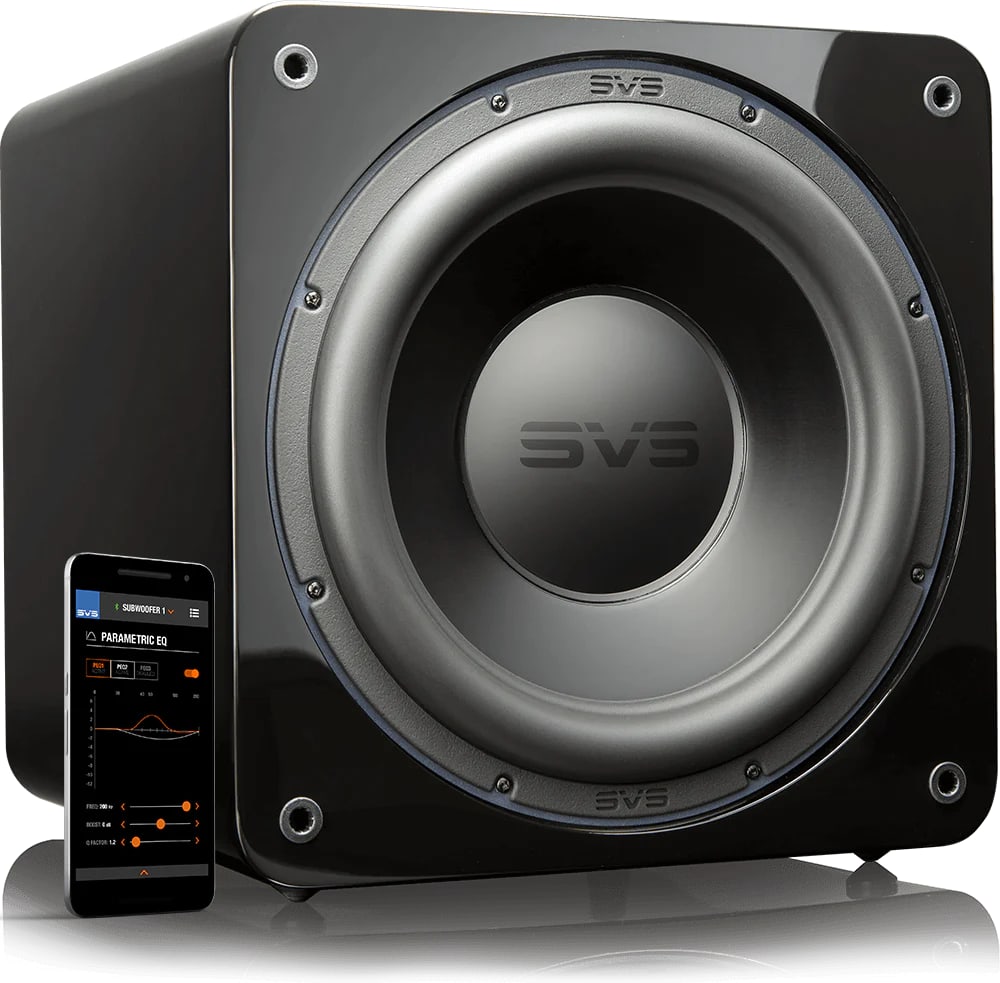
Forty-eight hours before I published this, I was staring at a REW waterfall plot with a 14 dB peak at 63 Hz and a 9 dB null at 47 Hz — in a room where I'd already moved the sub three times. Placement had helped. It hadn't fixed it. That's the honest limit of the physical approach, and it's where DSP earns its keep.
We've already covered subwoofer placement and the basics of subwoofer bass EQ elsewhere on this site. This piece sits between those two: it's specifically about understanding what DSP tools do under the hood, why some approaches work and others create new problems, and how to use them in sequence without chasing your own tail.
Why room acoustics defeat placement alone
Below roughly 300 Hz — lower for smaller rooms — your room stops behaving like a listening space and starts behaving like a resonant cavity. Pressure builds at room boundaries, nodes form at predictable points based on room dimensions, and the result is frequency response that varies by 20 dB or more across a distance of half a metre. No amount of careful placement fully resolves this because the room modes are structural. You're fighting physics.
DSP doesn't change the physics. What it does is apply corrective filters — EQ, delay, and sometimes phase manipulation — to the electrical signal before it reaches your amplifier and driver. Done well, this means the driver puts out a signal that, when the room acts on it, produces something closer to flat pressure at your listening position. Done carelessly, it just moves the problem around or clips your amp.
I'll admit I got the order wrong for years. I used to EQ first and place second. That's backwards. Always optimise placement first — even if imperfect — then use DSP to address what's left.
The three things DSP actually does to your bass signal
Strip away the marketing language and virtually every subwoofer DSP tool — whether it's a dedicated unit, software like REW, or the room correction built into your AVR — is applying some combination of three operations.
Parametric EQ adjusts the level at specific frequencies. A parametric band has three parameters: centre frequency, gain (boost or cut), and Q (how wide or narrow the band is). This is your workhorse for taming peaks. It cannot create bass energy where there is none — it can only attenuate what's there, or boost up to the driver's mechanical limits.
Delay shifts the sub's output in time relative to your main speakers. This matters at the crossover point where sub and mains overlap. If the sub's output arrives 8 ms late at your listening position (because it's physically further away, or because of processing lag), the overlap region will suffer partial cancellation. Delay correction — sometimes called time alignment — fixes this. Most AVRs handle it automatically during calibration. Standalone subs like the SVS SB-3000 (check price) offer manual trim adjustments.
Phase adjustment is where things get genuinely complicated. Phase and delay are related but not identical. A 180° phase switch — the one on the back of your sub — is a crude tool: it helps in some crossover situations and makes things worse in others. Continuously variable phase controls, which sweep from 0° to 180° or even 0° to 360°, let you fine-tune the hand-off between sub and mains at the crossover frequency. Some people confuse phase adjustment with fixing room modes. It doesn't. Phase affects the crossover region; it doesn't resolve a room mode at 80 Hz if your mains cross over at 120 Hz.
What automated room correction actually does (and where it falls short)
Audyssey MultEQ XT32, Dirac Live, YPAO, MCACC — all of these are measuring the impulse response at one or more positions in your room and generating corrective filters automatically. They're doing in seconds what used to take an acoustician hours with a calibrated microphone and a spectrum analyser. For most users in typical rooms, they produce a genuinely better result than manual EQ.
But automated systems have failure modes worth knowing.
First, most systems measure at multiple positions and average the result. Averaging is mathematically reasonable but acoustically misleading: a peak at one seat and a null at another average to something flat-looking that is in fact wrong at both seats. Dirac Live addresses this more intelligently than most through its target curve and position weighting, which is why I'd suggest it's the best general-purpose option if your AVR supports it — we cover this in detail in our calibration guide.
Second, all automated systems apply a target curve. Audyssey's default target rolls off bass slightly above the reference listening level (by design — it approximates a large-room response at home levels). If you're not aware of this, you'll hear the result as the system having "taken the bass away" and you'll compensate by boosting the sub level, which undoes part of the correction.
Third, no automated system can fix a severe null. A null is an absence of acoustic energy caused by cancellation. You can boost the electrical signal at that frequency all you want — if the room is cancelling the output, the boost just makes your amp work harder for no audible gain, and risks over-excursing the driver. This is the single biggest misuse of automated EQ I see.
Parametric EQ by hand: a practical approach
If you want to go beyond automated correction — or your sub doesn't sit in an AVR-managed system — manual parametric EQ with a measurement tool is the next level. REW (Room EQ Wizard) is free, runs on Windows, Mac, and Linux, and is what most competent installers actually use. You'll need a calibrated measurement microphone; the MiniDSP UMIK-1 is the standard starting point and costs around $120 AUD.
The workflow is: measure first, set targets, then apply filters. Don't apply filters and then measure to justify them — that's confirmation bias with extra steps.
When cutting peaks, use a moderate Q. A Q of 4 to 6 is a good starting point for room mode peaks: narrow enough to be precise, wide enough to account for the fact that room modes have some breadth. Very high Q filters (Q > 8) look surgical on a graph but can introduce pre-ringing artefacts and are hard to implement accurately on budget DSP hardware.
Apply a maximum cut of around 6 dB per band before re-measuring. Stack too many narrow cuts and you've built yourself a comb filter in the time domain. Less is generally more — three well-chosen bands beat ten poorly placed ones every time.
Boost sparingly. A boost of more than 3 dB below 80 Hz is asking your driver for significantly more excursion. If you're near the driver's Xmax limit — and most budget sub drivers are — you're trading headroom for a measurement that looks flat on screen but sounds distorted at volume.
Dedicated sub DSP hardware: when it makes sense
If your sub connects direct to a stereo amplifier without an AVR in the chain, or if you're running a two-channel system where the preamp's bass management is minimal, dedicated DSP hardware fills the gap.
The MiniDSP 2x4 HD is the benchmark at its price point — around $250 AUD, with a four-band parametric EQ per channel, crossover filters, delay, and gain control, all adjustable via software on your computer. It accepts digital (optical/coaxial) or analogue input and outputs analogue. For a stereo-plus-sub setup, it's genuinely transformative if you're willing to learn it.
The DDRC-24, also from MiniDSP, adds Dirac Live to the same hardware platform. That's Dirac's full room correction — the same algorithm used in Arcam and NAD gear — in a standalone box for around $600 AUD. For a dedicated two-channel room with a sub, I think this is a more honest investment than most cable upgrades I see people make at the same price point.
For those already running a streamer-based system, worth checking whether your platform has DSP built in. WiiM's app-based EQ is limited but functional for light correction; more capable streamers in our DAC and streamer guide sometimes include native parametric EQ or third-party Dirac integration.
Phase, group delay, and why they're not the same thing
This is the section that trips up even experienced listeners. Bear with me.
Phase is a snapshot: at a given frequency, how far is the waveform shifted from a reference? Group delay is the derivative of phase with respect to frequency: how much does the delay vary across a frequency band? A speaker or room with high group delay variation means some frequencies in a bass note arrive at your ear later than others, smearing the transient.
Sealed subwoofer designs have inherently better group delay behaviour than ported designs below their tuning frequency. This is why sealed subs — the SVS SB-3000 (check price) is a good example — are often described as sounding "tighter" on transient material like kick drums, even when a ported design measures similarly flat. The measurement you need to see isn't just frequency response; it's the phase and group delay plots.
Dirac Live attempts to correct group delay across the measured range, not just frequency response. This is the main technical reason it tends to produce better-sounding results than systems that only EQ amplitude — the time-domain correction is where the audible benefit largely lives. Whether that correction is audible in your room depends on how severe your room's group delay variation actually is. Some rooms are fine; others are awful. Measure first.
The right order of operations
If I were setting up a sub-integrated system from scratch tomorrow, here's the sequence I'd follow. Optimise placement first, using the subwoofer crawl or fixed-point measurement sweeps to find the position with the most even in-room response. Set the crossover frequency to match your mains' -3 dB point — if your standmounts roll off at 60 Hz, cross the sub at 80 Hz, not 120 Hz. Set the sub level by ear relative to the mains, then measure and refine. Run automated correction if your AVR supports it, or import your REW measurements into a parametric EQ chain if you're going manual. Check the result with both sine sweeps and real music — a waterfall plot that looks clean should also sound clean on a well-recorded double bass or 808 kick.
Then leave it alone for a week. Your ears adapt. Come back fresh and trust what you hear more than what you measured.
The Forum Purism Camp will tell you that any DSP in the signal path is a compromise. The Room-Doesn't-Matter Camp will tell you that EQ solves everything. Both are wrong in ways that become obvious the moment you sit in a room with a properly configured multi-sub system, flat to 20 Hz, with corrected group delay. That's not a religious position — it's just what the physics produces when you do it right.
— Theo Mensah, Digital, DACs & Streaming Editor
Common questions
- Does DSP EQ actually make bass sound better, or does it just flatten the measurement?
- Both, ideally — but they're not always the same thing. A flat amplitude measurement at a single point can still sound wrong if group delay is high or if you've EQ'd a null (an absence of energy caused by cancellation). Good DSP correction addresses amplitude, time alignment, and where possible group delay. Done well, the audible result matches the improved measurement. Done poorly — particularly by over-boosting problem frequencies — you'll have a flat-looking graph and a distorted, bloated bass in the room.
- Can I use DSP instead of proper subwoofer placement?
- Not really. DSP can only reduce a peak — it can't create energy at a null, and nulls are almost always worse if your placement is poor. The practical rule is: use placement to get the most even in-room response you can achieve physically, then use DSP to address what's left. A well-placed sub with modest EQ will outperform a badly placed sub with aggressive correction every time.
- What's the difference between the phase switch on my subwoofer and the phase control in my AVR's calibration?
- The switch on the sub is a fixed 180° inversion — it either helps or it doesn't, and you use it to find the setting where bass output at the crossover point is maximised when your mains are also playing. The continuous phase controls in AVR calibration software are more sophisticated: they align the sub's output in time with your mains across the crossover region rather than just flipping polarity. They're solving a related but different problem.
- Is REW difficult to learn for someone without a technical background?
- It has a learning curve, but it's flatter than it looks. The REW wiki is genuinely well-written, and the Home Theatre Shack and AVS Forum communities have step-by-step guides for common use cases. The hardest part isn't the software — it's learning to read what the measurements actually mean, particularly the difference between a fixable peak and an unfixable null. Budget an evening to get comfortable with basic sweeps before you start touching filters.

Theo here. By day I write software, by night I argue with people on forums about whether bit-perfect playback is "solved" (it mostly is, and then it isn't). I cover the digital end — DACs, streamers, servers, the whole messy ecosystem of getting a file to sound its best. My promise to you: I'll separate the genuine engineering from the audiophile folklore, and I'll never tell you a $500 streaming bridge sounds "blacker" unless I can explain why.
Software engineer; network-audio and DAC specialist
More from Theo Mensah
 Dongle DAC power limits: when a phone can't drive headphonesDongle DACs are brilliant until they aren't. Here's how to work out whether your phone-and-dongle rig actually has the current to drive your headphones.
 DNS and multiroom: why your streamer drops out at the worst timeMultiroom dropouts are rarely your Wi-Fi. Here's why DNS resolution quietly breaks streaming apps, and how to fix it for good.
- Parallel vs series IEM crossovers: why multi-driver in-ears sound so differentWhy do two IEMs with the same driver count sound nothing alike? The crossover topology is doing more work than the drivers themselves.
- Streaming a subwoofer's EQ filters: why your network player might be the bottleneckYour sub's miniDSP or app-based EQ can only act on a signal your streamer hasn't already mangled. Here's where network audio and bass management actually interact.
 Amplifier gain structure: the setting that decides your noise floorGain mismatches between DAC, preamp and power stage quietly wreck dynamic range. Here's how to actually set gain structure instead of guessing at the volume knob.
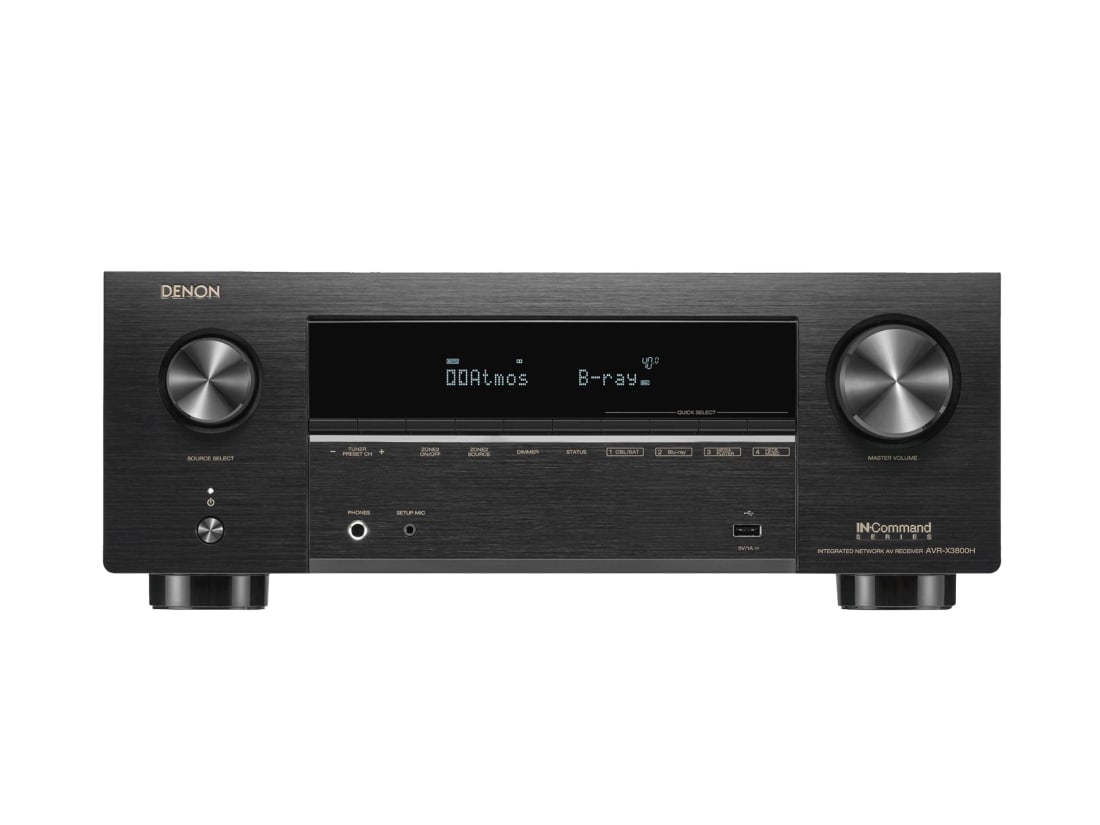 Bass management by the numbers: what your AVR's crossover and slope actually doCrossover frequency gets all the attention, but slope, distance settings and speaker size flags quietly decide whether your bass management works or fights itself.