Where diminishing returns actually kick in across a high-end system
A few months ago I sat in on a dealer demo in Sydney — one of those beautifully staged rooms off a quiet street near Surry Hills — where a prospective buyer was being walked through a system upgrade path. He'd arrived with a sensible $15,000 budget and left four hours later with a quote closer to $80,000. The gear was extraordinary. But when I replayed the session in my head afterwards, I kept wondering: at what point along that spend did the improvements become genuinely audible, and at what point were we just paying for engineering jewellery and brand mythology?
That's the question nobody in the industry really wants to answer honestly, so I'll have a go at it. Diminishing returns in high-end audio are real, they are steep, and they hit different components at wildly different price points. The model most audiophiles carry around — that every step up the chain delivers proportional gains — isn't just wrong; in several categories it's almost the reverse of true.
Why the concept of diminishing returns is more complex than it sounds
Let's be careful with how we frame this. Diminishing returns doesn't mean "no returns". It means the incremental gain for each additional dollar spent gets smaller. Going from a $300 DAC to a $1,200 DAC is often transformative. Going from a $12,000 DAC to a $40,000 DAC may yield real but subtle improvements that only matter in a sufficiently revealing system. The problem is that most upgrade conversations happen in isolation — component by component — when the honest question is whether the weakest link in your chain is even the component you're about to replace.
There's also a distinction between performance improvements and tolerance improvements. At the statement level, you're often paying for vanishingly low noise floors, better long-term reliability, tighter component matching, and the ability to drive pathologically difficult loads. Those are real engineering achievements. But if your speakers sit in an untreated room with significant early reflections, none of that precision survives the first bounce off your parallel walls. I'll admit I got this wrong for years — I kept chasing the source when the room was eating my investment.
Loudspeakers: where the money still works hardest
Across the whole chain, loudspeakers remain the category where spending more continues to produce audible returns for the longest distance up the price ladder. The reason is engineering complexity. A well-designed transducer — one with tight driver-to-driver unit matching, properly time-aligned crossover topology, and a cabinet that genuinely controls resonance — is expensive to make. There are no shortcuts that don't show up in the measurement or on your ears.
That said, diminishing returns do eventually arrive here too, somewhere in the $20,000–$40,000 range for a pair of floorstanders, depending on the brand. Above that figure you are frequently paying for real but increasingly marginal improvements in midrange clarity and bass control, combined with a larger proportion of exotic materials, finish options, and the cost of low-production-volume manufacturing. The Focal Kanta No.2 (check price) sits in a fascinating zone — expensive enough to be genuinely excellent, not so expensive that you're paying primarily for prestige.
The uncomfortable truth about the $60,000-plus floorstander category is that the speakers which justify those prices often require amplification and room treatment budgets that double or triple the total system cost to get the best from them. A $65,000 pair of speakers singing through a mediocre amplifier in a bare-walled room is a waste of everyone's time and money.
Amplification: the cliff arrives earlier than people think
This will upset a few people: for a modern, reasonably sensitive loudspeaker (say, 87dB or above, 8-ohm nominal load), the amplifier diminishing-returns cliff arrives somewhere between $3,000 and $6,000 for an integrated. That's not a popular opinion in a publication that reviews $125,000 monoblocks, but it's what honest listening and measurement work points to.
A well-engineered solid-state integrated at $4,000–$5,000 will typically measure and sound superb into all but the most demanding loads. What you get above that figure is better chassis construction, more headroom for difficult loads, lower noise floors that matter in ultra-high-sensitivity systems, and — genuinely — better user experience. You also get topology choices (valve, Class A, Class AB) that change the character of the sound in ways some listeners strongly prefer regardless of objective performance. That's a legitimate reason to spend more. "It measures better" is often not.
Where high-powered statement amplification genuinely earns its price is when driving electrostatically awkward or very low-efficiency speakers. If you're running a panel speaker that presents a 1-ohm load at 20kHz, yes, you need something special. But that's a specific, narrow use case, not the general market. Our review of the McIntosh MA352 (check price) is a good illustration of a point where engineering and performance genuinely justify a premium — the hybrid topology is coherent, the power reserves are real, and it drives demanding loads with authority.
Sources and DACs: the flattest part of the curve
The source component category — specifically DACs and network streamers — has arguably the most aggressive diminishing returns of anything in the chain, and yet it receives a disproportionate share of audiophile upgrade spend. Modern delta-sigma DAC implementations from ESS and AKM at mid-price points measure exceptionally well. Noise floors are vanishingly low. Distortion figures are better than any loudspeaker in the room by orders of magnitude.
That's not to say all DACs sound identical — they don't, and analogue output stage design matters enormously — but the meaningful differences compress into a narrower and narrower band as you climb the price ladder. The improvements at $8,000 versus $2,000 are real but lean heavily on implementation quality, power supply design, and chassis isolation rather than the conversion silicon itself. Our guide to DACs and network streamers maps this out in more practical detail.
What I will say for high-cost digital front ends: if you're running a genuinely resolving system and you care about streaming quality, the improvements in interface design, long-term reliability, software support and clock quality are legitimate reasons to spend. The Lumin X2 we reviewed earlier this year demonstrates that kind of considered engineering. But if you're running $5,000 worth of speakers and a mid-range integrated, a $12,000 streamer is optimising the wrong end of the chain.
Cables and ancillaries: handle with extreme scepticism
This section will generate complaints, and I genuinely don't mind. Cables are the single highest-margin, most mythology-laden category in audio retail. There are real engineering reasons to buy decent cables — adequate conductor cross-section for speaker cable, proper shielding on interconnects carrying low-level signals, appropriate impedance matching for digital connections. These are solved problems at very modest price points.
The returns on cables above a few hundred dollars for interconnects and a thousand for a full speaker-cable loom are, in my experience, at best marginal and at worst imaginary. I've spent time with some very expensive cables at the extreme end and I remain largely unconvinced that what I was hearing wasn't system-level variation or expectation bias. Our existing guide on where to spend on cables, racks and power takes a more measured look at where real gains exist — and it's mostly power conditioning in noisy Australian mains environments, not esoteric interconnects.
Racks and isolation platforms are a different story. Good isolation genuinely matters for turntables and valve amplifiers, and a solid, well-built rack prevents the kind of mechanical coupling that can muddy bass. Spend modestly here and spend it wisely.
Room acoustics: the one area where diminishing returns barely apply
Here's where I'll make the contrarian case strongly: room treatment has the lowest diminishing returns of any investment in your system, and it's the most consistently underweighted by serious audiophiles. A $2,000 set of well-placed broadband absorption panels and first-reflection treatment will do more for the resolving quality of your listening experience than a $10,000 amplifier upgrade in a parallel-wall, hard-floored room.
This isn't a new argument — Hannah Reid has made it eloquently in her room-first guide to speaker budgets — but it bears repeating in the context of high-end system building, where the dollar amounts make the omission genuinely painful. I've heard $200,000 systems in poorly treated rooms that were bested — in terms of stereo imaging, detail retrieval and tonal balance — by $20,000 systems in properly sorted spaces.
Treatment is unglamorous, it takes up physical space, and it doesn't look impressive on an Instagram caption the way a row of glowing monoblock amplifiers does. But the physics are unarguable, and no amount of engineering in a loudspeaker cabinet overcomes the room you put it in.
A practical framework for where to allocate a serious budget
If I were building a system today with, say, $50,000 Australian dollars to spend — which is a real, achievable budget for serious listeners — here is roughly how I'd apportion it, based on where the returns-per-dollar curve still has meaningful slope:
Loudspeakers would receive the largest single allocation, somewhere around 35–40% of the total. This is where the engineering gap between price tiers is most audible and most durable. Room treatment — including proper acoustic measurement before purchase — would take 10–15%, paid for before the speakers arrive. Amplification would receive 20–25%, targeting a topology matched to the specific speakers rather than a prestige nameplate. The source (streamer plus DAC or an integrated unit) would take 15–20%, with a strong preference for quality software and long-term update support. The remainder covers cabling (sensibly, not extravagantly), a proper rack, and power conditioning if the building's mains are noisy.
What this framework doesn't account for is taste. Some listeners want valves because they want valves — the warmth, the ritual, the glow. That's a legitimate preference and it should influence the amplification choice even if a solid-state alternative measures better at the same price. High-end audio isn't purely a measurement exercise, and anyone who tells you otherwise has probably never sat with a great system in a great room late at night.
But taste is different from mythology. Knowing where your money actually stops moving the needle is the most useful thing I can offer from years of spending time with systems at the extreme end. The gear at the statement tier is extraordinary. The gains above the diminishing-returns threshold, for most listeners in most rooms, are real but small — and the room will take most of them back anyway.
Common questions
- At what price point do amplifier upgrades stop making a meaningful difference?
- For most loudspeakers — say 87dB sensitivity or above with a benign impedance curve — a well-engineered integrated amplifier in the $3,000–$6,000 range will perform excellently. Above that you're often paying for better build quality, greater headroom for demanding loads, and topology preferences (valve, Class A) rather than a measurable improvement in core audio performance. Genuinely difficult loads — low-efficiency speakers, electrostatics — can justify more powerful, costlier amplification.
- Is room treatment really more important than upgrading components?
- In most real-world listening rooms, yes. Untreated parallel walls and hard surfaces create early reflections, comb filtering and bass modes that degrade stereo imaging and tonal accuracy more than the difference between a mid-range and high-end component. A modest acoustic treatment budget — broadband absorption at first-reflection points plus some bass management — typically delivers more audible improvement than a same-priced component upgrade.
- Do expensive cables make a real difference?
- There are legitimate technical reasons to use decent cables: adequate conductor cross-section for speaker cables, proper shielding on low-level signal interconnects, and correct impedance matching for digital connections. These needs are met at modest price points. The returns on cables costing several hundred dollars or more are, at best, marginal in most systems and highly susceptible to expectation bias. Prioritise component and room quality before spending heavily on cable.

I'm Sofia, and I get to play with the silly stuff — the statement amplifiers, the reference loudspeakers, the cost-no-object systems that most of us will only ever hear at a show. Someone has to, and I take it seriously: at this level the price stops mapping to performance and starts mapping to engineering, craft and ego, and part of my job is telling you which is which. I love the extreme end of this hobby, but I'm not dazzled by a big number on a price tag.
Covers flagship and cost-no-object reference systems
More from Sofia Laurent
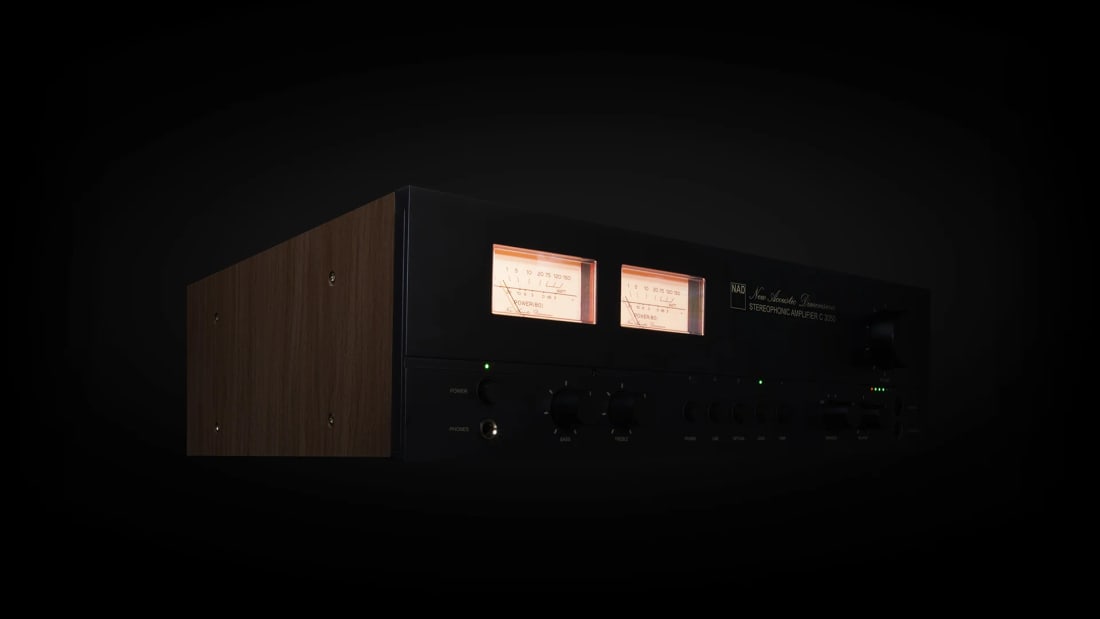 Negative feedback in amplifier design: the argument that never endsNegative feedback cuts amplifier distortion but divides designers. Here's what it does, why some statement amps avoid it, and what it means for you.
- The synergy tax: why mismatched gear costs more than cheap gearThe synergy tax explained: why pairing mismatched hi-fi components quietly costs more than buying modest, well-matched gear.
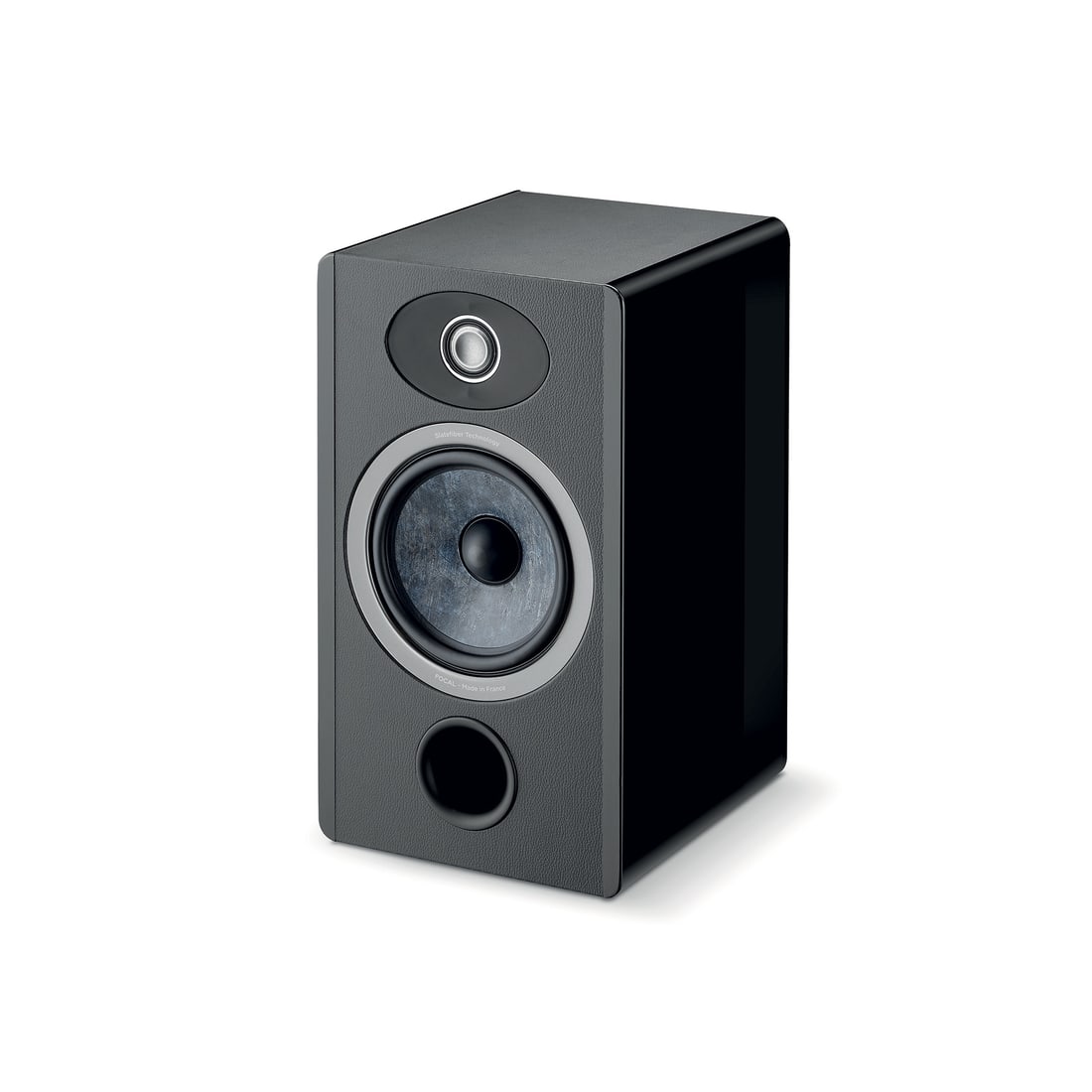 Rear-port floorstanders near a glass wall: a risky pairingRear-ported floorstanders against glass walls cause boundary reinforcement and reflections. Here's how to place, measure and tune them properly.
- Infrasonic bass below 20Hz: chasing the octave you feel, not hearBelow 20Hz is infrasonic bass: felt more than heard. Here's what it takes to reproduce it properly, and whether a statement system should bother.
- Why statement systems still get beaten by the zone two speakerA $150,000 reference system is only as good as the worst-sounding zone it's networked to. Here's why multiroom integration is the statement system's real weak point.
- Why a statement floorstander can be the wrong speaker in the roomSix-figure floorstanders fail in rooms that were never built for them. Here's how to tell if your space can actually support one before you buy.