Astell&Kern brought four vacuum tubes to a portable player — and it changes what 'high-end portable' means
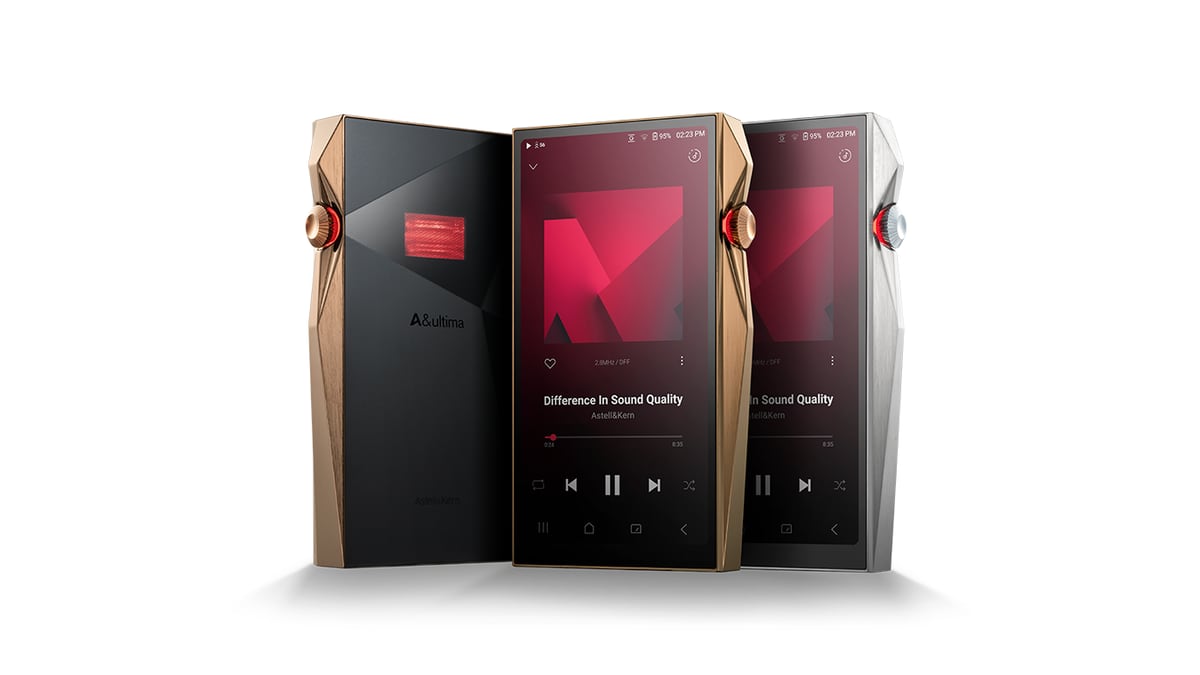
Four tubes. One pocket. One very pointed statement.
There is a particular kind of audacity that high-end audio demands of its best practitioners. Not the audacity of marketing superlatives — those are cheap and plentiful — but the audacity of genuine engineering ambition: the willingness to solve a problem nobody asked you to solve, in a way nobody thought possible, and then charge accordingly. Astell&Kern has made something of a habit of this, and at HIGH END Vienna 2026, running 4–7 June, the Korean brand did it again. The A&ultima SP4000T is, by any reasonable measure, the most technically ambitious portable digital audio player ever announced. It contains four vacuum tubes.
Let that land for a moment. Four vacuum tubes — not one, not two, as we saw in the SP3000T that arrived in 2024 — but four, arranged in a quad configuration, inside a device you are expected to carry in a jacket pocket or a bag. The engineering required to make that work without turning the chassis into a hand warmer, without destroying battery life entirely, and without subjecting those fragile glass envelopes to the mechanical indignities of daily transport, is not trivial. That Astell&Kern has apparently achieved it is worth examining carefully, because the SP4000T is not just a new product launch. It is a philosophical argument about what portable listening can and should be.
A brief history of tubes in your trouser pocket
To understand why the SP4000T is significant, it helps to understand the trajectory that led here. Vacuum tubes — thermionic valves, if you prefer the British nomenclature more familiar to Australian ears — were the dominant active amplification technology for the better part of the twentieth century. They were displaced by the transistor not because they sound worse (a debate that audiophiles have been having productively for decades) but because they are larger, consume more power, run hot, and are mechanically fragile. These are precisely the properties that make them catastrophically unsuited to portable audio. Or so the conventional wisdom held.
Astell&Kern first challenged that assumption with the SP1000M in a limited sense, and more directly with the SP3000T in 2024, which introduced a single-ended tube stage using what was already an unusual choice of tube type. The SP4000T takes the logic of that experiment and doubles it — literally. Where the SP3000T used two tubes, the SP4000T uses four, in a quad layout that the company is claiming as an industry first for a digital audio player. The specific tube is the Raytheon JAN6418 MIL-Spec vintage vacuum tube, and the choice of that particular component tells you a great deal about the engineering philosophy at work here.
Why the JAN6418, and why does MIL-Spec matter?
The JAN designation stands for Joint Army-Navy, a procurement standard that originated in the United States military during World War II and was maintained through the Cold War era. Components meeting JAN specifications were required to demonstrate reliability and consistency far beyond commercial-grade equivalents. The 6418 is a subminiature pentode — physically tiny by tube standards, which is obviously relevant when you are trying to fit four of them into a portable device — originally designed for use in military aircraft instrumentation, missile guidance systems, and other applications where failure was not an option and where vibration, shock, and thermal stress were facts of life rather than edge cases.
This is, from a portable audio engineering standpoint, an inspired choice. The 6418's subminiature form factor addresses the space constraint. Its MIL-Spec provenance means it was designed from the outset to tolerate mechanical shock — meaning it is substantially more robust against the bumps and drops of portable use than a conventional audio tube. And its operating characteristics lend themselves to the kind of low-voltage, relatively low-current circuit topologies you need when battery life is a consideration. Astell&Kern is not simply cramming decorative tubes into a chassis for the aesthetic reference. They have selected a component whose heritage makes it genuinely suited to the application.
The quad layout specifically — as opposed to the dual configuration of the SP3000T — enables a fully balanced tube stage across both channels, which is the architecture that serious headphone listeners will recognise as delivering the lowest noise floor and the most dimensional soundstage and imaging. A balanced output requires, at minimum, four active gain elements if you want true differential signal handling throughout the tube stage rather than a conversion at the last moment. The SP4000T apparently provides exactly that.
The digital engine underneath
The tube stage is the headline, but the digital and analogue circuitry surrounding it is equally serious. Astell&Kern has specified dual AK4499EX DAC chips per channel, paired with AK4191EQ digital filter and modulator processors — also one per channel. This is a flagship-grade implementation of AKM's current reference silicon, and deploying it in a fully dual-mono, per-channel configuration means the left and right channels share no conversion circuitry whatsoever. Crosstalk, in theory, approaches zero.
For those wanting the specifics: native playback extends to 32-bit/768kHz PCM and DSD512. If you need a primer on why those numbers matter — and what the distinction between bit depth and sample rate actually means for the analogue output — our Bit Depth & Sample Rate explainer covers the fundamentals thoroughly. DSD512 in particular is the outer boundary of what any commercially released music exists in; supporting it is as much a statement of capability as a practical feature, but it means the SP4000T will not be the limiting factor in any chain you build around it. Similarly, for a deeper understanding of what the DAC chips themselves are doing in this context, see our Digital-to-Analogue Converter glossary entry, and for DSD specifically, our Direct Stream Digital explainer.
Triple AMP Mode and the question of 54 combinations
One of the more unusual features announced is what Astell&Kern calls Triple AMP Mode, which the company says yields up to 54 distinct sound-tuning combinations. The SP3000T introduced a version of this concept, allowing the user to choose between tube and solid-state amplification paths and various configurations thereof. The SP4000T appears to expand this substantially.
54 combinations is a large number, and I want to be direct about what this likely means in practice. The combinations will be derived from a matrix of selectable parameters — tube stage in or out of circuit, different gain settings, different filter characteristics from the AK4191EQ processor, and possibly different output impedance settings — rather than 54 wholly independent amplification architectures. That is not a criticism; it is simply clarifying what the number represents. For the listener, the practical upshot is that the SP4000T offers an unusually deep degree of tailoring to match different headphone loads and personal preferences. Impedance matching between source and headphone is one of the more underappreciated variables in portable listening, and having gain and output stage options to work with it properly is genuinely useful.
The operating system is Android 15, which maintains the SP-series tradition of running a full Android environment for streaming app compatibility — Tidal, Qobuz, Spotify, Apple Music and so on are all accessible natively. The screen is a 6-inch Full HD touchscreen, which by current flagship DAP standards is generous. Internal storage is 256GB, expandable via microSD in the usual fashion for this class of device.
The SP3000T connection, and what changed
The SP4000T is explicitly positioned as the successor to the SP3000T, which launched in 2024 and established the tube-equipped A&ultima format as a genuine product category rather than a one-off experiment. The SP3000T sold in both Stainless Steel and Copper variants — a material differentiation that Astell&Kern treats as meaningful given the sonic and aesthetic properties of each — and the SP4000T follows the same pattern, with Stainless Steel launching first and Copper to follow.
Pricing for the SP4000T has not been confirmed at the time of writing, and given that Australian pricing for imported high-end electronics often involves a meaningful premium over converted US or European figures — customs, GST, distributor margin, and currency fluctuation all playing a role — I would caution against extrapolating too aggressively from any international figures that may emerge before local pricing is announced. The SP3000T sat at a price point that put it firmly in statement-system territory, and there is no reason to expect the SP4000T to be less expensive. Budget accordingly, or at minimum, manage expectations.
What does this mean for the broader portable audio landscape?
The SP4000T matters beyond the specs on its own sheet for a few reasons that I think deserve unpacking.
First, it represents a sustained commitment to analogue warmth as a differentiator in a category increasingly dominated by purely numerical spec-sheets. Other manufacturers compete on output power figures, noise floor measurements, and format support. Astell&Kern is competing on a fundamentally different axis: the quality and character of the analogue gain stage. The tubes are not decoration. They are an argument about what recorded music should sound like when it reaches your ears, and specifically about the harmonic relationships and dynamic behaviour that a well-designed tube stage handles differently from a solid-state equivalent. Whether you agree with that argument is a matter of personal preference and honest listening, but the argument itself is coherent and technically grounded.
Second, the SP4000T raises the ceiling for what is achievable in a portable form factor in a way that will influence the rest of the industry. We have seen this pattern before: a category-defining product appears at what seems like an absurd price and specification level, and within two or three product cycles, elements of its approach have migrated into more accessible tiers. The integration of a quad tube stage with flagship AKM silicon and fully balanced architecture will be studied by every serious DAP manufacturer operating today.
Third, for Australian listeners specifically, this is relevant because the high-end portable market in this country punches above what you might expect given our population. The enthusiast base here is serious, well-informed, and not afraid of investing properly in source quality. A device like the SP4000T — paired with appropriate headphones and ideally with our DACs and network streamers guide in mind for thinking about how it sits in a broader system — represents a genuine option for listeners who want statement-level performance in a form that fits their lives rather than demanding a dedicated listening room.
Practical considerations for interested Australian buyers
A few practical notes for those already reaching for their wallets or at least their bookmarks:
- Headphone matching will be critical. A quad-tube output stage with 54 tuning combinations is, in part, an acknowledgement that different headphones interact with output stages in meaningfully different ways. Take the time to understand the impedance and sensitivity characteristics of whatever headphones you intend to use with it, and factor in the SP4000T's output configuration options. Our Sensitivity glossary is a good starting point for thinking through this systematically.
- Stainless Steel arrives first. If you prefer the Copper finish — which Astell&Kern's previous SP series treated as more than cosmetic, influencing the mechanical and thermal character of the chassis — expect a wait after the initial launch.
- Android 15 means streaming compatibility. This is not a closed-ecosystem device. Your existing streaming subscriptions will work on it, though the primary use case for a device at this price point is local file playback of high-resolution content.
- Pricing is TBA. Resist the temptation to convert whatever figures appear in international press before local pricing is confirmed. Contact Astell&Kern's Australian distributor once official pricing drops.
- The new Clarus IEMs. Astell&Kern also showed new Clarus in-ear monitors at HIGH END Vienna alongside the SP4000T. Details remain limited at this stage, but pairing a source and IEM from a complementary design philosophy is worth investigating once both are available for audition.
The statement this makes
There is a version of the audio world in which portable players are purely practical objects: convenient boxes that store and play files with acceptable quality. Astell&Kern has never been interested in that version of the audio world, and the SP4000T is their most emphatic statement yet that portable listening deserves the same seriousness of purpose that we bring to a dedicated system built around a pair of speakers, a separate amplifier, and a carefully chosen source component.
Whether four MIL-Spec vacuum tubes in a handheld chassis represents the pinnacle of that philosophy or a magnificent piece of engineering theatre — or both — is something that will become clearer once units reach reviewers and listening rooms. What I can say, based on what has been announced at HIGH END Vienna 2026, is that Astell&Kern has once again done something that nobody else was doing, using components chosen with genuine care and purpose, in pursuit of a sonic goal that is at least internally consistent and technically defensible.
That is, in my view, exactly what a company operating at the top of this market should be doing. We will have more to say once the SP4000T reaches Australian shores.
Common questions
- What makes the Astell&Kern SP4000T different from the SP3000T it replaces?
- The SP4000T moves from a dual to a quad vacuum-tube configuration using Raytheon JAN6418 MIL-Spec tubes, enabling a fully balanced tube stage across both channels. It also upgrades the DAC implementation to dual AK4499EX chips per channel with AK4191EQ processors, expands sound-tuning options to up to 54 combinations via Triple AMP Mode, and runs Android 15. The SP3000T launched in 2024; the SP4000T was unveiled at HIGH END Vienna 2026.
- What formats does the SP4000T support, and how high does it go?
- The SP4000T supports native PCM playback up to 32-bit/768kHz and DSD up to DSD512, which represents the current outer boundary of high-resolution audio formats available in commercial releases. The dual AK4499EX DAC chips and AK4191EQ processors per channel handle the conversion and digital filtering respectively.
- When will the SP4000T be available in Australia, and what will it cost?
- Pricing has not been announced as of the HIGH END Vienna 2026 reveal in June 2026. The Stainless Steel variant will launch first, with a Copper version to follow. Australian buyers should contact the local Astell&Kern distributor for confirmed pricing and availability once that information is released, as Australian pricing for imported high-end electronics typically reflects additional factors beyond a simple currency conversion.
- Why were military-specification vacuum tubes chosen for a portable audio player?
- The Raytheon JAN6418 is a subminiature pentode originally designed for military aerospace and instrumentation applications. Its MIL-Spec designation means it was built to withstand mechanical shock, vibration, and thermal stress — characteristics that make it substantially more suitable for a portable device than conventional audio tubes. Its small physical size also aids integration into a compact chassis, while its operating characteristics are compatible with the lower-voltage, battery-dependent circuit designs required in portable audio.

I'm Sofia, and I get to play with the silly stuff — the statement amplifiers, the reference loudspeakers, the cost-no-object systems that most of us will only ever hear at a show. Someone has to, and I take it seriously: at this level the price stops mapping to performance and starts mapping to engineering, craft and ego, and part of my job is telling you which is which. I love the extreme end of this hobby, but I'm not dazzled by a big number on a price tag.
Covers flagship and cost-no-object reference systems
More from Sofia Laurent
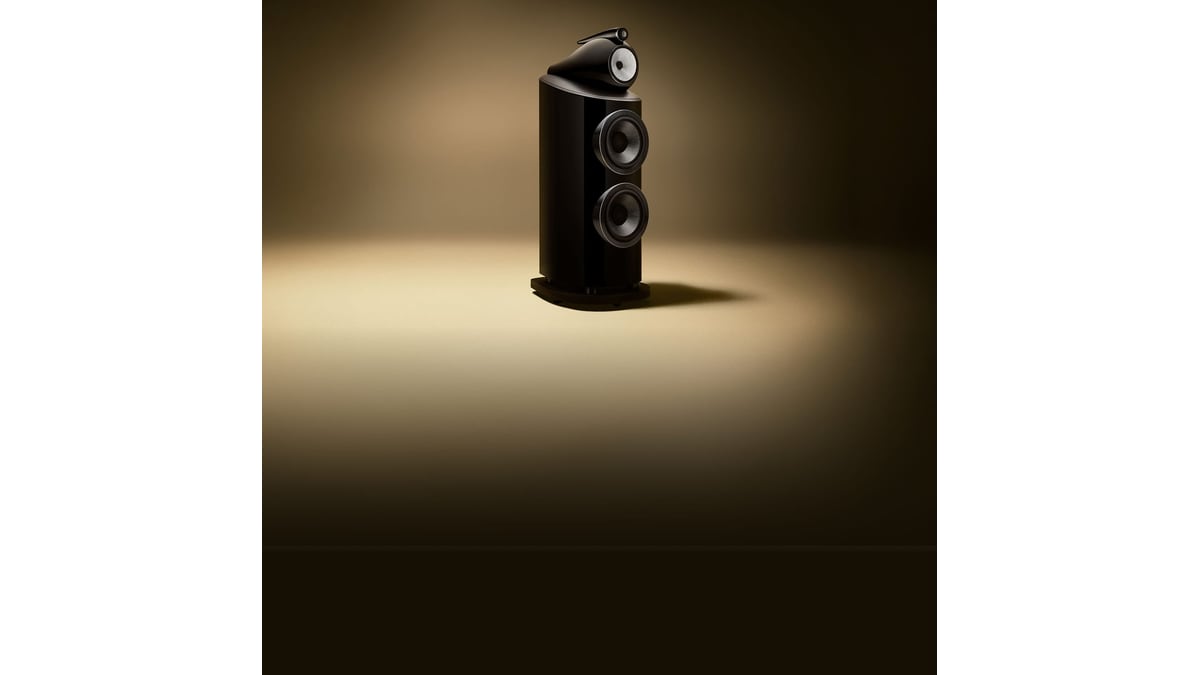 Bowers & Wilkins 801 D5: the new $65,000 flagship that reinvents an audiophile iconB&W's fifth-generation 801 D5 debuts at $65,000/pair, unveiled at High End Vienna on 4 June 2026. Here's why it matters for serious Australian listeners.
 JBL Summit Everest: a 237kg, $160,000 statement floorstander tops the Summit rangeJBL unveiled the 237kg, US$159,990 Summit Everest at High End Vienna 2026, completing its Summit Series on the brand's 80th anniversary.
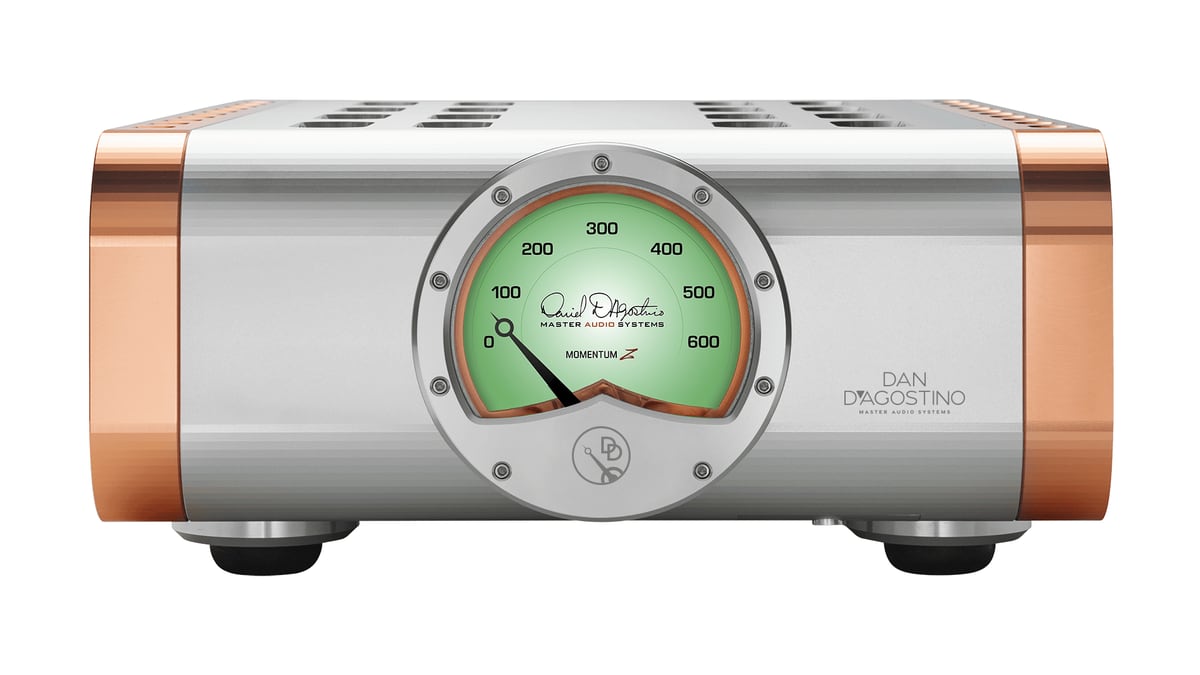 D'Agostino's $125,000 Momentum Z monoblocks are built for the world's most demanding speakersDan D'Agostino unveils the Momentum Z monoblock — 500W into 8 ohms, Kinetic Drive Regulator technology, and a network port for real-time monitoring.
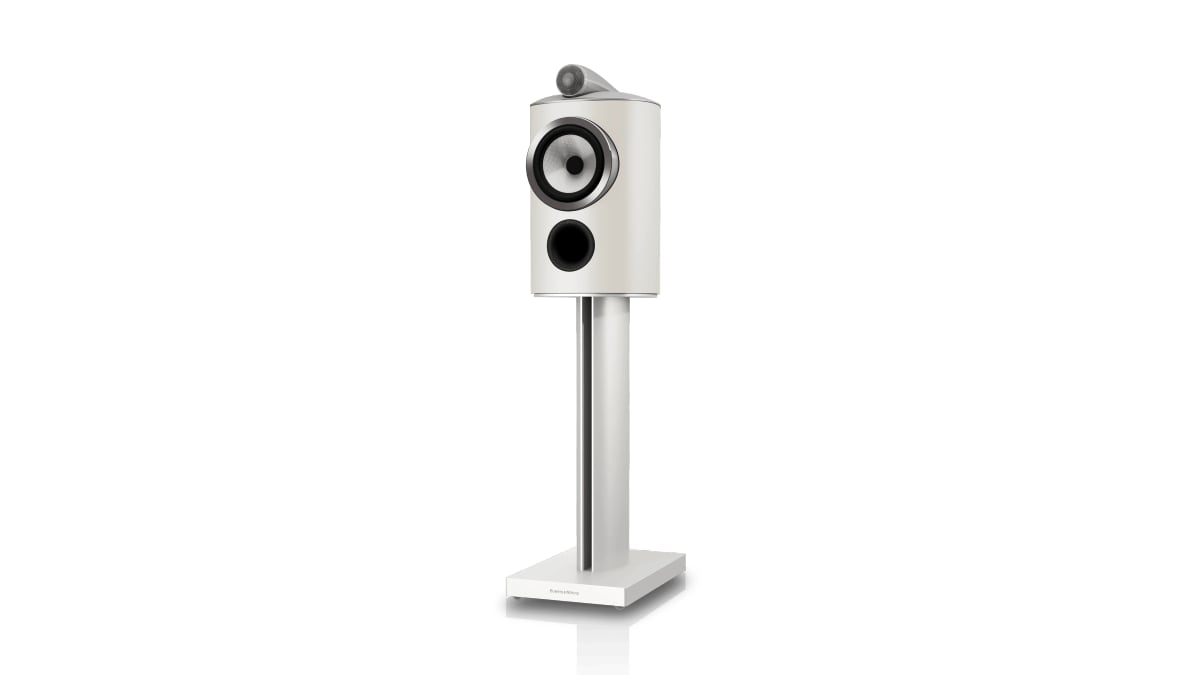 Bowers & Wilkins 805 D5: the iconic tweeter-on-top standmount gets a fifth-generation overhaulThe 805 D5 arrives as the entry point to B&W's new 800 Series Diamond D5 range, with a refined Diamond Dome tweeter, Continuum cone and a $15,000/pair AU price tag.
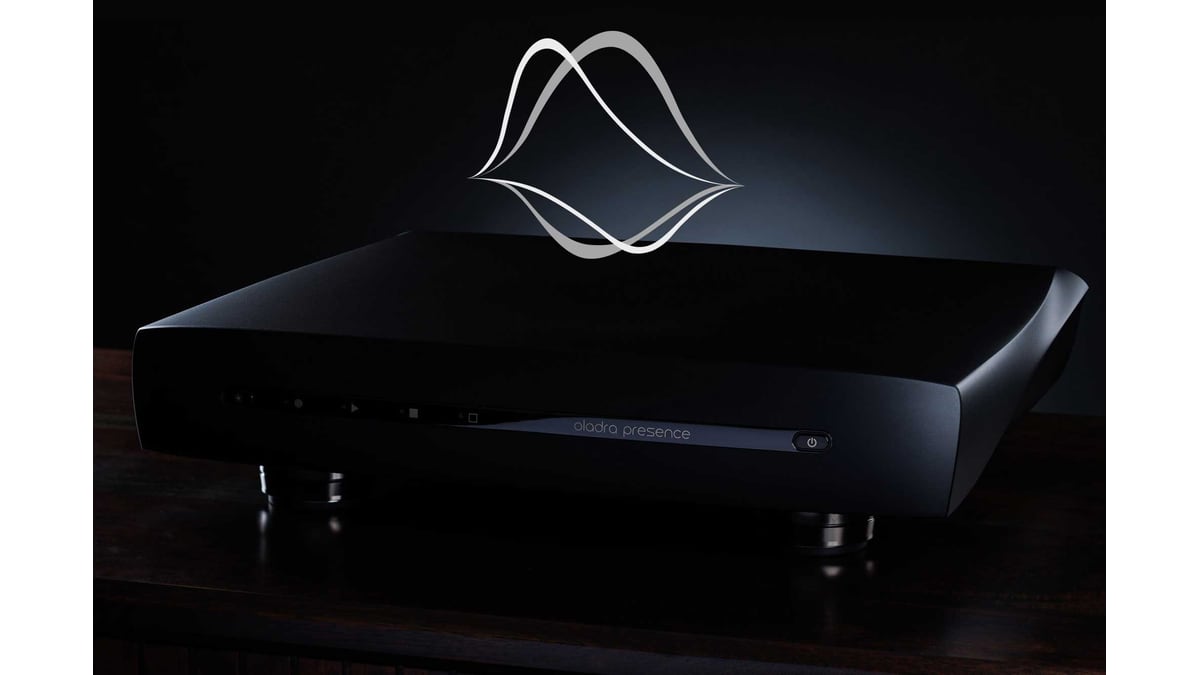 Antipodes spins out Oladra as a standalone brand with the $35K Sentia and $58K Presence music serversAntipodes Audio has established Oladra as its own super-premium digital brand, debuting the Sentia and Presence servers at AXPONA 2026.
 Final's DX10000 CL puts a true-diamond diaphragm in a flagship closed-back headphoneFinal's DX10000 CL debuted at Winter Headphone Festival Mini 2026 with a 26mm CVD pure solid diamond dome — and a price to match its ambition.