High-end multiroom: how to build zones that don't betray your main system
The question that comes up most often when I visit clients with serious listening rooms isn't about cartridge loading or amplifier topology. It's this: what do I put in the bedroom so it doesn't embarrass the main system?
It's a reasonable question, and the answer is more nuanced than the industry wants you to believe. The default advice — buy a smart speaker, slap an app on your phone, done — works fine if you've never heard anything better. But once you've spent real money on a front-end and a pair of transducers that can actually resolve what a recording contains, the gap between that and a $350 cylinder on the bedside table becomes genuinely jarring. Not snobbery. Physics.
So. How do you build a multiroom system that doesn't feel like a demotion every time you leave the listening room?
Why the standard ecosystem approach falls apart at the high end
Sonos, Apple HomePod, Amazon Echo — all competent products for what they are. The problem isn't the hardware in isolation. The problem is what happens when you put one of these ecosystems next to a system built around genuine source fidelity.
Most of the mainstream multiroom ecosystems compress or transcode somewhere in the chain. Sonos, to its credit, has pushed harder on lossless playback in recent years, but its architecture is still optimised for convenience and reliability across dozens of heterogeneous zones rather than for extracting the last detail from a 24-bit/96kHz master. Apple AirPlay 2 does support lossless transport — the signal itself arrives at the endpoint intact — but what the endpoint does with it varies wildly depending on the hardware. A HomePod is a sealed unit; you get what Apple's DSP decides you get.
At the high end, control matters as much as signal path. You need to know what's happening to your audio at every stage: what sample rate it's being delivered at, whether volume is being handled in the digital domain or the analogue domain, whether the clock in the receiving DAC is in charge or whether it's being driven by something upstream. These aren't theoretical concerns. They're exactly the variables that separate a $400 streaming endpoint from a $4,000 one.
I'll admit I got this wrong for a few years. I used to think that secondary zones were inherently a compromise and that the answer was just to make the main system portable — move it, use it, forget about the other rooms. That's fine if you live alone in a shoebox. For anyone with a real house and real listening habits across multiple spaces, it doesn't hold up.
The architecture decision: single ecosystem or distributed best-of-breed
Before you buy a single piece of hardware, you need to settle the architecture question. The two approaches are meaningfully different and almost impossible to reverse once you're committed.
Single ecosystem means every zone runs the same platform — Roon Ready endpoints throughout, or a manufacturer's own multiroom protocol (Naim's proprietary network, Linn's Exakt, Devialet's AIR). You get reliability, a unified control interface and guaranteed compatibility. The tradeoff is that the ecosystem sets a ceiling on what each zone can achieve, and the weakest zone in the chain determines how much flexibility you have.
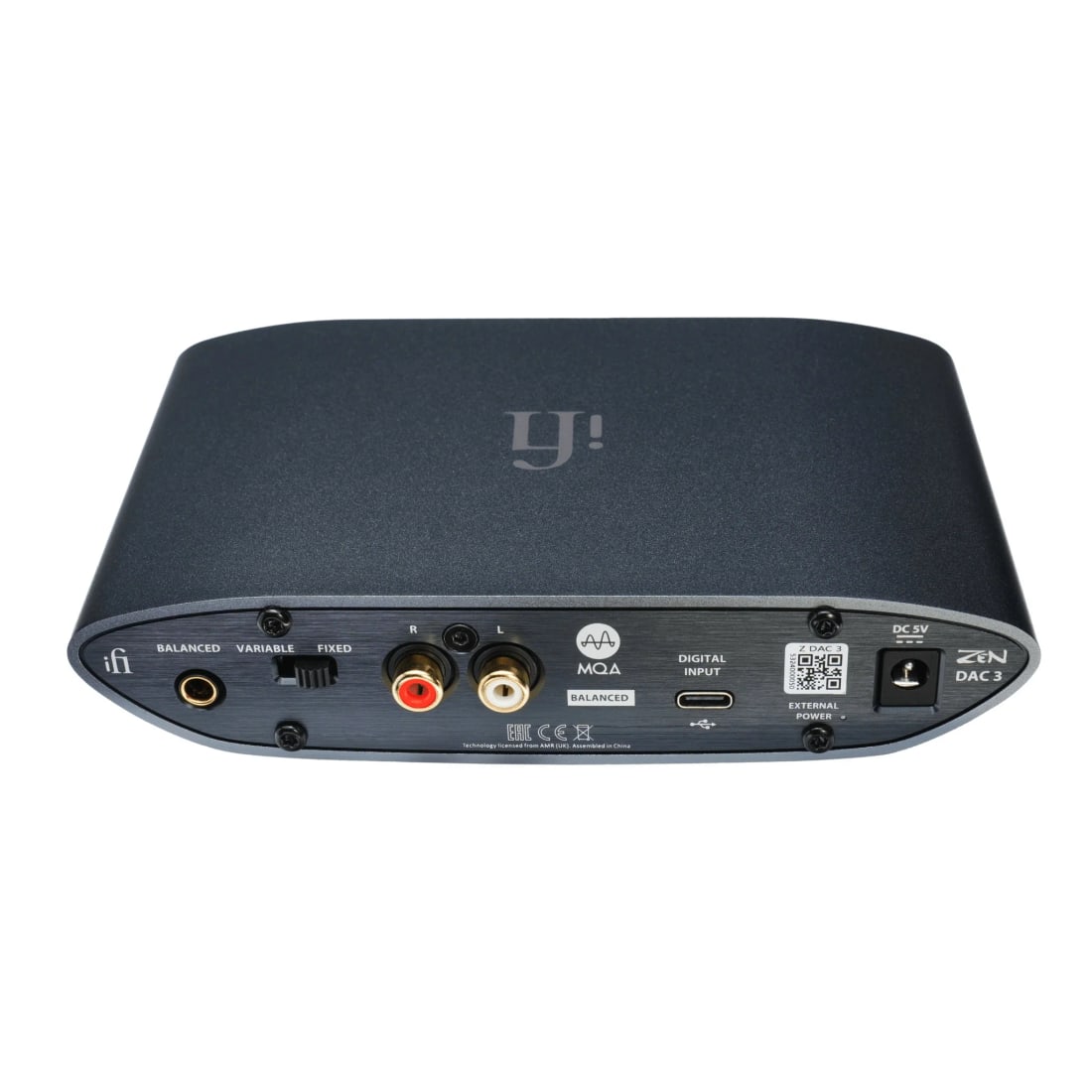
Distributed best-of-breed means you pick the optimal hardware for each zone and stitch them together with a control layer — almost always Roon, at this level. Your main system might run a dedicated streamer feeding a reference DAC. The study might run a WiiM Ultra (and I've spent enough time with the WiiM Ultra (check price) to say it punches well above what its price suggests). The bedroom might run a Cambridge Audio CXN100 or similar. Roon sits on top and treats them all as endpoints, delivering lossless audio to each via RAAT.
The best-of-breed approach is harder to set up and demands a Roon Core running on reliable hardware — a dedicated Nucleus, a NUC, or a server with headroom to spare. But it gives you genuine flexibility, and it means you're not constrained by what any single manufacturer decides to support.
Getting the signal path right in secondary zones
Here's where most high-end multiroom systems are quietly let down: the secondary zones use digital volume control without anyone thinking about it. You send a 16-bit or 24-bit stream to a network endpoint, the endpoint attenuates it digitally before passing it to an analogue output, and you've lost bit depth in every zone except the one you're sitting in front of.
The fix is straightforward but requires a bit of thought per zone. Wherever possible, run digital volume control at full scale and handle attenuation in the analogue domain — either via a downstream integrated or via a separate passive or active preamp. In a bedroom zone where you're running a streaming endpoint into a small integrated amplifier, this is easy. In a zone where the endpoint is driving powered speakers directly, you're more constrained, and you need to look carefully at whether the endpoint's own volume control is implemented in the digital or analogue domain.
For reference: Roon's own volume management can be set to DSP volume (digital, avoidable), device volume (uses the endpoint's own control, which may be analogue), or fixed volume (endpoint plays at full scale and you control level downstream). Fixed volume is almost always the right answer for a high-end zone. Set it, forget it, put a real volume control in the analogue chain.
The best DACs and network streamers guide covers endpoint hardware in more depth, but the short version for multiroom use is: prioritise endpoints with a quality analogue output stage and hardware volume control over endpoints with more features but weaker output stages.
Network infrastructure: the part everyone underinvests in
I've visited systems where the main listening room has a reference-level streamer, and it's sitting on a Wi-Fi connection shared with twelve other devices because the owner didn't want to run cable through the walls. That's a false economy at any price point, but at the high end it's genuinely painful.
Run Ethernet to every zone that will support serious listening. Not because Wi-Fi can't carry lossless audio — it generally can — but because network stability matters more than bandwidth for streaming audio. A single dropped packet at the wrong moment causes a glitch or a buffer underrun. A poorly positioned Wi-Fi access point creates intermittent instability that's almost impossible to diagnose. Ethernet is deterministic. It's also not that expensive if you're already doing a light renovation or running cables for other purposes.
For zones where Ethernet genuinely isn't practical — a guest room, an outdoor zone, a kitchen — a high-quality mesh Wi-Fi system with a dedicated backhaul (Ubiquiti UniFi, Eero Pro 6E, or similar) is a reasonable second choice. The key is dedicated backhaul: you don't want your audio traffic competing with general household internet on the same radio band that's also handling the backhaul between nodes.
And while I'm on the topic: put your Roon Core on a wired connection. Full stop. The Core needs to talk to the internet for metadata and library management, and it needs to talk to endpoints. Both of those conversations are better over Ethernet.
Matching zone quality to listening context
One thing I'd push back on — gently — is the instinct to replicate your main system's quality level in every zone. It's not necessary, and frankly it doesn't reflect how you actually listen in different spaces.
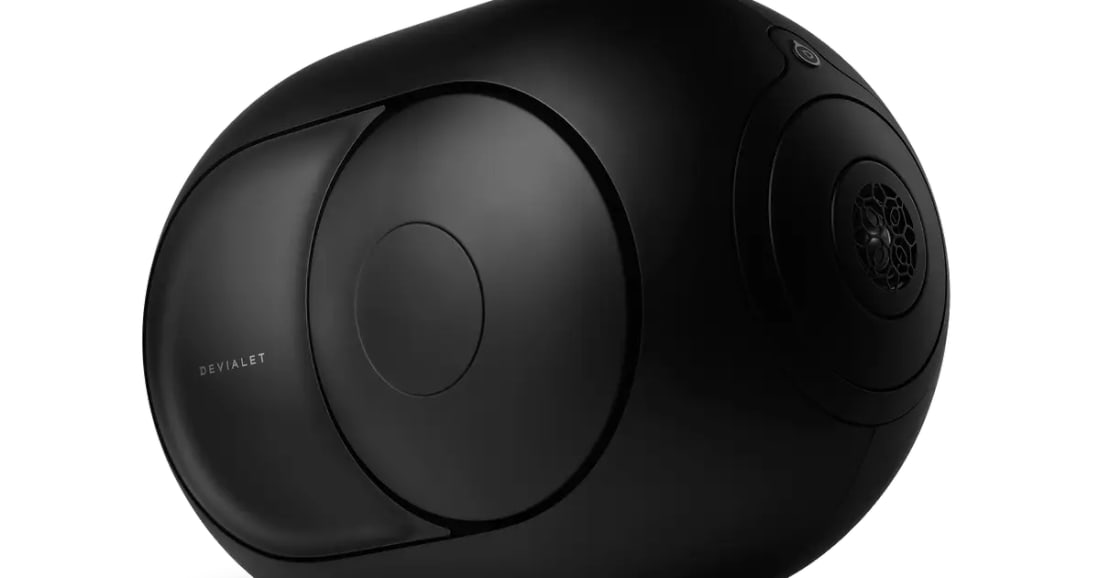
In a kitchen or bathroom, background listening is background listening. The ambient noise floor in a kitchen with an exhaust fan running is 50–60 dB SPL. You're not resolving microdetail. A good-quality active speaker with a network input — a KEF LS50 Wireless II, a Focal powered monitor, or even a Devialet Phantom for the people who like drama and don't mind the price — is more than enough. The Devialet Phantom I (check price) is genuinely interesting as a kitchen zone endpoint if you have the budget and the aesthetic tolerance, because it handles amplification, streaming and transduction in a single chassis with no exposed cables and no fussing with levels.
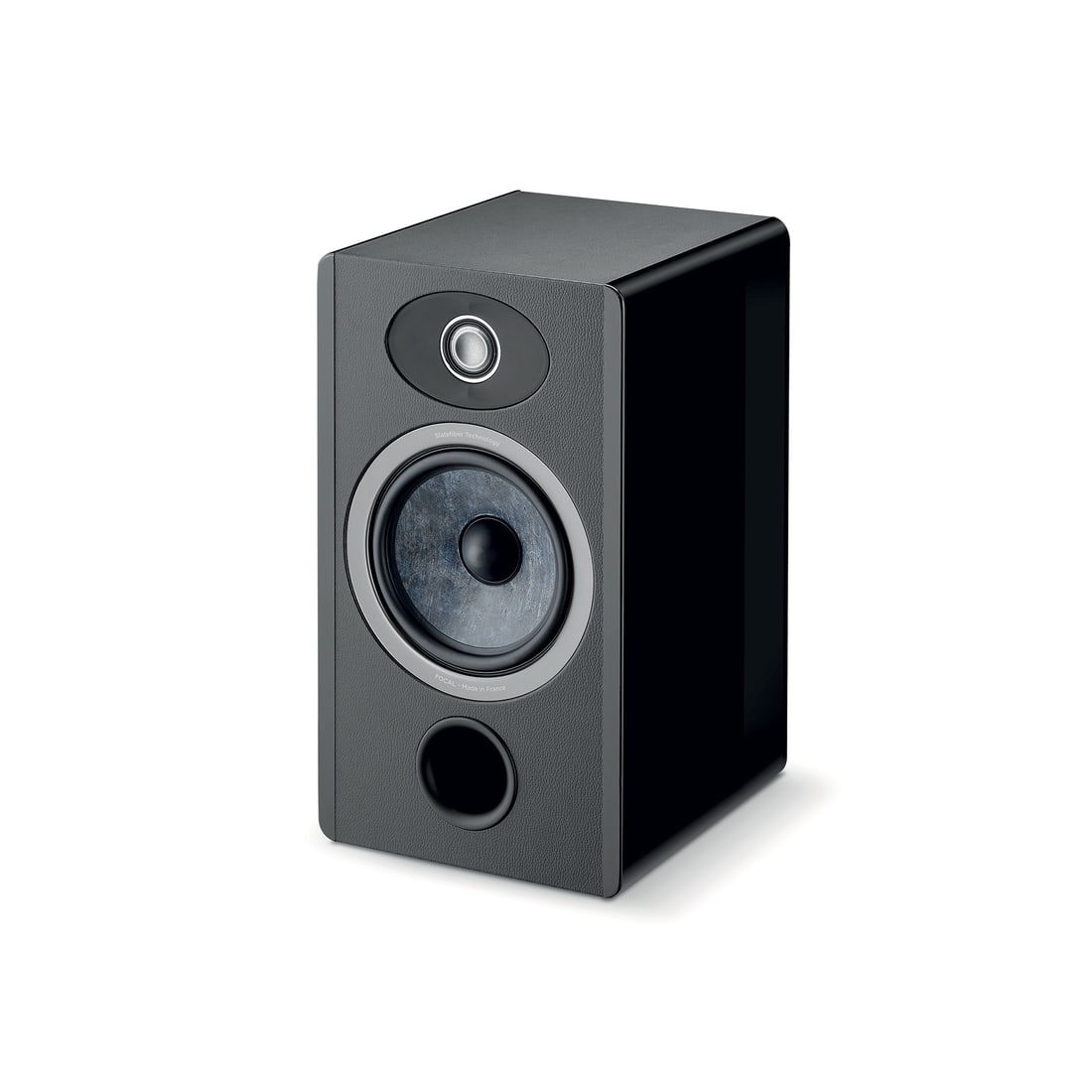
A study or home office is a different story. If you're spending two to four hours a day in front of a desk, the listening quality matters. A near-field setup with a quality DAC, a clean streaming source and a pair of serious standmounts is not overkill. It's proportionate. The best streaming amplifiers guide has options that work well in exactly this context — integrated units with built-in streamers that simplify the chain without compromising the signal path.
The bedroom is usually the zone where people either over-invest (a full separates stack that they then use at low volume with no treatment) or under-invest (a smart speaker that sounds like a phone call). A good streaming integrated — something like the Naim Uniti Atom, which I've spent considerable time with — threaded through a pair of compact standmounts is the sweet spot. You get real resolution at real listening levels, you get proper analogue volume control, and you're not wasting resolution on a space where you're half asleep. Have a look at our Naim Uniti Atom review (check price) if you want a sense of what a well-implemented all-in-one streaming integrated actually does.
The control layer: Roon, and what it actually costs you
Roon is the correct answer for most high-end multiroom systems, and I'm saying that as someone who spent a couple of years resisting the subscription model on principle. The reality is that Roon's RAAT (Roon Advanced Audio Transport) protocol handles clock management and synchronisation in a way that none of the consumer ecosystem protocols quite match. For a multi-zone system where you want bit-perfect delivery with proper handling of sample rate changes, Roon's implementation is genuinely ahead.
But. Roon is AU$21.99 a month (or AU$849.99 for a lifetime licence at current pricing — check Roon's official site for current Australian pricing before committing, as it has moved around). That's real money over a decade. And Roon's library management and metadata, while generally excellent, requires a properly organised music library to show its best. If your collection is chaotic, Roon will reflect that back at you.
The alternative worth considering seriously is a manufacturer-native ecosystem for zones that are all the same brand. Linn's own streaming architecture, for example, is excellent if every zone runs Linn hardware. The same is true of Naim's network implementation. If you're already committed to one manufacturer's hardware across multiple zones, their native protocol is often cleaner and more reliable than a third-party control layer sitting on top.
The hybrid approach — Roon for the main system and a manufacturer's native app for secondary zones — is messier than it sounds. Two control layers, two sets of favourites, two places to look for your playlist. I'd recommend against it unless there's a compelling reason specific to your situation.
Synchronisation: when zones need to play together
If you want music to play in sync across multiple zones — a party mode, background music through a whole house — synchronisation becomes the dominant technical constraint. Most streaming protocols introduce some latency, and that latency varies between endpoints. Two endpoints with slightly different buffering will drift out of sync and create a comb-filtering effect if you can hear both simultaneously.
Roon handles this with static latency alignment: you set a per-zone delay offset so that all zones play with the same buffer depth. It works, though it requires a bit of initial calibration by ear or with a phone's microphone. AirPlay 2 has its own synchronisation protocol built in, which is generally reliable but dependent on all endpoints being AirPlay 2 compatible. Sonos's own synchronisation is probably the most bulletproof of any consumer system, which is one genuine argument for using it in zones where sync matters more than ultimate fidelity.
My honest view: if synchronised playback across zones is a primary use case rather than an occasional one, lean toward a system with synchronisation built into the protocol rather than trying to retrofit it. The hard yards of getting Roon's zone grouping to stay locked over a whole evening of background music are real, and they're more annoying than they should be at this price level.
Build the architecture around your actual listening habits, not the theoretical ideal. A system that works reliably in the spaces where you actually spend time is worth more than a reference-quality setup in every room that you then fight with every time guests arrive. At the high end, the engineering should disappear. The music shouldn't have to compete with the system for your attention — and that's as true in the secondary zones as it is in the room where the serious speakers live.
— Sofia Laurent, High-End & Statement Systems Editor
Common questions
- Can Roon deliver bit-perfect audio to all zones simultaneously?
- Yes, with some caveats. Roon's RAAT protocol is designed for bit-perfect delivery, and in a well-configured system it will send the native file format (including hi-res PCM and DSD) to each endpoint without alteration. The catch is that each endpoint must be set to 'fixed volume' or use hardware volume control, and the endpoint's own DSP or volume processing must be disabled. If any zone is in a grouped playback session with a zone that has different capabilities — say, one endpoint that doesn't support DSD — Roon may convert the format to the lowest common denominator across the group.
- Is it worth running a separate Roon Core machine, or can a NAS handle it?
- A dedicated machine is strongly preferred for systems with more than two or three zones, or for anyone doing Roon DSP processing (convolution, upsampling, parametric EQ). A NAS can technically run the Roon Core software, but NAS hardware is generally built around low-power, always-on operation rather than the burst processing that Roon's library scanning and DSP require. The result is often sluggish search, slow library updates, and occasional audio dropouts under load. A dedicated NUC or Roon Nucleus is a better long-term foundation.
- Do I need to rewire my house to get good multiroom audio?
- Not necessarily, but Ethernet to your primary listening zone and your Roon Core is genuinely worth the effort if you can manage it. For secondary zones, a good mesh Wi-Fi system with dedicated backhaul handles lossless streaming reliably in most homes. The issue isn't bandwidth — a 24-bit/192kHz stereo stream uses well under 10 Mbps — it's stability and latency consistency. A poor Wi-Fi environment causes intermittent dropouts and buffer underruns that are more disruptive to listening than any difference in audio quality between good Wi-Fi and Ethernet.

I'm Sofia, and I get to play with the silly stuff — the statement amplifiers, the reference loudspeakers, the cost-no-object systems that most of us will only ever hear at a show. Someone has to, and I take it seriously: at this level the price stops mapping to performance and starts mapping to engineering, craft and ego, and part of my job is telling you which is which. I love the extreme end of this hobby, but I'm not dazzled by a big number on a price tag.
Covers flagship and cost-no-object reference systems
More from Sofia Laurent
 The synergy tax: why mismatched gear costs more than cheap gearThe synergy tax explained: why pairing mismatched hi-fi components quietly costs more than buying modest, well-matched gear.
 Rear-port floorstanders near a glass wall: a risky pairingRear-ported floorstanders against glass walls cause boundary reinforcement and reflections. Here's how to place, measure and tune them properly.
- Infrasonic bass below 20Hz: chasing the octave you feel, not hearBelow 20Hz is infrasonic bass: felt more than heard. Here's what it takes to reproduce it properly, and whether a statement system should bother.
- Why statement systems still get beaten by the zone two speakerA $150,000 reference system is only as good as the worst-sounding zone it's networked to. Here's why multiroom integration is the statement system's real weak point.
- Why a statement floorstander can be the wrong speaker in the roomSix-figure floorstanders fail in rooms that were never built for them. Here's how to tell if your space can actually support one before you buy.
- Diffusion in statement rooms: when scattering sound beats absorbing itIn a statement room, piling on absorption kills the air around the music. Here's when diffusion is the better tool, and where I've seen it misused.