Kiwi Ears Halcyon claims a world-first MEMS tribrid IEM
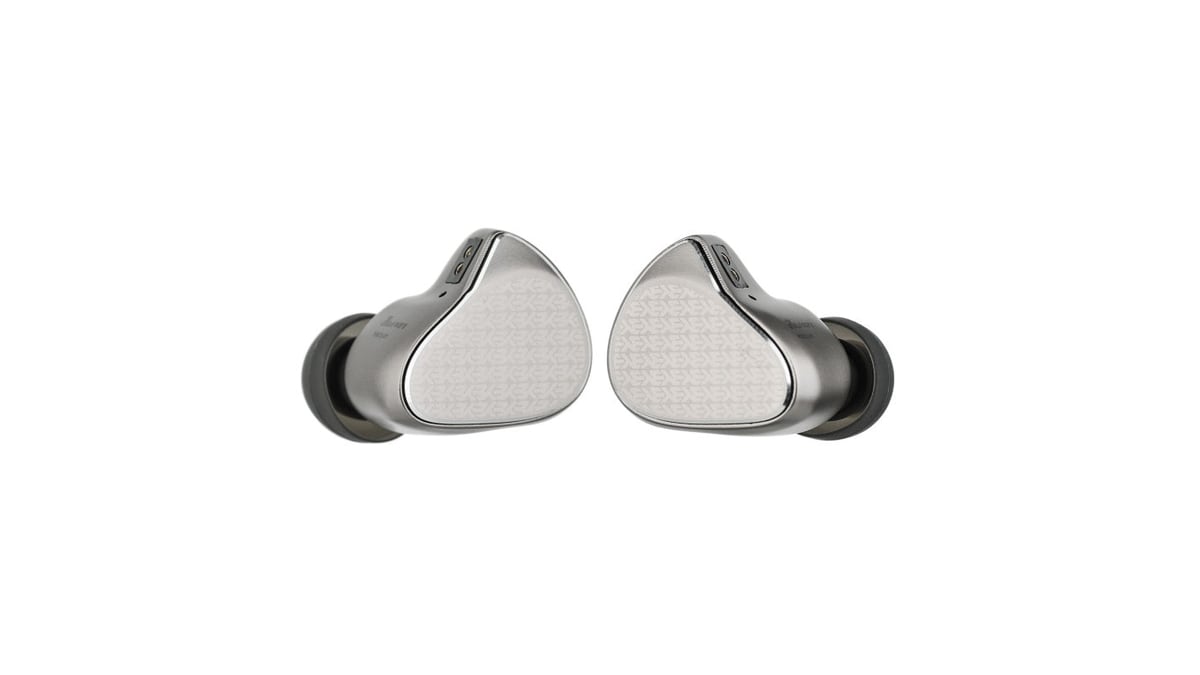
On 2 May 2026, the Kiwi Ears Halcyon launched on Kickstarter with a claim that is, to put it plainly, genuinely unusual in a category that has grown rather fond of extravagant boasts: the Halcyon is marketed as the world's first in-ear monitor to combine a single dynamic driver, a MEMS transducer, and three balanced armatures in one shell. If that claim holds, this is not simply another multi-driver IEM chasing a specification sheet. It represents a meaningful step in how silicon microelectromechanical systems technology, a driver architecture borrowed from hearing-aid research and laboratory measurement microphones, enters mainstream personal audio. And that is worth examining carefully.
The arrival of MEMS as a commercially deployed driver in an IEM at this price tier is precisely the sort of structural shift that tends to get buried under crowdfunding excitement before anyone has had a chance to think it through properly. So let us do that.
What the Kiwi Ears Halcyon actually contains
The driver complement is: one dynamic driver, one MEMS transducer, and three balanced armatures, specifically two custom DEK units and one custom WBFK balanced armature. Five discrete transducers in total, each assigned to a region of the frequency spectrum, with the MEMS driver handling ultra-fast transients and high-frequency detail. The frequency response is specified from 10 Hz to 42 kHz, sensitivity sits at 109 dB/mW, and impedance is rated at 29 ohms. The cable connection uses the standard 0.78 mm 2-pin detachable format. Optional accessories include a USB-C DSP-EQ cable and a boom-mic cable, the latter making the Halcyon a credible proposition for remote work or mobile use without sacrificing audio quality.
Those specs deserve a moment's consideration. At 29 ohms and 109 dB/mW, the Halcyon is easy to drive. A portable DAC such as the Chord Electronics Mojo 2 (check price) would be an obvious and well-matched partner for home and travel use, but a modern smartphone's headphone output or a USB-C dongle DAC should have no trouble reaching satisfying listening levels. That 42 kHz upper-frequency extension is clearly the MEMS driver's contribution, and while the audibility of content above 20 kHz is a familiar and not entirely settled debate, the real significance of pushing that ceiling lies in what a transducer capable of reproducing 42 kHz can do with the leading-edge transient structure of frequencies you absolutely can hear: the shimmer and decay of cymbals, the bite of a plucked acoustic guitar string, the micro-detail in breath and bow noise.
For a deeper grounding in why impedance and sensitivity matter when pairing an IEM with a source, I'd encourage less experienced readers to work through our glossary entries. Our explainer on headphone sensitivity and impedance covers the same ground in more detail. They're relevant here because a 29-ohm, high-sensitivity load like the Halcyon will reveal hiss in sources with elevated output impedance, something to bear in mind if you're considering pairing it with older portable amplifiers. The reasons are laid out in our piece on headphone output impedance.
A brief history of driver tribridism
The concept of combining multiple driver technologies in a single IEM shell is not new. Hybrid IEMs, pairing a dynamic driver for bass with one or more balanced armatures for mid and treble frequencies, became commercially mainstream during the mid-2010s as Chinese audio manufacturers demonstrated that the complementary strengths of each technology could be harnessed without the crossover and phase challenges that had previously made such designs difficult to execute cleanly.
The logic is straightforward in principle. Dynamic drivers, which work on the same electromagnetic principles as full-size loudspeaker drivers, produce bass with a sense of weight, texture and natural decay that balanced armatures have historically struggled to replicate. BAs, originally developed for hearing aids and refined for in-ear monitors, offer extraordinary detail resolution, tight transient control and excellent efficiency, but they can sound mechanical or constrained at the frequency extremes, particularly the deep bass. A hybrid uses both where each is strongest.
The tribrid concept extends this further by introducing a third driver technology, most commonly a planar magnetic or electrostatic element, to handle the uppermost treble frequencies, where both dynamic drivers and balanced armatures can exhibit distortion artefacts and reduced control. Electrostatic tribrid IEMs, requiring dedicated energiser circuitry built into the earphone shell, have been available from manufacturers including Kinera, Hidizs and 64 Audio at premium price points. They represent compelling engineering, but the energiser requirement adds complexity, cost and, in some implementations, a slight character to the treble that is not universally loved.
MEMS is a different proposition entirely.
Why MEMS matters
Microelectromechanical systems drivers are fabricated using semiconductor manufacturing processes, which means they can be produced with dimensional consistency that is essentially impossible to achieve with wound voice coils and hand-assembled balanced armature reeds. A MEMS transducer is, at its core, a silicon diaphragm actuated by electrostatic or piezoelectric forces at a microscopic scale. The same technology underlies the MEMS microphones in your smartphone, the ones that have become extraordinarily sensitive and low-noise over the past decade.
What this manufacturing heritage delivers in a loudspeaker context is speed. The moving mass of a MEMS diaphragm is orders of magnitude lower than even the smallest balanced armature assembly. Lower moving mass means faster acceleration and deceleration, and in acoustic terms this translates to transient response that can approach theoretical ideals in the frequency range the driver is assigned to handle. The high-frequency air-pressure variations that encode the micro-detail of recorded sound, the kind that separates a technically competent recording from one that sounds genuinely alive, are reproduced with less smearing and less intermodulation distortion from the driver's own mechanical resonances.
The engineering challenge is integrating a MEMS transducer into an acoustic system designed around a dynamic driver and balanced armatures, each of which has vastly different acoustic impedance characteristics and output levels. Getting crossover points right, maintaining phase coherence across the handoff frequencies, and ensuring the MEMS unit operates within its optimal excursion range across real-world listening levels are not trivial problems. A passive crossover splits the signal so each driver only receives the band it is good at, and our guide to parallel and series IEM crossovers shows why two designs with identical driver lists can still sound very different. The Halcyon's use of the MEMS element specifically for ultra-fast transients and high-frequency detail suggests Kiwi Ears has taken a sensible, conservative approach: let the MEMS driver do what it does best, high up in the frequency range, and keep the dynamic driver and balanced armatures in their established comfort zones.
Reading the three-BA arrangement
The three-BA complement, two custom DEK units and one custom WBFK, further suggests a carefully considered crossover architecture. Using two BA types for midrange and lower treble, and a third distinct unit (the WBFK is a wide-bandwidth design) likely bridging toward the MEMS handoff, implies an attempt to maintain tonal continuity across what is potentially a complex multi-way crossover. Whether the execution delivers on that ambition is something only extended listening will confirm, but the component selection reads as purposeful rather than a numbers game.
What multi-driver designs are actually trying to solve
It is worth being honest about the underlying problem these increasingly complex driver arrays are attempting to address, because the marketing narrative around driver count can obscure the genuine engineering goal.
Every transducer technology has a frequency range within which it operates cleanly and a range in which it degrades. A single dynamic driver, no matter how well engineered, will exhibit cone breakup modes, rising harmonic distortion and reduced transient control as it approaches the limits of its designed operating range. A single balanced armature, even the finest Knowles or Sonion unit, will compress dynamics and add a characteristic tonal signature outside its sweet spot. Electrostatic and MEMS elements offer extraordinary resolution but insufficient excursion for anything below the upper midrange.
The tribrid philosophy, done well, assigns each frequency region to the driver that handles it most cleanly, then uses a crossover network to stitch those regions together with minimum phase discontinuity and tonal character. The challenge is that every additional driver and every crossover point introduces new potential failure modes: group delay mismatches, resonances in the acoustic cavities connecting each driver to the ear canal, and tonal coloration from the crossover components themselves.
This is why a well-executed two-driver hybrid can sound more coherent than a poorly implemented five-driver design, and why driver count alone is never the right metric. I'd argue the Halcyon's claim to relevance is not the five-driver count per se. It is the specific inclusion of MEMS technology, which genuinely has not appeared in a mainstream tribrid IEM before, combined with what appears to be a thoughtful assignment of driver roles.
For readers who want to understand how soundstage and imaging emerge from transducer quality and crossover coherence, our glossary entry goes into detail that is directly relevant to evaluating claims like Kiwi Ears' , because a tribrid design that gets its crossover wrong will throw imaging in unpredictable ways, regardless of how exotic the component list looks.
The USB-C DSP-EQ cable: pragmatic or essential?
The optional USB-C DSP-EQ cable deserves more attention than it typically receives in IEM launch coverage. The ability to apply digital signal processing at the cable level, effectively creating a software-adjustable crossover and equalisation path that bypasses the fixed passive crossover in the shell, is a meaningful flexibility tool, particularly in a driver design as complex as the Halcyon's.
MEMS drivers, because of their semiconductor fabrication, have extremely consistent unit-to-unit characteristics. But the interaction between a MEMS unit and the acoustic cavities in an IEM shell, and the subjective balance between the MEMS-handled treble and the BA-handled midrange, may not suit every listener or every programme material. A DSP-EQ cable gives Kiwi Ears and the user a path to refine that balance without mechanical modification. It also positions the Halcyon as a tool for the kind of listener who takes seriously the idea that headphone frequency response should be tuned to their individual ear canal geometry and preference, not simply accepted as factory-set. If you are new to that approach, our guide to using headphone EQ properly is a sensible starting point, because heavy boosts can do more harm than good.
The boom-mic option is similarly practical. It acknowledges that a $200–$400 IEM (approximate Kickstarter tier territory, though exact AU pricing had not been confirmed at the time of writing) is a realistic daily carry for someone who also takes calls, attends video conferences, and wants their personal audio to serve multiple functions without compromising on either end.
The broader context: MEMS in personal audio is arriving
The Halcyon is not happening in isolation. Several transducer technology companies, including USound and xMEMS, have been developing MEMS loudspeaker elements targeted at in-ear applications for several years. xMEMS in particular has been vocal about targeting high-performance IEM manufacturers, and their Montara Plus and Cowell MEMS modules have appeared in reference designs from various audio engineering firms. The transition from reference design to commercial product in a mainstream IEM, which is what the Halcyon represents if Kiwi Ears' tribrid claim holds, is the step that turns a technology story into a consumer story.
It also has implications for what comes next. If MEMS integration at this level of complexity can be achieved at Kickstarter-accessible price points, the technology will spread rapidly through the IEM market. The first generation of MEMS-tribrid IEMs will have variable execution quality, as every first-generation technology category does. But the underlying physics of low-mass, high-speed, semiconductor-consistent MEMS diaphragms are not going away, and the refinement curve tends to be steep once the manufacturing volumes justify it.
For Australian buyers, the Kickstarter model carries the usual caveats: currency conversion at the time of pledge, import duties applicable to goods above the $1,000 AUD low-value threshold if the tier pricing exceeds it, and the inherent delivery uncertainty of crowdfunded hardware. None of these concerns are specific to Kiwi Ears, and the brand has a credible track record with previous IEM releases. But they are worth building into your decision calculus if you are considering backing the campaign.
What to drive the Halcyon with
In terms of what to drive the Halcyon with, the 29-ohm, 109 dB/mW spec puts it squarely in the territory where quality matters more than power. A clean, low-output-impedance source, whether a dedicated portable DAC-amplifier or a well-specified desktop unit, will reveal what the MEMS driver is actually contributing. Understanding digital-to-analogue conversion at a fundamental level becomes directly relevant here: the Halcyon's extended high-frequency capability is only meaningful if the upstream DAC is resolving those frequencies cleanly in the first place. Budget compromises in the chain upstream of the IEM will undermine exactly the performance attributes the MEMS driver is designed to deliver.
Fit matters just as much as the source. A tribrid with a carefully tuned crossover can lose its bass weight and treble balance if the seal is poor, so spend time on tips before judging the tuning. Our piece on IEM ear tips explains why this is often the cheapest upgrade available.
Why the Halcyon claim deserves attention
The Kiwi Ears Halcyon is interesting not because tribrid IEMs are new, because they are not, but because MEMS transducer technology in a commercial, mainstream IEM product represents a genuine first if the claim stands. The driver architecture, as described, is internally logical: use the dynamic driver for bass weight and texture, the balanced armatures for midrange body and lower-treble detail, and the MEMS unit for the ultra-fast transient resolution and high-frequency extension that neither of the other technologies handles as cleanly.
Whether the crossover implementation actually delivers coherent, phase-correct integration across five drivers is a question that cannot be answered from a specification sheet. It requires ears and extended listening across a range of programme material. That assessment will come.
What can be said now is that the underlying technology choice is credible, the specification window is sensibly positioned for easy driving, and the optional DSP-EQ cable suggests that Kiwi Ears is aware that getting a design this complex right may require some tuning flexibility. For the IEM enthusiast who has been watching MEMS technology approach consumer personal audio from the hearing-aid and industrial measurement sectors, the Halcyon is the product that may mark the moment it arrived properly, and that is worth paying attention to.
Common questions
- What makes the Kiwi Ears Halcyon different from other tribrid IEMs?
- The Halcyon is claimed to be the first IEM to combine a dynamic driver, a MEMS (microelectromechanical systems) transducer, and balanced armatures in a single shell. Previous tribrid IEMs used electrostatic elements for high-frequency duties; the Halcyon's use of a MEMS driver — a semiconductor-fabricated transducer capable of extremely fast transient response — is the key differentiator.
- What is a MEMS driver and why does it matter for audio?
- A MEMS driver is a transducer fabricated using semiconductor manufacturing processes, similar to the MEMS microphones in smartphones. Its diaphragm has an extraordinarily low moving mass, which translates to extremely fast acceleration and deceleration. In an IEM, this means the MEMS unit can reproduce high-frequency transients with less distortion and smearing than conventional balanced armature or dynamic drivers operating at those frequencies.
- Is the Kiwi Ears Halcyon easy to drive from a smartphone or portable source?
- Yes. At 29 ohms impedance and 109 dB/mW sensitivity, the Halcyon is an efficient, easy-to-drive load. A quality USB-C dongle DAC or portable DAC-amplifier will be sufficient. However, because the MEMS driver delivers extended high-frequency resolution, using a clean, low-output-impedance source will reveal more of what the design is capable of.
- What are the optional cable accessories for the Halcyon?
- Kiwi Ears offers an optional USB-C DSP-EQ cable, which allows digital equalisation and signal processing to be applied at the cable level — useful for fine-tuning the frequency balance of a complex five-driver design. A boom-mic cable is also available, making the Halcyon a dual-purpose option for critical listening and voice communication.
- When and where was the Kiwi Ears Halcyon announced?
- The Halcyon was announced on Kickstarter on 2 May 2026. Australian buyers should factor in currency conversion at the time of pledging and any applicable import duties for goods that may exceed the AUD low-value threshold, as with any crowdfunded hardware campaign.

I'm Sofia, and I get to play with the silly stuff — the statement amplifiers, the reference loudspeakers, the cost-no-object systems that most of us will only ever hear at a show. Someone has to, and I take it seriously: at this level the price stops mapping to performance and starts mapping to engineering, craft and ego, and part of my job is telling you which is which. I love the extreme end of this hobby, but I'm not dazzled by a big number on a price tag.
Covers flagship and cost-no-object reference systems
More from Sofia Laurent
 Negative feedback in amplifier design: the argument that never endsNegative feedback cuts amplifier distortion but divides designers. Here's what it does, why some statement amps avoid it, and what it means for you.
 The synergy tax: why mismatched gear costs more than cheap gearThe synergy tax explained: why pairing mismatched hi-fi components quietly costs more than buying modest, well-matched gear.
 Rear-port floorstanders near a glass wall: a risky pairingRear-ported floorstanders against glass walls cause boundary reinforcement and reflections. Here's how to place, measure and tune them properly.
- Infrasonic bass below 20Hz: chasing the octave you feel, not hearBelow 20Hz is infrasonic bass: felt more than heard. Here's what it takes to reproduce it properly, and whether a statement system should bother.
- Why statement systems still get beaten by the zone two speakerA $150,000 reference system is only as good as the worst-sounding zone it's networked to. Here's why multiroom integration is the statement system's real weak point.
- Why a statement floorstander can be the wrong speaker in the roomSix-figure floorstanders fail in rooms that were never built for them. Here's how to tell if your space can actually support one before you buy.