Klipsch Project Apollo: an audiophile moonshot at CES 2026
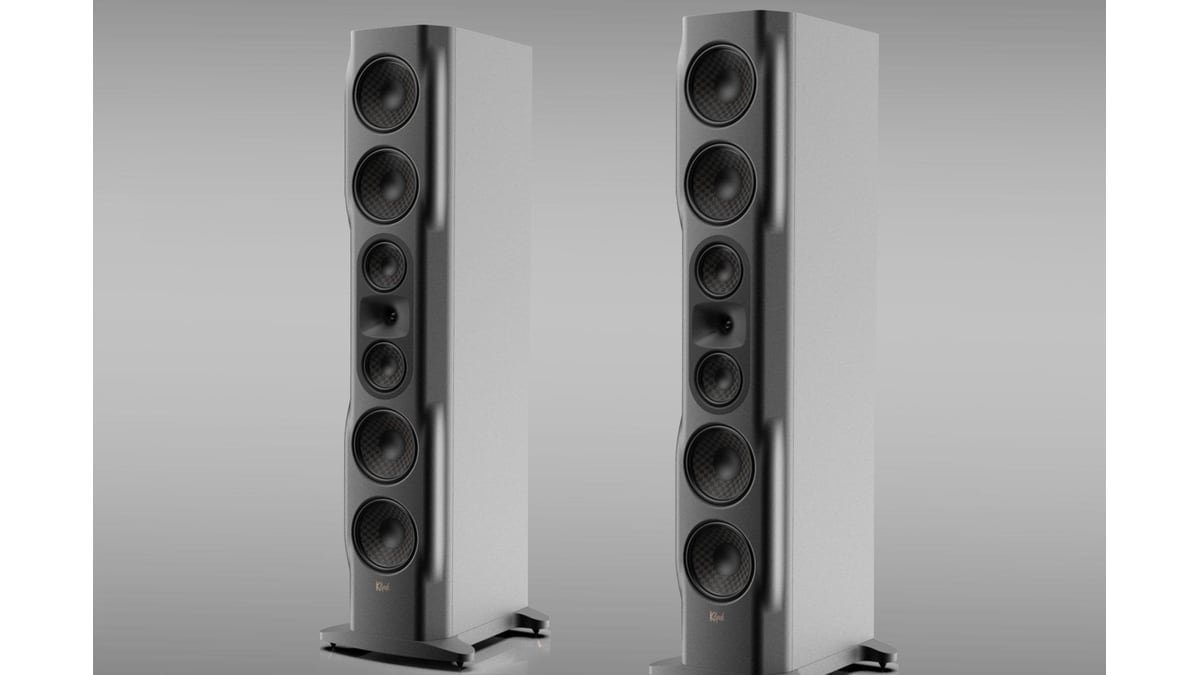
Eighty years in, and Klipsch is still reaching for the sky
There is something quietly audacious about a brand that has spent eight decades synonymous with the word "sensitivity" deciding, at CES 2026, that its most important statement is one it is not yet ready to fully reveal. That, in essence, is what Klipsch did in Las Vegas in January: framed its 80th anniversary around a tower speaker concept called Project Apollo, a name that carries obvious symbolic weight, and then declined to release full specifications for it. Not a finished product, not a price, not a ship date. Just a vision, a driver array, and a great deal of implied ambition.
For a company whose history is inseparable from Paul W. Klipsch's obsessive pursuit of horn-loaded efficiency, the choice to call this project Apollo is not accidental. The original Apollo programme was defined by engineering audacity and an almost irrational commitment to a goal that seemed, at the time, barely achievable. Whether Klipsch's internal teams have a sense of humour about that parallel or are dead serious about the metaphor, the message is clear: this is meant to be a moonshot. A genuine, no-compromises attempt to plant a flag in audiophile territory the brand has not historically been associated with at the very top of the market.
So what do we actually know, what can we reasonably infer, and, for Australian readers, why should you care when the thing isn't even a production unit yet? Let me work through all of it.
What Klipsch actually showed at CES 2026
Klipsch structured its CES 2026 presence around two distinct pillars. The first was the Reference Signature Series, a more immediately tangible product family befitting an 80th-anniversary celebration, positioned as the definitive expression of the core Klipsch sound for serious enthusiasts who don't need to wait for a concept to become a product. The second, and the one that generated the most conversation, was Project Apollo itself.
Project Apollo is described as a flagship tower concept. Architecturally, it is built on Klipsch's horn-loaded heritage, which is to say it is not abandoning what has made the brand distinctive for eight decades, but rather using that heritage as a foundation for something more ambitious. The driver configuration is an MTM array: midrange-tweeter-midrange, a topology with a long pedigree in high-end speaker design.
That MTM arrangement is worth pausing on, because it tells you something meaningful about where Klipsch is aiming. An MTM configuration, sometimes called a D'Appolito array after engineer Joseph D'Appolito, who formalised its acoustic properties, creates a symmetrical radiation pattern around the tweeter axis. When executed well, it produces a very specific set of benefits: a narrower vertical dispersion that reduces floor and ceiling reflections, a broader and more coherent horizontal soundstage, and a point-source-like integration between the drive units. These are not the priorities of a speaker designed to fill a large room with effortless volume. These are the priorities of a speaker designed to reward careful positioning and attentive, focused listening. In other words, the priorities of a genuine audiophile loudspeaker.
Combined with horn loading, which Klipsch has refined over 80 years into a genuinely sophisticated science and not merely a throwback to the valve era, an MTM array suggests a flagship that could offer the visceral dynamics and sensitivity Klipsch is known for, alongside the precision imaging and coherence that critics have sometimes felt the brand's more mainstream products sacrifice in the name of scale. If the engineering team can make those two things coexist at the highest level, Project Apollo could be genuinely interesting. Klipsch's own official site is the place to check for any confirmed detail as it emerges.
The significance of the MTM horn-loaded combination
To understand why this particular combination matters, it helps to understand what horn loading actually does and what its trade-offs have historically been. A horn is, at its most fundamental, an acoustic transformer: it couples the relatively small diaphragm of a compression driver to a much larger volume of air with far greater efficiency than a conventional direct-radiating cone can achieve. The result is dramatically higher sensitivity, the ability to produce high sound pressure levels from modest amplifier power, and a certain quality of dynamic aliveness that is very difficult to replicate with conventional designs.
The trade-offs, historically, have included coloration introduced by the horn mouth and throat geometry, limited bandwidth requiring careful crossover work, and dispersion characteristics that can make in-room integration challenging. These are not trivial engineering problems. The best horn-loaded speakers in the world, those from companies like Avantgarde Acoustic, Cessaro, and JBL's Everest-class offerings, address them through extremely precise geometry, exotic materials, and crossover networks of considerable sophistication. They are also, without exception, extremely expensive.
What Klipsch has as an advantage that those boutique manufacturers do not is eighty years of accumulated institutional knowledge about horn geometry specifically. Paul Klipsch spent decades refining the corner horn and the tractrix horn profile, publishing his work, iterating relentlessly. That body of knowledge is not nothing. If the Project Apollo team is drawing on it seriously, and the framing of the concept suggests they are, then they are starting from a position of genuine expertise rather than reinventing the wheel.
The MTM topology layered over that horn foundation suggests a specific target: soundstage and imaging performance that can compete with the finest conventional dynamic speakers at the price point the finished product will presumably occupy. If you have heard a well-implemented MTM design (the Focal Kanta No.2 (check price) uses a related approach with its IHL tweeter surrounded by midrange drivers), you will have some sense of what that coherent, enveloping presentation can feel like. Now take that quality and marry it to the dynamic headroom and efficiency of a serious horn-loaded system. That is the promise Project Apollo appears to be making.
Why tease Project Apollo now if it's not ready?
This is the question that strikes me as most interesting from a strategic perspective, and the answer probably has several layers. The most obvious is the 80th anniversary context: CES 2026 was Klipsch's moment to make a statement about what the brand stands for, and showing only a refined version of existing products would have felt insufficient for that occasion. Project Apollo gives the anniversary narrative a forward-looking dimension: not just "look how far we've come" but "look where we're going."
There is also a more practical commercial logic. The high-end audio market, particularly at the flagship level, operates on very long decision cycles. Buyers at this level are not impulse purchasers; they research, they audition, they deliberate. By introducing Project Apollo as a concept now, Klipsch begins building awareness and anticipation among the exact audience it needs to reach before a single production unit ships. By the time the speaker is actually available, and some CES 2026 concepts are expected to become finalized products later in 2026, the conversation will already have been running for months.
For Australian readers, this timeline matters. If finalized products do emerge in the second half of 2026, Australian availability will realistically trail that by some margin. Our market, for flagship speakers especially, often sees products arrive six to twelve months after their North American or European launches, and pricing in AUD at current exchange rates will add a further consideration. The practical takeaway for now is to watch this space carefully rather than make any purchasing decisions around it.
Where does this sit in the current high-end landscape?
The high-end floorstander market in 2026 is genuinely competitive. Brands like KEF, Focal, Bowers & Wilkins, and Wilson Audio have all invested heavily in driver technology, cabinet geometry, and crossover refinement. The Focal Kanta No.2 (check price) remains a benchmark for what French engineering and beryllium tweeter technology can achieve in its price bracket. KEF's coaxial Uni-Q driver, deployed across the R and Reference series, represents a fundamentally different approach to point-source integration. These are serious, mature products from brands that have been making statements at the high end for decades.
What Klipsch can offer that none of those brands can is horn efficiency and the specific dynamic quality that comes with it. At reference listening levels, a high-sensitivity horn-loaded speaker sounds categorically different from a low-sensitivity conventional dynamic: more alive, more immediate, with a sense of ease that no amount of amplifier power can fully replicate with a conventional design. If Project Apollo delivers that quality alongside the imaging precision the MTM array suggests it is targeting, it will occupy a genuinely distinctive position rather than competing directly with designs that have a decade's head start in the conventional high-end paradigm.
Klipsch's horn-loaded speakers have also always paired exceptionally well with low-powered valve amplification, a pairing that remains deeply appealing to a specific segment of the audiophile community. A flagship model that extends the brand's reach into that world, while remaining tractable with solid-state amplification, would broaden its appeal considerably. Whether Project Apollo is designed with that versatility in mind is something we simply don't know yet, given the absence of specifications.
The Reference Signature Series: the more immediate story
While Project Apollo carries the most conceptual weight, it would be a mistake to overlook the Reference Signature Series that Klipsch also presented at CES 2026. For Australian buyers who want a tangible Klipsch product in the near term, and who are evaluating what the brand can do at the high end of its current lineup, the Reference Signature range is the more immediately relevant story.
Klipsch has positioned the Reference Signature Series as an 80th-anniversary expression of its core heritage, the definitive version of what the brand does with horn-loaded dynamic technology in a more conventional product framework. Without detailed specifications having been released at this stage, it's difficult to say exactly how it differs from the existing Reference Premiere lineup in engineering terms, but the positioning as a Signature product suggests meaningful upgrades rather than cosmetic differentiation.
For buyers currently evaluating floorstanders in the serious enthusiast bracket, understanding the fundamental trade-offs between standmount and floorstander designs is useful context for where any Klipsch tower product sits. The scale of presentation, the bass extension, and the room interaction dynamics are all meaningfully different from what even the finest standmount speakers can achieve, and Klipsch's horn-loaded towers have always been particularly emphatic on those differences. Our piece on when two standmounts beat one floorstander covers the same ground from the other direction.
Room and system considerations for Klipsch at the high end
One aspect of Project Apollo that deserves attention even at this early stage is the room and system context it will demand. High-sensitivity horn-loaded speakers are not forgiving of poor room acoustics. Their efficiency and dynamic precision can make room problems more audible, not less. Anyone seriously considering a flagship Klipsch tower should think carefully about acoustic treatment as part of the overall system investment, not an optional extra.
Similarly, the amplification question is non-trivial. High-sensitivity speakers amplify noise floors and distortion characteristics of upstream electronics in ways that lower-sensitivity designs do not. The good news is that the efficiency means you have access to a much wider range of amplifier topologies, including low-powered valve designs that would be utterly inadequate for a conventional speaker of similar scale. The bad news is that upstream quality matters more, not less. Getting the gain structure right across the entire chain becomes a priority.
If you want to put numbers on it, our walkthrough of how to calculate the power you actually need shows how sensitivity and room size interact. And because efficient speakers expose what sits upstream, it is worth reading about power supply topology in high-end amplifiers before settling on a partner.
What to watch for as 2026 unfolds
Klipsch has indicated that some CES 2026 concepts are expected to become finalized products before the year is out. The questions I will be watching closely are: at what price point does Project Apollo ultimately land, what amplifier impedance and sensitivity specifications does it carry, and how does Klipsch position it relative to the established high-end European brands that currently own this conversation?
For Australian readers, I would add: who will distribute it here, what will the landed price in AUD look like, and will there be meaningful demonstration opportunities before purchase? A flagship speaker of this ambition is not something you buy unheard, and the Australian demonstration network for high-end products remains thinner than any of us would like.
In the meantime, Project Apollo is doing exactly what a well-named concept should do: it is making people think about Klipsch differently. Whether the finished product justifies the anticipation is a question only listening time can answer. But eighty years of horn-loaded engineering heritage, combined with what appears to be a genuine commitment to audiophile-grade precision, gives the project more credibility than most CES concepts earn. I will be watching this one very carefully as the year progresses.
Common questions
- What is Project Apollo from Klipsch?
- Project Apollo is a flagship tower speaker concept revealed by Klipsch at CES 2026 as part of the brand's 80th anniversary showcase. It features an MTM (midrange-tweeter-midrange) driver array built on Klipsch's horn-loaded heritage, and is aimed at the high-end audiophile market. At the time of the show, it was presented as an early concept rather than a finalised production product, with full specifications not yet released.
- What does MTM mean in speaker design, and why does it matter for Project Apollo?
- MTM stands for midrange-tweeter-midrange, a symmetrical driver arrangement where the tweeter is flanked by two midrange drivers. This configuration, sometimes called a D'Appolito array, creates a narrower vertical dispersion pattern that reduces floor and ceiling reflections, and produces a coherent, point-source-like presentation that can improve soundstage and imaging precision. Combined with Klipsch's horn-loaded driver technology, it suggests Project Apollo is targeting audiophile-grade imaging performance alongside the brand's characteristic high sensitivity and dynamic efficiency.
- When will Project Apollo be available in Australia?
- Klipsch has indicated that some CES 2026 concepts are expected to become finalised products later in 2026, but no specific release date or pricing has been confirmed. Australian availability will realistically follow North American and European launches, potentially by several months, and local pricing in AUD will depend on distributor arrangements and exchange rates at the time. We recommend monitoring Klipsch's official channels and Australian audio retailers for updates.
- What kind of amplifier would suit a high-sensitivity horn-loaded speaker like Project Apollo?
- High-sensitivity horn-loaded speakers are unusually flexible in their amplifier pairing — their efficiency means they can reach very high volume levels from quite modest amplifier power, making them compatible with low-powered valve amplifiers that would be completely inadequate for conventional low-sensitivity designs. However, that same sensitivity means they will reveal the noise floor and distortion characteristics of upstream electronics more readily, so upstream quality matters significantly. Until Project Apollo's final specifications are confirmed, specific amplifier recommendations aren't possible, but careful attention to gain structure across the entire system will be important.

I'm Sofia, and I get to play with the silly stuff — the statement amplifiers, the reference loudspeakers, the cost-no-object systems that most of us will only ever hear at a show. Someone has to, and I take it seriously: at this level the price stops mapping to performance and starts mapping to engineering, craft and ego, and part of my job is telling you which is which. I love the extreme end of this hobby, but I'm not dazzled by a big number on a price tag.
Covers flagship and cost-no-object reference systems
More from Sofia Laurent
 The synergy tax: why mismatched gear costs more than cheap gearThe synergy tax explained: why pairing mismatched hi-fi components quietly costs more than buying modest, well-matched gear.
 Rear-port floorstanders near a glass wall: a risky pairingRear-ported floorstanders against glass walls cause boundary reinforcement and reflections. Here's how to place, measure and tune them properly.
- Infrasonic bass below 20Hz: chasing the octave you feel, not hearBelow 20Hz is infrasonic bass: felt more than heard. Here's what it takes to reproduce it properly, and whether a statement system should bother.
- Why statement systems still get beaten by the zone two speakerA $150,000 reference system is only as good as the worst-sounding zone it's networked to. Here's why multiroom integration is the statement system's real weak point.
- Why a statement floorstander can be the wrong speaker in the roomSix-figure floorstanders fail in rooms that were never built for them. Here's how to tell if your space can actually support one before you buy.
- Diffusion in statement rooms: when scattering sound beats absorbing itIn a statement room, piling on absorption kills the air around the music. Here's when diffusion is the better tool, and where I've seen it misused.