Lossless multiroom at the high end: how to build a system that doesn't compromise your source
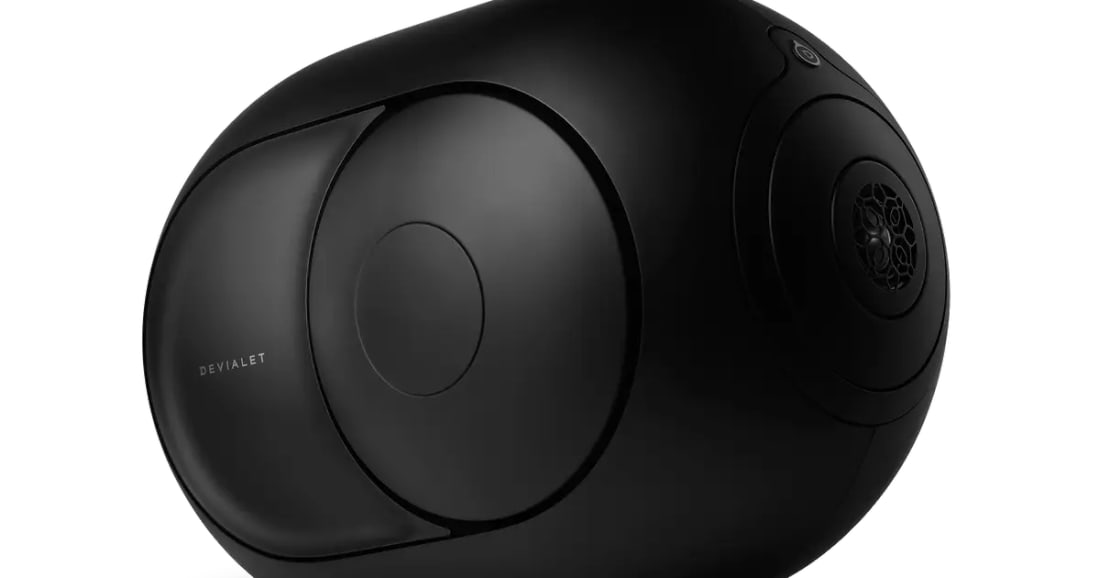
The most common mistake I see in serious listening rooms across Sydney isn't a bad amplifier or the wrong speakers. It's a beautifully engineered main system fed by a multiroom infrastructure that's quietly mangling the source before a single watt leaves the amp. The owner has spent six figures on transducers and electronics, then routed everything through a consumer hub that resamples, transcodes, or volume-levels the stream on its way out. It happens more often than anyone admits.
Multiroom audio has a reputation problem in high-end circles. The assumption is that you either have a serious system or you have convenient whole-home audio — not both. That assumption is, mostly, wrong. But it takes some deliberate architecture to prove it wrong.
Why most multiroom systems degrade your source
The convenient consumer platforms — Sonos, WiiM, Amazon Echo — work by accepting whatever stream arrives and converting it internally to a fixed clock domain before output. Sonos, for instance, has historically resampled all audio to 48 kHz internally regardless of source. The company has pushed firmware changes over the years that improve this, and the ERA 300 and later Sonos Amp hardware is considerably better than the original Connect, but the underlying architecture prioritises synchronisation across zones over bit-perfect delivery. That's a reasonable engineering trade-off for a product designed to play background music in twelve rooms simultaneously. It's the wrong trade-off for your listening room.
WiiM devices at the budget end have surprised a lot of people — they support FLAC up to 192 kHz and pass-through to an external DAC without resampling in most modes — but their internal DAC and output stage are not serious high-end components, and the clocking story is opaque. For a secondary zone feeding a good external DAC, fine. As the source for your reference system, probably not.
The deeper issue is clock domain management. Synchronised multiroom audio requires every endpoint to lock to a common timing reference, which traditionally meant each device doing its own sample-rate conversion so the zones can play in step. Asynchronous playback, which is what you want for bit-perfect output, and synchronised multiroom playback are in tension with each other by design. Getting both simultaneously is the engineering problem the high-end has been slowly solving.
The Roon architecture and why it handles this differently
Roon's signal path is worth understanding properly because it's the platform most high-end users land on, and it does several things that cheaper alternatives don't. The Core (the server software, running on a NUC, a Nucleus, or a capable NAS) handles all DSP and library management centrally. Endpoints receive a stream that has already been processed — EQ, upsampling, room correction if you've enabled it — and the endpoint's job is simply to play what arrives.
Critically, Roon supports RAAT (Roon Advanced Audio Transport), which is their own protocol. For endpoints that support it natively — Naim streamers, Lumin, Auralic, the better Cambridge Audio products — RAAT delivers bit-perfect audio with the clock controlled by the endpoint rather than the server. This is the asynchronous model: your DAC or streamer sets the pace, and Roon feeds it accordingly. The result is that a Naim ND5 XS2 in your listening room gets the same bit-perfect stream it would receive from direct Tidal Connect or local playback, whilst Roon's library interface and multi-zone management sit on top without touching the signal.
I've spent time in a few different Roon installations — including one in Woollahra where a dealer had set up a Nucleus+ feeding a dCS Rossini via ethernet — and the transparency of the signal path in that configuration is not something you can argue with. The dCS showed "bit-perfect" in Roon's signal path display, and listening confirmed it. Whether you trust Roon's own diagnostic or not, the output was indistinguishable from direct playback from the dCS's own network interface.
That said: Roon is expensive (currently around AU$950 for a lifetime licence, or $23/month on subscription), and the Nucleus hardware adds another significant cost. You can run Core on a repurposed PC or Mac Mini, which is what I'd suggest before committing to Nucleus hardware. See our guide to the best DACs and network streamers for endpoint options across a range of budgets.
Zone architecture: not all rooms deserve the same treatment
Here's the honest version of a multiroom architecture for someone who cares about sound: not every zone needs the same hardware, and trying to make them all equal is expensive and unnecessary. Design your zones in tiers.
The primary listening room — the one with the serious amp, the speakers you agonised over, the room treatment you've invested in — gets a dedicated endpoint with its own high-quality DAC and clock. A Lumin T3, an Auralic Aries G2.2, or a Naim ND5 XS2 in this role makes sense. These devices have been engineered specifically for the asynchronous, bit-perfect playback scenario. They sound different from each other, and choosing between them is a separate conversation, but all three sit in a category where the network transport is not the limiting factor. Your streamer and DAC choices at this level should start with "what does the signal path look like" before anything else.
Secondary zones — kitchen, outdoor area, a spare room — can run on significantly cheaper endpoints without meaningful compromise for casual listening. A WiiM Pro feeding a decent amp, or a Cambridge Audio CXN100 (check price) at the next step up, is entirely appropriate here. The key is routing these zones through the same Roon Core so library management and remote control stay unified, even if the hardware quality varies substantially between zones.
Bathrooms and garages: just use Sonos. Honestly. The acoustic environment in those spaces makes source quality an irrelevance.
The network infrastructure underneath it all
I'm going to say something that Marcus would frame differently but arrives at the same place: the network matters, but not for audiophile reasons. It matters for reliability. A streaming system that dropouts every forty minutes during a quiet passage is useless regardless of how transparent the signal path is. A stable, fast, correctly segmented network is the foundation everything else sits on.
Run ethernet to your primary endpoint. Not because ethernet is sonically superior to Wi-Fi in a rigorously controlled test — that argument belongs in a different article — but because a wired connection eliminates an entire class of reliability variables. Packet loss, interference from a neighbour's router, the occasional Wi-Fi renegotiation: none of these affect a wired connection. At AU$300 per metre for interconnects in a reference system, spending $200 on a proper ethernet run from your switch to your streamer is not a hard call.
Separate your audio devices onto a VLAN if your router supports it. This is network hygiene, not magic. It prevents your Ring doorbell or smart TV from introducing broadcast traffic that your streamer's network stack has to process and discard. On consumer-grade routers this isn't an option; on a UniFi or similar managed setup, it's a ten-minute configuration and it's worth doing.
Linear power supplies for network switches are sold as an audiophile upgrade. I'm sceptical — not hostile, just sceptical — because the ethernet physical layer is designed to reject noise, and the evidence that power supply quality at the switch cascades audibly through to the DAC output is thin. If you want to try it, the cost is low. But I'd spend that money on better endpoint hardware first.
Lossless source quality: what you're actually getting from the services
Tidal and Qobuz both deliver FLAC up to 24-bit/192 kHz depending on the track. Apple Music delivers lossless ALAC through AirPlay 2 at up to 24/48, and hi-res lossless via direct USB from an Apple device to a compatible DAC. Spotify's "Spotify HiFi" has been promised, delayed, re-promised, and as of 2025 remains either unavailable or bundled into premium tiers in some markets but not yet Australia.
In practice, Qobuz has the deeper hi-res catalogue for classical and jazz, and their desktop and iOS apps support FLAC delivery without the transcoding that used to affect Tidal's desktop client. Tidal's FLAC implementation through Roon and through RAAT-capable endpoints is reliable and bit-perfect in my experience. For most listening, the difference between a well-mastered 16/44.1 and a 24/96 version of the same recording is smaller than the difference between a good master and a bad one. We covered the streaming service landscape in detail in our DACs and streamers guide — the short version is: pick the service with the catalogue you actually want, and make sure your endpoint supports native FLAC delivery without transcoding.
All-in-one multiroom systems and where they fit
The integrated approach — where a single manufacturer provides server, endpoint hardware, and app — has appeal in terms of simplicity, and some of these systems are genuinely good. Naim's ecosystem (Mu-so for secondary rooms, ND series for primary) is coherent and sounds excellent in the listening room zones. Linn's Exakt architecture goes further: digital signal stays digital all the way to the active crossover inside the speaker, with no analogue conversion until the amplifier stage. That's an extreme implementation, and the cost reflects it, but the principle is sound.
The downside of the closed ecosystem is inflexibility. If you want to add a turntable feed to your multiroom distribution, or integrate a reel-to-reel output, or route a TV audio return into the same control interface, proprietary systems make this difficult. Roon, by contrast, integrates analogue sources if your endpoint has the inputs, and the Core handles the library and control layer regardless of what's physically connected.
For most serious listeners, my practical suggestion is Roon Core on modest server hardware, a high-quality RAAT-capable endpoint for the primary room, and whatever is convenient and reliable for secondary zones. The Naim Uniti Atom (check price) sits interestingly at the junction here — it's a complete integrated system that also functions as a Roon endpoint, which makes it a sensible choice for a high-quality secondary room where you want real sound but don't need full separates.
The things that genuinely don't matter much
I want to be direct about a few areas where the high-end audio community has, in my view, oversold the importance of specific choices.
Audiophile network switches with proprietary clocking sit in this category. The ethernet specification isolates clocking at each device boundary; the switch's internal clock does not propagate to your DAC's clock domain. I have not heard a controlled demonstration that convinced me otherwise, and I've sat through several. If you have one and it makes you happy, fine — but I'd spend the $800 to $2,000 that these switches cost on better endpoint hardware or room treatment instead.
Similarly, the "Roon sounds better than direct playback" debate has gone on for years. My experience is that Roon in bit-perfect mode, with DSP disabled, on a RAAT endpoint, sounds identical to direct playback from the same service. If there's a difference, it's in the endpoint hardware, not Roon itself. The comparison is worth doing in your own system.
Getting lossless multiroom right is less about finding magic components and more about understanding the signal path from server to DAC, eliminating transcoding and resampling, and giving your primary listening room endpoint the stable network connection and quality hardware it deserves. The rest of the house can run on whatever is convenient. That's not a compromise — it's just sensible architecture.
If you're starting from scratch or reassessing an existing setup, our guide to streaming amplifiers and all-in-ones covers the integrated endpoint options in more detail, and it's a reasonable starting point before you commit to separates.
— Sofia Laurent, High-End & Statement Systems Editor
Common questions
- Can I use Sonos in my high-end listening room?
- For casual background listening, Sonos is perfectly fine — it's convenient and reliable. For a serious listening room where source quality matters, the resampling and synchronisation architecture of Sonos puts it at a disadvantage compared to dedicated network streamers that support bit-perfect, asynchronous output. The Sonos Amp feeding a quality passive system is a step up from wireless Sonos speakers, but if your amplifier and speakers are reference-grade, the source endpoint deserves to match them.
- Does running Roon add any sonic degradation compared to direct streaming from Tidal or Qobuz?
- In bit-perfect mode with no DSP enabled, and on a RAAT-capable endpoint, Roon should deliver an identical signal to direct playback from the streaming service. Roon's signal path display will show 'Lossless' or 'High Quality' depending on whether any processing is occurring — that's your indicator. The most common source of degradation in a Roon setup is DSP that's been left enabled accidentally, or using a non-RAAT endpoint that introduces its own resampling. Check the signal path light in the Roon interface.
- How important is the server hardware I run Roon Core on?
- Less important than many sources suggest, for audio quality. Roon Core is doing library management, DSP (if enabled), and stream delivery — none of which requires exotic hardware for typical use. A modern Intel NUC or Mac Mini handles it comfortably. Where server hardware does matter is for heavy DSP loads: if you're running convolution filters or significant upsampling across multiple simultaneous zones, an underpowered CPU will struggle. For a single primary zone with minimal DSP, a mid-range NUC is entirely adequate.

I'm Sofia, and I get to play with the silly stuff — the statement amplifiers, the reference loudspeakers, the cost-no-object systems that most of us will only ever hear at a show. Someone has to, and I take it seriously: at this level the price stops mapping to performance and starts mapping to engineering, craft and ego, and part of my job is telling you which is which. I love the extreme end of this hobby, but I'm not dazzled by a big number on a price tag.
Covers flagship and cost-no-object reference systems
More from Sofia Laurent
 Negative feedback in amplifier design: the argument that never endsNegative feedback cuts amplifier distortion but divides designers. Here's what it does, why some statement amps avoid it, and what it means for you.
- The synergy tax: why mismatched gear costs more than cheap gearThe synergy tax explained: why pairing mismatched hi-fi components quietly costs more than buying modest, well-matched gear.
 Rear-port floorstanders near a glass wall: a risky pairingRear-ported floorstanders against glass walls cause boundary reinforcement and reflections. Here's how to place, measure and tune them properly.
- Infrasonic bass below 20Hz: chasing the octave you feel, not hearBelow 20Hz is infrasonic bass: felt more than heard. Here's what it takes to reproduce it properly, and whether a statement system should bother.
- Why statement systems still get beaten by the zone two speakerA $150,000 reference system is only as good as the worst-sounding zone it's networked to. Here's why multiroom integration is the statement system's real weak point.
- Why a statement floorstander can be the wrong speaker in the roomSix-figure floorstanders fail in rooms that were never built for them. Here's how to tell if your space can actually support one before you buy.