One subwoofer or two: why a second sub fixes what EQ never will
I spent an evening a few months back sitting on a mate's couch in his semi in Prospect, watching him nudge a parametric EQ band up and down trying to tame a 45Hz hump that made every kick drum sound like someone thumping a cardboard box. He'd move the mic six inches to the left and the hump would vanish. Move it back and it returned, worse. That's when I told him the truth nobody wants to hear about single-sub rooms: no amount of EQ fixes a problem that's actually about physics, not electronics.
I know, I know — I'm meant to be the headphones person. But bass management is one of those areas where my studio background actually helps, because control rooms figured this out decades before home cinema did. Most serious mix rooms don't run one sub. They run two, sometimes four, specifically because a single bass source creates uneven pressure across a listening area no matter how good the box or the amp inside it is. Home systems inherited the same physics and mostly ignored the lesson.
Why one subwoofer can never please the whole room
Room modes are standing waves, and they're created by the dimensions of your room interacting with the wavelength of low frequencies. A single subwoofer excites those modes from one point in space, and the resulting peaks and nulls are fixed in position regardless of how much EQ you throw at the receiver. If you're getting a 10dB dip at 60Hz at the main seat, EQ can pull the level down elsewhere to match, but it can't put energy back into a spot where the wave is genuinely cancelling itself out. You'd need more output than any driver or amp can deliver without breakup, and even then, it only fixes that one seat.
This is the bit that trips people up: a single sub, correctly placed and EQ'd for the main seat, can sound genuinely excellent right there and genuinely wrong two metres to either side. I've heard this demonstrated properly at a dealer session in Melbourne where they walked us around a couch with a single 15-inch sealed sub running — glorious at the centre cushion, noticeably thin at the armrests. Move to two subs, positioned asymmetrically, and the variance across the whole three-seat span dropped audibly. Nobody in the room needed a measurement mic to hear it.
What multiple subs actually do differently
The mechanism is straightforward once you see it laid out. Each subwoofer excites the room's modal structure from a different location. Where one sub creates a null, a second sub positioned elsewhere is unlikely to create a null at the exact same spot, because the standing wave pattern from each source is different. Sum the two together and the average response across multiple seats becomes far more even, even though neither sub alone is "correct" for every seat.
This is essentially the finding behind Todd Welti's research at Harman, which is the paper most manufacturers point back to when they spruik multi-sub setups — and it's worth reading if you like your claims backed by actual measurement rather than marketing copy (see the AES/Harman published work on multiple low-frequency sources in rooms). The takeaway that matters for a lounge room: two modest subs, sensibly placed, usually beat one large sub for seat-to-seat consistency, even at equivalent total output.
It's a genuinely different problem to solve than headphone bass, where the driver sits sealed against your ear and the room doesn't get a vote. That's part of why I find this stuff fascinating — it's the exact inverse of what I deal with daily.
Placement strategies that actually work
The classic approach is opposite corners — one sub in the front-left corner, one diagonally opposite at the rear-right, for instance. This tends to excite the room's modes in a complementary way and is a solid starting point if you're not measuring. But "opposite corners" isn't gospel; in an irregular room, or one with an open-plan kitchen bleeding off one side, it can work against you.
My preferred method, and the one most AV installers I trust use, is the "sub crawl": put a single sub in the seating position, temporarily, and crawl around the room on your hands and knees with it playing a bass sweep or looping test tone, listening for where the bass sounds fullest and most even. Wherever your ear says it's best is often a strong location for a permanent subwoofer position. Do this for each sub independently before you commit to final placement, because the goal isn't just "sounds good at the main seat" — it's minimising the total variance across every seat you actually use.
For a lot of Australian living rooms — open-plan, one side against a window rather than a wall — symmetric placement isn't realistic anyway, so this trial-and-error approach earns its keep. Don't assume a solution that looks tidy on paper (matching left and right positions) will measure or sound better than an asymmetric pair that actually accounts for your furniture and doorways.
Sealed vs ported changes the calculation
We've covered the sealed-versus-ported question in more depth elsewhere on the site — see our piece on sealed vs ported subs with a turntable in the room if you haven't already — but it's relevant here too. A ported sub extends deeper for a given size and amp but tends to have a steeper rolloff below tuning, which can interact more dramatically with room modes right at the frequencies most rooms struggle with, typically 30-60Hz. Sealed subs roll off more gently and, in my experience, integrate a touch more predictably when you're running two units that need to blend into each other as well as into the main speakers.
That's not a rule against ported subs in a multi-sub system — plenty of good rooms run ported pairs successfully — but it's a variable worth knowing about before you buy two of whatever's on special.
Level, phase and delay: still your job even with two subs
Adding a second sub doesn't remove the integration work; it just changes what you're integrating. You still need to match level between the subs and your mains, set phase or polarity so the subs are reinforcing rather than cancelling each other, and in some receivers, apply delay so the arrival time from each sub lines up at the primary seat. Skipping this step and just plugging in a second box because "more bass is better" is how people end up with muddier, less defined low end instead of the smoother, more even result they were chasing.
This is where a receiver's room correction and bass management genuinely earn their keep, though as I've written about elsewhere, room correction fixes some things and simply can't fix others — see what room correction actually fixes and what it can't for the fuller version of that argument. Multi-sub setups reduce the size of the problem room correction has to solve, which is precisely why the combination works so well: give the DSP an easier job and it does a noticeably better one.
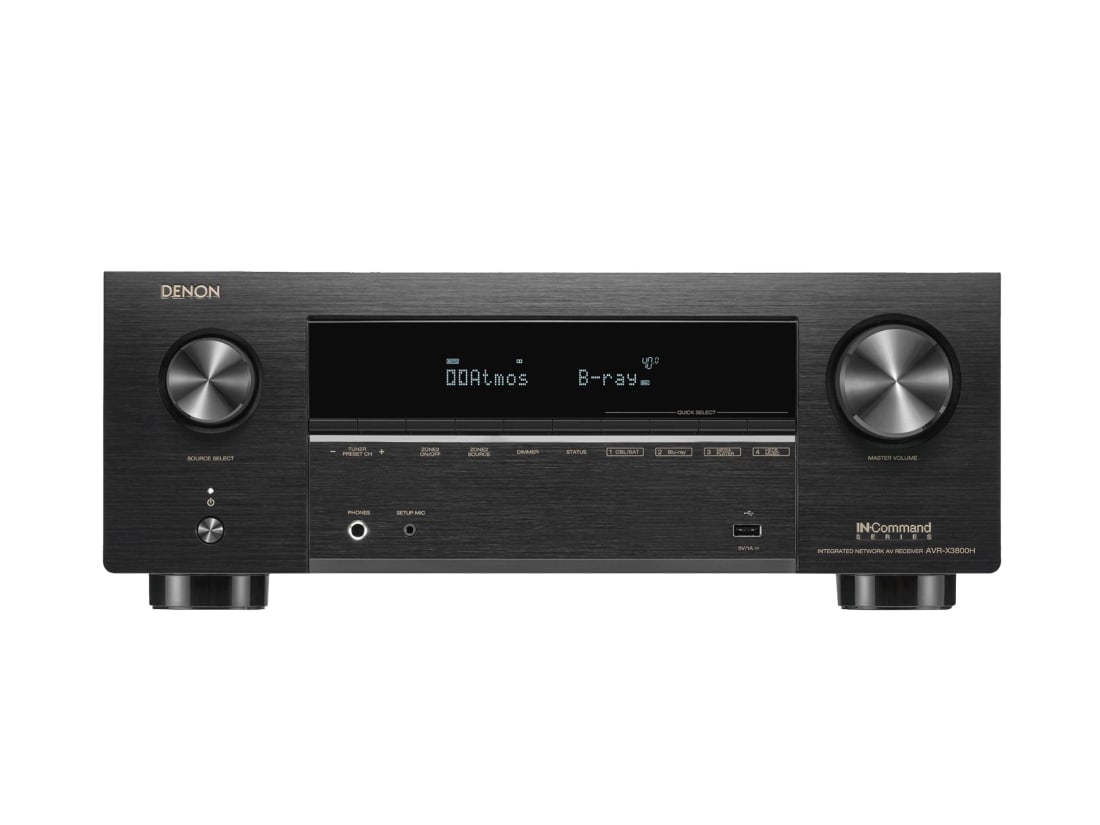
A receiver like the Denon AVR-X3800H (check price) handles dual-sub outputs with independent EQ per sub, which is the feature to look for if you're shopping receivers with this in mind — not every model in a given price bracket treats a second sub as anything more than a duplicated signal, and that distinction matters enormously in practice.
Do you actually need two subs, or is this overkill?
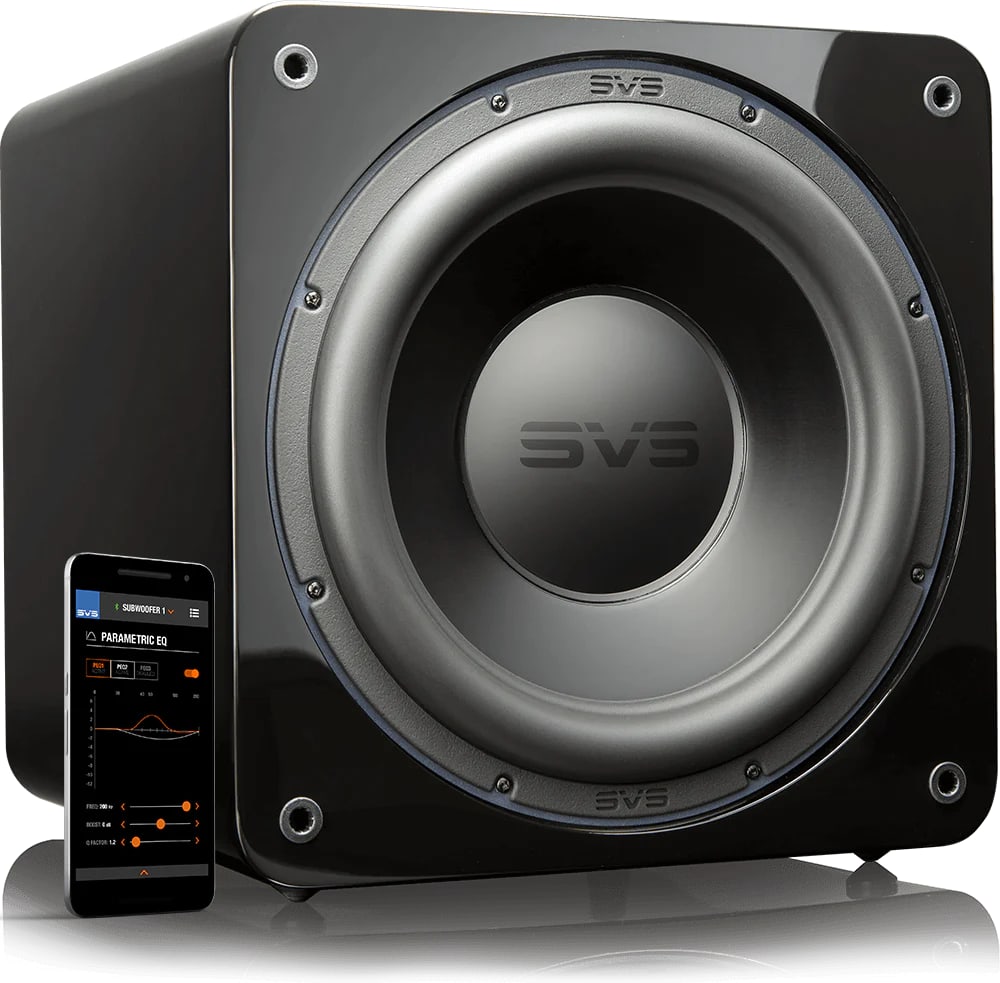
Honestly — and this is the bit I'll get pushback on — I don't think every room needs a second sub. If you've got a small, near-square room and one seating position you actually use, a single well-placed, well-integrated sub like the SVS SB-3000 (check price) can do a genuinely excellent job, and the money might be better spent on acoustic treatment or a better main speaker pair instead. The Harman research is about seat-to-seat consistency, and if you genuinely only ever sit in one seat, some of that benefit evaporates. Where it stops being optional, in my view, is family rooms with a three-or-four-seat couch and kids or a partner who don't sit where you do. That's the scenario where a single sub's uneven response becomes a genuine, audible problem for everyone except the primary listener, and where a second modest sub does more for the room than upgrading the first one ever will.
Building it into a wider system
If you're assembling a home cinema from scratch rather than retrofitting one, it's worth planning subwoofer count and placement at the same time you're choosing the AV receiver and main speakers, not as an afterthought once the rack's already built. Our guide to building a home cinema: the core components walks through the ordering logic — bass management decisions are far easier to get right when they're part of the initial plan rather than bolted on later.
The short version: a second subwoofer, sensibly placed and properly integrated, solves a category of problem that no amount of parametric EQ on a single sub ever will. It won't fix a genuinely bad room on its own, and it's not compulsory kit for a single-seat setup. But for the family lounge room with a real couch and real people sitting in more than one spot, it's one of the highest-value upgrades in home cinema, and it's routinely overlooked in favour of chasing a bigger single box instead.
— Eleanor Shaw, Headphones & Personal Audio Editor
Common questions
- Do two smaller subwoofers really beat one large subwoofer?
- For seat-to-seat consistency, generally yes, even at similar total output. A single large sub can hit harder at one exact spot, but two subs positioned differently even out the peaks and nulls caused by room modes across the whole seating area, which a single source can't do regardless of its size.
- Where should I put a second subwoofer if I can't measure my room?
- Opposite corners is a reasonable default, but the sub crawl method — placing a sub at the listening position and crawling the room listening for the best-sounding spot — tends to give more reliable real-world results, especially in irregular or open-plan rooms.
- Does my AV receiver need special features to run two subwoofers properly?
- You want independent level and EQ control per subwoofer output, not just a duplicated signal split across two ports. Check the receiver's bass management section specifically rather than assuming dual RCA sub outputs means dual independent control.
- Is a second subwoofer worth it if I mostly listen alone in one seat?
- Probably not as urgently. The main benefit of multiple subs is smoothing bass response across several seats; if you genuinely only use one seat, a single well-placed and well-integrated subwoofer can do the job just as well, and the budget might be better spent on room treatment instead.

I'm Eleanor — most people call me Nell. I came to this from the studio side, so I spend more time with headphones on my head than speakers in a room, and I've learned to hear the difference between detail and brightness pretending to be detail. I'm obsessive about fit and comfort, because the best-sounding headphone in the world is useless if it's clamping your skull after twenty minutes. I review everything from $200 daily-drivers to silly flagship planars.
Mastering-adjacent background; IEM and open-back specialist
More from Eleanor Shaw
 Why your headphone desk needs a sub (and how to set it up)A subwoofer under the desk can fix what headphones can't do: chest-felt bass. Here's how to add one without wrecking your headphone sound.
 Dongle DACs vs desktop DACs: when the small one is actually enoughDongle DACs have closed the gap on desktop units for most headphones. Here's where the small ones genuinely hold up, and where they don't.
- Bluetooth codecs and multiroom: why your headphones sound different on Wi-FiWhy the same headphones sound different depending on whether they're fed over Bluetooth, AirPlay or a multiroom app — and how to get the best signal path at your desk.
 Cartridge tracking force: why "close enough" costs you detailTracking force outside the maker's range doesn't just risk your records — it quietly wrecks the detail and channel balance you paid for. Here's how to get it right.
- Streaming to headphones: getting multiroom apps to actually feed your DACMultiroom apps are built for speakers in rooms, not headphones at a desk. Here's how to get Spotify Connect, AirPlay and Roon actually feeding your DAC properly.
 AVR versus processor: when a home cinema actually needs to split the amps outAV receivers do almost everything a separate processor does, until they don't. Here's the honest line between "buy an AVR" and "go separates."