ProAc Response DB1R: the smallest ribbon-tweeter standmount the brand has ever made
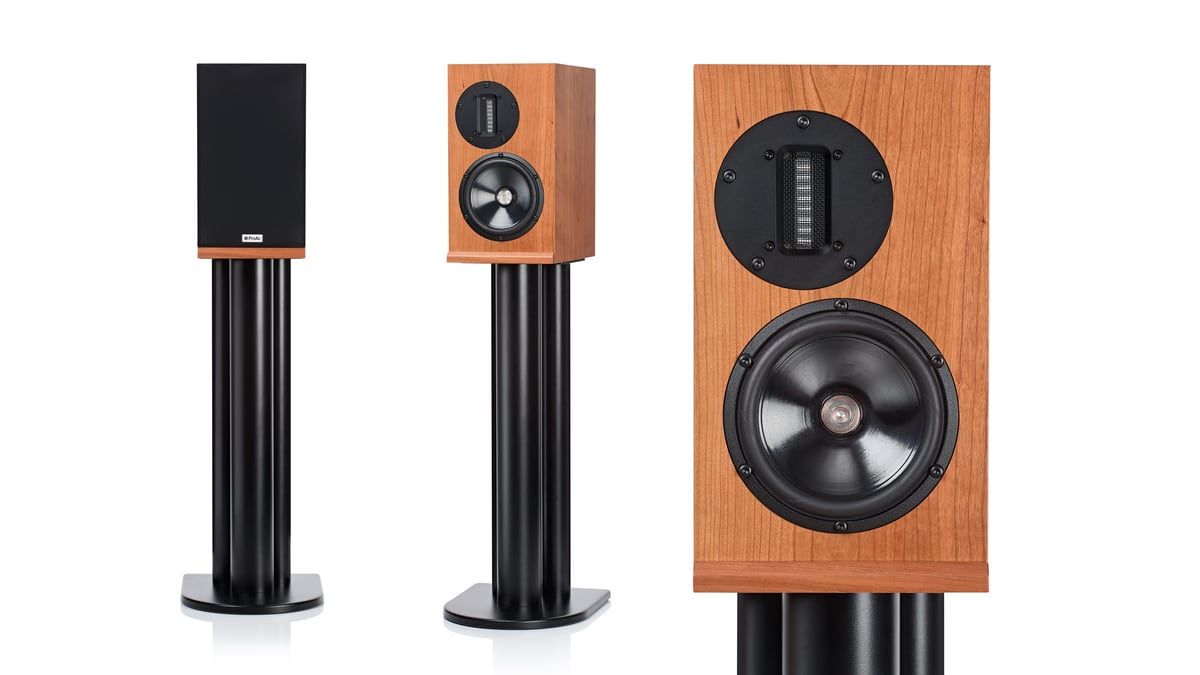
There are certain loudspeaker names that carry genuine weight in British hi-fi history, and the ProAc DB1 is one of them. When ProAc announced at the Bristol Hi-Fi Show in February 2026 that it was reviving that storied compact standmount as the Response DB1R — and fitting it with a ribbon tweeter for the very first time in that form factor — it was the kind of news that made serious listeners stop scrolling. I've been following ProAc's moves closely for years, and this one feels significant. Let me explain why.
What's happened, and why it matters
The Bristol Hi-Fi Show (February 20–22, 2026) is the UK's largest dedicated hi-fi event, and ProAc chose it as the launchpad for the Response DB1R. That's a deliberate statement. Bristol is where British manufacturers come when they want to make an impression on the enthusiast community, and unveiling a compact ribbon-tweeter standmount there signals that ProAc views this as a flagship moment for the brand's smaller-format speakers — not a budget exercise or a stop-gap.
The DB1 lineage stretches back decades. It was always one of ProAc's most beloved compact designs: a speaker that punched well above its cabinet volume in terms of resolution and musicality, and one that helped cement the brand's reputation among listeners who didn't have the room or the budget for a full floorstander. The "R" suffix here tells you the essential story: ribbon tweeter, a technology that ProAc has deployed in larger Response models but never, until now, brought to a cabinet this small.
At £2,945 in standard finishes and £3,465 in premium finishes, the DB1R positions itself firmly at the upper end of the compact standmount market — but well within the range that serious Australian enthusiasts regularly consider, particularly given the alternative of spending significantly more on a floorstander that might not actually suit a smaller listening room. Availability was expected from May 2026, so by the time you're reading this, your local ProAc dealer should either have stock or be expecting it shortly.
The ribbon tweeter: why it changes the conversation
Let's spend some time on the technology, because the ribbon tweeter is the reason this speaker exists in its current form. A ribbon tweeter operates on fundamentally different principles from a conventional dome tweeter. Rather than a voice coil attached to a diaphragm, a ribbon driver uses a thin, lightweight conductive foil — the "ribbon" itself — suspended in a magnetic field. Pass a signal through the ribbon and it moves directly. The result is an extremely low-mass radiating surface that can track transients with a speed and precision that dome tweeters, however good, must work hard to match.
ProAc has specified the ribbon tweeter in the DB1R with an alnico magnet — a detail worth pausing on. Alnico is an alloy of aluminium, nickel and cobalt that was largely displaced in commercial loudspeaker design by cheaper ferrite magnets from the 1970s onwards, but it never disappeared from the high-end. Alnico magnets have a particular sonic character that many designers and listeners associate with a natural, unforced quality in the treble — less hard, less analytical, more like the way acoustic instruments actually sound in a room. It's not a marketing choice; it's an engineering one that costs money and reflects a specific sonic philosophy.
The addition of rear-chamber damping to the tweeter assembly is the other piece of engineering worth noting. Ribbon tweeters can be acoustically challenging to integrate into a two-way standmount precisely because their rear-wave behaviour is different from a dome's. Without careful management, you can get resonances or colouration introduced by reflections within the cabinet. ProAc's use of a dedicated rear chamber with damping material addresses this directly, and it suggests that the engineering here isn't a matter of simply dropping a ribbon unit into an existing cabinet. The DB1R has been designed around its tweeter, not the other way around.
If you want to understand more about how sensitivity and impedance interact with tweeter design — and why those figures matter when you're choosing amplification — our sensitivity explainer and impedance glossary entry are worth a read before you audition.
The frequency response claim: taking 35Hz–30kHz seriously
ProAc quotes a frequency response of 35Hz to 30kHz for the DB1R. Let me be direct about both ends of that figure, because they both demand scrutiny.
30kHz from a ribbon tweeter is entirely credible — in fact it's one of the things ribbon tweeters do naturally. The low mass of the ribbon diaphragm means that upper extension well beyond the limits of human hearing is genuinely achievable, and the practical benefit is that the treble you can hear arrives without the phase and frequency-response compromises that a conventional dome tweeter is starting to experience as it approaches its rolloff region. Whether 30kHz extension matters to your listening is a separate philosophical question, but from an engineering standpoint, it's a real number, not aspirational marketing.
35Hz from a compact standmount is the more interesting claim. ProAc has always been unusually good at extracting bass from small enclosures — it's part of their design heritage — and the DB1 lineage was known for surprising low-end extension. Whether the DB1R fully delivers on that figure in a real room will depend on placement, boundary reinforcement and the characteristics of your specific space. In a smaller Australian listening room, rear-wall proximity will help. In a larger open-plan space, you may find a subwoofer partnership worthwhile. That said, a two-way standmount quoting 35Hz is not one you can dismiss: ProAc doesn't make that claim lightly.
For those thinking about how a speaker like this fits into a broader system — particularly around bass management — our bass management explainer covers the practical options.
Finishes and build: what you're actually buying
The finish options for the DB1R split into two tiers, which is partly why there are two price points. Standard finishes — Black Ash, Walnut, Natural Oak and Silk White — are priced at £2,945. These are ProAc's bread-and-butter veneers and lacquers, but that doesn't mean they're ordinary: ProAc's cabinet construction has always been taken seriously, and the company uses real wood veneers rather than printed vinyl wrap on its Response range.
The premium finishes — Rosewood, Ebony and Liquidambar — attract the higher £3,465 price. Liquidambar is the one that will catch the eye: it's a strikingly figured hardwood that ProAc has used on select models and that makes the DB1R genuinely furniture-grade. If you're placing these speakers in a considered domestic interior — which in a compact standmount is almost always the case — the premium finish tier is worth serious consideration. The additional cost is material and labour, not margin.
For Australian buyers, it's worth noting that UK prices will be subject to importer and dealer margins when converted to AUD, plus GST. Expect to pay meaningfully more than the direct pound conversion suggests — this is consistent with how British high-end standmounts land here — but the DB1R should still sit comfortably within the same bracket as competitors like the Bowers & Wilkins 705 S3 (check price) and the KEF R3 Meta (check price), both of which sit in a similar competitive tier.
How the DB1R fits the wider ProAc Response range
ProAc's Response range is not a single model but a family, and understanding where the DB1R sits within it is important context. The larger Response models — including floorstanders and larger standmounts — have carried ribbon tweeters for some time. What the DB1R represents is the downward extension of that ribbon technology into the most compact enclosure ProAc has ever used for it. That matters because it means there is genuine trickle-down engineering here: the alnico ribbon unit and its rear-chamber damping aren't a first attempt at ribbon design; they come from a lineage of refinement.
It also means that buyers who audition the larger Response models and love their ribbon character — that particular quality of treble air and detail retrieval — now have a compact option that shares the same fundamental high-frequency approach. For listeners in apartments, smaller homes, or secondary rooms who previously had to compromise on tweeter technology to get a cabinet that would fit the space, the DB1R closes that gap.
This is also worth considering in the context of the broader standmount versus floorstander debate. A compact standmount with genuine ribbon-tweeter performance and credible bass extension changes the calculus somewhat: you no longer have to accept a sonic trade-off to go compact.
Amplification and system matching for Australian buyers
The DB1R is a two-way design with the kind of engineering pedigree that rewards good amplification. ProAc speakers have traditionally been associated with valve amplifiers — the brand has a long relationship with the EL34-powered British integrated amplifier tradition — but they are by no means limited to valves. A quality solid-state integrated with enough current delivery will serve them well.
What you should avoid, in my view, is treating the DB1R as a set-and-forget proposition with a mediocre amplifier. A ribbon tweeter's resolution is genuinely high, and it will reveal the character of your upstream electronics more readily than a softer dome might. That transparency is a feature, not a problem — but it does mean the rest of your system needs to be up to the task.
For Australian buyers building around the DB1R, I'd suggest thinking carefully about your integrated amplifier choice. The ribbon tweeter responds particularly well to amplifiers with a composed, unhurried presentation in the upper midrange and treble. An amplifier that's bright or edgy will be exposed. If you're running a streaming-first setup, our round-up of the best standmount speakers for serious listening includes context on typical system partnerships that translate well to local market options.
Placement deserves its own mention. Compact standmounts with extended bass — especially those quoting sub-40Hz figures — are sensitive to rear-wall and side-wall distances. ProAc's own guidance has generally favoured pulling speakers away from boundaries, but in a smaller Australian room you may find that some boundary reinforcement actually helps fill out the low end in a way that's musically satisfying. Experimentation matters here, and it costs nothing.
The competitive landscape
At the price point the DB1R occupies, the competition is serious. The KEF R3 Meta uses Uni-Q driver array technology and metamaterial absorption to achieve its particular character; the B&W 705 S3 brings that brand's carbon-dome tweeter and Continuum mid-bass driver. Both are accomplished, well-reviewed speakers with strong Australian distribution.
What the DB1R brings that neither of those can match is a genuine ribbon tweeter in a compact two-way standmount. That's a real differentiator. The ribbon's transient response and upper-frequency extension are not qualities you can easily replicate with a dome, however technically sophisticated. Listeners who have spent time with ribbon-tweeter speakers at higher price points and loved what they heard will find the DB1R's pitch immediately compelling: this is a way to get that character in a compact form factor at a price that, while not cheap, is considerably less than full-range ribbon-equipped floorstanders command.
The alnico magnet specification also separates it from the mainstream field. Alnico is genuinely unusual at this price point — most competitors are using ferrite or neodymium — and while sonic comparisons are always system and room dependent, the material choice is a meaningful engineering statement from ProAc.
What to do next
If you're in the market for a compact standmount in this price bracket, the DB1R belongs on your audition shortlist without question. The combination of ProAc's DB1 heritage, a properly engineered alnico ribbon tweeter, genuine low-frequency ambition and cabinet quality that holds up against far more expensive furniture is a serious proposition.
For Australian buyers: contact your local ProAc dealer to confirm stock timing and local pricing. Given the pound-to-AUD conversion and typical importation margins, I'd expect local pricing to be confirmed in the AUD $5,500–$7,000 range depending on finish — but verify with your dealer directly, as exchange rates and importer pricing can shift. If you're evaluating these alongside other strong options in the compact standmount category, I'd also strongly recommend spending time with our best standmount speakers guide, which situates the DB1R within the broader competitive field.
The revival of the DB1 as the DB1R isn't nostalgia. It's ProAc taking one of its most beloved formats and asking what it would look like if it were designed today, with today's best available transducer technology. The answer, if the engineering delivers on its promise, could be one of the most interesting compact standmounts of 2026.
Common questions
- What is the ProAc Response DB1R?
- The ProAc Response DB1R is a two-way compact standmount loudspeaker that revives the classic DB1 design, now fitted with a ribbon tweeter using an alnico magnet and rear-chamber damping. It was unveiled at the Bristol Hi-Fi Show in February 2026 and is the smallest ribbon-tweeter standmount ProAc has ever made.
- How much does the ProAc Response DB1R cost?
- UK pricing is £2,945 in standard finishes (Black Ash, Walnut, Natural Oak, Silk White) and £3,465 in premium finishes (Rosewood, Ebony, Liquidambar). Australian pricing will vary based on importer margins and exchange rates — confirm with your local ProAc dealer.
- What are the frequency response specifications for the DB1R?
- ProAc quotes a frequency response of 35Hz to 30kHz. The 30kHz upper extension is a natural benefit of the ribbon tweeter's low-mass diaphragm, while 35Hz from a compact standmount reflects ProAc's longstanding ability to extract extended bass from small enclosures.
- Why does the DB1R use an alnico magnet in its ribbon tweeter?
- Alnico (an alloy of aluminium, nickel and cobalt) is associated with a natural, unforced treble character compared to more common ferrite or neodymium magnets. It's an engineering choice that costs more but reflects a specific sonic philosophy — and it's genuinely unusual at this price point.
- When will the ProAc Response DB1R be available in Australia?
- Availability was expected from May 2026 following its February 2026 Bristol show debut. Contact your local ProAc dealer to confirm current stock availability and Australian pricing.

Hi, I'm Hannah. Speakers are my thing — specifically, the conversation between a speaker and the room it's in, which is where most systems are won or lost. I did acoustics at uni and never quite got it out of my system. I'll measure your room's bass response and then gently break the news that the $20,000 speakers aren't the problem, the untreated wall behind your sofa is. Stand-mounts on good stands are criminally underrated and I will die on that hill.
Acoustics background; loudspeaker and room-treatment specialist
More from Hannah Reid
 Open-back headphones on a desk: why the "room" still mattersOpen-back headphones don't seal you off from the room. Here's why your desk, walls and even your monitor are still part of the sound.
 Turntable isolation: why footfall and feedback matter more than the plinthSuspended floors, speaker vibration and footfall do more damage to vinyl playback than plinth material. Here's how to actually isolate a turntable.
 Why your streamer's output stage still shapes the sound at the speakerBits are bits, but the analogue stage after the DAC chip in your streamer still colours what your speakers do. Here's what actually matters.
- Subwoofer size versus number: why two small subs beat one big oneA 10-inch sub in two spots usually beats a 15-inch sub in one. Here's the room-mode maths behind why, and when a single big box still wins.
 Toe-in angle: the free speaker upgrade nobody bothers measuringToe-in angle changes your speakers' tonal balance and imaging more than most upgrades. Here's how to actually find the right angle for your room.
- Speaker stands and boundary distance: the invisible spec on your spec sheetStand height, mass and distance from walls change a standmount's measured bass and imaging more than most upgrades. Here's how to get it right.