Reference DACs: what a six-figure digital front end actually buys
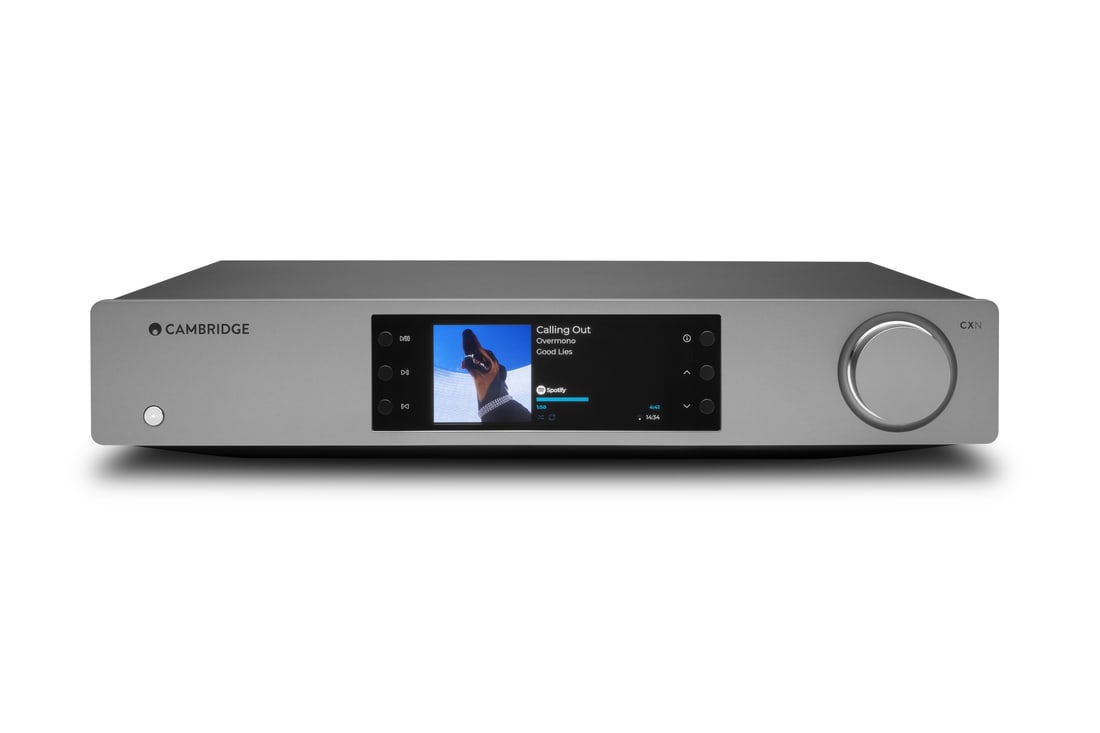
I spent a Thursday afternoon at a distributor's demo room in Alexandria last month, sitting in front of a DAC that costs more than my first car. The room went quiet in the way good rooms do — not silent, just settled — and the person next to me asked the question I get more than any other: what is that thing actually doing that a $1,200 DAC isn't? Fair question. The honest answer is uncomfortable for some manufacturers and useful for everyone else, so let's get into it.
The core conversion chip inside almost every DAC sold today, from a $250 dongle to most six-figure statement pieces, comes from one of three or four silicon vendors. I've said this before and I'll say it again because it still surprises people: the raw measurement performance of a well-implemented chip-based DAC using an ESS Sabre or AKM part has been, for the better part of a decade, close to the noise floor of human hearing. If you want the deep dive on why the conversion stage itself stopped being the bottleneck, our own best desktop DAC/amps guide covers the chip landscape properly. So if the chip is basically solved, where does six figures actually go?
The power supply is doing more work than the chip
This is the least glamorous answer and the most true one. A DAC chip is a small, well-behaved digital circuit that wants clean, stable, low-noise power and a clock with vanishingly low jitter. Feed it garbage and it will still measure reasonably on a static test tone, but the noise floor modulation under real musical signal — the stuff that correlates with "grain" or "digital glare" that experienced listeners describe — gets worse.
Reference-tier DACs spend an enormous amount of their bill of materials on power supply topology: multiple independently regulated rails, sometimes separate linear supplies for analogue and digital sections, occasionally battery or ultracapacitor stages that decouple the sensitive bits from mains entirely. None of that shows up on a basic THD+N spec sheet pulled at 1kHz into a resistive load. It shows up in dynamic behaviour under complex signal, and in long-term stability where a $300 switch-mode supply drifts and a well-designed linear supply doesn't.
I'd argue this is also where the industry's marketing gets sloppiest. A manufacturer will publish a jitter figure or a THD number as though it's the whole story, when the more expensive box's real advantage is in areas the standard spec sheet doesn't capture at all.
Clocking and jitter — real, but bounded
Jitter is real. It is not the boogeyman some retailers make it out to be, but at the frequencies and magnitudes present in a competently engineered modern DAC, its audibility is genuinely marginal — and I say that as someone who's spent a career listening for exactly this kind of thing. AES research on jitter audibility thresholds has generally found that timing errors need to be considerably larger than what you'll measure in any DAC built in the last fifteen years before they become reliably audible in a blind comparison. The Audio Engineering Society's published work on this is worth reading if you want the primary source rather than forum folklore.
Where reference DACs do something meaningful is in reclocking architecture — taking an incoming digital stream over USB or network, buffering it, and re-timing it against an internal master clock rather than trusting the source's clock at all. This is real engineering and it does remove one variable. Whether removing that variable is audible in your room, on your speakers, is a separate and much more honest question than most brochures ask.
Analogue output stage and topology choices
Once the digital-to-analogue conversion happens, that signal still has to be filtered, buffered and presented at line level with enough current drive to behave properly into whatever preamp or amplifier it's feeding. This is where a lot of the sonic character — and I use that word carefully — actually lives.
Some reference DACs use discrete analogue output stages built from individual transistors rather than off-the-shelf op-amps, because the designer wants specific harmonic behaviour or output impedance characteristics. Others run fully balanced differential topologies from the conversion stage right through to the XLR output, which genuinely does reduce noise pickup in long cable runs, particularly relevant in larger listening rooms or multi-room installs where cable length isn't trivial. Chord Electronics' FPGA-based approach — doing the digital filtering in a field-programmable gate array rather than a fixed-function chip — is a good example of a manufacturer choosing to own more of the design stack rather than lean on off-the-shelf silicon, and it's part of why their DACs, right down to the Chord Electronics Mojo 2 (check price), have such a recognisable house sound.
None of these choices are free lunches. Discrete stages cost more to build and are harder to keep thermally stable. Fully balanced topologies double most of the analogue circuitry. That's where a chunk of the price actually goes, and it's legitimate engineering spend rather than badge premium — provided the execution is good, which is not guaranteed just because the price is high.
Hi-res formats: the myths worth retiring
I still get asked whether DSD "sounds better" than PCM at the format level, independent of implementation. The honest answer is that the format war stopped mattering years ago. A well-mastered 16-bit/44.1kHz file played through a genuinely good DAC will outperform a poorly mastered 24-bit/192kHz file every time, because mastering quality dominates format specification by an enormous margin. If you want the fuller picture on where hi-res formats actually stand today, we covered it directly in our piece on the best DACs and network streamers, and separately in our look at which hi-res formats are actually worth paying for now that MQA has effectively exited the market.
Sample rate above 96kHz buys you almost nothing audible in the vast majority of cases — the extra bandwidth sits well above the range of human hearing and mostly just makes files bigger. Bit depth beyond 16-bit genuinely does help with dynamic range and noise floor in theory, but in a real room with real ambient noise, the practical benefit is smaller than the marketing suggests. This is not a popular thing to say in a hi-res-format press release. It's true anyway.
Where the streamer front-end actually matters
Here's the bit that catches a lot of statement-system owners out: your DAC can be flawless and your system will still sound compromised if the streaming layer feeding it is doing something clumsy with the data before it arrives. Volume-matched multiroom platforms, some network players, and a few "smart" preamp sections apply resampling or volume-domain processing that alters the bit stream before it hits the DAC's input. We wrote about this properly in our piece on why even an eighty-thousand-dollar system still needs a decent streamer — the short version is that the last metre of digital transport and the software stack driving it deserve as much scrutiny as the box with the fancy chassis.
A genuinely well-regarded network-native option like the RME ADI-2 DAC FS (check price) earns its reputation partly because RME treats the digital handling with the same rigour as the analogue stage — no shortcuts on either side of the conversion. It's not a six-figure product, and that's rather the point: it demonstrates that careful engineering at a sane price outperforms sloppy engineering at any price.
USB, coax, optical — does the input still matter at this level?
At the reference tier, most designers have settled on USB as the primary digital input because it carries the most bandwidth and, done properly with async transfer, hands clock control back to the DAC rather than the source. Coax and optical (Toslink) both still work fine for CD-quality and most hi-res content, and optical's galvanic isolation can actually be an advantage in a system with ground loop issues between separates. I'd steer most buyers away from treating the input choice as a tone control though — differences here are far smaller than differences in power supply and analogue output design, and I've heard people spend serious money chasing input-cable mythology that would have been better spent on room treatment.
What I'd actually tell you to listen for
When I'm evaluating a reference DAC I'm not listening for detail retrieval in isolation — every DAC above about $2,000 retrieves plenty of detail. I'm listening for how it behaves under complex, dense passages: full orchestra, layered electronic production, a crowded jazz recording with cymbals and vocal sibilance competing for space. Cheaper implementations tend to smear or harden under that load. The best reference pieces stay composed. That composure is real, it's audible, and it is what the money is actually for — not a magic chip, not a format war, but a power supply, a clock, and an analogue stage that don't compromise when the music gets busy.
If you're building toward this tier, my honest advice is to spend the hard yards auditioning rather than reading spec sheets, and to make sure your streaming source and network setup aren't quietly undermining a DAC you've paid a great deal of money for.
Frequently asked questions
Common questions
- Does a more expensive DAC always measure better than a cheap one?
- Not necessarily on a basic spec sheet. Many sub-$1,000 DACs measure exceptionally well at 1kHz into a resistive load. The differences at the reference tier show up more in power supply stability, dynamic behaviour under complex signal, and analogue output design than in a single published number.
- Is DSD worth seeking out over high-resolution PCM?
- Generally no, on its own. Mastering quality matters far more than the format. A well-mastered PCM file will usually outperform a poorly mastered DSD file, so chase good masters rather than a specific format.
- Do I need a separate streamer if I already own an expensive DAC?
- Often yes. Some multiroom platforms and network players apply resampling or volume processing before the signal reaches your DAC, which can undermine an otherwise excellent digital-to-analogue stage. Check how your streaming source handles bit-perfect playback.
- Does the digital input type (USB, coax, optical) change the sound at the reference level?
- Less than most forum threads suggest. USB with proper asynchronous transfer is the common choice for high-bandwidth reference DACs, but differences between well-implemented inputs are small compared with differences in power supply and analogue output topology.

I'm Sofia, and I get to play with the silly stuff — the statement amplifiers, the reference loudspeakers, the cost-no-object systems that most of us will only ever hear at a show. Someone has to, and I take it seriously: at this level the price stops mapping to performance and starts mapping to engineering, craft and ego, and part of my job is telling you which is which. I love the extreme end of this hobby, but I'm not dazzled by a big number on a price tag.
Covers flagship and cost-no-object reference systems
More from Sofia Laurent
 Negative feedback in amplifier design: the argument that never endsNegative feedback cuts amplifier distortion but divides designers. Here's what it does, why some statement amps avoid it, and what it means for you.
 The synergy tax: why mismatched gear costs more than cheap gearThe synergy tax explained: why pairing mismatched hi-fi components quietly costs more than buying modest, well-matched gear.
 Rear-port floorstanders near a glass wall: a risky pairingRear-ported floorstanders against glass walls cause boundary reinforcement and reflections. Here's how to place, measure and tune them properly.
- Infrasonic bass below 20Hz: chasing the octave you feel, not hearBelow 20Hz is infrasonic bass: felt more than heard. Here's what it takes to reproduce it properly, and whether a statement system should bother.
- Why statement systems still get beaten by the zone two speakerA $150,000 reference system is only as good as the worst-sounding zone it's networked to. Here's why multiroom integration is the statement system's real weak point.
- Why a statement floorstander can be the wrong speaker in the roomSix-figure floorstanders fail in rooms that were never built for them. Here's how to tell if your space can actually support one before you buy.