Spotify gates lossless behind a new three-tier Premium
When Spotify finally launched lossless audio, years behind Apple Music, Tidal and Amazon Music Unlimited, many of us in the serious listening community were cautiously optimistic. Here was a platform with roughly 640 million monthly active users, capable of nudging an enormous number of listeners toward higher-quality playback. Then, in November 2025, Spotify quietly revealed that its lossless tier would not be universally available to all Premium subscribers. Not everywhere, anyway. Instead, the company began rolling out a three-tier Premium structure across five emerging markets, with lossless audio tucked firmly behind the most expensive option. For audiophiles and streaming-curious listeners in those regions, it's a meaningful limitation. For the rest of us watching from Australia, it's a preview of a business logic that could travel. If you want the backstory on the original launch, our piece on Spotify Lossless finally arriving covers it.
What Spotify actually announced
Around 13 November 2025, Spotify confirmed it was restructuring Premium into three distinct tiers (Lite, Standard and Platinum) across five markets: India, Indonesia, the UAE, Saudi Arabia and South Africa. The pricing in India, which functions as something of a bellwether for the company's emerging-market strategy, lands at approximately $1.57 USD per month for Lite, $2.25 USD for Standard and $3.37 USD for Platinum. Those are remarkably low absolute numbers by Western standards, but the local purchasing-power context matters, and in India especially, each tier represents a real point of friction for budget-conscious subscribers.
The key detail: only Platinum includes lossless audio, delivered at 24-bit/44.1 kHz in FLAC format. Platinum also bundles Spotify's AI DJ feature and DJ-software integration, positioning it as both a high-fidelity listening tier and a semi-professional creative tool. Standard and Lite subscribers in these five markets get the same compressed audio that Spotify has always offered. It's perfectly functional for casual listening, but not what serious ears are after.
Meanwhile, in more than 50 other markets, Spotify has bundled lossless audio directly into the standard Premium tier at no additional cost. Australia is among those markets. If you're a Premium subscriber here, you're not being asked to pay extra to unlock FLAC playback. That's an important distinction, and one that's easy to overlook if you're consuming the news at a headline level.
Why the three-tier Premium structure matters beyond five markets
On the surface, this looks like straightforward price localisation, a strategy every major subscription business employs when entering or expanding in price-sensitive markets. Spotify needs to compete with free, ad-supported music consumption that's deeply entrenched in markets like India and Indonesia, so it creates a cheaper entry point. Fair enough. But the mechanism it's chosen to differentiate tiers, audio quality, is the part that should make serious listeners pay attention regardless of where they live.
This is, to my knowledge, the first time Spotify has explicitly used lossless audio as a paid upgrade lever rather than a feature parity inclusion. In doing so, the company has established a precedent. Business models get replicated and iterated upon internally. If the three-tier structure proves commercially effective in these five markets, if Platinum conversion rates are strong, or if the tier structure reduces churn at the Lite and Standard levels, there's no structural reason Spotify couldn't eventually revisit how lossless is packaged in Western markets too.
I'm not predicting that will happen. But it bears watching. The assumption that Spotify's global rollout of lossless represents a permanent commitment to audio quality as a standard Premium entitlement is, after this announcement, a slightly less safe assumption than it was before November 2025.
What 24-bit/44.1 kHz FLAC actually gives you
Spotify's chosen specification is 24-bit resolution at a 44.1 kHz sample rate, delivered as FLAC. For context, standard CD audio, defined by the Red Book standard, is 16-bit/44.1 kHz. The jump to 24-bit increases the dynamic range ceiling substantially, from roughly 96 dB to a theoretical 144 dB, though the audible benefit in real listening environments depends heavily on the quality of your downstream hardware. If you want to understand exactly what's happening in the signal chain, our Bit Depth & Sample Rate glossary breaks it down clearly, and our explainer on sample rate and bit depth goes further into what changes at higher numbers.
Importantly, Spotify is not offering DSD, MQA or anything above 44.1 kHz. It's not competing with hi-res streaming services that push 96 kHz or 192 kHz content. What it is offering is lossless at Red Book-adjacent quality, which for the vast majority of recordings in its catalogue is entirely appropriate. Most commercial music is mixed and mastered at 44.1 kHz or 48 kHz. Upsampling to higher rates adds data without necessarily adding musical information. A clean 24-bit/44.1 kHz FLAC is a genuinely worthwhile step up from Spotify's previous 320 kbps Ogg Vorbis ceiling.
It helps to be clear about what "lossless" means. A lossy codec such as Ogg Vorbis discards some audio information to shrink the file, and it can't be restored afterwards. A lossless codec such as FLAC compresses the data the way a zip file does, so the original is rebuilt exactly on playback. The file is bigger, but nothing has been thrown away.
The practical implication is that if you're feeding this signal into a capable digital-to-analogue converter, whether that's a standalone DAC, a streaming amplifier, or a network streamer with high-quality conversion, you will hear a difference versus the compressed stream, particularly in complex passages, transient detail and low-level resolution at quieter listening volumes.
The hardware side: making lossless streaming count in Australia
Here's where I want to spend some time, because the announcement of lossless on Spotify is only half the story. The other half is whether your system can actually resolve what the format delivers. This is something a surprising number of listeners overlook when they upgrade their streaming service but not their hardware.
To benefit from 24-bit/44.1 kHz FLAC playback, your signal path needs to handle the format natively. Many Bluetooth speakers and budget wireless earbuds will resample or compress the signal before it reaches your ears, because the Bluetooth link depends on the codecs both devices support. We look at that in more detail in our piece on lossless over Bluetooth. A wired connection to a DAC, or a streaming device that passes the native bitstream without modification, is essential for genuine lossless playback. If you're building or upgrading a system to make the most of what Spotify Platinum (or its standard-Premium lossless equivalent here) offers, our guide to the best DACs and network streamers is the most practical starting point.
For those with an integrated streaming system, the increasingly popular one-box approach that combines amplification, DAC and network streaming, the spec sheet matters. A well-implemented streaming amplifier will handle the native 24-bit FLAC without conversion artifacts, and the best examples in this category offer genuinely high-quality analogue output stages that justify the lossless source. Our streaming amplifiers and all-in-one systems guide covers the category thoroughly for AU buyers.
Software matters too. Operating-system mixers can quietly resample audio before it reaches your DAC, which undoes the point of a lossless source. Our explainer on bit-perfect playback sets out when that matters, and our guide to streaming service audio quality settings shows what you're actually sending to your DAC.
On the transducer side, it's worth being realistic: the improvements that lossless streaming offers are incremental, not transformative, and they become audible only when your speakers or headphones have sufficient resolution to reveal them. A quality standmount speaker in a well-treated room will expose the difference between 320 kbps Ogg and 24-bit FLAC far more readily than a budget Bluetooth unit ever could. If speakers are next on your list, start with our best standmount speakers guide.
Spotify vs the competition: where does this leave the hi-res streaming market?
Let's be direct about Spotify's competitive position in high-fidelity streaming. The company is a latecomer. Apple Music has offered lossless, including genuine hi-res up to 192 kHz for some recordings, at no additional cost to subscribers since mid-2021. Amazon Music Unlimited has offered a similar proposition. Tidal has offered lossless and hi-res content since its earliest days, and while the company has had its share of corporate turbulence, its catalogue depth at higher resolutions remains competitive.
Qobuz, perhaps the most audiophile-oriented of the major services, offers a catalogue that skews heavily toward classical, jazz and acoustic music where hi-res recordings are most plentiful and most audibly meaningful. For listeners who care deeply about format, Qobuz's streaming and download model remains compelling. Our Tidal vs Spotify vs Apple Music vs Qobuz comparison for Australia weighs all four against each other.
Against this backdrop, Spotify's lossless rollout, when it arrived, was less a technical leap and more a catching-up exercise. The three-tier pricing structure in emerging markets doesn't change that calculus for subscribers in Australia or Europe. But it does reveal something about how Spotify's internal teams are thinking about the feature: not purely as a quality-of-service improvement for existing subscribers, but as a monetisation lever with distinct commercial utility.
The AI DJ and DJ-software integration bundled into Platinum alongside lossless is also worth a look. By packaging those features together, Spotify signals that Platinum is aimed at a dual audience: listeners who want higher fidelity, and creators or semi-professionals who want additional tools. That's a broader and arguably more commercially defensible tier than "lossless audio alone," which might struggle to justify a price premium given that competitors include it at standard pricing. In my view, lossless on its own would be a hard sell as a paid upgrade in any market where rivals give it away.
The broader business question: will tiered quality come to Western markets?
This is the question I keep returning to. Spotify operates under significant margin pressure. Music royalties are one of the most contentious cost lines in the streaming industry, and the company has historically prioritised subscriber growth and engagement metrics over profitability. The introduction of a higher-priced tier that bundles premium features, including lossless audio, is a logical revenue-per-user expansion strategy.
In markets like Australia, where Spotify already includes lossless in standard Premium, the company would face considerable backlash if it moved to retier that feature behind an additional paywall. Apple Music's zero-cost lossless offering creates a ceiling on what Spotify could charge for audio quality alone in Western markets. But if Spotify's Platinum tier evolves its feature set, with deeper integrations with DJ software, enhanced discovery tools, spatial audio, or other features that have no direct competitor equivalent, a premium tier at a higher price point becomes more justifiable to consumers.
Watch the Platinum feature roadmap carefully. The lossless audio inclusion is almost certainly not the end point of what that tier will offer.
What Australian listeners should actually do right now
If you're an Australian Spotify Premium subscriber, the immediate news is reassuring: lossless is available to you at your current subscription price. The question is whether you're actually using it, and whether your hardware supports it properly.
First, check that you've enabled the lossless quality setting within Spotify's app. It is not always activated by default, and the setting may be buried within audio quality preferences depending on your device. On mobile, ensure your connection is stable enough to sustain a FLAC stream without buffering; many users find that lossless is most reliably delivered over Wi-Fi rather than mobile data.
Second, consider your listening chain critically. A lossless stream fed into a poor-quality DAC or a compressed Bluetooth codec will not sound better than a well-encoded lossy stream. The gains from lossless playback are realised downstream. If you're listening through a dedicated system, such as a network streamer, a quality integrated amplifier or a pair of capable standmounts, the improvement is real and worth pursuing.
Third, if you're in the market for a dedicated DAC or streamer to complement your Spotify setup, the combination of lossless streaming availability and a competitive hardware market means there's genuine value to be captured at multiple price points. Spend the hard yards on the chain after the stream, not on the subscription.
Where the Platinum decision leaves Australian listeners
Spotify's three-tier Premium rollout in India, Indonesia, the UAE, Saudi Arabia and South Africa is, on one level, a pragmatic response to the economic realities of those markets. The pricing structure makes Spotify accessible at multiple entry points in regions where even the Standard tier represents a meaningful monthly commitment.
But the decision to gate lossless audio behind the top tier, rather than treating it as a baseline quality improvement for all paying subscribers, is a strategic choice with implications beyond those five markets. It tells us how Spotify's product teams value the feature, and it establishes a template for how audio quality can function as a commercial differentiator in a tiered subscription model. The same logic sits behind the debate over whether most listeners can hear lossless at all.
For listeners in Australia, the current situation is fine. Lossless is included, the hardware market to support it is broad, and the format Spotify has chosen, 24-bit/44.1 kHz FLAC, is a sensible and genuinely useful one. Whether that remains the arrangement in three or five years is a different question, and one worth holding in mind as Spotify's global tiering strategy continues to evolve.
So enjoy lossless Spotify while it's included in your Australian Premium subscription, invest in hardware that can actually resolve it, and keep one eye on how the Platinum tier develops internationally. Those who pay attention tend to get the better end of these changes.
Common questions
- Does Spotify's three-tier Premium structure affect Australian subscribers?
- No, not currently. Australian Spotify Premium subscribers receive lossless audio (24-bit/44.1 kHz FLAC) as part of their standard Premium subscription. The three-tier Lite/Standard/Platinum structure has only been rolled out in India, Indonesia, the UAE, Saudi Arabia and South Africa as of late 2025.
- What audio quality does Spotify's Platinum tier offer?
- Spotify Platinum includes lossless audio delivered at 24-bit/44.1 kHz in FLAC format. It also bundles AI DJ and DJ-software integration features. Standard and Lite tiers in the five affected markets do not include lossless playback.
- What hardware do I need to benefit from Spotify's lossless audio?
- To hear genuine lossless playback, you need a device or DAC that can decode and play back native FLAC without resampling or compression. A wired connection to a quality DAC, a network streamer, or a streaming amplifier with high-quality conversion will deliver the best results. Bluetooth connections often use codecs that compress the signal before it reaches your ears.
- How does Spotify's lossless offering compare to Apple Music or Tidal?
- Spotify offers 24-bit/44.1 kHz FLAC — lossless at near-CD resolution. Apple Music and Amazon Music Unlimited include lossless and in some cases hi-res up to 192 kHz at standard pricing. Tidal and Qobuz also offer hi-res content above 44.1 kHz. Spotify's lossless spec is solid for most commercial music but is not a hi-res offering in the truest sense.

Theo here. By day I write software, by night I argue with people on forums about whether bit-perfect playback is "solved" (it mostly is, and then it isn't). I cover the digital end — DACs, streamers, servers, the whole messy ecosystem of getting a file to sound its best. My promise to you: I'll separate the genuine engineering from the audiophile folklore, and I'll never tell you a $500 streaming bridge sounds "blacker" unless I can explain why.
Software engineer; network-audio and DAC specialist
More from Theo Mensah
 Dongle DAC power limits: when a phone can't drive headphonesDongle DACs are brilliant until they aren't. Here's how to work out whether your phone-and-dongle rig actually has the current to drive your headphones.
 DNS and multiroom: why your streamer drops out at the worst timeMultiroom dropouts are rarely your Wi-Fi. Here's why DNS resolution quietly breaks streaming apps, and how to fix it for good.
- Parallel vs series IEM crossovers: why multi-driver in-ears sound so differentWhy do two IEMs with the same driver count sound nothing alike? The crossover topology is doing more work than the drivers themselves.
- Streaming a subwoofer's EQ filters: why your network player might be the bottleneckYour sub's miniDSP or app-based EQ can only act on a signal your streamer hasn't already mangled. Here's where network audio and bass management actually interact.
 Amplifier gain structure: the setting that decides your noise floorGain mismatches between DAC, preamp and power stage quietly wreck dynamic range. Here's how to actually set gain structure instead of guessing at the volume knob.
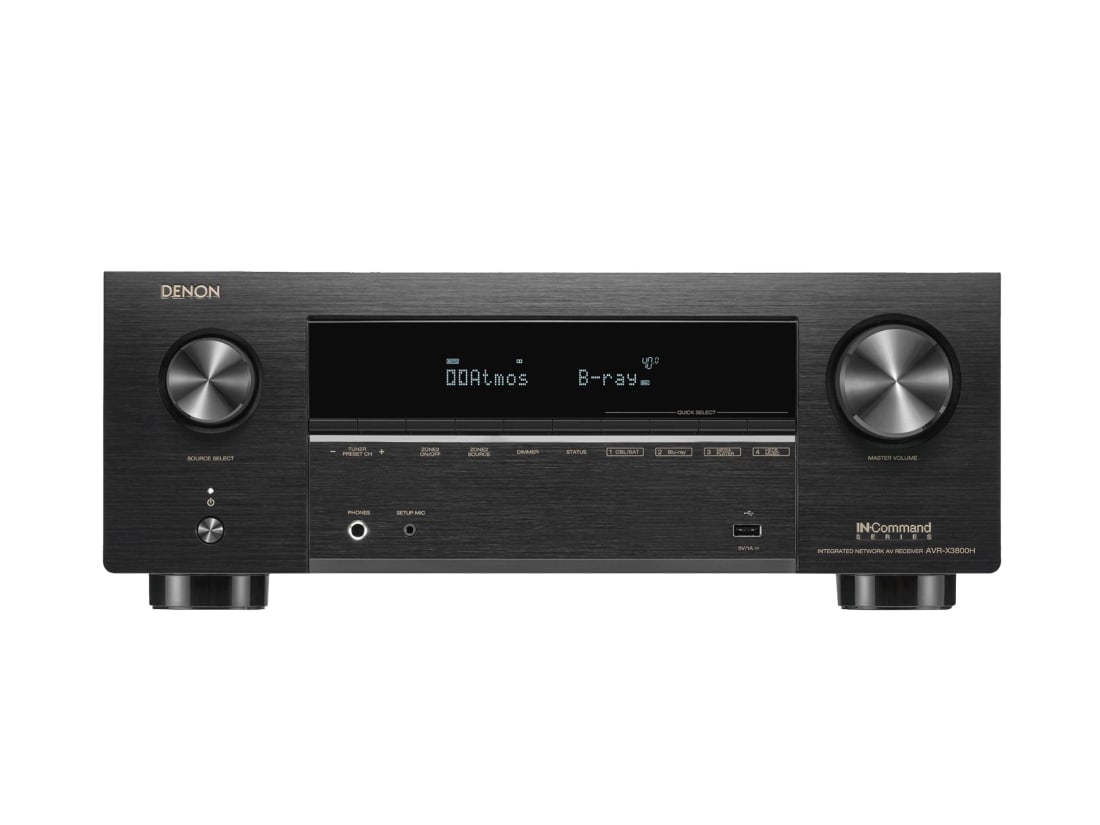 Bass management by the numbers: what your AVR's crossover and slope actually doCrossover frequency gets all the attention, but slope, distance settings and speaker size flags quietly decide whether your bass management works or fights itself.