AVR vs processor plus power amps: when to make the jump
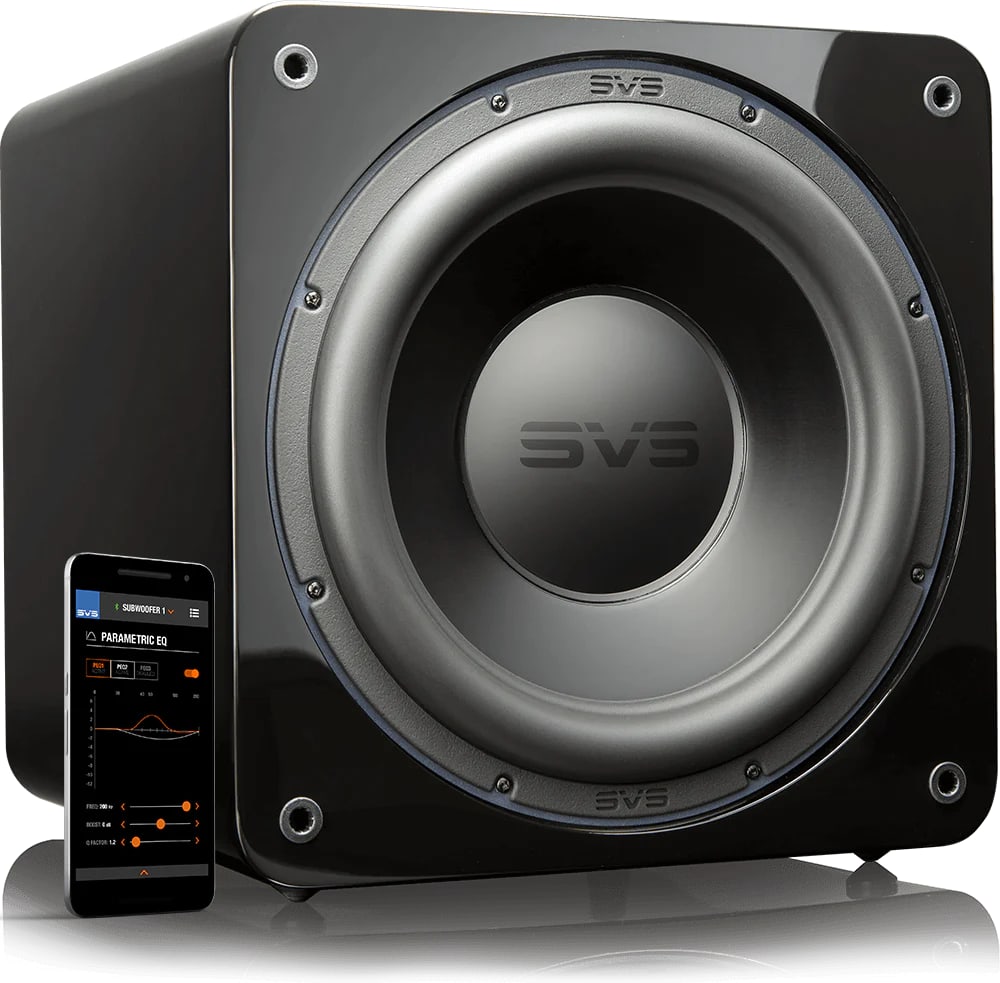
I get some version of this question every few weeks on the forums: "I've got a Denon AVR-X3800H driving a 7.2.4 layout and it sounds great, so why would I ever need a separate processor and power amps?" Honestly, for a lot of rooms, you wouldn't. But there's a specific point where the maths of an all-in-one receiver stops working, and I want to walk through exactly where that point is rather than just saying "upgrade when you can afford it," which is the non-answer you'll get from most gear reviews.
This isn't a hype piece for separates. Sofia covers statement-level gear for this site and I'll leave the six-figure processor stacks to her. My angle is the engineering: what actually changes when you split preamp/processing duties from amplification, and when that split is solving a real problem versus just moving boxes around your rack for the sake of it.
What an AV receiver is actually doing under the hood
A modern AVR like the Denon AVR-X3800H (check price) is two products crammed into one chassis: a digital processor handling HDMI switching, Dolby Atmos and DTS:X object decoding, room correction, and bass management, plus a bank of power amplifier channels sharing a single power supply and a single transformer (or, increasingly, a switch-mode supply with multiple rails). For most rooms and most content, this integration is completely fine. The processing side has gotten very good — decoding accuracy isn't really a differentiator between a $2,000 receiver and a $20,000 processor, the silicon doing that job is largely the same generation of chip either way.
Where it gets interesting is the amplification side. Sharing one power supply across 9, 11, or 13 channels means that under heavy dynamic content — a Dolby Atmos mix with height channels all firing during an action sequence — every channel is drawing from the same finite well. Push the front three hard during a dense scene and you can measurably steal headroom from the surrounds and heights, even if the receiver's per-channel spec sheet looks generous. This is the actual reason people report AVRs "running out of steam" in bigger rooms, not because the wattage number was a lie, but because that number was almost certainly measured with two channels driven, not eleven.
The case for staying integrated
If your room is under roughly 40 square metres, your speakers are reasonably sensitive (88dB or higher), and you're not chasing reference-level SPL for the whole runtime of a film, an AVR is doing everything a processor-plus-amps stack does, just with shared internals. I'd rather see someone spend the delta on a better subwoofer — see our piece on standmount speakers if height channels are on standmounts — or on acoustic treatment than on separates they don't structurally need.
There's also a control-layer argument for staying integrated. One box means one firmware update path, one HDMI board, one set of eARC handshakes to troubleshoot. Splitting the system adds a second box with its own update cycle, and I've lost entire evenings to HDMI handshake mismatches between a processor and an outboard amp that updated on different schedules. That's a genuine cost, not just an inconvenience — it's downtime in a system you built to relax with.
Where the shared power supply actually bites
The failure mode isn't subtle once you know what to listen for. It's compression under dynamics — the mix gets loud, and instead of the height channels staying crisp and detailed, everything flattens slightly, loses separation, and the whole soundstage seems to collapse toward the front. Measured on a bench, this shows up as increasing THD and clipping onset at lower absolute SPL when multiple channels are driven simultaneously versus the two-channel spec sheet number. It's the same reason stereo amplifier reviews always caveat "with one channel driven" figures — except in a home theatre context you routinely have nine or more channels driven at once during a busy Atmos scene.
Rooms over about 50 square metres, speaker layouts with four or more height channels, and anyone running larger, less sensitive floorstanders as mains are the profile where I start recommending a look at separates. Not because the AVR is broken, but because you're asking one shared power supply to do a job it was never dimensioned for.
What a dedicated processor actually buys you
Strip the amplification out and a processor like those built around the same Dolby Atmos and DTS:X decoding platforms found in high-end AVRs gives you the identical object-based decoding — Dolby's own technical documentation on the Atmos renderer makes clear the object-to-speaker mapping is a software layer, not something tied to a specific amplifier topology (see Dolby's technical overview at professional.dolby.com/atmos). What changes is what's downstream: more flexible pre-outs, often more robust bass management with independent subwoofer channel routing, and usually better build quality on the HDMI board because the thermal budget isn't shared with power amp heatsinks sitting two centimetres away.
The processor itself won't make your system louder or cleaner. That's entirely the job of whatever amplification you pair it with.
Matching power amps: the part people get wrong
This is where I see money wasted. People split their AVR into a processor plus a big multichannel power amp and expect a transformation, then wonder why it sounds only marginally different. The gain is proportional to how starved your original setup actually was. If your old AVR was already coasting well under clipping for your listening levels and room size, a separate amp buys you very little beyond peace of mind and a cooler-running rack.
Where it pays off is genuinely demanding layouts — big rooms, four height channels, floorstanders with dips into 4 ohms, or anyone who actually watches films at reference level rather than background-conversation level. In that scenario, dedicated amplification with its own regulated supply per channel (or per channel group) removes the shared-rail bottleneck entirely, and you'll hear it specifically during the loudest, busiest passages, not during quiet dialogue scenes where an AVR was never going to struggle anyway.
A stereo integrated like the Naim Uniti Atom (check price) or a two-channel amp such as the McIntosh MA352 (check price) gives you a sense of what dedicated, unshared power delivery sounds like at two channels; scale that mentally across nine or eleven channels and you've got the argument for separates in one sentence. The tricky bit is that most people never A/B this properly — they upgrade the whole chain at once and can't isolate what changed.
The practical build order if you do jump
Don't buy the amp first. Buy the processor, keep your existing AVR wired in as a temporary power amp bank via its pre-outs if it has them (most mid-tier and above Denon, Marantz and Yamaha units do), and live with that hybrid setup for a few weeks. This tells you immediately whether the processing layer — room correction quality, HDMI stability, app control — is actually the upgrade you wanted, separate from the amplification question.
Only then decide on amp channel count and configuration. Fully discrete monoblocks per channel are rarely necessary for home cinema; a well-designed multichannel amp with independent regulation per channel group gets you most of the benefit at a fraction of the rack space and cost. If you're starting a build from scratch rather than upgrading an existing one, our guide to building a home cinema covers the core component order in more depth, including where subwoofers and room treatment should sit in your budget relative to electronics.
An honest caveat on room correction
One thing that doesn't automatically improve when you split the system: room correction. Whatever algorithm your processor runs, whether it's a licensed Dirac Live implementation or a manufacturer's proprietary system, it's solving for the same room modes and reflections regardless of which box is doing the decoding. If your bass is uneven or your room has flutter echo off a hard back wall, moving to a processor and separates won't touch that. That's a room and subwoofer problem, and it's worth sorting before you spend on amplification — I'd argue plenty of people spend on separates when the actual bottleneck was room acoustics all along, which is a more uncomfortable but cheaper fix.
Projection has its own separate power-supply-adjacent story — a unit like the Sony VPL-XW5000ES (check price) lives on its own electrical circuit entirely and doesn't touch this conversation at all — but it's worth remembering that a system's weakest structural link is rarely the box you're about to upgrade. Check the room and the sub integration first.
Common questions
- Will a separate processor and amps make Dolby Atmos decoding better?
- No — the object-based decoding itself is a software/silicon layer that's largely equivalent between a good AVR and a dedicated processor of the same generation. The gains from separates come from amplification headroom and processor build quality, not decoding accuracy.
- How do I know if my AVR is actually running out of power?
- Listen during the loudest, busiest scenes rather than quiet dialogue. If the soundstage flattens or loses separation specifically when many channels fire at once — a big action sequence with height channels active — that's the shared power supply being asked to do too much, not a general fault.
- Can I use my existing AVR as a temporary power amp while I test a new processor?
- Yes, if your AVR has pre-outs, which most mid-tier and above Denon, Marantz and Yamaha models do. This lets you isolate whether the processing layer or the amplification is the actual upgrade before committing to new power amps.
- Is it worth doing separates in a room under 40 square metres?
- Usually not. If your speakers are reasonably sensitive and you're not chasing reference SPL for entire film runtimes, an integrated AVR is rarely the bottleneck — acoustic treatment or a better subwoofer will usually move the needle further.

Theo here. By day I write software, by night I argue with people on forums about whether bit-perfect playback is "solved" (it mostly is, and then it isn't). I cover the digital end — DACs, streamers, servers, the whole messy ecosystem of getting a file to sound its best. My promise to you: I'll separate the genuine engineering from the audiophile folklore, and I'll never tell you a $500 streaming bridge sounds "blacker" unless I can explain why.
Software engineer; network-audio and DAC specialist
More from Theo Mensah
 Where to spend on a digital front end: the diminishing-returns curve, mappedA software engineer's take on where DAC and streamer money actually buys sound quality, and where the curve goes flat.
 Cartridge alignment: why the last half-millimetre matters more than the cartridgeOverhang, zenith angle and azimuth decide more about vinyl sound quality than the cartridge you buy. Here's the engineering, explained by a digital guy.
- Streamer output stage vs speaker sensitivity: matching the digital front end to your pairYour streamer's output impedance and gain structure interact with speaker sensitivity more than most buying guides admit. Here's how to actually match them.
- Bass management over network audio: why your streamer's DSP matters for subsModern streamers now carry crossover and room EQ duties that used to live in an AVR. Here's what that shift actually changes for your subwoofer.
 Digital source, analogue speakers: why your streamer choice still shapes the pairA DAC engineer's take on why speaker matching starts upstream — how digital volume, output stage and streamer choice interact with standmounts and floorstanders.
- Phono preamp gain and loading, explained by someone who'd rather not own a turntableGain and loading settings on a phono stage aren't optional extras. Here's what they actually do to your cartridge's signal, explained without the mysticism.