Subwoofer crawl vs measurement: how to actually find the right spot
I had a client in Camp Hill a while back who'd done the subwoofer crawl exactly as the forums told him to. Crawled around his lounge room on hands and knees with a mono bass track playing, found the "sweet spot" behind the couch, dragged his SVS into position, and called me in because it still sounded like someone thumping a cardboard box every time the kick drum hit. The crawl hadn't lied to him, exactly. It just hadn't told him enough.
That's the problem with the subwoofer crawl as most people practice it. It's a genuinely useful technique — I still use it as a first pass on jobs where I don't want to drag the measurement rig out for a lounge-room reshuffle — but it's a blunt instrument being asked to do a precision job. It finds you a local minimum of boom, not an optimised in-room response, and it says nothing at all about what happens at your other seats, or what happens once you add a second subwoofer, which you should probably be doing anyway.
What the subwoofer crawl actually measures
The logic behind the crawl is sound, as far as it goes. Room modes — the resonant peaks and nulls that build up at specific frequencies related to your room's dimensions — are reciprocal. A frequency that peaks loudly at your listening position when the sub sits in the corner will, roughly, peak just as loudly at the sub's location if you swap places and listen from there. So you get down on the floor where the sub will eventually sit, play a 40–80Hz sweep or a bass-heavy track, and crawl around until you find a spot where the boom settles down. Put the sub there instead.
It works, sort of. What it's actually finding is a location where the summed effect of all the room's axial and tangential modes happens to be relatively flat at that one point, for that one frequency range, for a mono source. It's not measuring anything — you're using your ear as a very crude, single-band SPL meter with terrible calibration and a strong recency bias for whatever track you happened to choose.
The bigger issue is that a single subwoofer, wherever you put it, is trying to solve a genuinely three-dimensional standing-wave problem from one point in space. Any position that flattens the response at your main seat will usually create bigger holes at other seats in the room. You've moved the mess, not removed it. I wrote about this trade-off in more detail in subwoofer placement by the numbers, and it's worth reading alongside this one because the two approaches — crawl and measurement — aren't actually in competition. They're sequential.
Where the crawl genuinely earns its keep
I'm not going to pretend the crawl is useless, because that's not true either. On a rental property, a temporary setup, or a room where the client isn't going to commit to acoustic treatment or a proper measurement mic, fifteen minutes of crawling around the floor beats guessing. It'll reliably steer you away from the worst spots — usually the centre of a wall, which tends to excite modes hard, and towards corners or off-centre positions that tend to load the room more evenly across the bottom octave.
It's also a decent sanity check even when you are going to measure properly. If the crawl and the measurement disagree wildly, something's wrong — a mic placement error, a room mode you didn't account for, or a subwoofer with its own internal resonance issue. I use it as a first pass on almost every residential job before I ever plug in a laptop, mostly because it's fast and it gets the client physically involved in a process that otherwise looks like I'm just fiddling with software they can't see the point of.
Why one measurement position isn't enough either
Here's the thing the crawl method and a lot of single-point measurement approaches both miss: your seat isn't the only seat. In a proper cinema build — the kind with a second or third row — a placement that's flat at the front row can be six or eight decibels down at 40Hz in the back row, purely because of where the nulls fall. I saw this on a job in a converted double garage in Chermside, three years back, where the client had one seat that sounded reference-quality and a second row that sounded like the sub had been switched off below 60Hz. Same sub, same amp, six feet of difference.
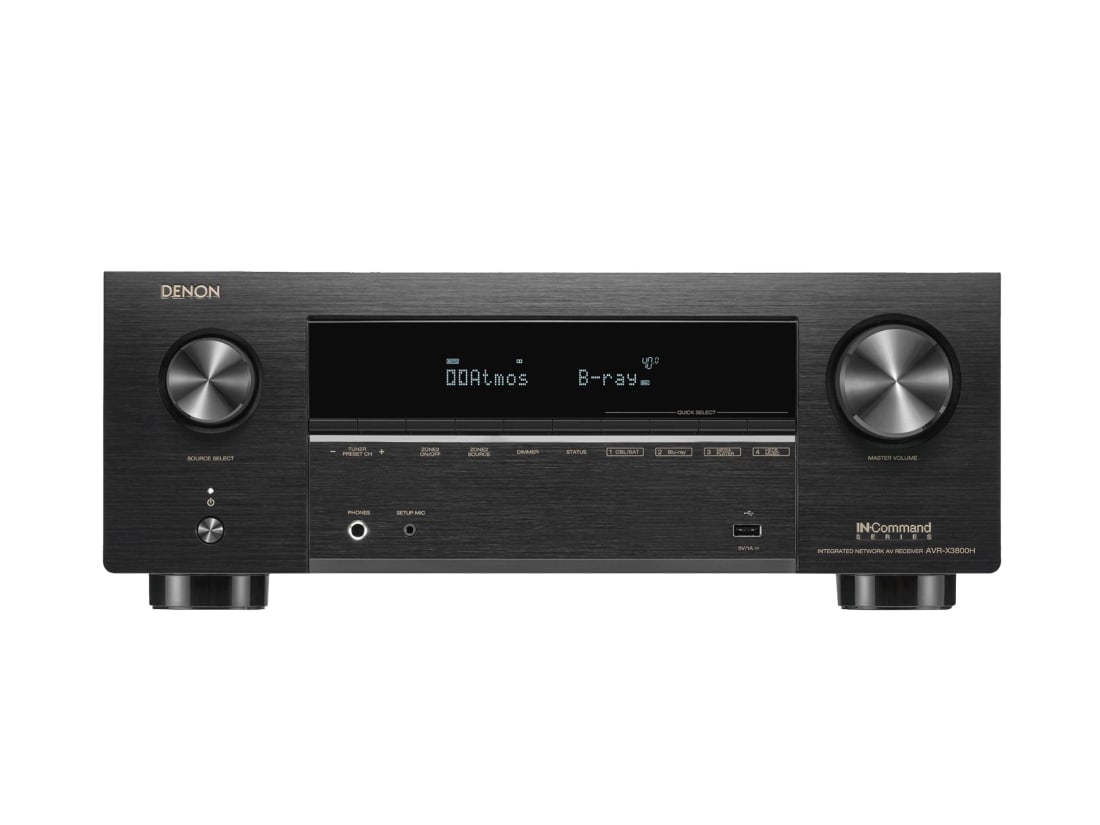
Multiple measurement positions — ideally averaged across your actual seating positions, not just the main chair — give you a response that reflects the room as people will actually experience it, not a single flattering snapshot. Room correction software like the systems built into a lot of modern AVRs, including the setup on something like the Denon AVR-X3800H (check price), will walk you through multi-point measurement for exactly this reason. It's not correcting your room by magic; it's averaging the mess across the seats you actually sit in, which is a genuinely different problem to solving it at one point.
The case for two subs, properly placed
If you take one thing from this piece, take this: the single biggest lever most people have available to fix uneven bass across multiple seats isn't a better EQ curve, it's a second subwoofer. I've made this argument before and I'll keep making it, because the physics doesn't change no matter how good your DSP is.
A single sub excites the room's modes from one point, and no amount of parametric EQ at the listening position fixes the fact that a null fifty centimetres to the left of your chair is a null because the acoustic pressure is genuinely near zero there — you can't EQ pressure that isn't there. Two subs, positioned asymmetrically (not mirrored on the same wall — that just reinforces the same modes twice) and summed correctly, smooth out the modal response across a much wider area of the room. It's a spatial fix for a spatial problem, which is the only kind of fix that actually works.
I go through the maths and the seat-to-seat improvement in more detail elsewhere, but the short version for anyone still deciding between one big sub and two smaller ones: buy two. A pair of something like the SVS SB-3000 (check price) will outperform a single larger sub in almost every real room, because you're fixing the problem at its source rather than trying to average it away after the fact.
Sealed, ported, and why it matters for where you can put the thing
Placement options are also constrained by cabinet type, and this is where a lot of buying guides skip a step. Ported subs are generally more efficient and can hit lower distortion at high output for the same cabinet size, but they're fussier about placement — corner-loading a ported sub can push the port tuning frequency around and produce audible chuffing if airflow gets restricted, which happens more often than you'd think when someone jams a sub hard against a wall or under a credenza.
Sealed subs are more placement-tolerant and generally have a cleaner, more controlled low-frequency rolloff, which is part of why I lean towards them in rooms where the sub has to live somewhere awkward — behind a rack, in a cabinet, wherever the room dictates rather than where the acoustics prefer. The trade-off is you're usually giving up a bit of maximum output and extension for that tolerance, watt for watt and dollar for dollar. If there's a turntable anywhere in the same room, the calculus shifts again — I've covered that specific interaction, mechanical feedback and cabinet resonance included, in sealed vs ported subs with a turntable in the room.
A practical sequence that actually works on real jobs
What I actually do, and what I'd suggest to anyone doing this themselves without a full acoustic measurement kit: crawl first, to rule out the genuinely bad spots and get a rough zone. Then, if you can borrow or buy a cheap measurement microphone — and a USB mic plus free room-measurement software will run you well under the cost of a decent HDMI cable — measure at your primary seat and at least one secondary seat. Compare a couple of candidate sub positions within your rough zone using actual frequency response traces rather than ears alone, because your ears are worse at judging flat bass response than you think, particularly below 60Hz where a lot of the perception is more about felt pressure than tonal accuracy.
Then, before you spend another cent on room treatment or a bigger amplifier, ask whether a second subwoofer solves more of your problem than any placement tweak to a single unit ever could. In the majority of rooms I've worked in — and I'd guess I'm on my third hundred by now — the answer is yes, and it's not close.
Bass management on the receiver side matters too, and it's the bit most manual-readers skip straight past. Crossover point, phase alignment between sub and mains, and correct delay compensation for time-of-arrival differences all interact with whatever placement you land on. Get the placement right and botch the bass management, and you've wasted the hard yards you put into finding the spot in the first place. It's worth getting your AVR or processor's bass management settings dialled in properly as a companion step — I go through it in bass management in stereo systems, which applies just as well to home cinema setups running through an AVR like the X3800H.
None of this is exotic. It's patient, slightly boring, and it rewards someone willing to move a subwoofer eight times over an afternoon rather than once. That's the bit nobody wants to hear, but it's the actual job.
Common questions
- Is the subwoofer crawl actually worth doing, or is it a myth?
- It's worth doing as a first pass, particularly if you're not going to measure properly. It reliably rules out the worst spots in a room, but it's finding a decent position for one frequency range at one point in space, not an optimised response across your whole seating area. Treat it as step one, not the final answer.
- How many measurement positions do I actually need for accurate bass response?
- At minimum, measure your primary seat and one secondary seat if you have multi-row seating. Most modern AVR room correction systems will guide you through several points and average them, which gives a far more honest picture than a single-position measurement ever will.
- Will a second subwoofer really fix uneven bass better than EQ?
- In most rooms, yes. EQ can only adjust level at frequencies you're already measuring at a given point; it can't put acoustic energy into a null where there genuinely isn't any. A second, well-placed sub changes the modal pattern itself, which is a structural fix rather than a corrective one.
- Does sealed or ported matter for where I can place a subwoofer?
- Yes. Ported subs are more sensitive to placement because boundary loading can shift the port's tuning and cause airflow noise if the sub is jammed too close to a wall or cabinet. Sealed subs are more forgiving of awkward, real-world placement, at some cost to maximum output and extension.

G'day, Jonno here. I spent the better part of twelve years as a custom installer building theatres — everything from a media room squeezed into a Queenslander to a fully blacked-out, acoustically-treated cinema with a hundred grand of gear behind the screen. The thing nobody tells you is that the room matters more than the boxes, and I'll bang on about acoustics until you're sick of me. If you're planning a theatre, talk to me before you spend a cent on speakers.
Ex CEDIA-trained installer; dedicated-theatre and Atmos specialist
More from Jonno Fraser
 Guest Wi-Fi and audio: why visitor networks break multiroomGuest Wi-Fi networks isolate devices by design, which quietly breaks multiroom audio. Here's why it happens and how to fix it properly.
 Ceiling speakers vs upfiring Atmos modules: what actually worksCeiling speakers vs upfiring Atmos modules compared for real rooms: when in-ceiling wins, when upfiring is the better call, and why.
- Why your home cinema amp runs hotter on movies than musicFilm soundtracks push amplifier channels harder and longer than stereo music ever does. Here's why that matters for topology, power supplies and what actually fails.
- Screen-wall speaker placement: building around a UST projector properlyUltra short throw projectors sit right where your centre channel wants to be. Here's how I actually solve that in real theatre builds, not in theory.
 Headphone isolation vs room noise: why your desk setup fights youOpen-back headphones and a noisy home office don't mix. Here's how to actually diagnose room noise before you blame the gear.
 Toe-in and rake: the free speaker tuning most owners never touchToe-in angle and cabinet rake cost nothing but change tonal balance and imaging more than most upgrades. Here's how I set both on site.