Subwoofer bass equalisation: when and how to use DSP to fix problem bass
Every room has a bass problem. Not some rooms — every room. The question is whether you've noticed it yet, and whether you're prepared to do something about it beyond shuffling your subwoofer around a carpeted corner.
I've been running measurement sweeps in my listening room for years, and the one thing that never changes is this: below about 300 Hz, the room dominates. Your subwoofer's driver, its cabinet, its amplifier — all of that engineering gets partially undone by the physics of the space it sits in. Rectangular rooms (and most Australian living rooms are close enough) support standing waves at predictable frequencies. Those are your room modes, and they cause bass peaks and nulls that can swing 15–20 dB or more at the listening position. No amount of careful subwoofer placement fully eliminates them.
That's where DSP equalisation comes in. Done correctly, it's the single most effective tool available for getting flat, controlled bass in a real room. Done badly, it can mask problems, introduce new artefacts, and give you a false sense of confidence. So let's get into the specifics.
What room modes actually are (and why EQ can only do so much)
A room mode occurs when a sound wave bounces between two parallel surfaces and reinforces itself at specific frequencies. The lowest axial mode in a room — call it the first-order length mode — sits at roughly half the wavelength that fits between the two longest walls. For a typical 5-metre-long Australian living room, that's around 34 Hz. There are modes along width and height too, plus tangential and oblique modes involving multiple surfaces. The result is a frequency response at any given listening position that looks nothing like what the subwoofer measures in a free-field environment.
Here's the honest limitation: EQ can reduce peaks. It cannot fix nulls. A null at 45 Hz at your listening chair means the direct wave and the reflected wave are cancelling. You can boost the signal at 45 Hz until the amplifier clips, and all you're doing is pushing more energy into two waves that are still cancelling each other. If the null is severe enough, move your seat or your sub — equalisation literally cannot address it.
Peaks, on the other hand, are fair game. A 12 dB hump at 63 Hz? A parametric filter centred there, with appropriate Q and attenuation, will knock it down and tighten the bass considerably. That's the core of what subwoofer DSP EQ actually does.
Parametric EQ versus automatic room correction: understand what you're buying
There are two broad approaches to DSP bass EQ, and they're not interchangeable.
Manual parametric EQ — built into better subwoofer amps and available in standalone software like REW (Room EQ Wizard, which is free and frankly excellent) — lets you define specific filters: a centre frequency, a gain change (in dB), and a Q factor that controls how wide or narrow the filter is. It's precise. It requires you to measure first, understand what you're seeing, and apply corrections methodically. The learning curve is real, but what you get is full transparency over what's actually happening to your signal.
Automatic room correction systems — Dirac Live Bass Control, Audyssey MultEQ XT32 with Sub EQ HT, and the like — take measurements, build a correction curve, and apply filters automatically. They're faster, and modern implementations like Dirac Live are genuinely sophisticated. But they're also a black box. I've seen auto-correction systems apply deep cuts at frequencies that were already null at the listening position, and boost ranges that were already elevated. They work best when you measure from multiple positions and let the algorithm average properly.
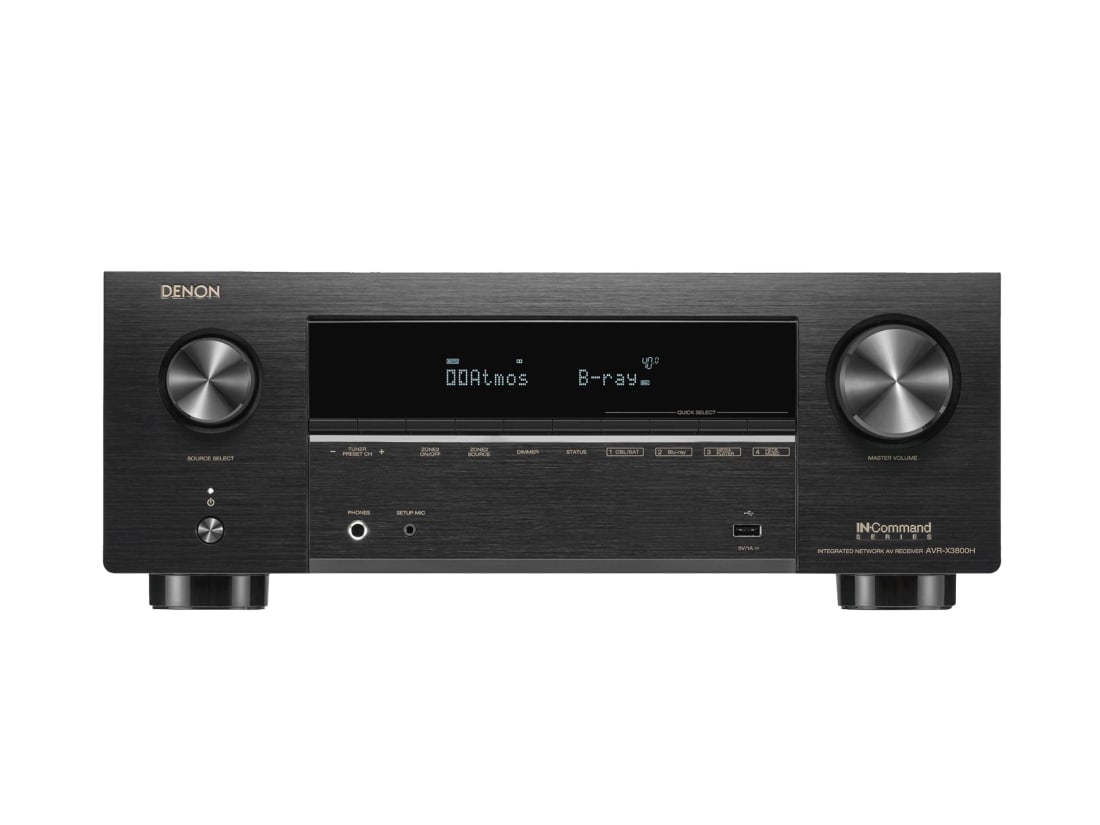
The best DACs and network streamers in our guide increasingly integrate with these correction systems — some AVR platforms like the Denon AVR-X3800H (check price) run Audyssey XT32 with dedicated subwoofer processing, which is worth enabling if you're running a sub through an AVR crossover. Just verify what the system actually did by re-measuring after correction. Trust but verify.
How to measure your subwoofer's in-room response
You need a measurement microphone and REW. Full stop. Guessing what filters to apply without measurement data is superstition, not engineering.
The UMIK-1 from miniDSP is the go-to here — around AU$130 landed, comes with a calibration file that compensates for its own measurement errors, and works directly with REW over USB. Download REW from roomequwizard.com. It's free. There's no reason not to.
Set up the microphone at your primary listening position at ear height. Run a frequency sweep from REW at moderate volume — loud enough to get a clean signal-to-noise ratio, quiet enough that your neighbours don't call the council. Measure at least three positions around the listening area (main seat, plus a seat either side) and average them. A single-point measurement will show you the response at that one point; bass response changes dramatically within half a metre, so averaging gives you something more representative.
What you're looking for: peaks of more than 6 dB above a smoothed target curve are candidates for EQ correction. Note their centre frequencies and their width (narrow peaks are sharp room modes; broad humps suggest cabinet or driver behaviour). Nulls deeper than 10 dB are generally unfixable with EQ and need a placement or multi-sub approach instead.
Applying filters: the practical workflow
REW has a built-in EQ filter generator — use the "EQ Filters" function and let it suggest a starting set. Check each filter it proposes against your measurement before accepting it. I typically start with the two or three most prominent peaks above 6 dB and work from there, rather than trying to correct every ripple. Over-correction introduces phase shifts that can make tight bass worse, not better.
For filter Q: room modes are usually narrow, so Q values between 2 and 8 are common for modal peaks. Broader humps (say, a shelf between 80–150 Hz) suit lower Q values, maybe 0.7–1.5. If you're not sure, start lower and re-measure.
Where do you apply the filters? Three main options:
- The subwoofer's own onboard DSP (miniDSP-equipped models, SVS with its app, and similar)
- A standalone miniDSP unit in the signal chain before the sub
- The room correction engine in your AVR or processor
The SVS SB-3000 (check price) is a good example of a sub with a capable DSP app — three parametric filters, a shelf, and polarity control, all adjustable from your phone. That's enough for most real-world correction tasks without any external hardware. Higher-end processing is possible with a dedicated miniDSP 2x4 HD between your preamp and sub amp, which gives you more filter slots and better resolution.
The crossover frequency matters more than most people realise
Subwoofer DSP isn't just about frequency response correction — it includes how the sub hands off to the main speakers. The crossover point and its slope directly affect how much of the room-mode problem the sub is responsible for.
A common mistake: setting the crossover too low (say, 40 Hz) hoping the sub is less localizable. But many standmount speakers start rolling off below 60–80 Hz, so a 40 Hz crossover leaves a gap. Set it where your main speakers actually lose output, not where you think the sub becomes audible. The KEF LS50 Meta (check price), for instance, is specified down to about 79 Hz at -6 dB — running a crossover at 60 Hz with those is asking for a suck-out in the 60–80 Hz range.
A 24 dB/octave Linkwitz-Riley crossover is the standard for good reason: the acoustic sum of the main speakers and the sub through an LR-4 filter is flat at the crossover frequency and in phase. If your sub has a 12 dB slope and your AVR is outputting a 24 dB slope to the mains, they won't add correctly. Matching slopes — or running correction through a system that handles both — matters.
If you're managing bass in a stereo context rather than home cinema, this is where the bass management article gets relevant — have a read of our guide on bass management if you haven't already, because the integration principles carry across regardless of channel count.
Phase and time alignment: the forgotten adjustment
Fix your frequency response and still have slow, disconnected bass? Phase alignment is probably the issue. A subwoofer physically separated from your main speakers introduces a time delay. If the bass signal from the sub arrives even a few milliseconds after the bass from the mains, the two sources partially cancel at the crossover region.
Most subs offer a continuous 0–180° phase control. Some have a full 0–360° adjustment. The quick method: play a bass-heavy mono track, adjust the sub's phase control until the bass sounds most solid and integrated. A better method: measure the combined response of the mains plus sub at the crossover frequency while sweeping phase, and look for the setting that produces the flattest combined response through the crossover region.
Time delay correction (available in better processors and in miniDSP) is more precise still — it lets you dial in alignment in milliseconds rather than phase degrees. The Dirac Live Bass Control implementation handles this automatically across multiple subs, which is one reason it's genuinely impressive engineering rather than marketing fluff.
Where DSP EQ won't save you
I'll be direct here. EQ is not a substitute for good placement, and it's not a substitute for adding a second subwoofer. I know that's not what people want to hear when they've just spent $1,500 on a sub and don't want to buy another one.
But consider: a single subwoofer in a rectangular room creates a modal pattern that's fundamentally asymmetrical. Move to a second sub placed symmetrically (opposite wall, or the diagonally opposed corner) and you get a more even modal distribution before any EQ is applied. The EQ correction required is smaller. The nulls at off-axis seats are less severe. The end result is better bass for everyone in the room, not just the person sitting at the measured sweet spot.
Our piece on why multiple subs beat one covers the physics of this in detail — it's worth the read if you're still on a single sub and finding that correction alone isn't getting you there.
And honestly, if you're in a highly problematic room — say, an open-plan space that opens into a kitchen along one wall, or a room with a concrete floor and bare plaster walls — no amount of DSP will produce audiophile-grade bass. Acoustic treatment in the bass range (proper bass trapping, not foam tiles) combined with DSP is the combination that actually works. DSP EQ is a tool, not a cure-all.
Getting started: a practical minimum kit
You don't need to spend a lot to get most of the benefit. A UMIK-1 microphone, a laptop running REW, and a sub with onboard parametric EQ (or a miniDSP 2x4 HD at around AU$250) is the baseline setup. That combination will let you identify your two or three worst room modes, apply targeted corrections, and re-measure to verify. Most people who go through this process for the first time are genuinely surprised how different measured bass and perceived bass are — and how much better things sound once they're aligned.
The hard yards are in the measurement session, not the software. Take your time, average multiple positions, and don't apply corrections to nulls. Get those basics right and the DSP does exactly what the engineering promises.
Common questions
- Can I use REW with any subwoofer, or does the sub need built-in DSP?
- REW works with any subwoofer — it's purely a measurement tool. You use it to identify what needs correcting. To actually apply those corrections, you either need a sub with onboard parametric EQ (many modern subs include this), an external DSP unit like a miniDSP in the signal chain, or an AVR with room correction such as Audyssey XT32 or Dirac Live. REW will also generate filter coefficients compatible with miniDSP hardware, which makes the workflow straightforward.
- How much EQ correction is too much? Is there a limit I shouldn't exceed?
- As a rough rule, avoid applying cuts deeper than around 12 dB at any single frequency — beyond that you're asking the filter to do extreme work and phase effects become audible. For boosts, stay under 6 dB, and ideally don't boost at all in the bass range unless you're compensating for a deliberate rolloff in the target curve. Over-correction — applying dozens of narrow filters to flatten every ripple in the response — typically sounds worse than a lighter touch targeting only the most prominent peaks.
- My AVR already has Audyssey — do I still need to run separate EQ for the subwoofer?
- Audyssey XT32 with Sub EQ HT (available on some Denon and Marantz receivers) does apply separate correction to the subwoofer, which is useful. Whether it's enough depends on your room. Run the Audyssey calibration, then re-measure with REW and check whether the bass response at your listening position is actually flat. If there are still prominent peaks above 6 dB, supplementing with manual parametric filters — or adding a miniDSP before the sub — is worth considering.

Theo here. By day I write software, by night I argue with people on forums about whether bit-perfect playback is "solved" (it mostly is, and then it isn't). I cover the digital end — DACs, streamers, servers, the whole messy ecosystem of getting a file to sound its best. My promise to you: I'll separate the genuine engineering from the audiophile folklore, and I'll never tell you a $500 streaming bridge sounds "blacker" unless I can explain why.
Software engineer; network-audio and DAC specialist
More from Theo Mensah
 Dongle DAC power limits: when a phone can't drive headphonesDongle DACs are brilliant until they aren't. Here's how to work out whether your phone-and-dongle rig actually has the current to drive your headphones.
 DNS and multiroom: why your streamer drops out at the worst timeMultiroom dropouts are rarely your Wi-Fi. Here's why DNS resolution quietly breaks streaming apps, and how to fix it for good.
- Parallel vs series IEM crossovers: why multi-driver in-ears sound so differentWhy do two IEMs with the same driver count sound nothing alike? The crossover topology is doing more work than the drivers themselves.
- Streaming a subwoofer's EQ filters: why your network player might be the bottleneckYour sub's miniDSP or app-based EQ can only act on a signal your streamer hasn't already mangled. Here's where network audio and bass management actually interact.
 Amplifier gain structure: the setting that decides your noise floorGain mismatches between DAC, preamp and power stage quietly wreck dynamic range. Here's how to actually set gain structure instead of guessing at the volume knob.
 Bass management by the numbers: what your AVR's crossover and slope actually doCrossover frequency gets all the attention, but slope, distance settings and speaker size flags quietly decide whether your bass management works or fights itself.