Subwoofer group delay: the spec that explains "boomy but late" bass
Last month I had a sub on the bench that measured dead flat from 20Hz to 120Hz, ±1.5dB, the kind of trace that usually makes me happy. Then I sat in front of it and the bass sounded thick. Not boomy exactly — slow. Like the kick drum arrived a beat after the rest of the mix decided to show up. The frequency response graph told me nothing was wrong. The group delay graph told me everything I needed to know.
Group delay is the most misunderstood measurement in the subwoofer world, and I include a lot of very experienced hobbyists in that statement. Most buyers have never seen the graph because most review sites don't publish it, mine included until recently, because it's harder to explain than a frequency response plot and harder still to make look meaningful on a page. But if you've ever set up a subwoofer that measures flat and still sounds wrong, group delay is very likely the reason, and it's worth fifteen minutes of your time to actually understand it rather than just nod along.
What group delay actually is
Every filter you put in front of a signal — and a subwoofer's low-pass rolloff, port tuning, and any active EQ are all filters — delays some frequencies more than others. Group delay measures, in milliseconds, how long a given frequency takes to get through the system relative to a reference. It's not the same as latency in a home cinema sense, and it's not the same as phase, though the two are mathematically related (group delay is literally the derivative of phase with respect to frequency, for anyone who wants the textbook version).
Here's why it matters in practice. A steep filter, or a ported enclosure tuned aggressively low, can rack up 20, 30, even 50+ milliseconds of group delay right around the tuning frequency or crossover point. Above roughly 20ms, human hearing starts to perceive that delay as a distinct, separate event rather than part of the same note. The bass note arrives late relative to the midrange information that's supposed to be attached to it. That's the "one beat behind" effect I heard on the bench. It's also why some ported subs that measure beautifully flat get described by listeners as "loose" or "flabby" — they're not distorting, they're just late.
Why sealed and ported enclosures behave so differently here
This is where enclosure type stops being a matter of taste and becomes a matter of physics. A sealed subwoofer rolls off at a gentle 12dB per octave below its tuning point, and that gentle slope keeps group delay comparatively low and smooth across the band. A ported enclosure, by design, uses the port's own resonance to reinforce output near the tuning frequency — which is exactly what lets a small ported box dig deeper than a sealed box of the same size. But that reinforcement comes from a steeper 24dB per octave rolloff below tuning, and steeper filters always mean more group delay concentrated in a narrower band.
I wrote about this trade-off in more physical terms in sealed versus ported subs in statement systems, and the group delay behaviour is really the acoustic mechanism behind why that trade-off exists at all. It's not that ported is "worse" — plenty of excellent subwoofers, including SVS's SB and PB range, are ported and measure and sound very good. It's that the designer has made a deliberate choice: extend low-frequency extension and output at the cost of concentrating delay near the port tuning frequency. Whether that trade is audible in your room depends heavily on where the tuning frequency sits relative to your crossover point.
Why the problem shows up worse right at your crossover
Group delay problems are almost always worst in the octave or so around a filter's transition band, which for most home systems means somewhere between 60Hz and 100Hz — precisely where your AVR or processor's crossover to the main speakers usually sits. This is the overlap zone where the subwoofer and your mains are both trying to reproduce the same notes, and if one arrives noticeably later than the other, the blend falls apart even though each device individually measures fine in isolation.
I went through the mechanics of crossover slopes themselves in bass management by the numbers, and group delay is the missing piece that explains why a textbook-correct 80Hz/24dB crossover can still sound wrong in one room and right in another. The AVR's crossover itself adds delay. The subwoofer's own internal filtering adds more. Stack a steep ported rolloff on top of a steep AVR crossover slope and you can end up with genuinely audible smearing right in the band where kick drum, bass guitar fundamental, and a huge amount of film LFE content all live.
What you can actually do about it
There's no single fix, but there are a few genuinely useful moves, roughly in order of how much control they give you.
The first and cheapest is simply choosing a crossover point away from your subwoofer's own tuning frequency or steepest rolloff region, rather than defaulting to 80Hz because that's what the AVR suggests. If your ported sub is tuned around 25Hz with a nasty group delay hump at 35Hz, and your mains can genuinely handle down to 60Hz, running the crossover lower keeps the transition band away from the worst of the delay. This is free. It costs you nothing but ten minutes with a test tone and a calibrated microphone, or at minimum some careful listening with familiar tracks.
The second is room correction that actually addresses phase and timing, not just amplitude. Convolution-based systems — I covered the mechanics of this properly in convolution-based room correction — can apply time-domain correction that a simple parametric EQ cannot. A basic PEQ only pulls down a peak in amplitude; it does nothing for the fact that the peak's energy is arriving late. Convolution engines like Dirac Live or Audyssey's higher tiers measure impulse response, not just frequency response, and can correct timing errors that a graphic EQ is structurally blind to. This is genuinely one of the few areas where the marketing claim and the engineering reality line up — it's not magic, it's just doing the maths properly.
The third, and the one I'd argue is underused, is running two subwoofers rather than one. I've made the case elsewhere for when a second sub earns its keep from a room-mode perspective, but there's a group delay angle too: two subs summed correctly, ideally with slightly different placement and independent delay/phase adjustment on a decent bass management processor, let you split the workload so neither unit needs the steepest possible filter to hit your target extension. A sealed sub for tight, low-delay midbass paired with a ported sub crossed low for pure extension is a legitimate strategy, not just an excuse to buy two boxes.
Phase and delay controls matter more than people think
Most subwoofers, even budget ones like the SVS SB-3000 (check price), ship with a continuously variable phase control and sometimes a delay setting, and I'd guess the majority of owners leave it at the factory default. That's a mistake. The phase and delay controls exist specifically to let you fine-tune the timing relationship between the sub and your mains at the crossover frequency, compensating for exactly the kind of group delay mismatch this article is about. Sweep the phase control while playing a test tone at your crossover frequency and listen for the point of maximum reinforcement rather than cancellation — it's a five-minute job that most setup guides mention in passing and most owners skip entirely, similar in spirit to the toe-in adjustment I've banged on about before.
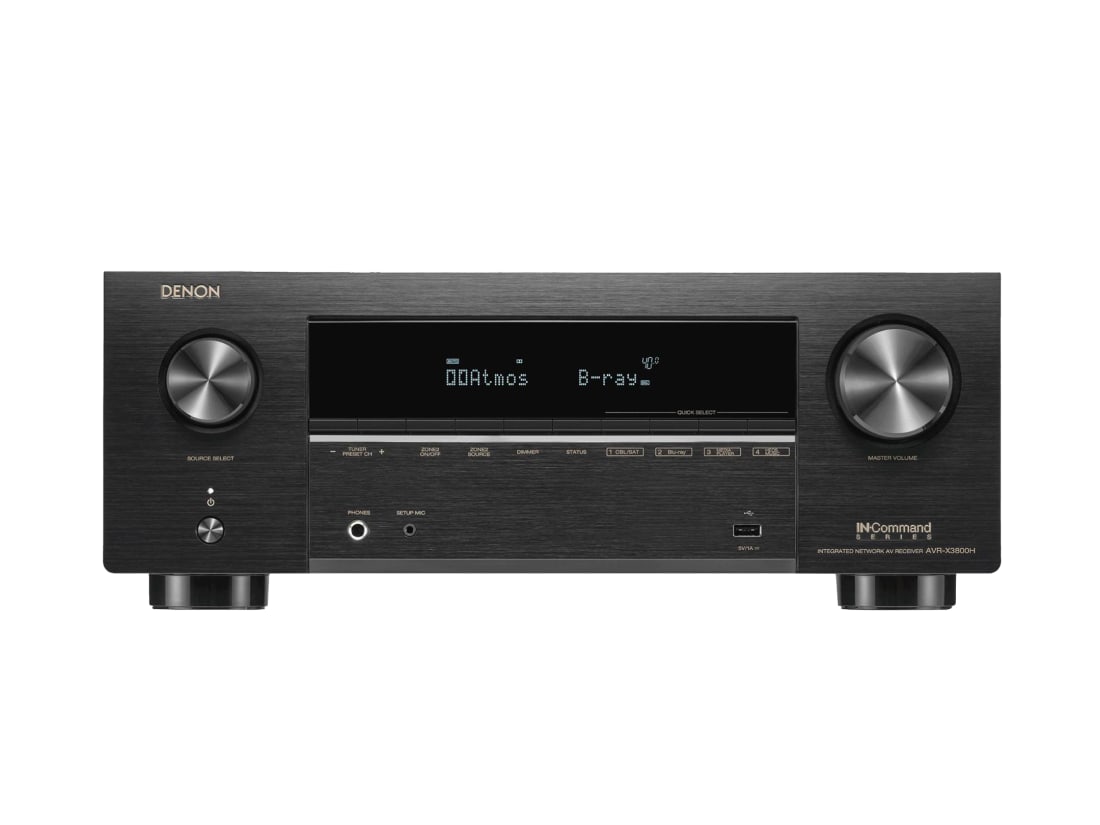
If your processor supports it, setting subwoofer delay in milliseconds based on the actual measured distance difference between sub and main speakers is more precise than guessing by ear, and most modern AVRs including the Denon AVR-X3800H (check price) handle this in their setup routine automatically via the measurement microphone. I still recommend checking the result manually with a tape measure and doing the arithmetic yourself, because automated room correction systems occasionally get this wrong when a room has strong early reflections confusing the impulse response measurement.
Reading a group delay graph, if you can find one
Not many manufacturers publish this data, which I think is a genuine gap in how the industry communicates specs to buyers — frequency response tells you what a sub can do, group delay tells you when it does it, and the second number is arguably more predictive of how "tight" a sub will sound in a real room. If you can get hold of a measurement, whether from a manufacturer's engineering white paper or by measuring it yourself with software like REW (Room EQ Wizard, which is free and does this calculation automatically from an impulse response sweep), look for where the group delay curve starts climbing steeply. That knee point tells you roughly where the transition band begins, and anything holding under about 10-15ms through your intended crossover region is generally going to sound tight and well-integrated. Past 25-30ms in that same region, expect some audible smearing regardless of how flat the amplitude response looks.
I'll say the mildly unfashionable thing here: I think sealed subwoofers are underrated for two-channel and near-field home cinema setups specifically because of this, and I'd take a well-designed sealed sub over an equivalent-priced ported unit in a small-to-medium room even though the ported box will out-spec it on paper for low-frequency extension. The extra 3-5Hz of extension a ported design buys you rarely matters as much in practice as clean, well-timed transient response through 40-80Hz, which is where most music and a lot of film content actually lives.
Getting it right without an engineering degree
You don't need to understand transfer functions to fix this in your own room. Start with crossover placement away from your sub's rolloff knee, use the phase control properly rather than leaving it at zero or 180 degrees by default, measure distances for delay settings rather than trusting auto-setup blindly, and if you're building a system from scratch, weigh sealed versus ported against your room size and crossover point rather than chasing the deepest extension spec on the box. None of this shows up on the spec sheet the way wattage or frequency response does, which is exactly why it trips up buyers who've done all their other homework properly.
The sub I mentioned at the start, the one that measured flat but sounded slow? A 15ms delay adjustment and a crossover moved from 80Hz down to 60Hz fixed it almost entirely. No new hardware, no EQ, just paying attention to timing instead of amplitude. That's the whole point of understanding group delay — it's a free fix hiding behind a spec most people have never been shown.
Questions I get asked about this
Common questions
- Can I hear group delay directly, or do I need a measurement?
- You can often hear the symptom — bass that feels detached or 'behind' the beat — without ever seeing a graph, but you can't diagnose the cause by ear alone. A sweep and an impulse response measurement in something like REW is the only reliable way to confirm group delay is the culprit rather than a room mode or a bad crossover slope choice.
- Does a higher-order crossover slope always mean worse group delay?
- Generally yes, steeper slopes (24dB/octave versus 12dB/octave) concentrate more delay in a narrower frequency band around the crossover point. That's not automatically a problem if the crossover sits well away from the content you care most about, but it's worth knowing the trade-off exists rather than assuming a steeper slope is simply 'more correct'.
- Is this the same thing as the delay setting on my AVR?
- No, though they interact. The delay setting on your AVR compensates for the physical distance difference between your sub and main speakers so their sound arrives at your seat at the same time. Group delay is an internal property of the subwoofer's own filters and enclosure design, and no amount of AVR delay adjustment can fix delay that's smeared unevenly across a frequency band rather than uniform.
- Should I avoid ported subwoofers because of this?
- Not at all. Ported design is a legitimate, well-understood trade-off that buys real extension and output for the size, and many excellent subwoofers are ported. The point isn't to avoid them, it's to choose your crossover point sensibly relative to the port's tuning frequency, and to use the phase and delay controls properly rather than leaving them at default.

I'm Marcus, and I'll be honest up front: I trust a measurement before I trust my own ears, because my ears lie to me daily. I spent fifteen years designing audio electronics before I started writing about them, so when a brand tells me a number, I want to see the graph. That doesn't make me cold about this hobby — I love a system that disappears as much as anyone — it just means I'll tell you when an expensive box is selling you confidence rather than performance.
Former audio electronics engineer; objectivist; runs the test bench
More from Marcus Vale
 Why your turntable's earth wire isn't optionalTurntable earthing fixes most phono hum problems. Here's how grounding actually works, why it fails, and how to track down a noisy connection.
 Why your AVR runs cool on music but throttles on AtmosAVR thermal throttling explained: why nine-channel Atmos mixes push receivers into protection mode that two-channel music never triggers.
- Subwoofer delay settings: why your AVR's number is a guessAVR auto-calibration estimates subwoofer delay from distance, not timing. Here's how to measure and correct it properly for tighter bass.
- AVR auto-calibration: what Audyssey, YPAO and Dirac actually measureAudyssey, YPAO and Dirac Live all run a mic sweep and spit out numbers, but they're not measuring the same things or fixing the same problems. Here's what's actually happening.
- Cartridge break-in: what actually changes in the first 40 hoursDoes a new cartridge really need 40 hours to "open up"? I measured one to find out what's mechanical fact and what's audiophile folklore.
- DAC output stages: what the chip doesn't tell youThe DAC chip gets all the marketing attention, but the analogue output stage after it does most of the work shaping what you actually hear.