Why I still won't put a record player in the theatre room
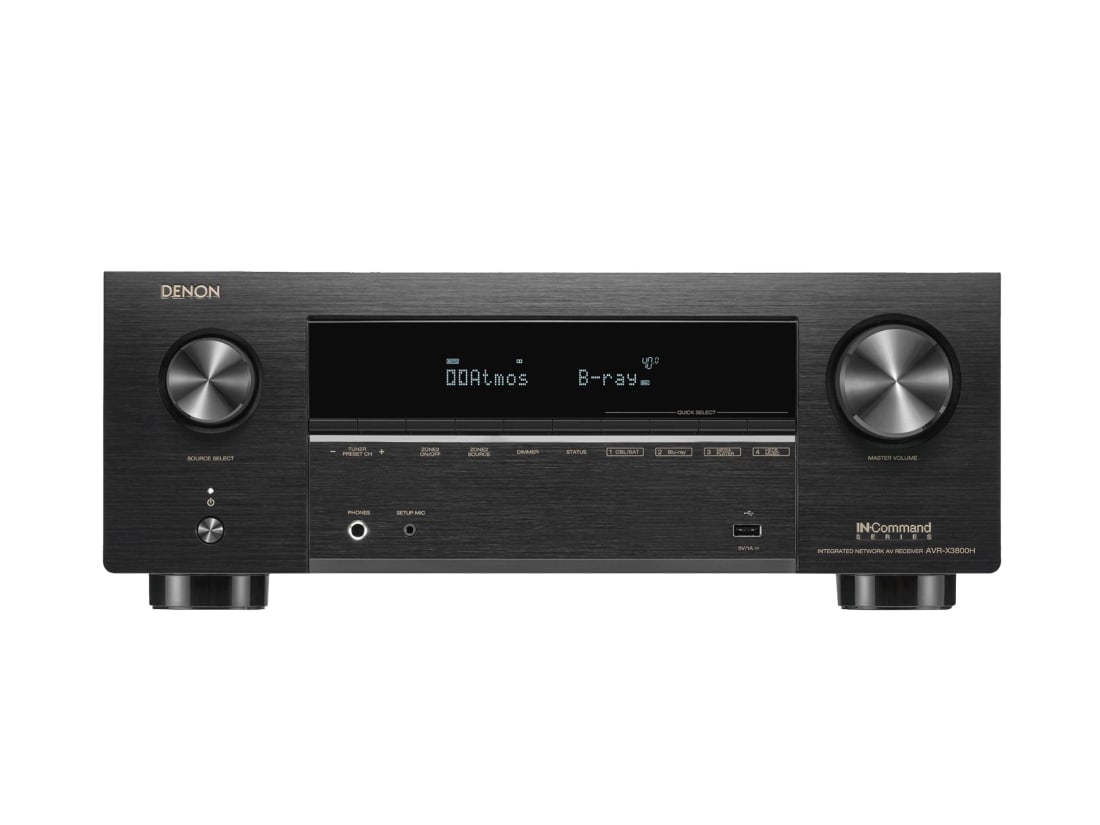
A bloke came into the old Fitzroy shop years back with a plan that sounded terrific on paper: one room, one system, projector on one wall, Rega on a shelf by the window, seven speakers wired in for Atmos, and a subwoofer he was very proud of. He wanted to know which cartridge would "cut through" the surround processor when he switched inputs. I told him the cartridge wasn't his problem. The room was.
This is a topic I get asked about more than almost anything else, usually by people who've just finished reading our piece on building a home cinema and are now wondering whether the good record player from the lounge should migrate into the new theatre. The short answer is no. The longer answer is why, and it's less about snobbery than you'd think — it's actually mostly physics, furniture, and how differently these two hobbies want to be lived.
Two systems built for opposite jobs
A home theatre is engineered around control. You want a flat response at the seats, consistent bass across the room, height channels doing something specific and repeatable, and a processor making decisions about levels and delays sixty-plus times a second during a film. Every speaker in that room is there to disappear into a soundtrack that someone else mixed with reference monitors in a calibrated space. The AVR or processor's entire job is to reproduce that mix faithfully, not to add its own character.
A turntable is the opposite kind of machine. It's mechanical, it's imperfect by design, and half of what makes vinyl satisfying is the tiny bit of personality a cartridge and a valve phono stage bring to a groove that was never "correct" in the first place — it was cut with RIAA equalisation applied specifically so it could be un-applied on replay, which is a strange and lovely bit of 1950s engineering nobody talks about enough. I run mine through a modest valve setup at home because I like what a bit of second-harmonic distortion does to a voice, and I'm honest about the fact that a distortion analyser would mark that down as a flaw. It's a flaw I've chosen. That's a very different mindset to a theatre room, where the whole point is zero personality in the reproduction chain.
The vibration problem nobody solves properly
Here's the practical bit, and it's the one that actually bites. A subwoofer in an Atmos room is trying to move a lot of air at low frequency, and low frequency energy doesn't stay where you put it — it goes through floors, through stud walls, through the shelf your turntable is sitting on. A stylus tracing a groove is measuring displacement in the order of micrometres. Any structure-borne vibration that reaches the platter, whether through the floor, a shared wall, or airborne bass pressurising the plinth itself, shows up as mistracking, as a smeared low end, sometimes as an audible rumble that has nothing to do with your cartridge and everything to do with your sub.
I've written about this specific mechanism before in more detail — see our piece on turntable and subwoofer in the same room if you want the full feedback-loop explanation — but the short version for theatre rooms is that a home cinema sub is usually working harder and lower than a stereo sub ever would, because it's carrying LFE duty on explosions and rumbling doom-laden scores. That's precisely the frequency range a suspended or semi-suspended turntable is most sensitive to. You can isolate a plinth reasonably well against footfall. Isolating it against a room that's being pressurised by a properly set up subwoofer, like the SVS SB-3000 (check price), is a much harder ask, and in my experience it's never fully solved, only reduced.
The furniture argument, which sounds trivial and isn't
Vinyl is a physical ritual. You get up, you flip the record, you clean it, you read the sleeve notes, you sit close enough to see the platter spin. That whole sequence wants low, comfortable seating near the equipment, decent light to read a sleeve by, and a rack you can actually get your hands into. A dedicated theatre room is built around the opposite geometry: seating pushed back to the calculated viewing distance for the screen, lights that go fully dark, and equipment racked away in a cabinet or a separate room entirely so it doesn't throw reflections at the screen or distract from the picture. Try reading a gatefold sleeve in a blacked-out theatre and you'll see what I mean inside about four minutes.
There's also a genuinely mundane reason: a turntable needs a stable, non-resonant surface roughly at chair height near where you sit, and in most builds that real estate has already been claimed by the centre channel, the AVR, or the equipment rack for the processor and amps. Something has to give, and it's almost always the turntable that loses that argument, badly placed on top of a rack that's humming gently from cooling fans and cable clutter.
Where the money actually wants to go
If you're planning a build and wondering where the budget should land, our home cinema core components guide covers the spending order for the theatre side properly, and I won't repeat it here. But from the vinyl side, I'd say this: don't compromise the phono front end to save money for the theatre, and don't compromise the theatre's bass management to protect a turntable that shouldn't be in that room anyway. Keep them financially and physically separate projects. A lounge room system built around something like a Rega Planar 3 (check price) and a modest valve or solid-state phono stage, sitting in its own space with its own seating, will give you more listening pleasure per dollar than trying to squeeze a compromised version of both hobbies into one room.
I'll admit this is where I'm biased and I own it. I think a lot of enthusiasts chase the idea of "one system to rule the house" because it sounds efficient, and efficiency is a very seductive word. But hi-fi and home cinema are genuinely different pastimes wearing similar clothes. One is a private, unhurried, slightly fussy ritual. The other is a shared, dark, immersive event designed by committee at a mixing stage in Los Angeles or Burbank. Forcing them to share a room means both compromise, and in my experience the turntable compromises first and worst.
If you genuinely only have one room
Not everyone has a spare room, a converted garage, or the kind of floor plan that allows two separate systems, and I'm not going to pretend otherwise from a terrace in Fitzroy where storage is basically theoretical. If you're stuck with one room, a few things help meaningfully, even if none of them fully solve the underlying tension.
Put the turntable on its own wall-mounted shelf rather than the equipment rack, ideally on a wall that doesn't share a stud bay with the subwoofer's location. Keep the sub as far from the turntable's wall as the room allows, and treat it as a placement problem first, using the crawl method rather than just shoving it in a corner because that's where the cable reaches. Consider a suspended or spring-isolated plinth if your existing one is a basic slab design, because a genuine isolation platform buys you real headroom against structure-borne bass even if it can't fix airborne pressurisation entirely. And be honest that movie nights and record nights are probably going to happen on different evenings, with different lighting and different seating arrangements, even in the one physical space. That's not a defeat. That's just what the two hobbies actually need.
The Australian Communications and Media Authority doesn't regulate any of this, obviously, but the physics is about as fixed as regulation gets — low frequency energy propagates through structures according to well-understood building acoustics, and no amount of enthusiasm changes how a stud wall transmits a 30Hz pressure wave. The Bluetooth SIG and Dolby can write all the specs they like for the digital side of a theatre chain; none of it touches the mechanical problem sitting on a shelf six feet from a subwoofer. If you want the technical detail on how AVRs and processors handle the digital half of that chain, our DACs and network streamers guide is a reasonable adjacent read, even though it's not the point of this piece.
What I actually do at home
My own setup is embarrassingly simple by comparison to some of what Sofia covers on the statement end of this site. The turntable lives in the front room with a decent valve integrated and a pair of standmounts, nowhere near a subwoofer, nowhere near a screen. The television and its modest soundbar arrangement live in the back room, and I've made peace with the fact that it will never be a proper Atmos room because the ceiling has decorative plasterwork from about 1912 that I'm not drilling into for height speakers. Fair enough, I reckon — some rooms tell you what they want to be, and mine told me pretty clearly. If yours is telling you something different, listen to it before you listen to the demo disc.
— Priya Anand, Vinyl & Valves Editor
Common questions
- Can I run a turntable through my AVR instead of a separate phono stage?
- Only if the AVR has a dedicated phono input with proper RIAA equalisation built in, and most modern AVRs don't. Running a turntable straight into a line-level input without correction will sound thin and wrong. If your AVR lacks phono, you'll need an outboard phono stage regardless of which room the deck lives in.
- Does record-night sound actually clash with Atmos content, or just the equipment?
- It's mostly the equipment and the room geometry, not some fundamental incompatibility. A turntable can technically feed a home cinema system's stereo inputs fine. The problems are vibration from the subwoofer reaching the platter, and the seating and lighting layout of a theatre room being wrong for the vinyl ritual.
- Is a suspended turntable shelf worth it if I can't move the subwoofer?
- Yes, it's one of the better single upgrades for a shared room. A proper isolation platform meaningfully reduces structure-borne vibration reaching the stylus, though it won't fully stop airborne bass pressure from affecting a lightly damped plinth during heavy LFE content.

Hello — I'm Priya. I ran a second-hand record shop in Fitzroy for the better part of a decade, which is a polite way of saying I have three thousand records and nowhere to put them. I listen to vinyl through valve amplification because I like the ritual as much as the sound, and yes, I know the measurements aren't perfect — I don't care, and I'll explain why on the page. If you want someone to tell you a turntable is "just a motor and a bearing," I am not your person.
Record collector (3,000+); valve-amp enthusiast; ex record-shop owner
More from Priya Anand
 Sample rate and bit depth explained: what actually changes at higher numbersPriya Anand unpacks what sample rate and bit depth genuinely do to sound, and why chasing bigger numbers past 16/44.1 rarely buys what the spec sheet implies.
 Turntable and subwoofer in the same room? Here's how to stop the feedback loopA subwoofer and a turntable sharing a room can turn a great pressing into mud. Here's how to place both so bass and vinyl actually get along.
- Turntable in the theatre room: why vinyl and Atmos rarely mix wellVinyl and a dedicated Atmos set-up can share a room, but rarely share a rack. Here's why, and what I'd actually do about it.
- MQA is dead. Here's what that actually means for your streaming serviceMQA's collapse left a lot of confused shelves of "Masters" tier subscriptions. Here's what actually changed, and what to do about it.
- Where a vinyl system's money actually goes: spending in the right orderA former record shop owner on the real spending order for a turntable system, and where extra dollars stop buying you anything.
- Sealed vs ported subs with a turntable in the room: what actually changesPorted subs and suspended timber floors don't always get along with a turntable. Here's how sealed vs ported bass actually behaves when vinyl is in the signal chain.