Sample rate and bit depth explained: what actually changes at higher numbers
A customer walked into my old shop on Brunswick Street with a printout — an actual printout — comparing sample rates like it was a spec sheet for a car. He wanted to know why his 24-bit/192kHz download of a Bill Evans record didn't sound twice as good as the CD rip. I didn't have a tidy answer for him then. I've got a better one now, mostly because I've spent years running vinyl through valve gear while half-listening to digital arguments happen around me at hi-fi shows, and I've finally worked out which parts of the sample rate story are real engineering and which parts are spreadsheet theatre.
The short version: bit depth and sample rate solve two completely different, mostly already-solved problems. Once you understand what each one actually does, you stop caring about the number on the box and start caring about whether the file was mastered properly in the first place. That's the bit nobody puts on the packaging.
What sample rate actually measures
Sample rate is how many times per second the analogue waveform gets measured and turned into a number. CD audio samples at 44,100 times a second. Hi-res files often run at 96kHz or 192kHz — two or four times as often.
The reason 44.1kHz was chosen isn't arbitrary marketing, either. Harry Nyquist and Claude Shannon's sampling theorem — yes, actual named engineers, not folklore — established that a sample rate needs to be roughly double the highest frequency you want to reproduce to capture it accurately. Human hearing tops out somewhere around 20kHz for young, undamaged ears, and realistically closer to 15-16kHz for most adults past their thirties. Double 20kHz, add some headroom for the anti-aliasing filter, and you land very close to 44.1kHz. It wasn't a compromise; it was maths done properly, decades before streaming existed.
So what does 96kHz or 192kHz actually buy you? Mostly headroom for the filter designer, not extra audible frequency response. Higher sample rates push the ultrasonic content further from the audible band, which lets manufacturers use gentler, more benign digital filters instead of the brick-wall types that older CD players sometimes used clumsily. That's a genuine engineering benefit — I won't pretend it's nothing — but it's a benefit that lives in filter design choices, not in you personally hearing content above 20kHz. Nobody's ears go to 40kHz. Dogs, maybe.
What bit depth actually measures
Bit depth is a different animal entirely. It sets how finely each sample's amplitude gets measured — essentially the resolution of loudness at each instant, and by extension, the noise floor and dynamic range of the recording.
CD's 16-bit depth gives a theoretical dynamic range around 96dB. That's already wider than the dynamic range of most rooms, most amplifiers, and honestly most recordings — orchestral masters aside, very few commercial mixes use anywhere near 96dB of range because engineers compress things for a reason. 24-bit theoretically pushes that out past 140dB, which is beyond the threshold of pain and well beyond what any domestic system, speaker, or human ear can usefully resolve in one sitting.
Where 24-bit genuinely earns its keep is in the studio, not your lounge room. Recording and mixing engineers need that extra headroom during tracking and processing, where multiple gain stages and plugin chains can otherwise reveal quantisation noise. By the time a well-mastered recording reaches you as a 16-bit consumer file, the useful dynamic range advantage of the 24-bit master has usually already been captured in how it was mixed down. Published engineering research on high-resolution audio is worth reading if you want the engineering framed without the marketing gloss.
The bit nobody puts on the spec sheet: mastering
Here's my mildly contrarian bit, and I'll own it: I think the entire "hi-res vs CD quality" debate is mostly a distraction from the actual variable that decides how a digital recording sounds — the mastering.
A loudness-war-era CD master, squashed flat with a limiter to compete on car stereo volume, will sound worse than a dynamic 16/44.1 file every single time, regardless of what bit depth or sample rate the hi-res version claims. I've done blind-ish comparisons at shop listening sessions — nothing peer-reviewed, just a few of us swapping files on decent gear — and the "hi-res" file frequently wins not because of its numbers but because it happens to be sourced from a different, better master. Change the mastering and keep the numbers the same, and the hi-res advantage often evaporates.
This matters practically because streaming services now market "hi-res" tiers heavily, and the assumption baked into the marketing is that bigger numbers equal better sound. Sometimes it does. Often what you're actually getting is simply a cleaner, less compressed master that happened to be encoded at a higher rate because that's the workflow the label used for that particular release. The number on the file is a correlation, not the cause.
Where the chain actually leaks quality
If you want to spend money chasing better digital sound, sample rate and bit depth are close to the bottom of the list. The things that actually shape what comes out of your speakers, in rough order of impact, are the source master quality, the DAC's implementation, the analogue output stage, and then the amplifier and speakers doing the rest of the work.
I've written before about where to spend on a digital front end and the diminishing-returns curve applies directly here. A well-implemented DAC chip in something like the iFi Audio ZEN DAC 3 (check price) or the FiiO K11 (check price) handling 16/44.1 competently will beat a mediocre implementation chewing through 32-bit/384kHz files. My colleague Theo has made the point elsewhere that DAC chip specs are marketing, and the sample rate ceiling printed on the box is really just an extension of that same spec-sheet theatre.
The output stage matters more than people assume too — how the DAC's analogue circuitry actually shapes the signal before it leaves the box has more bearing on the character you hear than whether the incoming file was 44.1 or 192kHz. Something like the RME ADI-2 DAC FS (check price) earns its reputation on measured, clean implementation rather than headline sample rate support, and units like the Chord Electronics Mojo 2 (check price) get their character from filter and output design choices, not from the numbers on the input spec.
Bit-perfect playback and why it's overrated as a talking point
"Bit-perfect" gets thrown around as though it's the finish line. All it actually means is that the digital data reaching the DAC hasn't been altered by resampling, volume processing, or an operating system's mixer meddling with it along the way. It's a real thing worth getting right — nobody wants Windows quietly resampling everything to 48kHz behind your back — but it's a baseline hygiene setting, not a sound-quality tier. Getting bit-perfect playback sorted takes ten minutes in your streaming app's settings and costs nothing. It's not a reason to buy new gear.
Where it does interact with a genuine format debate is PCM versus DSD, which I'd point you toward our separate piece on bit-perfect and PCM vs DSD for the fuller technical picture, because that's a different argument about encoding structure rather than sample rate per se.
So does any of it matter for streaming?
Practically, yes, a little — but not for the reason the marketing implies. If a streaming service offers you a choice between a heavily compressed lossy stream and a lossless 16/44.1 stream of the same master, take the lossless one; that's a real, audible difference in most systems, particularly through decent headphones or standmounts. Whether that lossless stream is also labelled "hi-res" at 24/96 versus plain 16/44.1, from the same master, is where I'd stop spending mental energy. Put it toward the amplifier or the room instead.
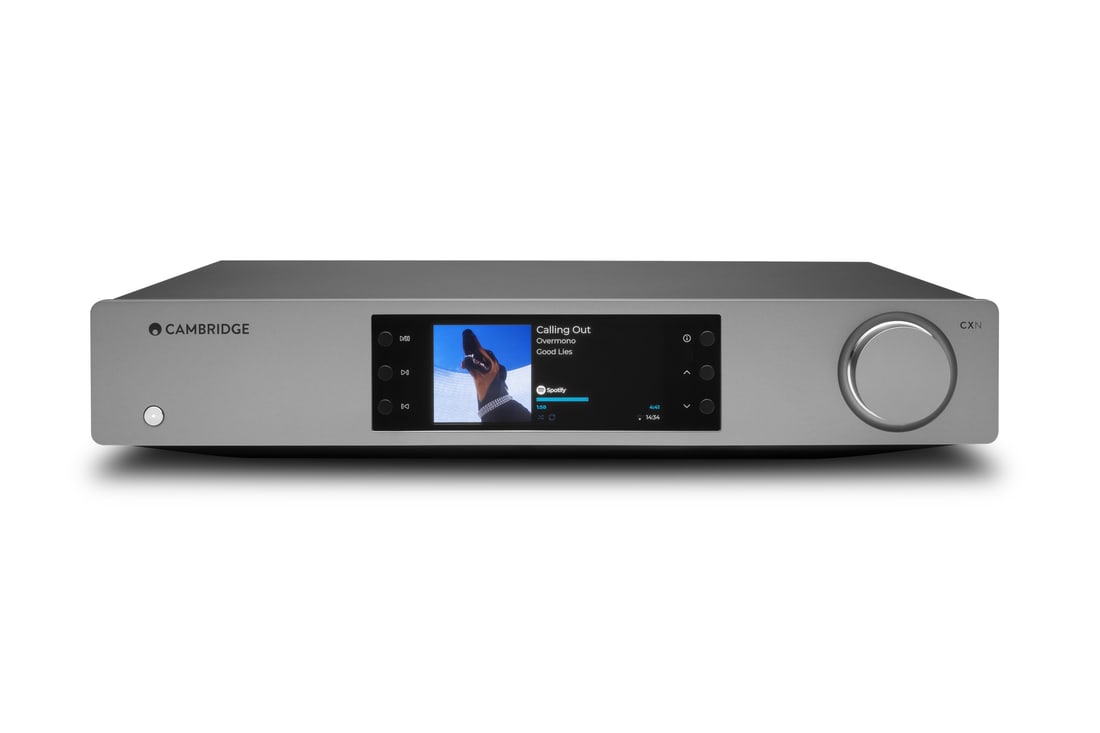
If you're building a system around a streamer, something like the WiiM Ultra (check price) or the network side of the Cambridge Audio CXN100 (check price) will happily pass through whatever resolution your service provides. Neither one is going to sound meaningfully worse because it's fed 44.1kHz instead of 192kHz, provided the master itself is decent. Our broader roundup of the best DACs and network streamers is a reasonable starting point if you're shopping, and I'd encourage reading it with this article's scepticism intact.
I'll admit I used to be more dismissive of digital altogether — old vinyl-shop habits — and I got that wrong for years. The engineering here is genuinely sound; it's the marketing layered on top of it that's the problem. Nyquist and Shannon solved the sampling question properly last century. Everything since has mostly been about convincing you to solve it again, for money.
Common questions
- Can I actually hear the difference between 16-bit and 24-bit audio?
- In a properly mastered, well-dithered 16-bit file played on typical home gear, the difference is very hard to detect reliably. 24-bit's advantage is mostly useful during recording and mixing, where extra headroom prevents quantisation noise building up across multiple processing stages.
- Is 192kHz audio worth paying more for?
- Usually not for the sample rate itself. If the 192kHz version happens to come from a better, less compressed master than the standard release, that's the actual reason it might sound better, not the sample rate number.
- Does my streaming service's 'hi-res' badge guarantee better sound?
- It guarantees a higher resolution file was delivered, not that the mastering behind it is superior. A heavily compressed hi-res file can still sound worse than a well-mastered CD-quality one.
- What should I actually check if I want better digital sound at home?
- Confirm bit-perfect playback in your app's settings, choose lossless over lossy where offered, and then spend your money on the DAC's output stage, the amplifier and the speakers rather than chasing higher sample rate numbers.

Hello — I'm Priya. I ran a second-hand record shop in Fitzroy for the better part of a decade, which is a polite way of saying I have three thousand records and nowhere to put them. I listen to vinyl through valve amplification because I like the ritual as much as the sound, and yes, I know the measurements aren't perfect — I don't care, and I'll explain why on the page. If you want someone to tell you a turntable is "just a motor and a bearing," I am not your person.
Record collector (3,000+); valve-amp enthusiast; ex record-shop owner
More from Priya Anand
- USB vs S/PDIF for DACs: does the digital input matter?USB, coaxial and optical into a DAC: which digital input actually changes the sound, and when the difference is real versus imagined.
- Qobuz vs Tidal for your record collection's digital halfQobuz vs Tidal compared for vinyl collectors who want a digital half that matches their records, not just a bigger catalogue.
 Why a subwoofer makes a valve system sound more honestAdding a subwoofer to a valve amp system can tighten bass, cut distortion and let low-power tubes sing. Here's how to do it properly.
- Tidal vs Qobuz vs Apple Music: which one actually suits a valve systemStreaming services aren't interchangeable once you're running valves. Here's how Tidal, Qobuz and Apple Music actually behave through a warm front end.
 Speaker matching to valve amps: sensitivity beats watts every timeWhy sensitivity, not power output, decides whether a valve amp and speaker pair actually works together — and how to read a spec sheet properly.
- Your phone's volume slider is quietly re-encoding your musicTurning your phone down before a Bluetooth speaker or DAC often re-processes the digital signal. Here's what's actually happening, and when it matters.