Wi-Fi vs Ethernet for network streamers: does the cable actually matter?
Three people emailed me last month asking essentially the same question: "I've run Ethernet to my streamer and it sounds better — am I imagining it?" The honest answer is: probably not, but almost certainly not for the reason you think. Let me walk through what's actually happening at the network level, because there's a lot of folklore in this space and the truth is more interesting than either side of the argument usually admits.
What the network actually delivers to your streamer
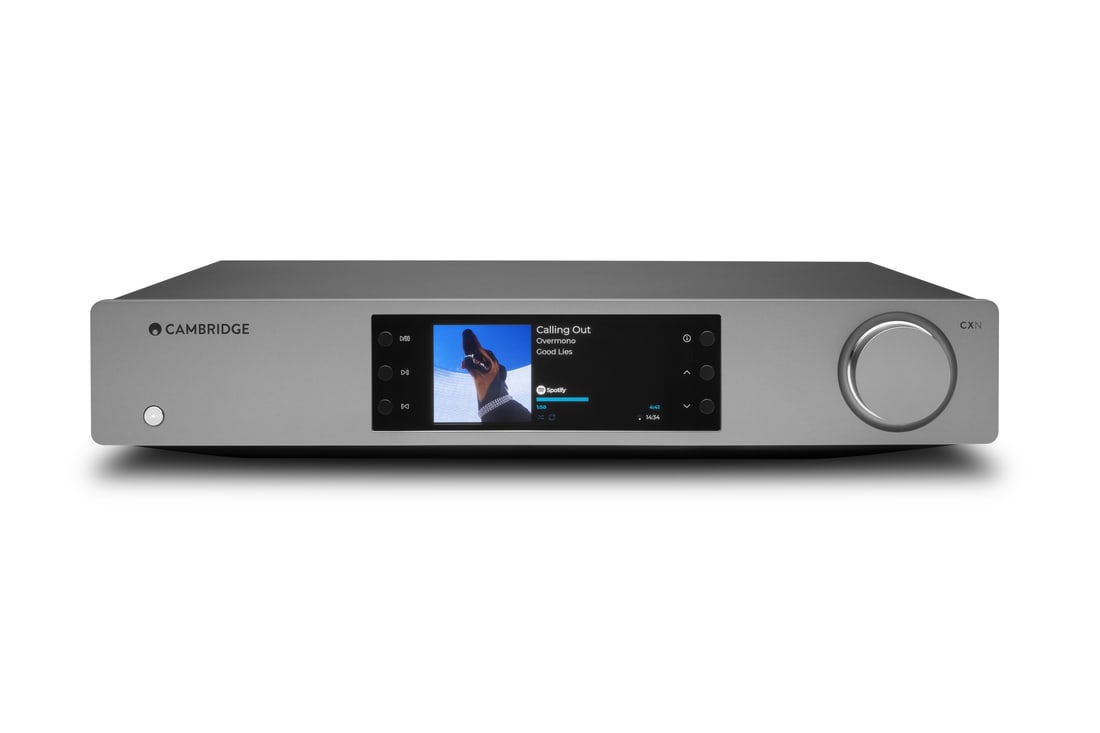
First, a baseline. A modern network streamer — whether it's something like the Cambridge Audio CXN100 (check price) or a more ambitious unit from the DAC and streamer category — receives audio data as packets. TCP/IP, the protocol under everything, is a guaranteed-delivery system. Packets that arrive corrupted get retransmitted. This is not like an analogue cable where a dodgy connection degrades the signal proportionally. Either the data arrives intact and your streamer buffers it, or the connection is so broken it drops out entirely. There is no middle ground where "slightly lossy Wi-Fi" smuggles noise into the audio bitstream.
So, right up front: the network itself does not inject audible noise into a digital audio signal via packet errors. That's not how TCP works.
Then why does Ethernet seem to sound different?
This is where it gets genuinely interesting, and it's the part most discussions skip.
The network interface inside a streamer — the Wi-Fi radio or the Ethernet PHY chip — does not sit in an acoustically inert void. It sits on a PCB, shares a ground plane with the DAC and output stage, and draws power from the same supply rails. A Wi-Fi radio is an RF transmitter. It transmits continuously, it bursts data at irregular intervals, and it generates interference across a broad frequency range. That interference can couple into sensitive analogue circuitry — the output stage, the clock circuit — through shared power rails or ground-plane contamination.
An Ethernet connection is not RF-free, but the PHY operates at lower radiated power and its interference profile is more predictable. More importantly, the data arrives in a steadier stream (assuming a well-configured network), which means the interface logic is less likely to generate irregular current spikes on the supply rails.
Is this guaranteed to be audible? No. Is it physically real? Yes. The magnitude depends entirely on how well the manufacturer has isolated the digital and analogue sections — a well-designed streamer with proper galvanic isolation and a clean power supply will be far less susceptible than a budget unit that's cut corners on the board layout.
The clock argument, and why it's mostly separate
Some people extend the Wi-Fi-sounds-worse argument to jitter. The reasoning goes: irregular packet arrival from Wi-Fi causes jitter in the master clock, which causes audible degradation. This is a popular claim, and I'll be blunt — it's mostly wrong for any streamer built in the last five years.
A decent network streamer buffers incoming data. The buffer completely decouples the network's packet timing from the DAC's clock. Whether packets arrive in neat 10ms intervals or in chaotic bursts, the DAC reads from the buffer at a rate controlled by a local oscillator. The network timing is irrelevant to the output clock, because the two are not connected. We covered this in much more detail in our piece on network audio clocking — the relevant factor is the quality of the local crystal or TCXO, not the packet schedule.
Where jitter arguments do have some validity is in very cheaply made units where the buffer implementation is inadequate, or where the designer has skimped on clock isolation. But those units tend to sound bad regardless of connection type.
Wi-Fi reliability: the real practical problem
Set aside the RF interference question for a moment, because there's a purely practical issue that often gets conflated with sound quality: Wi-Fi is less reliable in congested environments.
If you're in a flat in Surry Hills or a terrace in Fitzroy where twenty networks overlap on 2.4 GHz, your streamer will occasionally have to wait, retransmit, or renegotiate. A buffer sized for normal latency can underrun if the network hiccups at the wrong moment. The result isn't subtle colouration — it's a skip, a dropout, or a reconnection delay. That's not a sound quality problem, it's a reliability problem. Ethernet eliminates it entirely.
I ran a quick test with a Wi-Fi analyser in my own listening room — a spare bedroom in a terrace in Newtown — and counted eleven visible networks on 2.4 GHz, four of them stronger than my own AP. Moving to 5 GHz (or 6 GHz on Wi-Fi 6E routers) reduces congestion significantly, but the signal doesn't penetrate walls as well. Ethernet is simply not competing on this axis. It wins on reliability by default.
Does the Ethernet cable itself matter?
Short answer: not much, within reason.
Cat 5e is rated to 1 Gbps at 100 metres. Your streamer connects at 100 Mbps or 1 Gbps. A lossless 24-bit/192kHz stereo stream is about 9 Mbps. You are not bandwidth-limited by a Cat 5e cable over any domestic run. Cat 6 or Cat 6A cables cost a little more and handle 10 Gbps — complete overkill, but they're slightly better shielded (in the STP variants) and the connectors are often higher quality, which matters for long-term mechanical reliability.
Audiophile Ethernet cables at $500 a metre are a different conversation. The engineering case for them is not convincing. The argument usually pivots to noise rejection and shielding, but the 802.3 standard's isolation requirements already specify transformer coupling at each end of the link — that isolation is built into every Ethernet port. I'm not going to tell you the cables sound identical to me, because I haven't done a proper blinded test and I try not to make claims I can't support. What I will say is that the mechanism by which a $600 cable could outperform a $12 shielded Cat 6A is not obvious from the engineering, and the people selling them have not provided measurements that change my view.
Practical setup: getting the best from either option
If you're running Wi-Fi and it's stable, here's what actually helps:
- Move to 5 GHz or 6 GHz if your router and streamer support it — less congestion, similar or better throughput at domestic distances.
- Place the router and streamer on different power circuits if you're concerned about RF noise coupling via mains — though a decent linear PSU on the streamer matters more.
- Use a mesh node on the same wall or adjacent room rather than relying on a distant router. Signal strength and SNR matter for reliability, not for bit accuracy.
- Reserve a fixed IP for the streamer in your router's DHCP settings — eliminates occasional reconnection delays on some implementations.
If you're running Ethernet:
- A simple Cat 6 patch cable from a switch is all you need. An unmanaged gigabit switch (the TP-Link TL-SG108, for example, retails for under $40) is a perfectly competent way to distribute Ethernet in a listening room without installing wall plates.
- If your switch and router share a wall outlet with your system, an audiophile switch with a separate linear PSU might reduce conducted noise. Might. The effect is subtle and system-dependent. I'd try a cheap switch first.
- Galvanic isolation at the Ethernet port — a proper isolation transformer — is already built into every 802.3-compliant device. You don't need an external isolator unless you have a specific ground-loop problem that's already measurably present.
What the streamer design matters more than the cable
Honestly, if I had $200 to spend improving a streaming setup, it would go toward a better streamer or an upgraded linear power supply for the existing one, not cables. The internal design quality — how well the manufacturer has isolated the network interface from the analogue output, how good the local clock is, whether they've used a proper reclocker before the DAC — dwarfs whatever marginal benefit a premium cable might contribute.
The integrated streaming amplifiers we've looked at, including the Naim Uniti Atom (check price) and the Marantz Model 40n (check price), both put real engineering into network isolation and clock quality. Both also support Ethernet. That's not a coincidence — their designers know where the signal chain is actually vulnerable, and they've addressed it internally. A well-designed unit like either of those will outperform a poorly designed unit regardless of whether you use Wi-Fi or Ethernet, good cables or generic ones.
If you're thinking about what the right all-in-one solution looks like for a given budget, our guide to streaming amplifiers goes through the options in some detail.
The verdict, with numbers
Ethernet over Wi-Fi: worth doing if you can run the cable, primarily for reliability. The sound quality benefit — to whatever extent it exists — comes from reduced RF interference at the board level, not from bit-perfect delivery (both achieve that). The magnitude is system-dependent and likely small relative to other variables.
Audiophile Ethernet cables over standard shielded Cat 6: the engineering mechanism is not well established, and I'd want to see blinded measurements before I spent more than $30 on a patch lead. Spend the difference on your room or your power supply.
Wi-Fi vs Ethernet for sound quality, in a well-designed streamer with proper internal isolation: probably not a meaningful difference. Wi-Fi vs Ethernet for reliability in a congested urban environment: Ethernet wins clearly and completely.
Run the cable if you can. Use good Wi-Fi if you can't. Either way, the thing that determines whether your system sounds right is almost certainly something else entirely.
— Marcus Vale, Editor
Common questions
- Does Wi-Fi actually affect sound quality on a network streamer?
- Not through the audio bitstream — TCP/IP guarantees data integrity regardless of connection type. The more credible concern is RF interference from the Wi-Fi radio coupling into the streamer's analogue circuitry via shared power rails or ground planes. How audible this is depends almost entirely on the quality of the streamer's internal design and isolation. A well-engineered unit will be largely immune.
- Do I need an audiophile Ethernet switch or cable?
- The engineering case is weak. Every Ethernet port includes transformer-based galvanic isolation as part of the 802.3 standard, so the isolation argument for expensive switches applies mainly to the power supply quality feeding the switch — not to the switching hardware itself. A standard unmanaged gigabit switch with a clean power supply is sufficient for the vast majority of systems. If you have a measurable ground-loop problem, address it at the source rather than spending several hundred dollars on a switch.
- My streamer dropped out on Wi-Fi — will Ethernet fix it?
- Almost certainly yes, if the dropouts are network-related. Ethernet eliminates packet loss from RF congestion, signal fade, and interference from neighbouring networks. In dense urban environments where the 2.4 GHz band is congested, the reliability improvement from Ethernet can be dramatic. Moving to a 5 GHz or 6 GHz Wi-Fi band is a reasonable alternative if cabling isn't possible.
- What Ethernet cable category should I use for audio streaming?
- Cat 5e handles 1 Gbps over 100 metres — far beyond what any audio stream requires. Cat 6 or shielded Cat 6A cables are a sensible choice for a permanent install given their improved shielding and connector quality. There is no audible or measurable benefit from going beyond Cat 6A for audio purposes.

I'm Marcus, and I'll be honest up front: I trust a measurement before I trust my own ears, because my ears lie to me daily. I spent fifteen years designing audio electronics before I started writing about them, so when a brand tells me a number, I want to see the graph. That doesn't make me cold about this hobby — I love a system that disappears as much as anyone — it just means I'll tell you when an expensive box is selling you confidence rather than performance.
Former audio electronics engineer; objectivist; runs the test bench
More from Marcus Vale
 Why your turntable's earth wire isn't optionalTurntable earthing fixes most phono hum problems. Here's how grounding actually works, why it fails, and how to track down a noisy connection.
 Why your AVR runs cool on music but throttles on AtmosAVR thermal throttling explained: why nine-channel Atmos mixes push receivers into protection mode that two-channel music never triggers.
- Subwoofer delay settings: why your AVR's number is a guessAVR auto-calibration estimates subwoofer delay from distance, not timing. Here's how to measure and correct it properly for tighter bass.
- AVR auto-calibration: what Audyssey, YPAO and Dirac actually measureAudyssey, YPAO and Dirac Live all run a mic sweep and spit out numbers, but they're not measuring the same things or fixing the same problems. Here's what's actually happening.
- Cartridge break-in: what actually changes in the first 40 hoursDoes a new cartridge really need 40 hours to "open up"? I measured one to find out what's mechanical fact and what's audiophile folklore.
- DAC output stages: what the chip doesn't tell youThe DAC chip gets all the marketing attention, but the analogue output stage after it does most of the work shaping what you actually hear.