Apple TV 4K gets 24-bit/192 kHz hi-res lossless in tvOS 27
The announcement that serious listeners have been waiting for
At WWDC on 10 June 2026, Apple quietly dropped a line into its tvOS 27 feature rundown that will matter a great deal more to readers of this publication than it will to the average person streaming Ted Lasso on their lounge room television. Apple TV 4K, running tvOS 27, will finally support Apple Music Hi-Res Lossless audio at up to 24-bit/192 kHz on external outputs. The general release is slated for the fall (northern hemisphere fall, so read: sometime between September and November for us in Australia).
On the surface this looks like a minor software update note. In practice, it closes one of the most quietly aggravating gaps in the modern streaming audio landscape, a gap that has existed, almost inexplicably, for five full years.
A bit of necessary history: why this gap ever existed
Cast your mind back to June 2021. Apple made a genuinely surprising move and announced that Apple Music would offer Lossless and Hi-Res Lossless audio, encoded in ALAC (Apple Lossless Audio Codec), at no additional cost to subscribers. No tier upgrade, no premium add-on. The entire Apple Music catalogue, encoded up to 24-bit/192 kHz, available to anyone already paying for the service. At the time, that was a significant shot across the bow at Tidal, Qobuz and Amazon Music HD, and it got a lot of people talking. If you are weighing the services against each other, our comparison of Tidal, Spotify, Apple Music and Qobuz in Australia covers the field.
For iPhone and iPad users with a suitable USB-C to Lightning or USB-C DAC adapter, the hi-res tier was accessible almost immediately, with some caveats around AirPlay and Bluetooth that diluted the experience in practice. For Mac users, things worked reasonably well through USB audio. But Apple TV 4K? The device that sits in millions of living rooms, connected via HDMI to amplifiers, AV receivers, and soundbars? It was capped. Not at the standard Lossless ceiling of 24-bit/48 kHz, which would have been merely disappointing. It was hard-limited to 24-bit/48 kHz under tvOS 26 and every version before it.
Let that sink in. Apple spent five years encoding a catalogue to 24-bit/192 kHz, marketing it as a premium listening experience, and then shipped the device most likely to be connected to a proper hi-fi system without the ability to actually pass that signal on. The catalogue has been ready since 2021. The hardware was never really the bottleneck, because Apple TV 4K has had the processing grunt to handle the data. This was a software and, arguably, a prioritisation problem. tvOS 27 is the fix.
What exactly is changing, and what isn't
To be absolutely clear about what tvOS 27 does and does not do: this is purely a playback and operating system update. Apple is not changing its catalogue, not re-encoding anything, and not moving to a different codec or format. The ALAC files at up to 24-bit/192 kHz have been sitting on Apple's servers for five years. tvOS 27 simply stops throttling the output.
Under tvOS 26, if you opened Apple Music on your Apple TV 4K and played a Hi-Res Lossless track, the system would downsample that stream to 24-bit/48 kHz before sending it out. You were getting Lossless quality, genuinely better than a lossy stream, but not the full Hi-Res Lossless tier that Apple has been advertising. Under tvOS 27, when you have compatible external speaker outputs connected, that ceiling is lifted to 24-bit/192 kHz.
That phrase, "compatible external speaker outputs", is doing some important work, and I'll come back to it shortly. But the core change is straightforward: the software is now getting out of its own way and allowing the full signal to pass through.
If you want a solid grounding in what the numbers actually mean in practice, our glossary entry on Bit Depth & Sample Rate is worth reading before we go further. The short version: 24-bit depth gives you dramatically more dynamic range than the 16-bit of a CD, and 192 kHz is a sample rate four times higher than the 44.1 kHz that CD uses. Whether those extra digits translate into audible improvements is a debate that has occupied audiophiles for decades. Our piece on the hi-res formats worth paying for takes a view on that. The point here is that the information is no longer being discarded before it reaches your DAC.
The "compatible external outputs" question
Here is where I want to slow down, because this is the detail that will determine whether tvOS 27 actually changes anything in your listening room.
Apple TV 4K connects to the outside world primarily via HDMI. If your HDMI chain runs into an AV receiver or a DAC with HDMI input that supports PCM audio at 24-bit/192 kHz, you should, in principle, be able to receive the full hi-res signal. Many modern AV receivers handle this without issue, provided they are configured to pass LPCM rather than compressed audio formats.
However, a large number of Apple TV 4K users run their audio through a television first, and then out via the TV's optical (TOSLINK) output to a DAC, amplifier or soundbar. Here is the problem: optical output is bandwidth-limited. TOSLINK maxes out at 24-bit/96 kHz in stereo under ideal conditions, and many TVs further restrict it to 16-bit/48 kHz or stereo PCM only. If your audio path goes Apple TV → TV HDMI → TV optical out → DAC, you will not be receiving 192 kHz audio. The television becomes the bottleneck, and tvOS 27 cannot help you there. We have a separate explainer on USB, coaxial and optical DAC inputs if you want the detail.
The path that will actually deliver 24-bit/192 kHz is more direct: Apple TV 4K via HDMI into a receiver or DAC that accepts multi-channel or stereo PCM at the full resolution, configured to decode it natively. If you are running into something like a streaming amplifier or a dedicated DAC with HDMI input, check the specifications carefully. Not all HDMI-equipped amplifiers and DACs are rated for 192 kHz PCM input. Some only handle up to 96 kHz even on HDMI, and others prioritise compressed formats like Dolby Atmos over uncompressed PCM.
For those who have built a more considered two-channel setup around their Apple TV 4K (and there are more of you than the broader audio industry sometimes acknowledges), this update is potentially transformative. If you have been using the Apple TV 4K as your primary streaming source running into a quality DAC or streaming amplifier, you have been leaving half the table on the floor for five years. That changes with tvOS 27, assuming the output chain can keep up.
What this means for your system: practical implications
Let me think through a few common scenarios that Australian readers are likely to encounter.
The dedicated two-channel streaming setup
If your Apple TV 4K connects via HDMI to a standalone DAC with HDMI input, or into a streaming amplifier that handles LPCM, and from there to a power amplifier and speakers, you are in the best position. Check that your DAC or amplifier's HDMI input is rated for 24-bit/192 kHz PCM stereo, ensure your Apple TV audio settings are configured for PCM output rather than Dolby, and tvOS 27 should give you the full hi-res stream.
For readers building or upgrading this kind of setup, our guide to the best DACs and network streamers is a good starting point for understanding what hardware sits comfortably at the receiving end of a 192 kHz signal. If you are unsure whether you need a separate box at all, do you need an external DAC is worth a read first.
The AV receiver-based system
If you are running HDMI from Apple TV 4K directly into an AV receiver, bypassing the television for audio, this should work well on any reasonably modern receiver. The key setting to check is your receiver's audio input format. If it's set to auto-detect and prioritises Dolby Atmos or DTS, it may not default to PCM. Go into your Apple TV audio settings and, if your goal is stereo hi-res listening rather than surround sound, set the output format manually.
The television-first path
As discussed above, if your audio exits the television via optical, you will hit the optical ceiling well before 192 kHz. The practical solution, if you care about this, is to run HDMI from your Apple TV 4K directly to your amplifier or DAC rather than routing through the TV. This is how I would suggest setting it up anyway for any serious listening. Televisions are not audio devices, and treating them as audio pass-through points adds layers of processing and signal degradation you simply do not need.
The broader question: does Apple TV 4K belong in a serious audio system?
This is a question I have wrestled with genuinely. My instincts, as someone who spends most of her listening time with a turntable and valve amplifiers, are to reach for a purpose-built network streamer when I want to stream music properly. Dedicated streamers are designed from the ground up for audio fidelity. They have better clocking, better power supply design, purpose-built output stages, and software that prioritises audio performance over streaming video, gaming and everything else Apple TV 4K is asked to do.
And yet, the Apple TV 4K is extraordinarily convenient. The Apple Music integration is smooth. The interface is fast and polished. For a household that already subscribes to Apple Music and has an Apple TV 4K connected to a quality system, the argument for adding a dedicated streamer becomes harder to make on strict value grounds, particularly now that the hi-res ceiling has been lifted. Valve-amp owners in particular may want to read which service suits a valve system before settling on a source.
The honest answer is probably this: if you have a system built around a quality DAC and amplifier, something in the territory of, say, a Naim Uniti Atom (check price) or a Marantz Model 40n (check price), a dedicated network streamer will still likely extract more from the source. Better clocking, lower jitter, and a signal path that has not been shared with a Pixar film earlier in the evening all matter at that level. But for a well-set-up system at a more modest price point, or for the bedroom or study system, Apple TV 4K with tvOS 27 and a quality DAC becomes a genuinely compelling and cost-effective solution.
The five-year gap: an honest reckoning
I do not want to let Apple off the hook here entirely. The gap between Apple Music offering 24-bit/192 kHz and Apple TV 4K being able to deliver it was not caused by technical impossibility. The Apple TV 4K has had the processing power to handle these data rates for years. This was a software prioritisation decision that left paying subscribers unable to hear what they were paying for through the device most likely to be connected to a system capable of resolving the difference.
Five years is a long time. For the serious listener who has been using Apple TV 4K as a primary streaming source and wondering why the hi-res tier didn't seem to sound dramatically different from Lossless, there is now an answer: because you weren't getting it. That is a frustrating realisation, even if tvOS 27 finally addresses it.
To be fair, Apple is not alone in taking years to fully implement hi-res streaming on all its platforms. The streaming audio industry has a long history of announcing capabilities and then quietly lagging on certain device classes. Smart TVs, gaming consoles, and set-top boxes have often been the last to receive full hi-res treatment. But Apple's situation was particularly ironic given that Apple Music was marketed on the strength of its hi-res catalogue from the start. For a broader look at what each service actually sends to your DAC, see our note on streaming service audio quality settings.
What to do now, before tvOS 27 arrives
The general release is expected in the fall, which means Australian listeners should have access some time between September and November 2026. Between now and then, there are a few things worth doing to ensure you are ready to take advantage of the update.
- Audit your audio path. Trace the signal from your Apple TV 4K to your DAC or amplifier. If it passes through a television's audio output at any point, consider whether you can reroute it directly.
- Check your DAC or receiver's HDMI specifications. Confirm that the HDMI input you are using supports 24-bit/192 kHz stereo PCM. The manual or manufacturer's website will have this information.
- Review your Apple TV audio settings. Under Settings → Video and Audio → Audio Format, check what your current output is set to. When tvOS 27 arrives, you may need to update this setting to take full advantage of the hi-res output.
- Consider your speakers and DAC. There is limited point in passing a 192 kHz signal through the chain if the rest of the system cannot resolve fine detail. Our guide to the best streaming amplifiers and all-in-one systems has updated recommendations for systems that are well-matched to hi-res source material.
The verdict on Apple TV 4K and tvOS 27
tvOS 27's addition of 24-bit/192 kHz Hi-Res Lossless support on Apple TV 4K is unambiguously good news. It is news that should have arrived years ago, but it is welcome news nonetheless. For listeners who have built a quality two-channel system around the Apple TV 4K as a streaming source, and for the many more who have been considering doing so, this update meaningfully changes the equation.
The caveats are real: your audio output path must be able to handle the signal, and a purpose-built network streamer will still have architectural advantages in a high-end system. But as a streaming source for Apple Music in a well-configured setup, Apple TV 4K with tvOS 27 becomes something it has never quite been before: a credible hi-res audio device. Five years late. But finally worth the conversation.
Common questions
- Will tvOS 27 automatically enable 24-bit/192 kHz output on my Apple TV 4K, or do I need to change settings?
- tvOS 27 enables the capability, but you may need to review your audio output settings manually. On Apple TV 4K, go to Settings → Video and Audio → Audio Format and ensure your output is configured for PCM rather than a compressed surround format. The Hi-Res Lossless stream will also only be delivered in full if your downstream hardware — DAC, amplifier or receiver — can accept 24-bit/192 kHz LPCM via HDMI. If your audio path routes through a television's optical output at any point, you will be limited to a lower resolution regardless of the tvOS version.
- Is a dedicated network streamer still worth buying if Apple TV 4K now supports 24-bit/192 kHz?
- For serious two-channel listening, a dedicated network streamer will still generally outperform an Apple TV 4K, even with tvOS 27. Purpose-built streamers benefit from better clocking, lower jitter, cleaner power supply design, and software optimised exclusively for audio. However, for listeners with mid-tier systems who already use Apple Music and have an Apple TV 4K connected to a quality DAC or amplifier, tvOS 27 makes the incremental gain from adding a dedicated streamer harder to justify on value grounds. The answer depends largely on the level of the rest of your system and how critically you listen.
- Does tvOS 27 add new music content or change the Apple Music catalogue?
- No. The Apple Music catalogue has been encoded in ALAC at up to 24-bit/192 kHz since June 2021, at no extra cost to subscribers. tvOS 27 is entirely a playback and operating system change — it stops the Apple TV 4K from downsampling the existing hi-res stream before output. The catalogue itself is unchanged; the hardware and software are simply now capable of delivering what was already there.
- What is the difference between Apple Music Lossless and Hi-Res Lossless?
- Apple Music Lossless refers to tracks encoded in ALAC at CD quality or up to 24-bit/48 kHz — these are losslessly compressed files that retain all the original audio data, but at sample rates no higher than 48 kHz. Hi-Res Lossless extends this to 24-bit/192 kHz, which is four times the sample rate of a standard CD and significantly higher than the base Lossless tier. Under tvOS 26, Apple TV 4K could only output up to 24-bit/48 kHz even when playing a Hi-Res Lossless track, meaning the higher sample rate content was being downsampled before it left the device. tvOS 27 removes this limitation. For more on what these numbers mean in practice, see our glossary entry on Bit Depth and Sample Rate.

Hello — I'm Priya. I ran a second-hand record shop in Fitzroy for the better part of a decade, which is a polite way of saying I have three thousand records and nowhere to put them. I listen to vinyl through valve amplification because I like the ritual as much as the sound, and yes, I know the measurements aren't perfect — I don't care, and I'll explain why on the page. If you want someone to tell you a turntable is "just a motor and a bearing," I am not your person.
Record collector (3,000+); valve-amp enthusiast; ex record-shop owner
More from Priya Anand
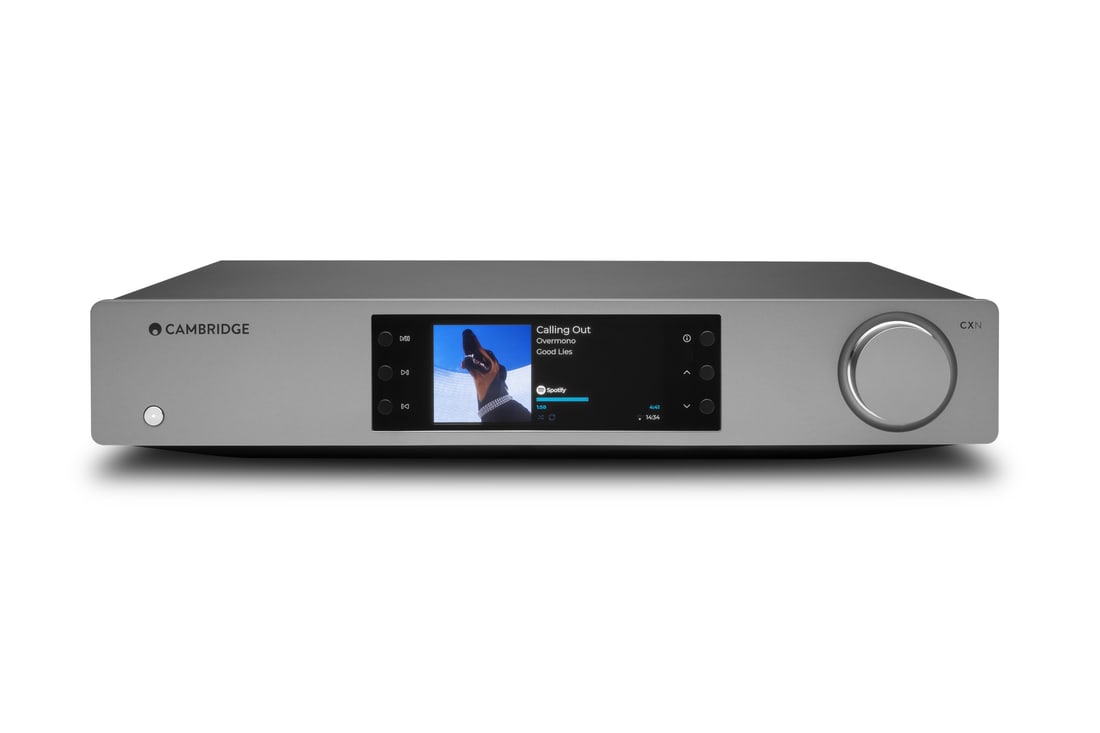 USB vs S/PDIF for DACs: does the digital input matter?USB, coaxial and optical into a DAC: which digital input actually changes the sound, and when the difference is real versus imagined.
- Qobuz vs Tidal for your record collection's digital halfQobuz vs Tidal compared for vinyl collectors who want a digital half that matches their records, not just a bigger catalogue.
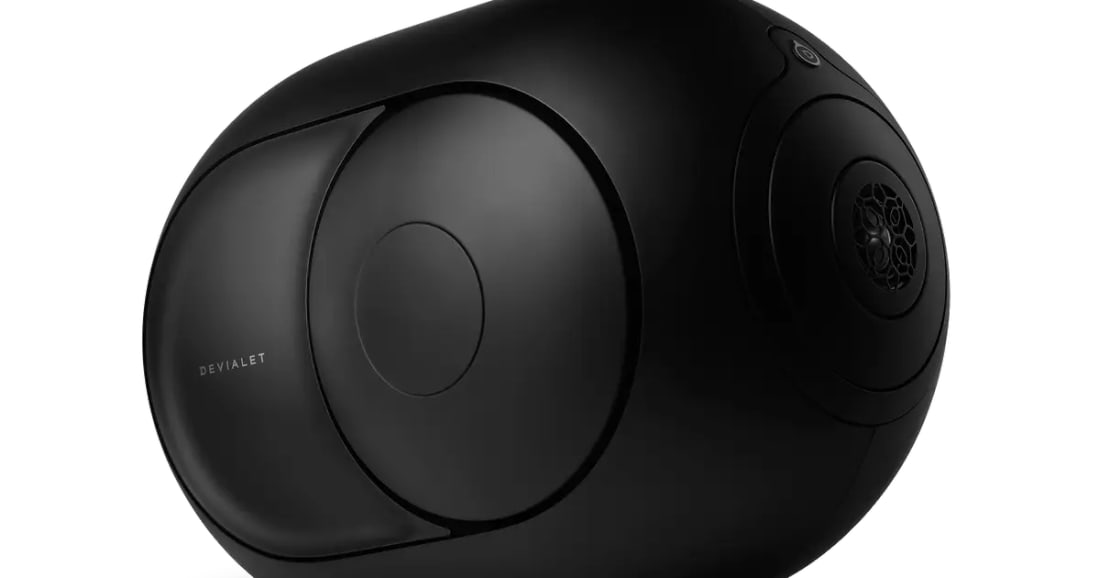 Why a subwoofer makes a valve system sound more honestAdding a subwoofer to a valve amp system can tighten bass, cut distortion and let low-power tubes sing. Here's how to do it properly.
- Tidal vs Qobuz vs Apple Music: which one actually suits a valve systemStreaming services aren't interchangeable once you're running valves. Here's how Tidal, Qobuz and Apple Music actually behave through a warm front end.
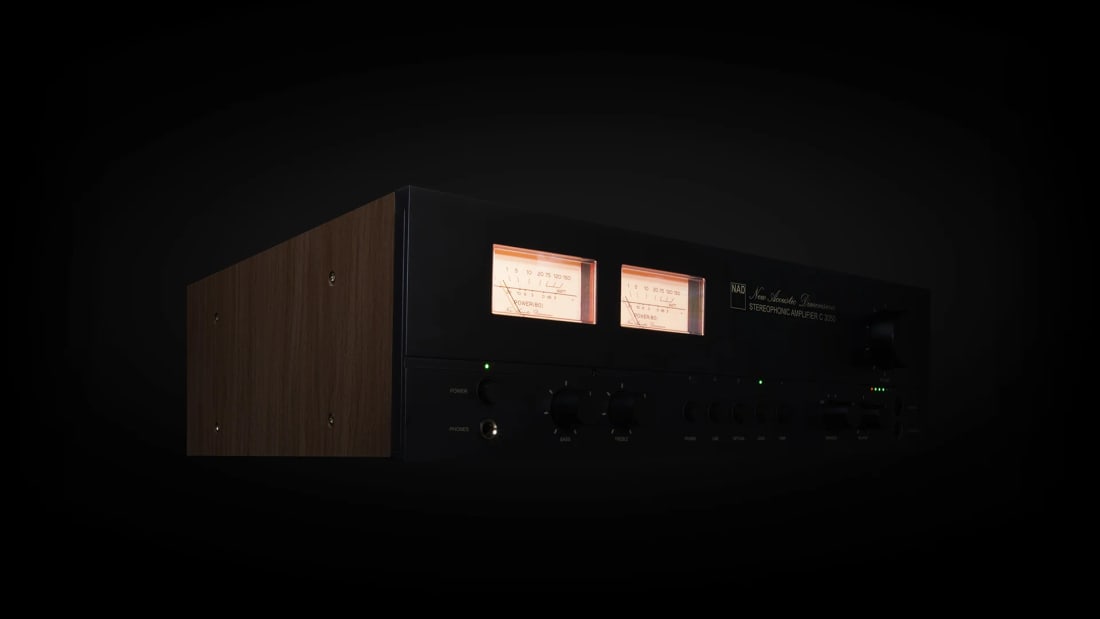 Speaker matching to valve amps: sensitivity beats watts every timeWhy sensitivity, not power output, decides whether a valve amp and speaker pair actually works together — and how to read a spec sheet properly.
- Your phone's volume slider is quietly re-encoding your musicTurning your phone down before a Bluetooth speaker or DAC often re-processes the digital signal. Here's what's actually happening, and when it matters.