Arcam Radia line enters home cinema with AU pricing
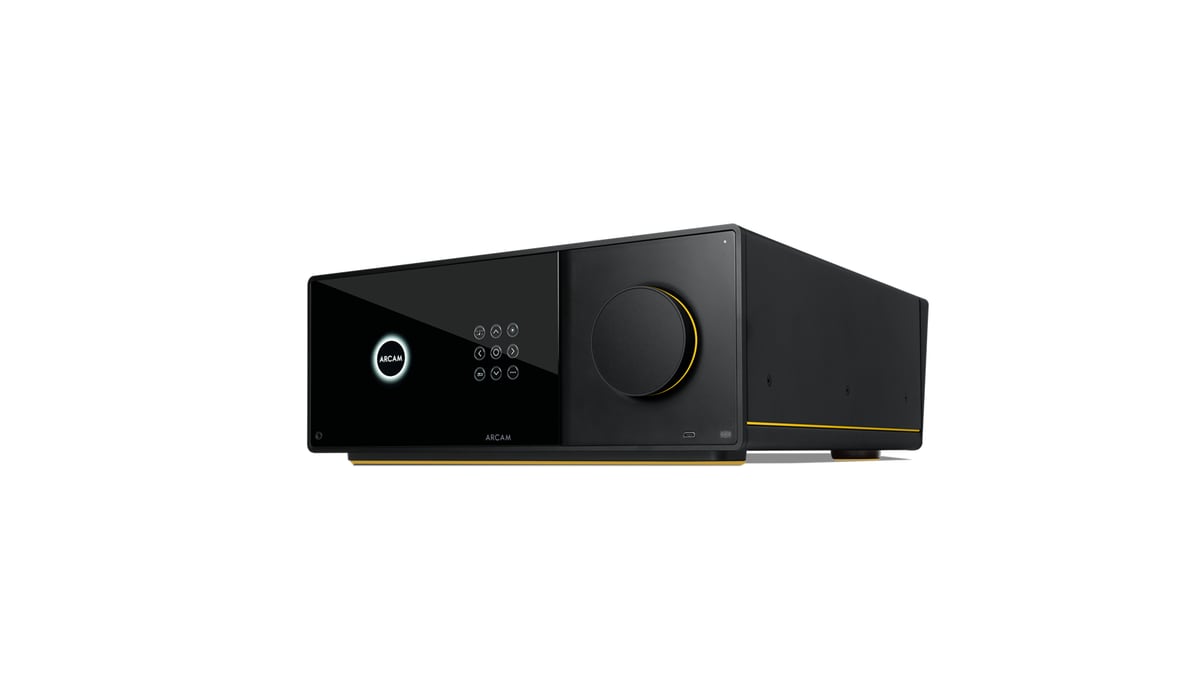
The Arcam Radia line goes cinematic, and Australia is in the picture from day one
Barcelona's ISE 2026 delivered no shortage of announcements, but for anyone who has watched Arcam carefully rebuild its identity under HARMAN ownership, the expansion of the Arcam Radia line into home cinema feels like the moment the brand's post-acquisition story finally clicked into place. Three AV receivers, a 16-channel processor and two companion power amplifiers: all carrying the Radia name, all featuring Dirac Live ART, and all confirmed for Australian authorised dealers from Q3 2026 with local pricing already locked in. That last detail matters enormously. Too many ISE announcements arrive in Australia six months late at prices that seem to have been converted using a particularly unfavourable exchange rate. Not here. HARMAN's local distributor has clearly been part of this rollout from the beginning.
Where the Radia cinema range sits in the market
Let me be direct about why this matters beyond the headline numbers. The Radia home cinema line isn't Arcam hedging its bets by attaching a familiar badge to a commodity product. It is a deliberate, considered attempt to own the upper tier of the AV receiver market: the segment that sits above the enthusiast mainstream but below the processor-and-separate-amplification world that costs as much as a decent car. Arcam has always understood that space from the stereo side. Now it is applying that understanding to cinema.
If you are still deciding whether a receiver or a processor with separate amplifiers suits your room, our explainer on AVR vs AV processor for home cinema sets out the trade-offs before you look at any one brand.
The lineup, unpacked
AVA15: the entry point into something serious
At A$6,995, the AVA15 is the starting point for the Radia cinema range and already sits in territory where buyers expect, and deserve, genuine engineering rather than feature-stuffing. This is not a receiver you purchase because it ticks the most boxes on a retail comparison chart. You buy it because you want Arcam's amplification philosophy and Dirac Live ART room correction applied to your cinema system without compromising the stereo listening you do the other 60 per cent of the time.
Connectivity is thoroughly modern: Bluetooth 5.4 with Auracast support and HDMI with eARC are both confirmed. Auracast is worth flagging specifically. It is the broadcast audio extension of Bluetooth LE Audio that allows a single source to stream simultaneously to multiple receivers without pairing. For home cinema use cases that involve guests, accessibility devices, or secondary listening zones, this is genuinely useful rather than a specification that reads well and gets used never. We cover the technology in more depth in our piece on Auracast, LE Audio and LC3.
AVA25: Auro-3D joins the conversation
Step up to the AVA25 at A$9,995 and Arcam adds Auro-3D decoding to the mix. This is the detail that separates the AVA25 from simply being a more powerful version of the AVA15. Auro-3D represents a fundamentally different spatial audio philosophy to Dolby Atmos and DTS:X. Where object-based formats place sounds in a three-dimensional space and render them for whatever speaker layout you have, Auro-3D is a channel-based immersive format built around a specific speaker arrangement that includes a "Voice of God" height layer directly above the listening position.
In practice, for a well-constructed home cinema with carefully placed height speakers, Auro-3D can produce an envelopment that some listeners find more natural and less processed than object-based alternatives. It is not the dominant format, since the disc catalogue is more limited and not every room suits the required layout. But for a buyer at this price point who is building a dedicated space and wants every option available, its inclusion in the AVA25 is the right call. Pairing it with Dirac Live ART means the format's spatial characteristics are being presented in a room that has actually been measured and corrected, which is how immersive audio is supposed to be experienced. If you are planning a serious build, our guide to building a home cinema: the core components covers the speaker layout considerations in detail.
AVA35: the statement receiver
The AVA35 at A$13,995 is where Arcam plants its flag as a manufacturer that takes the receiver format seriously enough to spend real engineering resources on it. Specific additional capabilities over the AVA25 have not been fully disclosed in the ISE materials available to us at time of writing, but the pricing delta, A$4,000 over the AVA25, suggests this is not merely an incremental upgrade. At this level, buyers will reasonably expect higher amplifier power reserves, expanded channel count, enhanced analogue stage quality, or some combination of all three. We will update this analysis as Arcam releases full specifications ahead of the Q3 local launch.
What I can say with confidence is that A$13,995 for a receiver places the AVA35 in direct conversation with separates configurations from brands that don't carry Arcam's stereo credibility. If you are currently running a processor-and-amplifier combination in that price neighbourhood and reconsidering your setup, the AVA35 deserves an audition. I'd argue it is also the model that has the most to prove until the full specifications arrive.
AVP45 and the PA4 and PA9: the separates option
The AVP45 processor at A$11,995 is the product in this lineup that most clearly signals Arcam's intentions. A 16-channel processor at this price point is an aggressive market statement. It positions Arcam against established processor brands while offering the full Radia family's signal chain coherence when paired with the companion PA4 and PA9 power amplifiers.
Sixteen channels of processing is significant. It accommodates configurations that go well beyond standard 7.1.4 Dolby Atmos setups: think wide front channels, multiple height layers, or dual subwoofer management with genuine channel independence. For a custom installation professional speccing a dedicated cinema room, this is the kind of flexibility that previously required spending considerably more, or accepting compromises in the analogue output stage quality. Room correction at this channel count, delivered via Dirac Live ART, is also a non-trivial engineering achievement, because the computational demands of measuring and correcting 16 independent channels simultaneously are substantial.
The PA4 and PA9 power amplifiers complete the separates proposition, though detailed specifications (channel count, power output, topology) are pending full product documentation from Arcam. What the naming convention suggests is a four-channel and nine-channel configuration respectively, which would give an AVP45-anchored system the amplifier channels to drive a 16-channel layout when both units are deployed together. That is a tidy system architecture, and it fits neatly with the way serious custom installers prefer to work: a single processor with modular amplification that can be expanded as speaker layouts evolve. Our look at when a home cinema needs to split the amps out explains why that modular approach appeals.
Dirac Live ART: why this is the differentiator
Every product in the Radia cinema lineup includes Dirac Live ART, Active Room Treatment, and this deserves a closer look because it is meaningfully different from the standard Dirac Live implementation that has become relatively common across the industry. Standard Dirac Live performs linear phase correction across the frequency spectrum and optimises the impulse response of your room. It is excellent, and it places Arcam products well ahead of receivers using proprietary correction algorithms that optimise for a single listening position while leaving the broader acoustic picture unaddressed.
Dirac Live ART extends the correction process into the bass management domain in a way that accounts for the dynamic interaction between your subwoofers and the room's low-frequency modes. Rather than simply applying static EQ curves, ART uses a model of how bass energy builds and decays in your specific room geometry and applies correction that improves transient accuracy and reduces the bloom that makes bass in untreated rooms sound slow and ill-defined. If you have ever heard a beautifully calibrated cinema system and then walked into a room where the bass is loud but vague, you understand exactly why this matters. Our explainer on Dirac Live ART explained goes further into the method.
Even the best room correction algorithm is working with the room you give it. Acoustic treatment and Dirac Live ART are complementary, not competing, approaches. The correction works better when it isn't trying to overcome severe first-reflection problems or bass trap deficiencies. If you are building a room around one of these Arcam components, treat first and correct second. Multiple subwoofers also help the correction by smoothing the room's bass response before any filters are applied, as we explain in why two or four subs beat one.
The Radia identity: what Arcam is actually selling here
The Radia line began as a stereo proposition: integrated amplifiers and network streamers that positioned Arcam as a serious contender in the sub-A$10,000 two-channel space. The design language was cleaner than previous Arcam generations, the feature sets were more coherent, and the overall impression was of a brand that had taken the HARMAN resources available to it and applied them with discipline rather than simply expanding the product count.
Extending that identity into home cinema carries risk. The AV receiver market is dominated by Denon, Marantz, Yamaha and Onkyo at the mainstream end, with brands like Anthem, Lyngdorf and Storm Audio occupying the upper reaches. Arcam's pitch is that it belongs in a specific gap: buyers who have moved beyond the mainstream brands but cannot justify or don't need the full separates investment. The Denon AVR-X3800H (check price) is excellent at its price point, but it is not trying to do what the AVA15 is attempting at more than double the price. These are different products for different buyers.
The customers most likely to respond to the Radia cinema line are, frankly, Arcam stereo customers who have been managing a separate and somewhat uncomfortable relationship with their AV receiver. They have an SA30 or an HDA series amplifier in the rack alongside a receiver from another brand, and the aesthetic and sonic inconsistency bothers them. The Radia cinema range gives them a path to consolidation without abandoning the brand philosophy they have already bought into.
Australian context: pricing, availability and what to expect
The confirmed Q3 2026 Australian landing date puts these products in market well ahead of the Christmas buying season, which is sensible positioning for components at this price. Buyers considering a cinema project for a new build or renovation will have time to properly audition and specify without the pressure of a December deadline.
Australian pricing is confirmed as follows:
- AVA15 AV Receiver: A$6,995
- AVA25 AV Receiver (with Auro-3D): A$9,995
- AVA35 AV Receiver: A$13,995
- AVP45 16-Channel Processor: A$11,995
- PA4 and PA9 Power Amplifiers: Pricing to be confirmed
These figures are not outliers for the Australian high-end AV market. Import costs, GST and the relatively small volume of premium AV gear that moves through this country all contribute to a significant premium over equivalent USD pricing. What matters is that the pricing has been set locally and confirmed at announcement, which gives buyers and dealers alike a stable planning basis.
For those pairing these receivers with speakers, the Radia cinema products will drive a wide range of loudspeaker loads. I would expect them to partner particularly well with speakers in the mid-to-upper tier of the market, and brands like KEF, Focal, and Bowers & Wilkins all have strong Australian distribution and consistent availability. If you are working out the speaker side of the equation, our guide to building a home cinema: the core components covers system matching considerations thoroughly.
What I would ask Arcam before buying
There are details I want to hear more about before I would advise a reader to commit to any of these products sight-unheard. Specifically:
- Amplifier topology and power output across all three receivers. The distinction between continuous power ratings and dynamic headroom is particularly relevant at cinema listening levels where transients are demanding.
- Network streaming capabilities. Radia stereo products have strong network feature sets, and I want to know whether that carries through to the cinema line with full Roon Ready certification and lossless streaming support.
- Pre-out configuration on the AVA35, specifically whether it supports full separation of all channel outputs for a hybrid receiver-plus-power-amp configuration.
- PA4 and PA9 pricing. The AVP45 processor is only fully relevant in context of a complete system cost, and that calculation cannot be completed without amplifier pricing.
These are questions for the Australian distributor and, ultimately, for the full product review that we will conduct once review units are available. Consider this analysis a scene-setter rather than a verdict.
The bottom line
Arcam's entry into the home cinema market with the Radia line is not a token gesture or a rebadging exercise. It is a coherent, well-priced range that brings genuine differentiators (Dirac Live ART, Auro-3D in the mid-tier receiver, 16-channel processing in the separates configuration, and Bluetooth 5.4 with Auracast) to a market segment that has been underserved at the quality end. The confirmed Q3 2026 Australian availability and locked-in local pricing suggest HARMAN is treating this market seriously, which is exactly the attitude that earns long-term dealer and customer loyalty in a country where premium audio buyers feel the tyranny of distance acutely.
If you are planning a cinema build or upgrade for the second half of 2026, these products belong on your audition shortlist. Start that conversation with your local Arcam dealer now. Demand for well-specified cinema components at these price points is not trivial, and early interest will help ensure demonstration stock arrives alongside the first retail units.
For context on what a well-matched speaker and subwoofer system looks like alongside a receiver at this level, our bass management explainer is a useful primer, and if you are also weighing up the room correction landscape more broadly, that piece covers the major platforms and their respective strengths. Our walkthrough on how to calibrate your home cinema with Dirac Live, Audyssey or YPAO covers the practical side.
Common questions
- When will the Arcam Radia home cinema products be available in Australia?
- Arcam has confirmed that the full Radia home cinema lineup — including the AVA15, AVA25 and AVA35 receivers, the AVP45 processor, and the PA4 and PA9 power amplifiers — will be available through Australian authorised dealers from Q3 2026.
- What is Dirac Live ART and why does it matter for a home cinema system?
- Dirac Live ART (Active Room Treatment) is an advanced extension of the standard Dirac Live room correction platform. Beyond standard frequency and impulse response correction, ART specifically addresses bass management by modelling and correcting the dynamic interaction between subwoofers and low-frequency room modes. This results in tighter, more accurate bass reproduction compared to static EQ-based correction approaches. All Arcam Radia cinema products include Dirac Live ART.
- What is the difference between the AVA15, AVA25 and AVA35 receivers?
- The AVA15 (A$6,995) is the entry-level model, the AVA25 (A$9,995) adds Auro-3D immersive audio decoding, and the AVA35 (A$13,995) is the flagship receiver. All three include Dirac Live ART, Bluetooth 5.4 with Auracast, and HDMI with eARC. Full specifications for the AVA35's additional capabilities are expected ahead of the Q3 2026 Australian release.
- Can the AVP45 processor be used with non-Arcam power amplifiers?
- As a standalone 16-channel processor priced at A$11,995, the AVP45 is designed for use with external power amplification. While Arcam's own PA4 and PA9 power amplifiers are the natural partners within the Radia ecosystem, a processor with balanced and unbalanced outputs can generally be matched with amplification from other manufacturers. Buyers should confirm output configuration details with their Arcam dealer when the full specification sheet is released.

I'm Sofia, and I get to play with the silly stuff — the statement amplifiers, the reference loudspeakers, the cost-no-object systems that most of us will only ever hear at a show. Someone has to, and I take it seriously: at this level the price stops mapping to performance and starts mapping to engineering, craft and ego, and part of my job is telling you which is which. I love the extreme end of this hobby, but I'm not dazzled by a big number on a price tag.
Covers flagship and cost-no-object reference systems
More from Sofia Laurent
 The synergy tax: why mismatched gear costs more than cheap gearThe synergy tax explained: why pairing mismatched hi-fi components quietly costs more than buying modest, well-matched gear.
 Rear-port floorstanders near a glass wall: a risky pairingRear-ported floorstanders against glass walls cause boundary reinforcement and reflections. Here's how to place, measure and tune them properly.
- Infrasonic bass below 20Hz: chasing the octave you feel, not hearBelow 20Hz is infrasonic bass: felt more than heard. Here's what it takes to reproduce it properly, and whether a statement system should bother.
- Why statement systems still get beaten by the zone two speakerA $150,000 reference system is only as good as the worst-sounding zone it's networked to. Here's why multiroom integration is the statement system's real weak point.
- Why a statement floorstander can be the wrong speaker in the roomSix-figure floorstanders fail in rooms that were never built for them. Here's how to tell if your space can actually support one before you buy.
- Diffusion in statement rooms: when scattering sound beats absorbing itIn a statement room, piling on absorption kills the air around the music. Here's when diffusion is the better tool, and where I've seen it misused.