Astell&Kern AK HC5 review: a flagship AK4499EX DAC chip in a $450 dongle
What's happened and why it matters
Dongle DAC/amps have had a peculiar few years. What started as an emergency accessory category — born the moment Apple yanked the headphone jack from the iPhone 7 — has quietly evolved into a genuine enthusiast battleground. The segment now stretches from a $15 Apple USB-C adapter all the way to hand-crafted boutique units costing several hundred dollars, and the engineering ambition crammed into these thumb-sized devices has become genuinely extraordinary. Even so, Astell&Kern's announcement on 13–14 December 2025 managed to raise eyebrows across the personal audio community. The South Korean brand — best known for its reference-grade digital audio players — had decided to fit the very same AK4499EX digital-to-analogue converter chip that anchors its flagship DAPs into a USB-C dongle. The AK HC5 went on sale through authorised Australian retailers in January 2026, priced at $450 AUD (£399 / EUR 499).
That's not a typo, and it's not an entry-level price. Four hundred and fifty dollars for something you plug into a phone is a significant ask, and it deserves serious scrutiny rather than breathless enthusiasm. I've been living with the AK HC5 for several weeks now, running it across a range of headphones and listening scenarios, and what follows is my honest assessment of whether A&K has built something genuinely special or simply slapped a prestigious chip inside a premium-priced accessory.
Context: where does the AK HC5 sit in the dongle landscape?
To understand why the AK HC5 exists, it helps to understand the competitive pressure Astell&Kern faces. The dongle market's upper tier has become genuinely crowded. Chord Electronics' Mojo 2 — a device I rate very highly, as you can read in our Chord Electronics Mojo 2 review (check price) — occupies a pocket-friendly form factor at a comparable price point and uses Chord's own proprietary FPGA-based DAC architecture. Meanwhile, a raft of Chinese audio brands have been pushing increasingly competent dongle hardware at prices that would have seemed impossible three years ago. In that environment, A&K needed a statement product: something that justified its heritage and commanded its asking price through tangible, measurable engineering rather than badge value alone.
The AK4499EX is Asahi Kasei Microelectronics' current flagship DAC chip, and it's the real story here. AKM's factory fire in October 2020 sent the entire audio industry into a supply chain crisis, and the subsequent rebuild and redesign effort produced chips that are, by most technical accounts, a meaningful step forward from the pre-fire generation. The AK4499EX is a current-output, multi-bit delta-sigma design with extremely low noise and distortion figures on paper. Seeing it appear in a dongle — a category that typically relies on mid-tier silicon — is genuinely notable. It's the audio equivalent of finding a full-size laptop processor inside a smartwatch.
Design and build: A&K's signature aesthetic, miniaturised
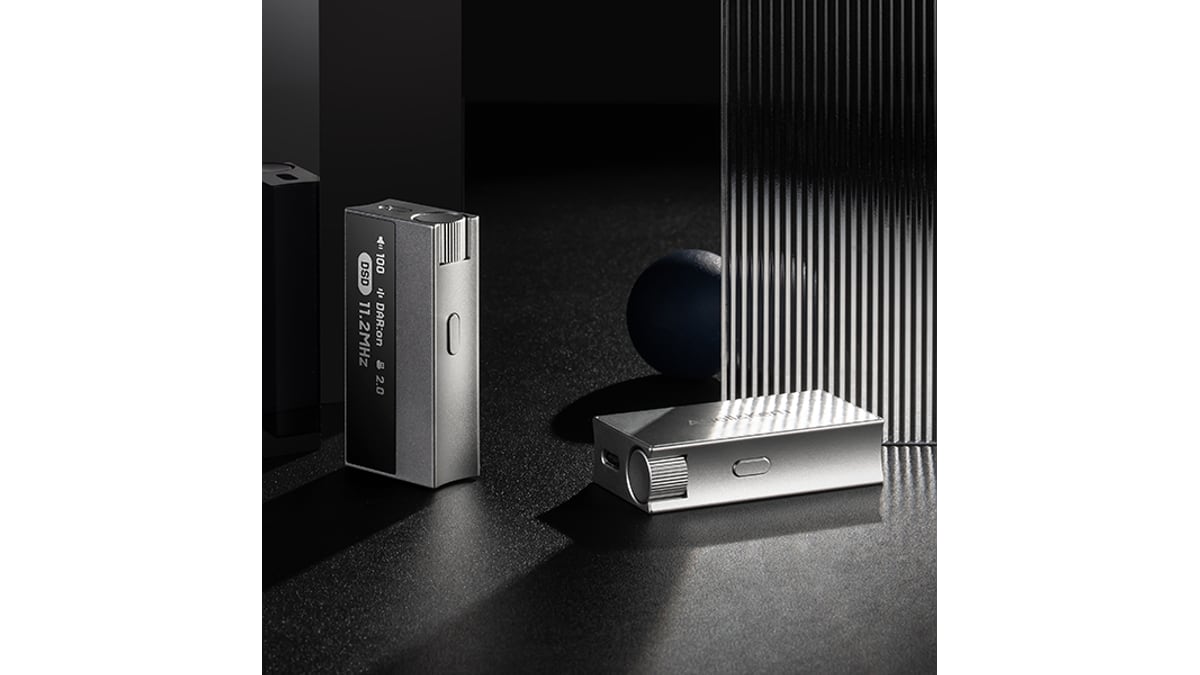
Astell&Kern has always taken physical design seriously, and the HC5 reflects that. The unit has a premium machined metal chassis that feels purposefully over-engineered for something destined to dangle from a phone. It's heavier than competing dongles, which will either read as reassuring quality or annoying bulk depending on your use case. For desktop or travel listening where the dongle rests on a surface, the weight is fine. Clipped to a shirt collar during a commute, it's a consideration.
The standout feature — and I mean genuinely standout, not marketing-copy standout — is the 1.62-inch OLED display. No other dongle at this price point gives you a screen. A&K has used it sensibly: it shows sample rate, bit depth, volume level and input format, which is exactly the information a serious listener wants at a glance. If you've ever wondered whether your streaming app is actually passing through a high-resolution signal or quietly downsampling to 44.1 kHz, the HC5's display answers that question immediately and without ambiguity. For anyone who takes bit depth and sample rate seriously — and at this price point, you should — that real-time readout is a genuine quality-of-life upgrade over the guesswork involved with most dongles.
The 150-step volume wheel is the other hardware flourish that sets the HC5 apart from the competition. Most dongles either rely entirely on software volume control via the connected device or offer a rudimentary rocker switch. A fine-stepped physical wheel is a meaningfully different experience: you can make tiny adjustments, you get tactile feedback, and you maintain precise channel balance at low listening levels — something that matters enormously when you're driving sensitive in-ear monitors. The wheel's action is smooth and well-damped; it doesn't feel like a cost-saving measure dressed up as a premium feature.
A&K has also fitted dual noise-shielded cables — one USB-C to USB-C and one USB-C to USB-A — which is a practical touch that acknowledges real-world usage. The shielding is relevant: the cable connecting a dongle to a phone or laptop can act as an antenna for digital noise, and quality shielding on bundled cables is something many competitors skimp on. Whether the cables make an audible difference in your specific setup will depend on your source device and how electrically noisy it is, but their inclusion at least signals that A&K has thought about the signal chain holistically rather than treating the cables as an afterthought.
The AK4499EX chip: what does it actually mean for sound?
Let me be clear about something upfront: a DAC chip is a necessary but not sufficient condition for good sound. The implementation — the analogue output stage, the power supply, the overall circuit architecture — matters just as much as the silicon. Plenty of budget dongles use chips that measure well in isolation and sound mediocre in practice because of compromised surrounding circuitry. The question isn't whether the AK4499EX is a good chip (it is) but whether A&K has built a circuit worthy of it.
Based on my listening, the answer is largely yes. The HC5 presents music with a composure and low-level resolution that I haven't heard from a dongle at any price, let alone one that's genuinely portable. The noise floor is extremely low — running sensitive IEMs, there's a blackness to the background that you normally only encounter with dedicated desktop units. Detail retrieval is exceptional: small spatial cues, the decay of notes, the micro-dynamics of a brush on a snare — these come through with a clarity that feels qualitatively different from what the segment's previous best has offered.
Tonal balance is neutral to slightly warm. This isn't a clinical, analytical presentation; A&K has tuned the HC5 with musicality in mind, and that shows in the way it handles voices and strings. There's body and texture to instruments without any sense of added colouration. The midrange is particularly accomplished — transparent and detailed without the slightly forward, slightly hard quality that affects some highly revealing sources. Bass is well-controlled and extended; it doesn't inflate for effect, which means it sounds more realistic with well-recorded music and slightly lean with pop productions that rely on boosted low frequencies.
Soundstage and imaging performance will depend heavily on your headphones, but the HC5 provides a stable, well-defined image that lets the transducer do its job without adding congestion. Running it with the Sennheiser HD 660S2 — see our full Sennheiser HD 660S2 review (check price) for context — the spatial presentation was notably more expansive and better-defined than through either the phone's internal output or through a mid-tier competing dongle. Open-back headphones particularly benefit from sources that get out of the way; the HC5 does exactly that.
Practical matters: impedance, sensitivity and matching
A dongle lives or dies by how well it drives the headphones you own or intend to buy. Impedance and sensitivity matching is fundamental here, and A&K hasn't published full output specifications in the materials available to me at time of writing. What I can report from practical use is that the HC5 drives full-size, high-impedance headphones with more authority than most competing dongles — the 300-ohm HD 660S2 is driven to satisfying levels without running the volume wheel near its maximum. Sensitive IEMs are also well-served: background hiss is negligible, which is not a given with powerful dongles running very sensitive in-ear monitors.
The 150-step volume control proves its worth here. With a high-gain, sensitive IEM, the difference between one volume step and the next is small enough that you can actually dial in your preferred listening level rather than toggling between too quiet and slightly too loud — a frustration that plagues dongles with cruder volume implementations. If you're interested in the broader relationship between gain structure and audio quality, our gain structure explainer covers the fundamentals in detail.
The Australian buyer context
At $450 AUD, the AK HC5 is priced in a bracket where genuine competition exists and where the value question is sharp. Chord's Mojo 2 is the most credible alternative at a comparable price: it's larger, battery-powered, and uses a very different DAC architecture, but it's also a proven performer with a strong second-hand market. The HC5's advantages over the Mojo 2 are the OLED display, the physical volume wheel, the genuinely flagship silicon, and — critically — its compatibility as a pure USB-C dongle with any modern phone or laptop without needing to manage a battery charge. The Mojo 2's battery is both its greatest asset for truly portable, phone-independent use and its greatest liability as it ages.
For the Australian market specifically, warranty and service support through authorised A&K dealers is worth factoring in. The brand has established distribution here and the HC5 is a current, actively supported product. Buying grey-market at a slight discount introduces service uncertainty that I'd consider carefully for a $450 accessory.
Who is this for? The honest answer is that the AK HC5 makes most sense for three types of buyers. First, existing A&K DAP owners who want consistent sound quality across their portable devices — the HC5 will feel sonically coherent with the broader A&K ecosystem. Second, serious listeners who use a laptop or recent Android or iPhone as their primary listening device and want the best possible result from it without committing to a full desktop DAC/amp stack. Third, frequent travellers who need both quality and the convenience of not carrying a separate battery-powered device. If you fall outside those categories — say, you listen primarily at a fixed desk — a desktop DAC at a similar or lower price would likely serve you better. Our roundup of the best DACs and network streamers is the appropriate starting point for that conversation.
What could be improved
The HC5 is not without its limitations, and I'd be doing you a disservice to gloss over them. The weight and size, while acceptable, make it one of the larger and heavier dongles available — if genuine pocketability is your primary concern, there are more discreet options. The price is obviously significant and will exclude many listeners who would otherwise benefit from the hardware. And while the OLED display is genuinely useful, the interface is minimal: you're not getting EQ, crossfeed or any DSP functionality, which puts it behind some competitors that offer software customisation. For listeners who want to tailor frequency response to specific headphones, that absence is worth noting.
Battery drain on the connected device is also a real-world consideration. Flagship DAC chips demand more power than budget silicon, and while the HC5 is efficient for what it is, it will consume more battery from your phone than a simpler dongle. For long flights or full working days away from power, that's a practical trade-off to factor in.
Verdict
The Astell&Kern AK HC5 is the most technically accomplished dongle DAC/amp I've used. The combination of the AK4499EX chip, a thoughtfully implemented analogue output stage, the 1.62-inch OLED display and the 150-step volume wheel adds up to something that feels genuinely purpose-built for serious listening rather than assembled from off-the-shelf components to hit a price point. It sounds exceptional — detailed, composed and musical in equal measure — and it drives a wider range of headphones convincingly than most of its competitors.
Four hundred and fifty dollars is real money for a dongle, and I won't pretend otherwise. But within the category it occupies, the HC5 makes a compelling case for itself. If portable audio quality is genuinely important to you, and if your listening life increasingly revolves around a phone or laptop rather than a dedicated source component, this is the most serious answer the market currently offers in a plug-and-play form factor. It earns its price without quite earning it effortlessly — but for the right listener, it is absolutely worth the investment.
Common questions
- What makes the AK4499EX chip significant in the AK HC5?
- The AK4499EX is Asahi Kasei Microelectronics' current flagship DAC chip, typically found in high-end dedicated digital audio players costing well over $1,000. Its appearance in a USB-C dongle is unusual: the chip offers extremely low noise and distortion figures that translate to a very black background, high resolution of fine detail and composed, musical playback. That said, chip quality alone doesn't determine sound quality — A&K's implementation of the surrounding analogue circuitry is equally important, and the HC5 appears to make good use of the silicon available to it.
- Is the Astell&Kern AK HC5 compatible with iPhones and Android phones?
- The AK HC5 uses a USB-C connection and ships with both a USB-C to USB-C and a USB-C to USB-A cable. It will work with Android phones and recent iPhones that have USB-C (iPhone 15 onwards). Older Lightning iPhones are not directly compatible without a third-party Lightning to USB-C adapter, though audio quality through such adapters is not guaranteed to be optimal. No drivers are required for most operating systems — it functions as a standard USB audio class device.
- How does the AK HC5 compare to the Chord Mojo 2 for portable use?
- Both are premium portable DAC/amps at similar price points, but they differ meaningfully. The Chord Mojo 2 is battery-powered, making it independent of your phone's battery, and uses Chord's own FPGA-based DAC architecture with EQ-like DSP via its colour-coded filter system. The HC5 draws power from its host device (no internal battery), uses the AK4499EX chip, has a clear OLED display and a 150-step volume wheel, and is slightly more compact in footprint if heavier than expected for a dongle. If battery independence and DSP flexibility matter most, the Mojo 2 has the edge. If you want the most resolving sound from a pure plug-and-play USB dongle with no battery management, the HC5 is the more compelling option.
- Will the AK HC5 drive full-size, high-impedance headphones adequately?
- Based on practical listening, yes — more so than most competing dongles. High-impedance headphones such as the Sennheiser HD 660S2 at 300 ohms are driven to satisfying listening levels without approaching the top of the volume range. The 150-step volume wheel gives useful fine control at both low and high volume settings. Sensitive in-ear monitors are also well-served, with negligible background hiss. That said, listeners with particularly demanding planar-magnetic or very high-impedance headphones designed for desktop amplification may still benefit from a dedicated desktop amplifier rather than any dongle.

I'm Eleanor — most people call me Nell. I came to this from the studio side, so I spend more time with headphones on my head than speakers in a room, and I've learned to hear the difference between detail and brightness pretending to be detail. I'm obsessive about fit and comfort, because the best-sounding headphone in the world is useless if it's clamping your skull after twenty minutes. I review everything from $200 daily-drivers to silly flagship planars.
Mastering-adjacent background; IEM and open-back specialist
More from Eleanor Shaw
 Speaker stands aren't furniture: mass, coupling and the sound you're leaving on the tableSpeaker stands do more than hold height. Mass, fill and coupling change bass control and midrange clarity more than most cable or amp upgrades.
 IEM ear tips: the free upgrade that beats most cable swapsEar tips shape IEM sound more than most upgrades costing real money. Here's how seal, bore size and tip material actually change what you hear.
- Standmounts near-field, floorstanders far: matching speaker format to listening distanceListening distance changes which speaker format actually works. Here's how near-field, mid-room and far-room seating should shape your standmount vs floorstander decision.
 Multiroom for headphone listeners: building a private zone that doesn't sound like an afterthoughtMost multiroom systems are designed around speakers in rooms. Here's how to build a headphone zone into that same ecosystem without gutting the sound.
- Multiroom for headphone listeners: getting a private zone rightMultiroom systems are built around speakers in rooms. Here's how to get a proper headphone zone out of the same network, without losing resolution.
- Bit-perfect and PCM vs DSD: which digital format claims actually matterDSD, MQA, bit-perfect, hi-res PCM — Nell Shaw sorts which digital audio format claims genuinely change what you hear and which are marketing noise.