Multiroom for headphone listeners: building a private zone that doesn't sound like an afterthought
I've got a WiiM Ultra feeding a pair of standmounts in the living room, a Naim system in the study, and for years my desktop headphone rig was just... not part of that conversation. It sat there on USB, disconnected from whatever multiroom group the rest of the house was doing, and if I wanted to follow an album from the kitchen speaker to my headphones at the desk, I had to manually find it again on Qobuz and hope the volume didn't blow my ears off. That's the problem nobody designs for. Multiroom systems are built around speakers in rooms. Headphones are an afterthought bolted on with a headphone jack on the front of a streamer, if you're lucky.
This is worth fixing properly, because a private headphone zone inside a multiroom ecosystem is genuinely one of the more useful upgrades in a modern hi-fi setup — you get whole-house source control without whole-house volume, which matters if you've got a partner asleep upstairs or you just don't want the neighbours on Hodgson Street knowing you've discovered Steely Dan again.
Why headphones and multiroom fight each other
Multiroom platforms — AirPlay 2, Chromecast, Sonos, the various Linn/Naim/proprietary systems — were engineered to solve one problem: get the same (or different) audio stream to multiple sets of speakers in multiple rooms, in sync, controlled from one app. Headphones don't fit that model cleanly for a few reasons.
First, latency. Speaker-based multiroom protocols buffer audio to keep rooms in sync with each other, which is fine when you're not comparing the sound to anything else. Headphones sit right on your head, so any perceptible lag between what you see on screen (if you're watching something) or between left/right channel handoff during a room transition becomes obvious in a way it never would across a room.
Second, gain structure. A multiroom zone tuned for a floorstander in a living room is typically running fairly high output because the amp has to work against room losses, air absorption, someone talking in the kitchen. Route that same output straight into a pair of IEMs or a sensitive planar and you've got a genuinely dangerous volume spike waiting to happen the first time you forget to check.
Third — and this is the one that actually annoys me — most multiroom ecosystems treat the headphone output as an on/off appendage rather than a proper zone. You can't always give it its own EQ, its own volume memory, or its own default source the way you can a "real" room. It's the audio equivalent of a granny flat with no separate power meter.
Two ways to build the zone, and why they're not the same
There are broadly two architectures for a private headphone zone, and I think the distinction matters more than most reviews let on.
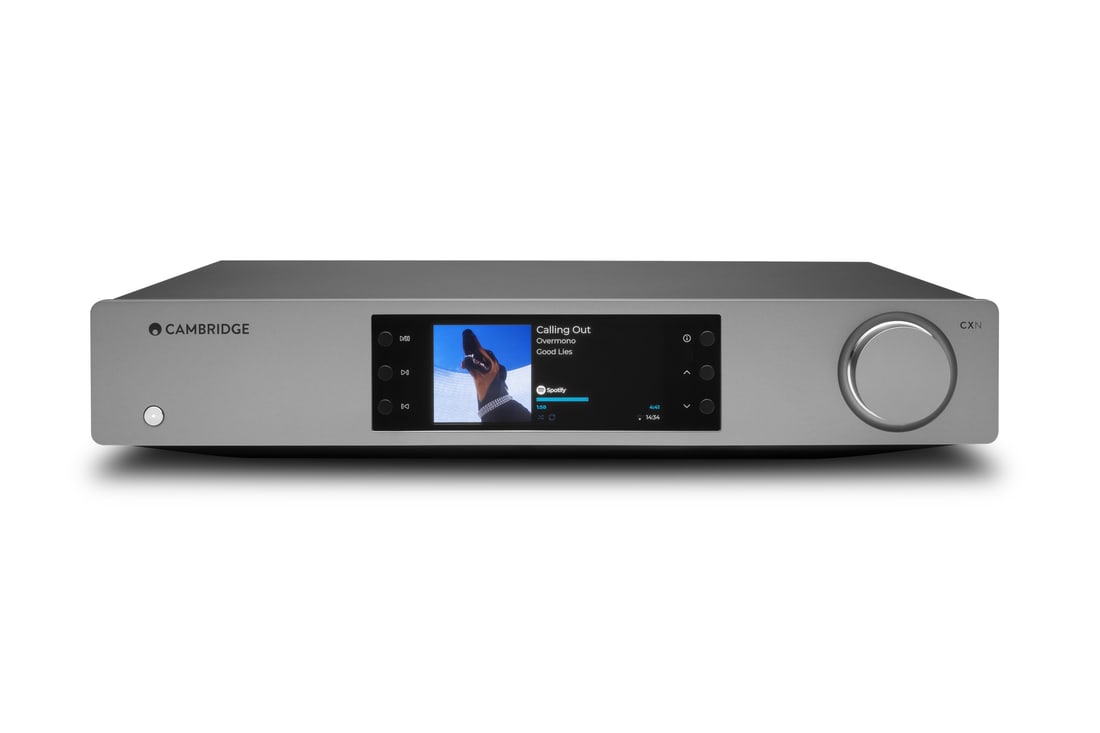
The first is the desktop DAC/amp as its own multiroom endpoint. Something like a streaming amplifier or a network-capable DAC sits at your desk, joins the same AirPlay 2 or Chromecast group as the rest of the house, and drives your headphones directly from its own headphone output. This is the cleaner solution because the DAC and amp stage are matched to the headphone load from the start — no impedance mismatch, no gain-staging surprise. The WiiM Ultra (check price) is a good example of a product that's cheap enough to dedicate to this one job and still gives you a proper headphone-friendly output stage plus full multiroom grouping. The Cambridge Audio CXN100 (check price) does the same job with a bit more polish and a much better headphone amp if you're running something demanding like the Audeze LCD-X (check price).
The second architecture is the "silent zone" approach: you keep a streaming amplifier like the Naim Uniti Atom (check price) or a Devialet Phantom I 103 dB (check price) as the actual multiroom node, and use its headphone output (where it has one) or a pre-out into a separate headphone amp. This gives you access to the full-fat amplifier's DAC and volume control, but you're now leaning on gear that was designed primarily to drive speakers, and the headphone jack is very often an afterthought circuit tacked onto the main board rather than something engineered from scratch. I've measured a few of these and the output impedance is sometimes high enough to audibly change the frequency response of anything with a wobbly impedance curve — multi-driver IEMs especially.
Getting gain staging right so you don't deafen yourself
This is the bit I actually care about, because I've done it wrong. If your headphone zone shares a volume scale with your loudspeaker zones — which happens by default on a lot of multiroom platforms — then joining a group that was last played loud in the living room and putting your headphones on cold is how you get a genuine "ears ringing for twenty minutes" moment. It's happened to me with a pair of closed-backs and I still remember exactly which track it was (a very percussive Anderson .Paak record, unhelpfully).
The fix, where the platform allows it, is to decouple the headphone zone's volume memory from the group volume and set a hard cap. Roon lets you do this cleanly with per-zone volume limits. WiiM's app allows independent volume per group member even inside a synced group. If your ecosystem doesn't support that distinction at all, my honest advice is don't group the headphone zone with speaker zones as a habit — join it manually per session and treat the convenience of always-on sync as something you're deliberately giving up for safety.
Sensitivity matters here too. A high-sensitivity IEM run off a line-level output with no dedicated gain switching is far more exposed to this than something like the Sennheiser HD 660S2 (check price), which needs real voltage to get loud and is comparatively forgiving of an overcooked volume slider. If your headphone zone is going to double for both open-backs at your desk and IEMs on the couch, look for a DAC/amp with switchable gain rather than relying on the app's volume curve to protect you.
Where Roon actually earns its subscription for this
I'll say something that might read as a soft admission for someone who spends most of her life with cans on: Roon's zone handling is the best solution I've used for exactly this problem, and it's not close. You can set per-zone DSP, per-zone volume limits, assign a default headphone profile to a specific endpoint, and — this is the underrated bit — apply a parametric correction curve to your headphone output that's completely separate from whatever room correction your speaker zones are running. That's genuinely useful because headphone correction and room correction are solving entirely different problems and should never share a curve.
The catch is cost and the fact that you need a Roon Core running somewhere on the network, which is one more thing to manage. If you're not already bought into Roon for other reasons, I wouldn't recommend adopting it purely to solve a headphone-zone problem — WiiM's own app and AirPlay 2 groups will get you 80 percent of the way there for a fraction of the complexity, and for most people that's plenty.
Building the actual desk rig
If you're starting from nothing, my order of operations is: streamer/DAC first, headphone amp second, headphones last — which is the opposite of how most people shop. A iFi Audio ZEN DAC 3 (check price) or FiiO K11 (check price) gets you into a desktop stack cheaply but neither is a network streamer on its own, so you'll need something upstream doing the multiroom heavy lifting, typically over USB from a small always-on device or via S/PDIF from a network bridge. If you want the streaming and DAC/amp stages combined into one box that also joins your multiroom ecosystem natively, the RME ADI-2 DAC FS (check price) is overkill for casual desk listening but genuinely excellent if you're serious about measurement-grade accuracy and want a single box that does headphone amp, DAC and precise digital volume control without any of the gain-staging anxiety I mentioned above.
Our best desktop DAC/amps guide covers this ground in more depth if you're assembling the stack from parts rather than buying an all-in-one. And if you haven't settled on headphones yet, it's worth reading the best audiophile headphones guide before the amp, not after — the amp's job is to suit the headphone's impedance and sensitivity, not the other way round.
Streaming quality inside the multiroom chain
One thing that trips people up: multiroom protocols don't all pass bit-perfect high-resolution audio. AirPlay 2 caps out at 16-bit/44.1kHz regardless of what your streaming service is sending, which is completely fine for casual listening but does mean if you're chasing every last bit from a Qobuz Hi-Res or Apple Music Lossless stream, AirPlay is quietly throwing part of it away before it reaches your headphone DAC. Chromecast and most proprietary systems (Naim's, for instance) will pass higher resolutions through, but check the spec sheet for your specific streamer rather than assuming — the Bluetooth SIG's own documentation on codec support is a useful reference if you're relying on Bluetooth for any leg of that chain, since aptX, aptX HD and LDAC all behave differently again.
Honestly, for headphone listening specifically, I care less about squeezing out the last few kilobits of resolution and more about getting the gain staging and output impedance right — that's the "did you fix the interesting problems" test people should be applying at their desk, not "is a Hi-Res badge showing."
The setup that's actually worked for me
My current desk rig runs a small streaming DAC as its own AirPlay 2 and Chromecast endpoint, joined to the house group only when I deliberately want continuity from another room, with its own volume ceiling set independently in the app. Headphones plug into a dedicated headphone amp downstream of that DAC's line out, not its own onboard headphone jack, because the onboard jack on nearly everything in this price range is an afterthought circuit with more output impedance than I'm comfortable driving a multi-driver IEM from.
It's not the most elegant looking desk. But it means I can follow an album from the kitchen to my desk without touching a volume knob in a panic, and that's the entire point of multiroom in the first place — continuity without compromise. If your headphone zone can't do that reliably, it's not really part of your multiroom system. It's just a headphone jack that happens to be in the same house.
Common questions
- Can I just use my AVR or streaming amp's headphone jack for a multiroom zone?
- You can, but check the output impedance and gain range first. Many onboard headphone jacks on amplifiers and streamers are secondary circuits not designed for sensitive IEMs or high-impedance planars, and they'll usually share the same volume scale as the speaker outputs, which is where accidental volume spikes happen.
- Does Roon actually sound better for headphone listening, or is it just more convenient?
- The convenience is the real benefit — separate DSP and volume limits per zone. Any sound quality difference versus AirPlay 2 or a manufacturer's own app comes down to bit-depth handling and DSP options, not some inherent Roon advantage in the signal path.
- Will AirPlay 2 bottleneck my Hi-Res streaming for headphones?
- Yes, technically — AirPlay 2 tops out at 16-bit/44.1kHz. For most headphone listening the practical difference is small, but if you're specifically chasing Hi-Res or MQA-adjacent formats, check whether your streamer supports Chromecast or a proprietary protocol that passes higher resolutions instead.
- What's the safest way to avoid a volume spike when switching from speakers to headphones?
- Decouple the headphone zone's volume from any shared group volume where your platform allows it, set a hard ceiling in the app, and get into the habit of joining the headphone zone manually rather than leaving it auto-grouped with louder speaker zones.

I'm Eleanor — most people call me Nell. I came to this from the studio side, so I spend more time with headphones on my head than speakers in a room, and I've learned to hear the difference between detail and brightness pretending to be detail. I'm obsessive about fit and comfort, because the best-sounding headphone in the world is useless if it's clamping your skull after twenty minutes. I review everything from $200 daily-drivers to silly flagship planars.
Mastering-adjacent background; IEM and open-back specialist
More from Eleanor Shaw
 IEM ear tips: the free upgrade that beats most cable swapsEar tips shape IEM sound more than most upgrades costing real money. Here's how seal, bore size and tip material actually change what you hear.
 Standmounts near-field, floorstanders far: matching speaker format to listening distanceListening distance changes which speaker format actually works. Here's how near-field, mid-room and far-room seating should shape your standmount vs floorstander decision.
- Multiroom for headphone listeners: getting a private zone rightMultiroom systems are built around speakers in rooms. Here's how to get a proper headphone zone out of the same network, without losing resolution.
- Bit-perfect and PCM vs DSD: which digital format claims actually matterDSD, MQA, bit-perfect, hi-res PCM — Nell Shaw sorts which digital audio format claims genuinely change what you hear and which are marketing noise.
- Clamping force and headband sag: the comfort variables nobody measuresFrequency response gets all the graphs, but clamping force and headband sag decide whether you'll actually wear a headphone past the twenty-minute mark.
- Streaming to headphones: how your service and DAC settings actually shape the soundWhat actually changes when you stream to headphones: service quality settings, exclusive mode, and the DAC steps that matter more than the app you use.