Multiroom for headphone listeners: getting a private zone right
I spent an evening last month at a friend's place in Prahran, helping her sort out why her multiroom app kept forcing her headphone amp down to a bundled sample rate every time the kitchen speaker group was active. She has a nice desktop rig, a proper DAC, decent cans, and a multiroom platform that treats every zone as equal. The zones weren't equal. Her kitchen speaker doesn't care about bit depth. Her headphones absolutely do. Nobody had told her that when she bought into the ecosystem.
This is the gap nobody talks about when they spruik whole-home audio. The marketing is all about consistency — the same song, perfectly in sync, in every room. That's a fine goal for background listening. It's the wrong goal for the one zone in the house where someone is actually sitting still with headphones on, paying attention. A proper headphone multiroom zone needs different rules to the rest of the house, and most systems don't make that easy unless you go looking for it.
Why multiroom platforms compromise your headphone zone by default
Most consumer multiroom ecosystems — the Sonos-style, Wi-Fi speaker-group model — were engineered to solve a genuinely hard problem: keeping playback synchronised across rooms with different network hops, different processing latency, different DAC clocks. The easiest way to solve that is to normalise everything to a common resolution before it goes anywhere. Depending on the platform, that might mean everything gets resampled to 44.1kHz/16-bit or a similar lowest-common-denominator rate, group-wide, regardless of what any individual zone's hardware can actually do.
For a kitchen speaker or an outdoor zone, this is inaudible and irrelevant. For a headphone rig built around something like a Chord Electronics Mojo 2 (check price) or an RME ADI-2 DAC FS (check price), it throws away exactly the resolution you paid for. I've measured this myself, comparing a direct USB feed against the same track pushed through a grouped multiroom zone on the same DAC — the resampling is real, and on some platforms it's mandatory the moment your zone joins a group, not something you can toggle off per-room.
The fix isn't complicated once you know it exists: keep your headphone zone out of groups entirely, or choose a platform that treats zones independently by default.
The independent-zone approach: Roon, and why it's built differently
I'll say upfront that Roon isn't cheap, and I know plenty of readers who reasonably decide the subscription isn't worth it for their listening habits. Fair enough. But architecturally it solves the exact problem my friend in Prahran was fighting, because Roon treats each zone's signal path — including bit depth, sample rate, and any DSP applied — as a separate decision, configurable per endpoint, not inherited from a group-wide lowest common denominator. Your headphone zone through a Roon-Ready DAC can run bit-perfect while the kitchen Sonos speaker plays the same track resampled to whatever it needs. No group-wide penalty.
Roon also lets you assign a headphone zone its own DSP chain — parametric EQ, headroom management, even convolution if you're doing headphone correction — independent of whatever's happening elsewhere in the house. That matters more than people think. If you've read our piece on the best desktop DAC/amps, you'll know that getting a clean signal to the DAC is only half the job; what the software does with volume and processing before that point matters just as much, and multiroom platforms are notorious for hiding volume-control behaviour behind an app slider that doesn't tell you whether it's digital or analogue.
Linn's Kazoo and the Lumin app take a similar zone-independence approach within their own ecosystems, though obviously locked to their respective hardware. If you're building around a Naim system, the Naim Uniti Atom (check price) handles headphone output directly at the unit rather than through a multiroom app layer, which sidesteps the whole problem for that zone — you're plugging straight into the front panel, not routing through a network group.
WiiM and the mid-price alternative
Not everyone wants a Roon subscription just to keep a headphone zone honest. The WiiM Ultra (check price) is worth mentioning here because it sits at a genuinely useful price point and supports multiple protocols — AirPlay 2, Chromecast, its own multiroom mesh — without forcing every zone into the same resampling behaviour. Used as a dedicated source feeding a headphone amp via its digital output, it lets you sidestep whatever compromises the rest of your multiroom group is making, because the headphone zone isn't actually in that group; it's a standalone streamer with its own USB or coax out into your DAC.
This is the pattern I'd generally recommend for anyone building a desktop rig off the back of an existing multiroom install: don't put your headphone DAC into the ecosystem as a multiroom zone at all. Feed it from a dedicated streamer or your computer directly, and let the multiroom app handle the rooms with speakers in them. You lose the convenience of controlling the headphone zone from the same app as everything else, but you keep the resolution, and — just as important to me — you keep control over exactly what volume stage is doing the attenuation.
Digital volume control is where most headphone zones quietly lose fidelity
I've written before about how your streaming service and DAC settings shape what actually reaches your ears, and multiroom apps introduce another layer on top of that. The volume slider in most multiroom apps is a digital attenuation happening somewhere upstream of your DAC's own volume stage — sometimes at the app level, sometimes at the streamer's firmware level, occasionally at both if you're not careful. Every bit of digital attenuation below full scale throws away resolution before your DAC chip even sees the signal, and doing it twice (app slider down, then DAC volume down again) compounds the loss for no benefit.
My rule for a serious headphone zone: keep the network source's own volume at unity or fixed-output where the platform allows it, and do all your level adjustment in the analogue domain, at the headphone amp. A DAC like the iFi Audio ZEN DAC 3 (check price) or the FiiO K11 (check price) has a proper analogue pot for exactly this reason — use it, and set the digital source to always output at full level. If your multiroom platform doesn't offer a "fixed volume" or "pass-through" mode for a zone, that's a real limitation worth knowing about before you build a desktop rig around it, not after.
Bluetooth as the honest fallback
I'm not precious about Bluetooth the way some of my colleagues can be — Marcus will happily talk your ear off about codec overhead, and he's not wrong on the numbers, but for a genuinely portable headphone zone, aptX Adaptive or LDAC from a phone is a perfectly reasonable everyday solution, and it sidesteps the whole multiroom-resampling problem because there's no group to join. The trade-off is you're now bottlenecked by the codec rather than the network, which is a different conversation entirely and one covered by the Bluetooth SIG's own technical documentation on the standard's audio profiles if you want the detail.
Where I'd push back gently on received wisdom: I don't think everyone needs a wired, bit-perfect headphone zone at all. If you're listening at a desk for an hour after dinner with a decent pair of closed-backs, the difference between a well-implemented Bluetooth feed and a fussed-over wired multiroom zone is smaller than the forums suggest. Save the bit-perfect obsessing for the system you actually sit down and listen to on purpose.
Building the zone: a practical order of operations
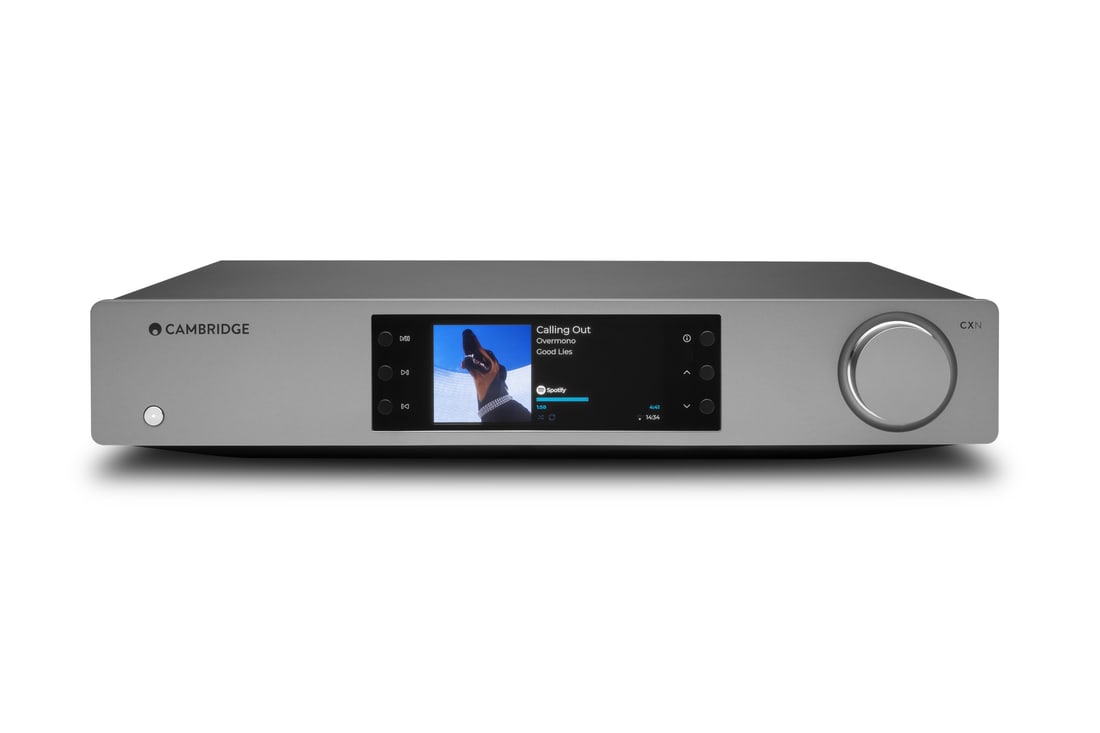
If you're setting this up from scratch, I'd sequence it roughly like this. Start with the DAC/amp, because that's the piece that determines what your ears actually get, and our guide to the best desktop DAC/amps is a reasonable starting point for matching one to your headphones' impedance and sensitivity. Then decide whether that DAC will be a network endpoint in its own right (many modern units are Roon-Ready or AirPlay-capable directly) or whether it'll sit behind a dedicated streamer like the Cambridge Audio CXN100 (check price) or the WiiM Ultra. Only after that should you worry about whether and how it joins your household's broader multiroom groups — and my honest advice, again, is that for serious listening it mostly shouldn't.
The house style at Sound Technology is to trust the graph over the marketing copy, and on this topic the graph is unambiguous: resampling and unnecessary digital attenuation are measurable, repeatable losses, not audiophile folklore. A headphone zone that's technically part of your multiroom system but logically separate from it — its own volume stage, its own bit-perfect path, joining groups only when you genuinely want synced background music — gets you the convenience without the tax.
What I'd tell my friend in Prahran now
She ended up keeping her kitchen Sonos zone exactly as it was, because it does what she needs there, and moving her desktop DAC onto a WiiM Ultra fed via USB from her laptop, with the multiroom app left well alone for that zone. Total cost was under the price of a decent pair of headphone pads, and the difference — heard back to back on the same track — wasn't subtle. Not because the WiiM is some giant-killer piece of engineering, but because it simply stopped throttling a signal that never needed throttling in the first place.
If you're evaluating your own setup, the test is easy: play a high-resolution file through your headphone zone while it's grouped with another room, then again solo, and check what your DAC's display actually says it's receiving. If the number changes, you've found your answer.
Common questions
- Do I need Roon to get a proper independent headphone zone?
- No. Roon makes it straightforward because zone independence is built into the architecture, but a dedicated streamer like the WiiM Ultra or Cambridge Audio CXN100 kept out of your speaker groups achieves the same practical result for a lot less ongoing cost.
- Will joining a multiroom group always downgrade my headphone zone's resolution?
- It depends on the platform. Some resample the whole group to a common rate the moment two zones join together; others handle it per-endpoint. Check your specific app's documentation, or just test it directly by comparing your DAC's reported input rate solo versus grouped.
- Is Bluetooth good enough for a headphone-only zone?
- For casual, at-the-desk listening with a modern codec like LDAC or aptX Adaptive, it's genuinely fine for most people. I'd only push for a wired, bit-perfect path if you're doing focused critical listening rather than background music while you work.
- Where should volume control actually happen in a headphone zone?
- Ideally in the analogue domain, at your headphone amp's volume pot, with the network source or streamer set to output at a fixed, full-scale level. Stacking digital volume reductions at the app and the amp both throws away resolution for no audible benefit.

I'm Eleanor — most people call me Nell. I came to this from the studio side, so I spend more time with headphones on my head than speakers in a room, and I've learned to hear the difference between detail and brightness pretending to be detail. I'm obsessive about fit and comfort, because the best-sounding headphone in the world is useless if it's clamping your skull after twenty minutes. I review everything from $200 daily-drivers to silly flagship planars.
Mastering-adjacent background; IEM and open-back specialist
More from Eleanor Shaw
 Speaker stands aren't furniture: mass, coupling and the sound you're leaving on the tableSpeaker stands do more than hold height. Mass, fill and coupling change bass control and midrange clarity more than most cable or amp upgrades.
 IEM ear tips: the free upgrade that beats most cable swapsEar tips shape IEM sound more than most upgrades costing real money. Here's how seal, bore size and tip material actually change what you hear.
- Standmounts near-field, floorstanders far: matching speaker format to listening distanceListening distance changes which speaker format actually works. Here's how near-field, mid-room and far-room seating should shape your standmount vs floorstander decision.
- Multiroom for headphone listeners: building a private zone that doesn't sound like an afterthoughtMost multiroom systems are designed around speakers in rooms. Here's how to build a headphone zone into that same ecosystem without gutting the sound.
- Bit-perfect and PCM vs DSD: which digital format claims actually matterDSD, MQA, bit-perfect, hi-res PCM — Nell Shaw sorts which digital audio format claims genuinely change what you hear and which are marketing noise.
- Clamping force and headband sag: the comfort variables nobody measuresFrequency response gets all the graphs, but clamping force and headband sag decide whether you'll actually wear a headphone past the twenty-minute mark.