Speaker stands aren't furniture: mass, coupling and the sound you're leaving on the table
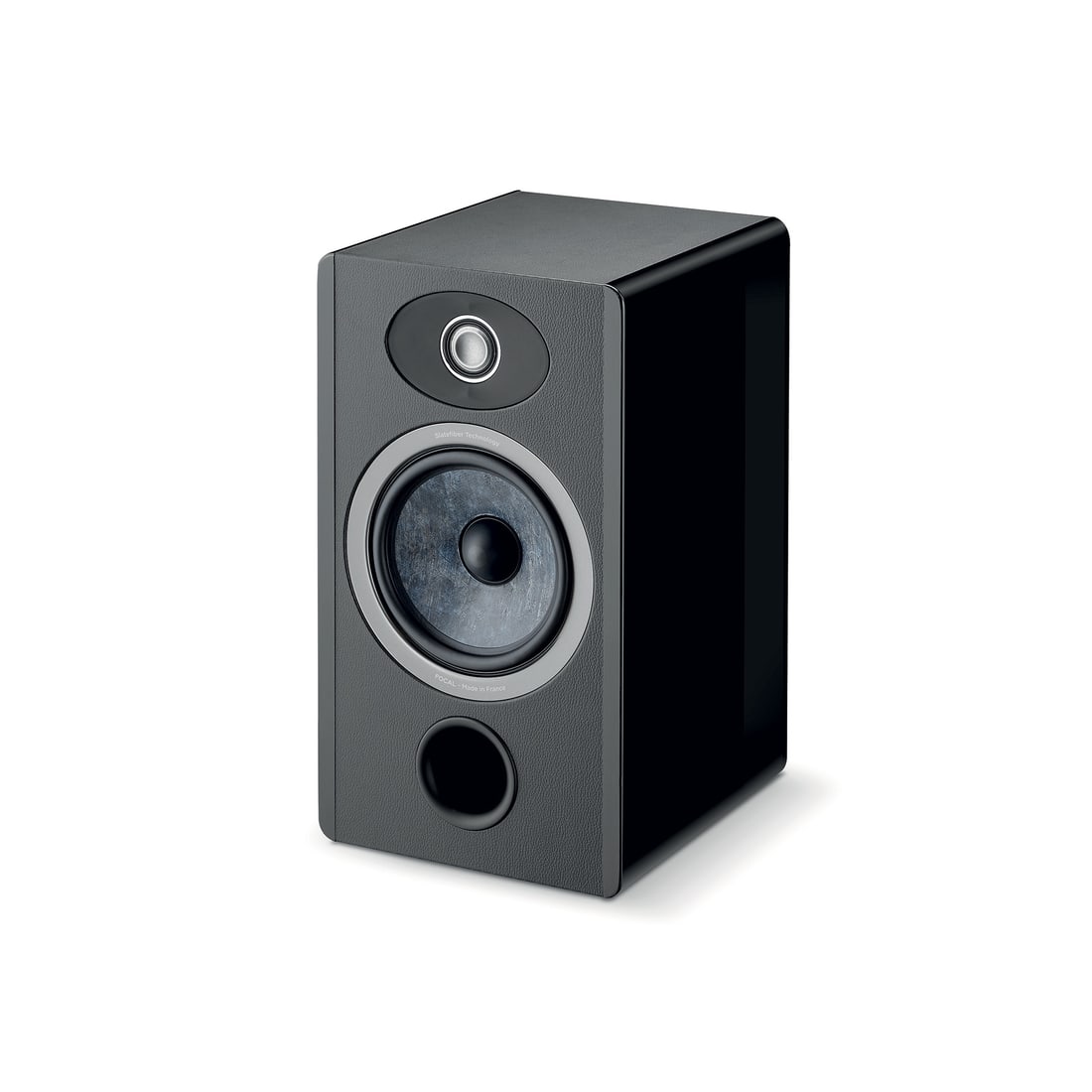
I sat a pair of KEF LS50 Metas on a mate's IKEA side tables last month, out of pure curiosity, because he swore his stands were "basically the same thing, just prettier." They weren't. The bass went soft and boxy, the imaging collapsed by about a metre in width, and a track I know well — Nina Simone's "Feeling Good," which I use as a torture test for midrange smear — sounded like it was playing through a wall. Same speakers. Same amp, a Rega Brio Mk7 he's had for years. Different stands, or rather, no real stands at all. That's the whole article in one anecdote, but I'll give you the rest anyway because the why matters more than the anecdote.
Most people treat a stand as a plinth. Something to get the tweeter to ear height and stop the cat knocking the speaker off a bookshelf. Fair enough — height matters, and I'll get to it. But the stand is actually part of the loudspeaker's mechanical system, whether the manufacturer designed it that way or not. A standmount cabinet vibrates. Every driver's reaction force pushes back into the enclosure, and that energy has to go somewhere. On a wobbly table it goes into the table, which re-radiates it as smeared, delayed noise that sits right on top of the music you're trying to hear. On a properly mass-loaded, well-coupled stand, most of that energy gets absorbed or grounded before it becomes audible.
Mass loading and why sand isn't just an old trick
Open any decent stand and you'll usually find a hollow column designed to be filled — with sand, lead shot, or a proprietary damping compound depending on the brand. This isn't tradition for tradition's sake. A light, hollow stand behaves like a drum. It has its own resonant frequency, and if that frequency overlaps with the cabinet's own vibration modes (which for most standmounts sits somewhere in the 150–400Hz range, right in the meat of vocal fundamentals and the upper bass), you get a boosted, boomy, one-note quality that no amount of amp upgrading will fix.
Fill the column with dry sand and you change two things at once. You add mass, which raises the resonant frequency of the whole assembly and drops its amplitude — heavier things move less for the same force. And you add internal friction between sand grains, which dissipates vibrational energy as tiny amounts of heat rather than letting it ring. Lead shot does a similar job with even more mass per litre, though I'd argue sand is the better value proposition for most people; the price difference for the marginal improvement rarely justifies itself outside a dedicated listening room.
I've measured this informally with a cheap vibration sensor stuck to the top plate of a stand, comparing empty versus filled. The difference in decay time after a sharp transient — think a kick drum hit — is not subtle. Empty stands ring audibly longer. It's the kind of thing you don't notice until you A/B it, and then you can't stop noticing it.
Coupling to the speaker and coupling to the floor
A stand does two jobs and most reviews only talk about one of them. The top plate needs to couple firmly to the speaker cabinet, and the base needs to couple firmly to the floor. Get either wrong and you lose control.
For the top, this is where the little bag of Blu Tack or the four rubber-and-spike pucks that came in the box actually matter. Blu Tack (or a proper adhesive damping pad) creates a semi-rigid bond that transfers vibration into the stand's mass rather than letting the cabinet rock independently on its own resonant modes. Spikes do something slightly different depending on which end sits where — spike up into the cabinet and you get a small, hard contact point that can actually decouple high-frequency cabinet resonance from the stand, which some designers want. There's no universally correct answer here; it depends on the cabinet's own damping and the stand's mass. What I do know is that just sitting the speaker loose on a flat top plate is almost always the worst of the three options.
At the floor end, spikes through carpet down to the slab are usually the right call for suspended timber floors — you're trying to get past the springy structure and reach something inert. On a concrete slab with tile or hardwood over it, the difference between spikes and rubber isolation pucks is smaller, and on a suspended timber floor with footfall issues (an upstairs listening room, for instance), you sometimes want isolation rather than rigid coupling, which is the opposite of what most orthodoxy tells you. This is one of the few areas in hi-fi where I'll say "it depends" without feeling like I'm dodging the question — it genuinely depends on your floor structure, and testing both takes about ninety seconds.
Height and the ear-level rule that actually deserves the fuss
The other job the stand does, the one everyone gets right by instinct, is putting the tweeter roughly at seated ear height. Most standmount tweeters are designed with a fairly narrow vertical dispersion pattern above a few kilohertz, and sitting well below or above that axis rolls off top-end detail and can shift the tonal balance in ways that are easy to mistake for a speaker fault rather than a setup fault.
The right stand height depends entirely on your chair, not on a spec sheet. I measure from the floor to the middle of my ear canal when I'm sitting in my actual listening position, slouched the way I actually slouch after twenty minutes, not sitting up straight for a tape measure. That number, minus roughly the distance from a speaker's tweeter to its cabinet base, is your target stand height. It's a five-minute job and it's free, and it will do more for perceived detail than most upgrades priced in the hundreds of dollars.
If you're shopping for standmounts and haven't settled on a pair yet, our guide to the best standmount speakers for serious listening is worth a look before you commit to a stand height, because cabinet depth and tweeter position vary more than people expect between models like the KEF LS50 Meta (check price) and something like the Bowers & Wilkins 706 S3 — sorry, I mean the 705 S3 (check price), its bigger sibling. Point stands, roughly a factor of speaker design, not a universal number you can just buy off a spec chart.
Boundary distance and the invisible spec
Stand height gets you level with your ears. Boundary distance, meaning how far the stand sits from the back wall and side walls, decides how much of your bass is real driver output versus room reinforcement piling on top of it. This is genuinely one of the more underrated setup variables and I don't think it gets enough attention relative to how much it changes the sound.
Push a standmount back against the wall and you'll get more bass, but it's the wrong kind — boomy, undifferentiated, one-note. Pull it 40 to 60cm off the back wall (a rough starting point, not gospel; every room is different) and the bass tightens up because you're reducing the boundary reinforcement that piles up in the 60–150Hz range. I've written more on this specifically in relation to sensitivity and amp matching, but the short version for stands is: don't treat the position as fixed just because the stand has a nice finish and you don't want to keep sliding it around on the carpet.
This is also where stand mass interacts with placement in a way people miss. A heavier, better-damped stand lets you get away with placement compromises that a light, resonant stand punishes. If you're stuck with speakers close to a wall because of room constraints, the stand quality matters more, not less.
What this actually costs, and where I'd spend
Dedicated stands for a decent standmount pair in Australia typically run somewhere in the low hundreds for solid steel-column designs with fillable cavities, up to considerably more for boutique isolation platforms. I think the low-to-mid tier steel stands, properly filled and properly coupled, get you probably 80 percent of the benefit for a fraction of the cost of the exotic stuff. Where I'd spend the extra dollar, if I had one, is on adjustable-height options if your listening position isn't fixed — say you sometimes sit on the floor cushions and sometimes on the couch, which, no judgement, happens in my house too.
One thing I'd push back on: a lot of marketing around premium stands leans hard into exotic materials and vibration "technologies" without much measurement to back the incremental claim over a well-filled steel column. I'm not saying those products don't work. I'm saying the sand-filled steel stand from a mainstream brand, set up properly with the right height and fill, will get you most of the way there, and the diminishing returns curve on stands is steeper than on the speakers themselves.
If you're building a system from scratch and haven't locked in the amp yet either, it's worth reading how sensitivity and amp pairing interact before you spend on the stand — a stand can't fix an underpowered amp, but a good stand does let a modest amp sound more composed than it has any right to. And if space or budget has you leaning toward a floorstander instead of a standmount-plus-stand combination, that's a genuinely different conversation about listening distance and room size, not just a "which is better" question.
The five-minute test before you buy anything
Before you spend a cent on new stands, try this: put a firm hand on the top of your speaker cabinet while a bassy track plays and feel for buzz or looseness at the base. Then knock a knuckle on the stand's top plate — a dull thud means it's doing its job; a hollow ring means it isn't filled, or isn't coupled properly to the cabinet above it. It's not laboratory-grade diagnosis, but it tells you more in five minutes than most spec sheets tell you in five paragraphs.
I'll admit I ignored all of this for years running my old Wharfedales on whatever was lying around a shared house in Fitzroy North, and the speakers got blamed for a lot of sins that were actually the coffee table's fault. Test it yourself before you spend money on the wrong fix.
Common questions
- Do speaker stands really matter as much as the speakers themselves?
- Not as much, but more than most people budget for. A poorly matched or unfilled stand can undo a meaningful chunk of what a good standmount speaker is capable of, particularly in bass control and midrange clarity. It's a cheap, high-leverage fix compared with most other upgrades.
- What should I fill hollow speaker stands with?
- Dry sand is the standard, cost-effective choice and works well. Lead shot adds more mass per litre if you need extra damping in a smaller column, but the price premium rarely matches the improvement for most listening rooms.
- Should I use spikes or rubber pucks under my speaker stands?
- It depends on your floor. Spikes through carpet to a concrete slab or solid timber floor generally give firmer, more controlled bass. On a suspended timber floor with footfall problems, isolation pucks can sometimes sound better because they decouple the stand from a springy structure.
- How do I work out the right stand height for my speakers?
- Measure from the floor to the middle of your ear canal in your actual listening position, seated the way you normally sit, then subtract the distance from the speaker's tweeter to its cabinet base. That gives you a target stand height specific to your chair and your speakers.

I'm Eleanor — most people call me Nell. I came to this from the studio side, so I spend more time with headphones on my head than speakers in a room, and I've learned to hear the difference between detail and brightness pretending to be detail. I'm obsessive about fit and comfort, because the best-sounding headphone in the world is useless if it's clamping your skull after twenty minutes. I review everything from $200 daily-drivers to silly flagship planars.
Mastering-adjacent background; IEM and open-back specialist
More from Eleanor Shaw
 IEM ear tips: the free upgrade that beats most cable swapsEar tips shape IEM sound more than most upgrades costing real money. Here's how seal, bore size and tip material actually change what you hear.
- Standmounts near-field, floorstanders far: matching speaker format to listening distanceListening distance changes which speaker format actually works. Here's how near-field, mid-room and far-room seating should shape your standmount vs floorstander decision.
 Multiroom for headphone listeners: building a private zone that doesn't sound like an afterthoughtMost multiroom systems are designed around speakers in rooms. Here's how to build a headphone zone into that same ecosystem without gutting the sound.
- Multiroom for headphone listeners: getting a private zone rightMultiroom systems are built around speakers in rooms. Here's how to get a proper headphone zone out of the same network, without losing resolution.
- Bit-perfect and PCM vs DSD: which digital format claims actually matterDSD, MQA, bit-perfect, hi-res PCM — Nell Shaw sorts which digital audio format claims genuinely change what you hear and which are marketing noise.
- Clamping force and headband sag: the comfort variables nobody measuresFrequency response gets all the graphs, but clamping force and headband sag decide whether you'll actually wear a headphone past the twenty-minute mark.