Standmounts near-field, floorstanders far: matching speaker format to listening distance
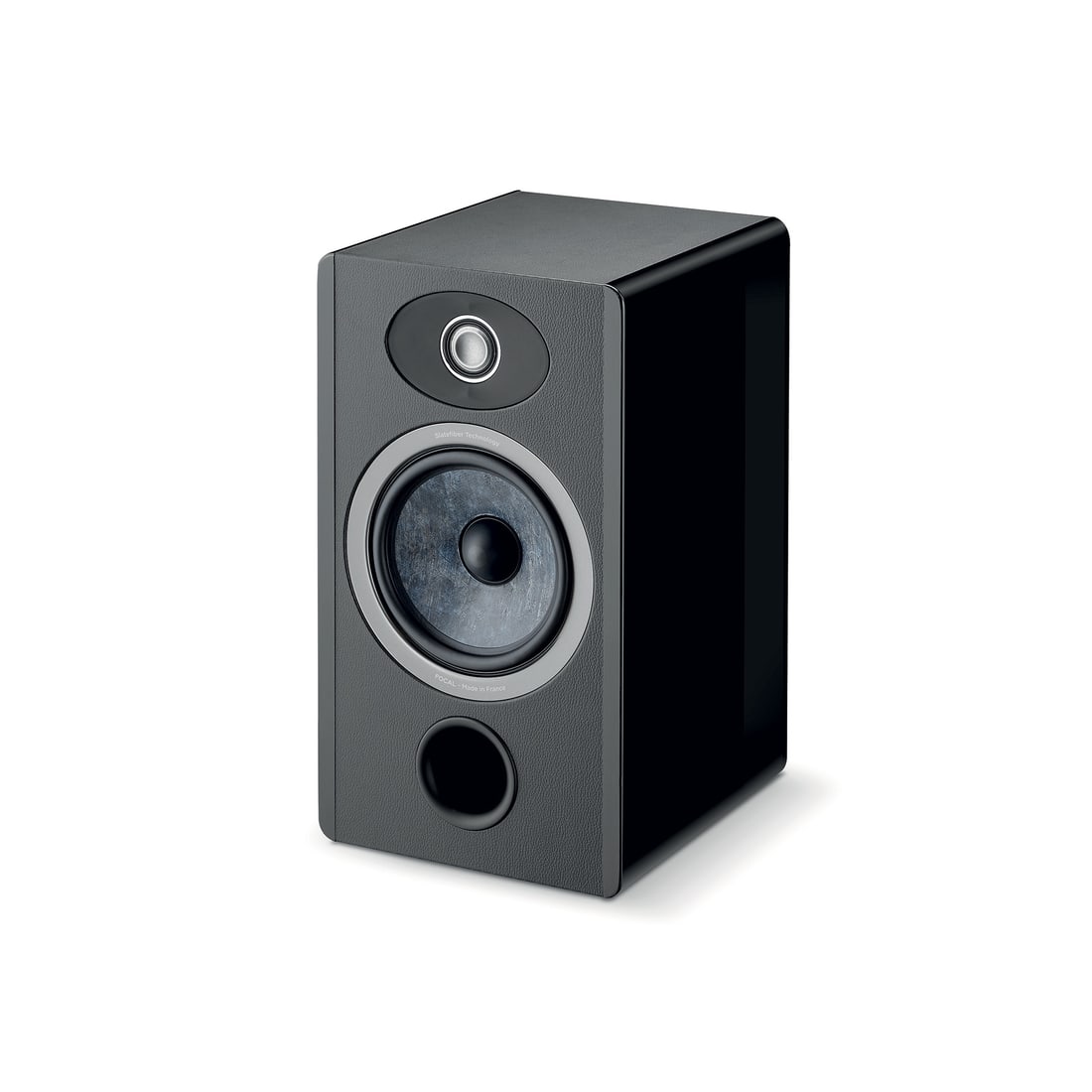
Last month I sat in on a friend's system rebuild in a terrace off Brunswick Street in Fitzroy. Narrow living room, sofa jammed almost against the back wall, a pair of floorstanders that had sounded glorious in the shop and sounded like two separate instruments arguing with each other at home. The problem wasn't the speakers. It was that he was sitting 1.8 metres from cabinets designed to integrate their drivers somewhere past 2.5 metres. Nobody at the shop had asked him how far back he'd be sitting. They should have.
I spend most of my working life with headphones clamped to my head, so I notice driver integration and time-alignment more than most speaker reviewers, probably because with cans there's no room to hide behind. Bring that same ear to a loudspeaker room and the first thing you learn is that listening distance isn't a footnote on the spec sheet. It's arguably the single biggest variable in whether a standmount or a floorstander is the right shape of box for your space, and it gets almost no attention compared with toe-in angle or cable gauge.
Why listening distance changes the physics, not just the vibe
A multi-way loudspeaker doesn't produce one coherent wavefront at the cabinet face. It produces several, one from each driver, and they combine acoustically somewhere out in the room in front of the speaker. That combination point depends on the physical offset between drivers, the crossover design, and to some extent the crossover slopes the designer chose. Get too close and you're inside that integration zone, hearing the tweeter and mid-bass as semi-separate sources rather than as one voice. This is a well understood problem in loudspeaker design and it's part of why some manufacturers time-align drivers on a sloped baffle or use first-order crossovers specifically to widen the zone where things sum properly.
Floorstanders, especially three-way designs with vertically spread drivers, typically need more distance for that summation to complete. A tall cabinet with a tweeter, midrange and dedicated bass driver stacked over 90cm of baffle height is asking your ears to do more geometric averaging than a two-way standmount with its tweeter and mid-woofer sitting a hand's width apart. That's the acoustic reason, separate from any room-boundary reason, why floorstanders in small rooms so often disappoint people who sit close.
The three rough distance bands I actually use
I'll be honest that nobody publishes a clean chart for this because every design integrates differently, but after enough loungerooms and demo suites to lose count, I work with three rough bands.
Near-field, under about 2 metres, is standmount territory almost without exception. A compact two-way like the KEF LS50 Meta (check price) or a Bowers & Wilkins 705 S3 (check price) is voiced and time-aligned to work at desk or near-field distances where a floorstander's bass driver hasn't had room to develop and its crossover point is still resolving. Sitting close to a standmount also means the tweeter's dispersion pattern matters more than its total output, since you're inside the direct field rather than blending with room reflections.
Mid-room, roughly 2.5 to 4 metres, is where either format can work, and this is genuinely the contested middle ground. A stand-mounted design on quality stands, something like the Monitor Audio Silver 100 7G (check price), will often image with more precision here than a floorstander because the smaller baffle and more compact driver array integrate cleanly and the stereo image doesn't get smeared by cabinet diffraction off a tall enclosure. But a floorstander in this zone starts to make sense too, particularly in rooms with enough volume to let the extra bass driver breathe. This is where room size, not distance alone, starts pulling rank.
Far-room, past about 4 metres, generally favours floorstanders or standmounts paired with a subwoofer, because a compact two-way asked to fill a large volume from a stand will run out of headroom and low-frequency extension before a comparable floorstander does. A design like the Focal Kanta No.2 (check price) has the cone area and cabinet volume to properly pressurise a bigger room at distance, in a way a small standmount simply can't regardless of how good its amplifier is.
Room volume complicates the neat distance rule
I'd be doing you a disservice if I pretended distance was the only variable, though. A 2.5-metre listening distance in a large, high-ceilinged apartment behaves differently to the same 2.5 metres in a boxy 3.4-metre-square room, because room volume governs how quickly low frequencies build up and where your first reflections land. Small, cubic rooms often suit standmounts even at distances where a floorstander's on-paper numbers say you should be fine, purely because floorstanders drive room modes harder at low frequency and a small room has fewer, more widely spaced modes to begin with. That's a bad combination: big peaks and dips, and less of them to average out.
Our guide on the best standmount speakers for serious listening goes into this in more detail, but the short version is that a standmount's smaller bass output is often a feature in a small, boxy room rather than a limitation. You're not fighting room gain nearly as hard.
Stands aren't optional, and this is where people cheap out
If you've settled on a standmount because your listening distance and room say so, don't then put it on a cheap wobbly stand and wonder why the bass sounds loose. Mass-loaded, rigid stands at the correct height for your ear line when seated aren't an accessory, they're part of the speaker's design brief. Most standmount designers voice their cabinets assuming a specific stand height and a reasonably decoupled, filled stand column. Skip that and you're not hearing the speaker as intended, full stop. I'd argue this matters more than most cable upgrades people obsess over, and it costs less.
Amplifier headroom shifts with distance too
There's a second-order effect that catches people out: as listening distance increases, so does the amplifier power you need for the same perceived loudness, because sound pressure level falls off with distance. Move your seat from 2 metres to 4 metres and you've lost up to about 6dB of SPL (half the sound pressure) in free field for the same amp output, somewhat less in a real room thanks to reflections, meaning you need meaningfully more power, or more sensitive speakers, to compensate. This is one reason floorstanders tend to pair well with far-room seating beyond the acoustic integration point; they're usually also more sensitive and better able to fill a larger volume without strain. If you're building a system around a streaming amplifier rather than separates, it's worth checking the guide to the best streaming amplifiers and all-in-one systems with your actual room size in mind, not just the spec sheet's stated power figure. An integrated like the Naim Uniti Atom (check price) has plenty of headroom for near-field standmounts but you'd want to think harder about it driving big floorstanders at four-plus metres in a large room.
What I'd actually tell you to do before buying
Measure your seat-to-speaker distance before you go shopping, not after. Bring that number with you. If a dealer doesn't ask about it, ask them yourself what distance the pair you're auditioning was designed around, and if they don't know, that's useful information about the dealer, not just the speaker. In my experience the best independent dealers will actually walk out the tape measure with you.
And if you're stuck between formats because your room genuinely sits in that awkward mid-zone, my honestly slightly contrarian take is that a good standmount on proper stands will beat a mediocre floorstander in more rooms than the industry likes to admit. Floorstanders look more serious in a lounge room and that visual weight sells a lot of pairs that would have been happier as standmounts with a well-chosen subwoofer added later. Something like a Q Acoustics 5040 (check price) is a case where the floorstander genuinely earns its size and distance requirements, but it's not the default answer just because it's bigger.
Toe-in and boundary distance still matter enormously once you've settled on a format, and I'd point you to our separate piece on standmount speakers for pairing advice once distance has told you which shape box to be shopping for in the first place.
Common questions
- Can a floorstander ever work well in a near-field desk setup?
- Rarely, and not well. Most floorstanders need at least 2 to 2.5 metres for their drivers to integrate acoustically, and at desk distance you'll hear the tweeter and mid-bass as separate sources rather than one coherent voice. A compact two-way standmount or even a desktop monitor will almost always sound more coherent that close.
- Does speaker sensitivity matter more than distance when choosing a format?
- They're related rather than separate issues. Sensitivity determines how loud a speaker gets for a given amplifier power, and because SPL falls off with distance, a low-sensitivity standmount pushed to fill a large room at distance will run out of headroom before a higher-sensitivity floorstander does. Check both figures together against your room size.
- Is it worth adding a subwoofer to standmounts instead of buying floorstanders?
- In many mid-to-large rooms, yes. A quality standmount on proper stands crossed to a subwoofer often images better than a floorstander of similar price, because you get the compact cabinet's cleaner integration plus dedicated low-frequency extension. It's a bit more setup work but the results are often worth it.

I'm Eleanor — most people call me Nell. I came to this from the studio side, so I spend more time with headphones on my head than speakers in a room, and I've learned to hear the difference between detail and brightness pretending to be detail. I'm obsessive about fit and comfort, because the best-sounding headphone in the world is useless if it's clamping your skull after twenty minutes. I review everything from $200 daily-drivers to silly flagship planars.
Mastering-adjacent background; IEM and open-back specialist
More from Eleanor Shaw
 Why your headphone chair and desk still need bass trappingClosed headphones don't escape room modes. Here's why bass trapping near your desk changes what you feel through the chair and the leakage you hear.
 Why your headphone desk needs a sub (and how to set it up)A subwoofer under the desk can fix what headphones can't do: chest-felt bass. Here's how to add one without wrecking your headphone sound.
- Dongle DACs vs desktop DACs: when the small one is actually enoughDongle DACs have closed the gap on desktop units for most headphones. Here's where the small ones genuinely hold up, and where they don't.
- Bluetooth codecs and multiroom: why your headphones sound different on Wi-FiWhy the same headphones sound different depending on whether they're fed over Bluetooth, AirPlay or a multiroom app — and how to get the best signal path at your desk.
 Cartridge tracking force: why "close enough" costs you detailTracking force outside the maker's range doesn't just risk your records — it quietly wrecks the detail and channel balance you paid for. Here's how to get it right.
- Streaming to headphones: getting multiroom apps to actually feed your DACMultiroom apps are built for speakers in rooms, not headphones at a desk. Here's how to get Spotify Connect, AirPlay and Roon actually feeding your DAC properly.