Cambridge Audio L/R Series: first active wireless speakers
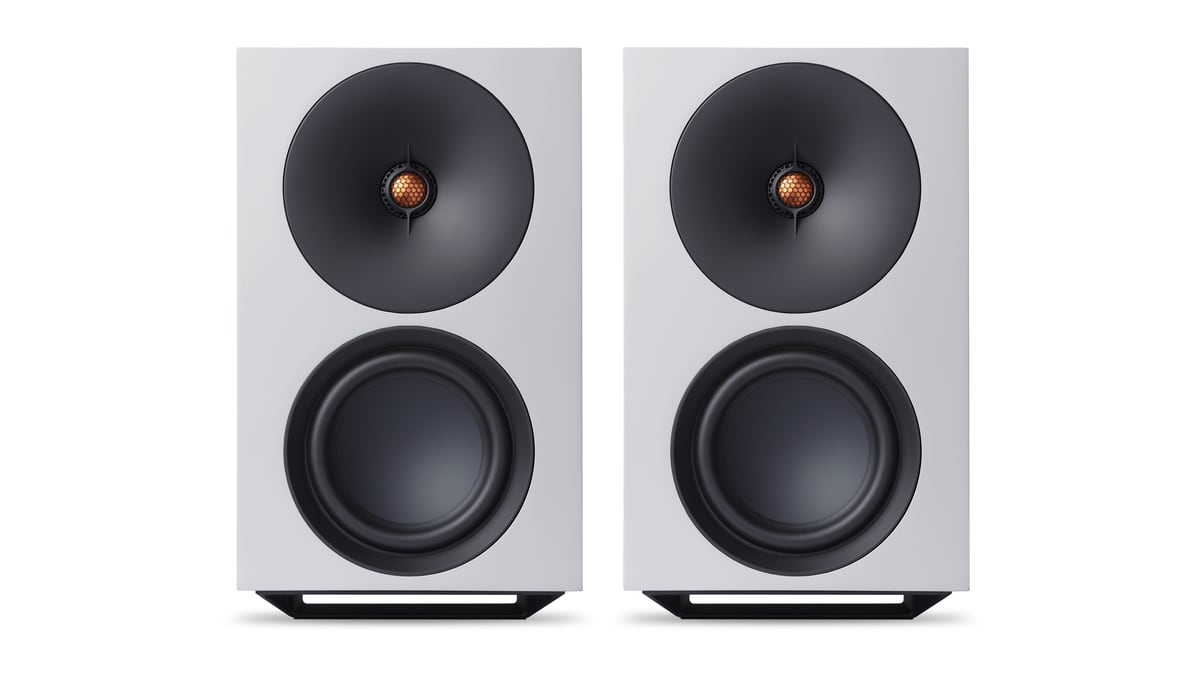
Cambridge Audio L/R Series enters the active wireless arena
There are moments in this industry when a brand does something that genuinely redraws the competitive map. Cambridge Audio's debut at CES in January 2026 was one of them. After more than five decades as a maker of amplifiers, CD players, streamers and DACs (consistently brilliant separates and all-in-ones, but always the sort of kit you pair with a passive speaker), the Cambridge Audio L/R Series marks the company's first foray into active, wireless loudspeakers. It's a significant pivot, and on paper at least, it's an impressive one.
The L/R Series spans three models: the entry-level L/R S at AU$549 per pair, the mid-tier L/R M at AU$1,599 per pair, and the flagship L/R X at AU$2,299 per pair. The launch is staggered across 2026, so we won't have all three in Australian stores simultaneously, but the range is already generating serious conversation in enthusiast circles, and for good reason. When you look at the spec sheet for the L/R X in particular, you quickly understand who Cambridge Audio is gunning for. Full details sit on the Cambridge Audio website.
Why this matters for Australian buyers
The active wireless speaker category has matured enormously over the past five years. What once felt like a compromise, an all-in-one convenience play that sacrificed resolution and dynamics, has evolved into a genuinely compelling alternative to separates. KEF, with its LS50 Wireless II and the later LSX II, essentially defined the category for discerning listeners. Sonos approached it from the mass-market end. Devialet carved out its own extremely expensive niche with the Phantom line. But the sweet spot (audiophile-grade performance, real-world connectivity, sensible WAF-friendly aesthetics, and a price that doesn't require a second mortgage) has remained frustratingly crowded with near-misses.
Cambridge Audio's entry is notable precisely because the brand understands the separates buyer. These are speakers designed by people who know what a StreamMagic platform is supposed to do, what an MM phono stage should sound like, and why HDMI eARC matters for a listener who wants their speakers to serve double duty as a TV system. That insider knowledge, if it translates faithfully into the L/R Series, could make these genuinely dangerous competitors.
In the Australian market specifically, the pricing is competitive. The L/R X at $2,299 per pair sits in the same conversation as the KEF LS50 Meta (check price) when you factor in what you'd spend on a matching streamer-amplifier to drive those passive speakers. The value proposition isn't just about the speakers themselves. It's about what you don't have to buy separately.
That is the real appeal of any active (powered) speaker: the amplifiers sit inside the cabinet and are matched to the drivers by the manufacturer, so there is no separate amplifier to choose and no speaker cable to fuss over. Our look at active versus passive speakers covers the trade-offs in more detail.
The flagship L/R X: specifications worth examining
The L/R X deserves the closest look, because the engineering decisions here reveal a lot about Cambridge Audio's intent. The total amplification on board is 800 watts, a genuinely substantial figure for a standmount-sized active speaker. That power budget funds a 2.5-way driver configuration comprising a 28mm Torus tweeter, dual five-inch woofers and, this is the detail that caught my attention, dual six-inch force-cancelling passive radiators.
Force-cancelling passive radiators are not a gimmick. When two passive radiators are mounted in opposition, their mechanical motion cancels out the reactive forces that would otherwise cause cabinet vibration and colouration. It's an approach that acknowledges the fundamental tension in designing a compact, high-output enclosure: you want extended bass response, but you don't want the cabinet itself becoming a resonator. The decision to employ this topology in a speaker at this price point tells me that Cambridge Audio's acoustic engineering team has thought carefully about what goes wrong with competitors at similar price points, and tried to address it structurally rather than through DSP correction alone.
The Torus tweeter designation deserves a mention too. Cambridge Audio has used the Torus name before in its speaker history, and the 28mm dome size sits in a sensible sweet spot: large enough for smooth high-frequency dispersion, small enough to push the crossover point usefully high and protect the tweeter from excess excursion. Whether the execution lives up to the specification is something we'll assess properly when review samples arrive, but the foundations look sound.
For a deeper look at what makes a 2.5-way topology different from a conventional two-way design, and how passive radiators compare to ports in real-world listening rooms, I'd encourage readers to revisit our guide on the best standmount speakers for serious listening. The underlying acoustic principles apply directly here.
Connectivity: Cambridge Audio knows its audience
The L/R Series connectivity suite reads like Cambridge Audio surveyed its existing StreamMagic customer base and simply asked: what do you need? The answer is thorough.
- Wi-Fi streaming via StreamMagic: Cambridge Audio's own platform, which has proven itself across the CXN100 streamer and Evo series, supporting high-resolution audio, Roon, Tidal, Qobuz and a broad codec range. Existing StreamMagic users will know the app well.
- HDMI eARC: Essential for television integration. eARC supports lossless audio formats including Dolby TrueHD and DTS-HD Master Audio, a meaningful step up from the optical connections that many competing active speakers rely on. The HDMI Forum and licensing organisation publishes the underlying specification. For anyone building a cleaner living room system without a separate AV receiver, this is the feature to look for.
- Bluetooth: Presumably aptX or aptX HD, though the specific codec support hasn't been confirmed in the materials available to us. We'll update as details land.
- MM phono input: The inclusion of a moving-magnet phono stage is a statement of intent. Cambridge Audio knows that a significant portion of its customer base owns turntables. The ability to connect a deck like the Rega Planar 3 (check price) directly to the speakers, without an outboard phono stage, removes a friction point that would otherwise force buyers to add another box.
- USB-C: Likely for direct device playback or charging, with details pending, but its inclusion acknowledges modern source devices.
- WiSA HT linking: This is the detail that elevates the L/R Series from a stereo-only proposition to something with genuine home cinema ambitions. WiSA (Wireless Speaker and Audio) enables the L/R speakers to be used as front left and right channels in a wider surround system, linking wirelessly with compatible centre channels and surrounds without running speaker cables across the room.
That WiSA inclusion is clever positioning. It acknowledges that buyers at this price point often want a system that can serve both critical music listening and cinematic experiences. For anyone thinking through a clean, low-cable home cinema build, our home cinema component guide covers the broader ecosystem decisions in useful depth.
The KEF comparison: how does it actually stack up?
The competitive target is obvious. KEF's wireless active speaker range has owned this category for years, and the LS50 Meta (check price) remains the reference point against which new entrants are inevitably measured. So how does the L/R X compare on paper?
KEF's LS50 Wireless II uses a different topological approach. The Uni-Q coaxial driver places the tweeter at the acoustic centre of the midrange/bass driver, which KEF argues delivers superior point-source imaging (the company explains the concept on its own site). It's a legitimate engineering advantage for soundstage and imaging performance, and KEF's execution of the Uni-Q concept is genuinely world-class. Cambridge Audio's conventional multi-driver layout with the 2.5-way topology and force-cancelling passive radiators takes a different path to low-frequency extension and dynamics.
The L/R X's 800W total power figure is substantially higher than the LS50 Wireless II's amplifier stage, which suggests Cambridge Audio is confident in the dynamic capability of the L/R X, particularly at higher playback levels. Whether raw power translates to audible superiority at realistic listening levels is a question for the listening room, not the spec sheet. But the headroom is there.
Where Cambridge Audio has a genuine structural advantage is ecosystem integration. StreamMagic is a mature, well-regarded platform. Buyers already using a Cambridge Audio CXN100 (check price) or similar in their system will find the L/R Series drops in with minimal friction. KEF's own Control app and streaming implementation have improved over time, but StreamMagic has the longer track record in the Australian enthusiast community.
Aesthetics: six finishes including real walnut
This matters, and it's often underweighted in technical coverage. Cambridge Audio has committed to six finishes for the L/R Series, including real walnut veneer. That is a meaningful differentiator. In a category where too many products default to gloss black or matte white, real timber veneer speaks to buyers who care about their listening space as much as their listening experience. The walnut option in particular positions the L/R Series as furniture as well as electronics, a consideration that carries real weight in Australian homes where the speaker is likely to live in a main living area rather than a dedicated listening room.
Active speakers with genuine aesthetic ambition tend to hold their resale value better, too. That's a practical concern for buyers in this price bracket who may want to upgrade in three or four years.
The L/R S and L/R M: democratising the platform
The $549 L/R S is worth acknowledging separately, because it represents an accessible entry point into the StreamMagic active speaker ecosystem. If Cambridge Audio's engineers have made sensible driver and amplification choices at that price point, rather than simply scaling down the L/R X's performance catastrophically, the L/R S could represent one of the more interesting speakers in the sub-$600 active category. That segment already has respectable options from Klipsch, Q Acoustics and KEF's own LSX range, so competition is real. Our KEF Coda W review shows how strong an all-in-one active standmount can be. We'll hold final judgement until we can listen.
The L/R M at $1,599 per pair occupies perhaps the most interesting strategic territory. It's priced above casual lifestyle purchases but below the premium active speaker tier, and will likely find its audience among buyers who want genuine streaming performance without the flagship price. For listeners considering all-in-one streaming amplifier solutions to partner with passive standmounts, the L/R M is worth adding to the shortlist alongside options in our best streaming amplifiers guide.
What we still need to know about the L/R X
A CES launch provides a framework, not a verdict. There are several things I'll be listening for closely when review samples arrive:
- Low-frequency integration: Force-cancelling passive radiators are a promising approach, but the quality of bass reproduction depends on enclosure tuning, driver matching and DSP implementation. Does the L/R X deliver genuinely extended, controlled bass, or does it trade extension for tightness?
- Treble refinement: The 28mm Torus tweeter has to justify its existence against KEF's Uni-Q and Bowers & Wilkins' aluminium dome competition. Smoothness, air and off-axis behaviour are all under scrutiny.
- StreamMagic implementation: Does the platform's network performance match what the CXN100 has set as the benchmark? Specifically, gapless playback, high-res streaming reliability and app responsiveness.
- Phono stage quality: A built-in MM stage is only valuable if it's genuinely good. A mediocre phono stage can actively degrade the vinyl experience relative to a dedicated outboard unit.
- WiSA integration in practice: Wireless surround systems live or die on latency and reliability. We'll need to test this in a real home cinema context.
Verdict on the launch
Cambridge Audio's L/R Series is the most considered debut in the active wireless speaker category from a traditional British hi-fi brand. The engineering decisions (force-cancelling passive radiators, a proper phono stage, HDMI eARC, StreamMagic integration, WiSA support) read like a product developed by people who actually use the things they're designing. The pricing is competitive against the KEF benchmark, the aesthetic range is broader than most competitors, and the three-model spread means there's a genuine entry point at $549 without cheapening the flagship.
Whether the L/R X can genuinely challenge the LS50 Meta's imaging precision and the LS50 Wireless II's streaming maturity remains to be heard. But as opening moves go, this is a strong one. Cambridge Audio has entered the room confidently, and the category is better for it. Review units can't arrive soon enough.
Common questions
- What are the Australian prices for the Cambridge Audio L/R Series?
- The L/R Series launched with three models: the L/R S at AU$549 per pair, the L/R M at AU$1,599 per pair, and the flagship L/R X at AU$2,299 per pair. The range is being released in a staggered launch across 2026.
- Do the Cambridge Audio L/R speakers need a separate amplifier or streamer?
- No — all models in the L/R Series are active speakers with amplification and streaming built in. They include Wi-Fi connectivity via Cambridge Audio's StreamMagic platform, Bluetooth, and HDMI eARC for TV connection, so no separate amplifier or network streamer is required.
- Can I connect a turntable directly to the Cambridge Audio L/R speakers?
- Yes. The L/R Series includes a moving-magnet (MM) phono input, which means you can connect a standard turntable with an MM cartridge directly without a separate phono stage. Moving-coil (MC) cartridges with low output would still require an outboard phono stage.
- What is WiSA and how does it work with the L/R Series?
- WiSA (Wireless Speaker and Audio) is a wireless audio standard that allows compatible speakers to link together for multi-channel home theatre use without speaker cables. The L/R Series' WiSA HT support means you could use the L/R speakers as front left and right channels in a wider surround system, paired with compatible WiSA centre and surround speakers.

Hi, I'm Hannah. Speakers are my thing — specifically, the conversation between a speaker and the room it's in, which is where most systems are won or lost. I did acoustics at uni and never quite got it out of my system. I'll measure your room's bass response and then gently break the news that the $20,000 speakers aren't the problem, the untreated wall behind your sofa is. Stand-mounts on good stands are criminally underrated and I will die on that hill.
Acoustics background; loudspeaker and room-treatment specialist
More from Hannah Reid
 Headphone stands and hooks: the desk accessory that changes your soundHeadphone stands aren't just tidy storage. How you park your cans between sessions affects driver life, cable strain and even headband fit.
 First reflections: finding them, and what to actually do about themThe mirror trick still finds first reflection points better than any app. Here's how to locate them and what treatment actually earns its keep.
- Headphone soundstage: why some pairs sound "wide" and others don'tSoundstage in headphones isn't magic or marketing. It comes from crossfeed, driver geometry and pad depth — here's what's actually happening and what you can change.
- Turntable wall shelves versus stands: what actually kills footfall bassFootfall bass in vinyl playback usually isn't the turntable's fault. It's the floor. Here's how to work out whether a wall shelf or a proper stand fixes it.
 Why your amplifier struggles below 4 ohms (and when to actually worry)Impedance dips scare buyers more than they should. Here's how to read a speaker's impedance curve and match it to an amp that won't run out of puff.
- Subwoofer placement: the crawl test still beats any appRoom-correction apps are handy, but the old carpet-crawl method still finds the seat-by-seat bass problems software glosses over.