Gallium nitride goes mainstream as Chord adopts GaN for its Blade amplifier
When a legacy brand bets on a new transistor technology, the industry notices
Something quietly significant happened in Vienna at the beginning of June 2026. At High End Vienna, Chord Electronics — the British manufacturer that has spent four decades building some of the most analytically precise amplifiers and DACs on the planet — pulled back the curtain on two new power amplifiers. One was the ULTIMA 7, a 135-watt-per-channel stereo amplifier aimed squarely at the premium two-channel market. The other was something altogether more intriguing: the Blade, a rack-mountable, 0.5U-high Class G stereo amplifier built around gallium nitride transistors and designed with custom installation firmly in mind. Full specifications, pricing and availability are confirmed for September 2026.
Chord's decision to move to GaN — gallium nitride — is not a case of a brand chasing a trend. John Franks, the company's founder and chief designer, does not do that. He has spent his career building electronics around proprietary topologies, most famously the Dual Feed Forward error-correction circuit that sits at the heart of Chord's amplifier designs. When someone with that level of commitment to a specific engineering philosophy decides that a new switching transistor technology is worth adopting, it is worth paying attention to why.
To understand what Chord has done with the Blade — and why it matters beyond one product launch — you need to understand where GaN fits in the broader story of amplifier design. This is, in the most literal sense, a materials science story that is reshaping an entire product category.
What gallium nitride actually is, and why it switches differently
For most of the history of solid-state audio, amplifiers have been built around silicon. Silicon bipolar junction transistors, then silicon MOSFETs, then silicon-based IGBTs for very high-power applications. Silicon is abundant, manufacturable at scale, and engineers understand its behaviour at an extremely deep level. It has served the industry well. But silicon has a fundamental physical limitation when it comes to high-frequency switching: it is relatively slow, and the faster you push it, the more energy it loses as heat during each transition from on to off and back again.
Gallium nitride operates differently at a semiconductor physics level. GaN devices have a wider bandgap than silicon — roughly three times wider — which means they can handle higher electric fields without breaking down. More relevantly for audio amplification, GaN transistors switch significantly faster than their silicon equivalents, with lower on-resistance and dramatically reduced switching losses. The practical consequence is that a GaN-based switching stage can operate at higher frequencies with less heat generated per cycle, which opens up design possibilities that were previously impractical or outright impossible with silicon.
It is worth being precise here about where GaN sits relative to the amplifier classes your might already be familiar with. If you want a primer on how Class A, Class A/B and Class D relate to one another from a fundamental circuit topology perspective, our Amplifier Classes explainer covers the ground well. GaN is not itself a class of amplification — it is a transistor technology that can be employed within various topologies. Where it has had the most dramatic impact is in Class D and related switching amplifier designs, where the high switching speed directly translates into measurably lower distortion, better efficiency and reduced thermal output.
Chord's Blade, however, is Class G, not Class D. That distinction matters and is worth unpacking.
Class G: the amplifier topology that GaN was almost made for
Class G amplification is a relatively old idea — it dates back to the late 1970s — but it has been experiencing a genuine renaissance as switching transistor performance has improved. The core concept is straightforward: rather than running an amplifier from a single fixed supply rail (as in conventional Class A/B designs), a Class G amplifier uses multiple supply voltages. At low output levels, the amplifier runs from a lower-voltage rail, consuming very little power. As the signal demands more headroom, the amplifier steps up to a higher-voltage rail. The efficiency gains can be substantial, and the heat generated at typical listening levels is dramatically lower than an equivalent Class A/B design.
The problem that has historically bedevilled Class G designs is the transition between supply rails. If the switching from one rail to another is not handled with extreme precision, you get distortion artefacts at the crossover point. These artefacts are often characterised as a kind of transient hardness or grain — subtle enough that many listeners cannot consciously identify them, but audible as a lack of ease in the presentation. Engineers have spent decades trying to minimise this artefact, with varying degrees of success.
This is precisely where GaN changes the equation. Because GaN transistors switch so much faster than silicon, the transition between supply rails in a Class G design can be executed with far greater precision and speed. The window during which the switching artefact can occur is compressed to the point where it is, at least in principle, below the threshold of audibility and measurability. Combined with an error-correction topology like Chord's Dual Feed Forward architecture — which is specifically designed to detect and cancel residual distortion before it reaches the output — you have a genuinely compelling technical case for the combination of Class G and GaN.
The result, as Chord describes it, is vanishingly low distortion figures. I will reserve judgement on exactly how low until we see the full published specifications in September, but the technical logic is sound and the underlying physics support the claim.
The Blade's form factor tells you who it is really for
At 0.5U in rack height, the Blade is not a product designed to sit on a equipment rack in a listening room and be admired for its aesthetics. It is an installation product, engineered to be integrated into a rack system, driven by a control system, and quite possibly never seen by the end user once it is commissioned. That is a specific market with specific demands.
Custom installation amplifiers are judged by criteria that differ meaningfully from consumer hi-fi products. Reliability under continuous duty cycles matters enormously. Thermal management in enclosed rack environments is critical — an amplifier that runs cool is one that will not trigger protection circuits during a dinner party or require expensive ventilation engineering. Form factor efficiency is paramount when you are trying to pack four, six or eight channels of amplification into a standard 19-inch rack. And the ability to drive a variety of loudspeaker impedances reliably — from the benign to the awkward — is non-negotiable.
GaN and Class G address almost every one of those requirements in ways that conventional Class A/B silicon designs cannot match at comparable output power. Running cool means smaller cooling requirements and better rack density. High switching efficiency means lower electricity bills in installations that run amplifiers for extended periods. And the combination of Chord's error-correction topology with GaN's switching precision means that even a load with a challenging impedance profile should receive a clean, well-controlled signal.
For Australian custom installers, the Blade could be a genuinely attractive proposition. The local custom install market has historically been dominated by Class D amplifiers from manufacturers like Powersoft and Lab.gruppen for high-channel-count applications, and by Class A/B amplifiers from brands like Crown and QSC for more traditional installations. A half-rack-unit Chord Electronics amplifier with measurably low distortion and the engineering credibility of the brand's consumer products sits in an interesting space between high-performance audio and practical installation engineering.
Dual Feed Forward: Chord's secret weapon, and why it pairs well with GaN
Any discussion of a Chord amplifier that does not address the Dual Feed Forward error-correction topology is incomplete. John Franks developed this approach as a fundamental alternative to conventional negative feedback, which has been the dominant method of distortion reduction in amplifier design since the early days of the valve era.
The theoretical problem with conventional negative feedback is that it is inherently reactive — it measures an error after it has already occurred at the output and then applies a correction signal. Because this correction travels through the amplifier's signal path, it can introduce its own phase shifts and group delay artefacts, particularly at high frequencies. The amplifier is, in effect, chasing its own tail. At low frequencies and moderate gain factors this is not a significant issue, but at high gain or high frequencies the feedback loop can become a source of added complexity rather than simplification.
Feed-forward error correction takes a different philosophical approach. Rather than measuring the output and applying a correction, the circuit predicts the distortion that the amplifier stage will introduce, generates an inverted version of that predicted error, and combines it with the signal before it reaches the next stage. In Chord's Dual Feed Forward implementation, this process occurs at two points in the signal chain, which compounds the error-cancellation effect substantially. The circuit never applies negative feedback in the conventional sense — it operates in a fundamentally different control paradigm.
GaN transistors are beneficial here for a reason that is not immediately obvious. Because GaN devices are so fast, they introduce very little phase shift at the frequencies where Dual Feed Forward needs to operate most precisely. The error-cancellation circuit can therefore work with greater accuracy, because the transistors it is compensating for are behaving in a more linear, predictable manner in the first place. The combination is synergistic rather than merely additive.
This is not Chord's first foray into switching technology territory
It is worth contextualising where the Blade sits within Chord's broader product history. The company has never been dogmatic about operating class in the way that some audiophile brands have been. Chord's DACs — including products like the Mojo 2, which we reviewed at this link (check price) — have always used FPGA-based custom digital filter implementations that prioritise measured performance and proprietary signal processing over conventional chip-based approaches. The amplifier range has likewise evolved through multiple generations, with the ULTIMA series representing the current apex of the consumer line.
The ULTIMA 7, previewed alongside the Blade at High End Vienna, delivers 135 watts per channel into 8 ohms and also employs the Dual Feed Forward topology. It is the more conventional product of the two announcements — a stereo power amplifier in a traditional enclosure, aimed at two-channel listeners who might be building a system around demanding loudspeakers. If you are considering something like the Focal Kanta No.2 (check price), which presents a moderately complex load and rewards amplification with genuine current delivery, the ULTIMA 7 would be a logical pairing to investigate once full specifications are published.
The Blade is the more novel of the two. Half a rack unit of Class G GaN stereo amplification from a manufacturer with Chord's pedigree is something that genuinely has not existed before at any price point. Whether the combination of low distortion, compact dimensions, thermal efficiency and Chord's engineering heritage translates into a compelling commercial proposition for Australian installers and integrators will depend substantially on the September pricing announcement.
The broader industry signal: GaN is no longer a boutique technology
Until relatively recently, GaN-based audio amplification was the territory of a small number of specialist manufacturers. Companies like Hypex with their Ncore modules, Purifi Audio with their Eigentakt topology, and a handful of custom amplifier builders were the primary proponents. These are genuinely excellent technologies, and the performance of modern Class D GaN designs has converted many listeners who once considered all switching amplification to be a compromise relative to linear designs.
But Chord Electronics is not a boutique GaN specialist. It is a 40-year-old British manufacturer with a dedicated global customer base, a recognisable design language, and a track record of measured performance that its customers take seriously. When a brand like Chord commits to GaN — not as an experiment, but as the foundation of a product intended for full commercial production — it signals something real about the maturity of the technology and the confidence that serious engineers now have in its audio performance.
We are likely looking at the beginning of a broader adoption curve. Other premium amplifier manufacturers will be watching the reception to the Blade and the ULTIMA 7 carefully. If Chord's measured performance data, published in September, confirms the theoretical advantages that GaN and Class G should provide — and if the listening reports from reviewers with established credibility back that up — the pressure on other manufacturers to address GaN in their own product roadmaps will increase substantially.
For Australian buyers, the practical implication is straightforward: do not be in a hurry. The September launch is the moment when this conversation becomes concrete. Full specifications, pricing in Australian dollars, and confirmed local distribution will determine whether the Blade and the ULTIMA 7 represent compelling value propositions against what is already available. The technology is genuinely interesting. Whether the commercial execution matches the engineering ambition is the question that September will answer.
In the meantime, if you are thinking about what kind of loudspeaker load you might pair with an amplifier of this specification, it is worth familiarising yourself with how speaker sensitivity interacts with amplifier power ratings — because 135 watts into 8 ohms and a thermally efficient Class G GaN design will behave quite differently in practice depending on the efficiency and impedance curve of the loudspeaker you choose to drive with it.
Handmade in Kent: the manufacturing context
One final point that deserves acknowledgement: both the Blade and the ULTIMA 7 are designed by John Franks and handmade in Kent, England. In an era where much of the electronics industry has consolidated manufacturing into a small number of contract factories in East Asia, this is a meaningful statement about quality control, traceability and the kind of iterative refinement that is difficult to achieve when design and production are separated by thousands of kilometres.
Handmade production in Kent means that every unit passes through the hands of technicians who are familiar with the design at a schematic level, not merely trained to follow an assembly procedure. It means that field problems — if any emerge — can be diagnosed and addressed at the source. And it means that the supply chain for an Australian dealer or end customer, while longer in geography, is anchored in a manufacturing environment with a demonstrable track record.
That context matters when you are considering a product at the price level that Chord's amplifiers occupy. You are not merely buying measured specifications and a brand name. You are buying into an engineering culture that has been consistent for four decades. GaN is new to Chord's product line. The philosophy behind why Chord chose it, and how they have implemented it, is entirely consistent with everything the company has done before.
We will be back in September with the full details. Until then, the Blade stands as one of the more technically interesting previews from the first half of 2026 — and a clear signal that gallium nitride has earned its place in the mainstream of serious audio amplification.
Common questions
- What is gallium nitride (GaN) and why does it matter for audio amplifiers?
- Gallium nitride is a semiconductor material with a wider bandgap than conventional silicon. GaN transistors switch significantly faster than silicon devices and generate less heat during each switching transition. In amplifier design, this translates to lower distortion, greater efficiency, and the ability to build amplifiers that run cooler and more compactly than comparable silicon-based designs. Chord Electronics has employed GaN transistors in its new Blade amplifier alongside a Class G topology, using the technology's fast switching characteristics to reduce the distortion artefacts that have historically been a challenge in Class G designs.
- What is Class G amplification, and how does it differ from Class A/B or Class D?
- Class G amplification uses multiple power supply voltage rails rather than the single fixed rail of a conventional Class A/B design. At lower output levels the amplifier operates from a lower-voltage rail, consuming less power and generating less heat. As the signal demands more headroom, the amplifier steps up to a higher-voltage rail. This makes Class G more efficient than Class A/B at typical listening levels, while avoiding the full switching operation of Class D. The historical challenge has been achieving a clean, distortion-free transition between rails — a problem that fast-switching GaN transistors help to address. For a broader overview of amplifier operating classes, see our Amplifier Classes glossary entry.
- When will the Chord Blade and ULTIMA 7 be officially available, and where can Australian buyers get pricing?
- Chord Electronics previewed both the Blade and the ULTIMA 7 at High End Vienna in June 2026. The official launch, including full specifications and pricing, is scheduled for September 2026. Australian buyers should contact Chord's local distribution partners once the September announcement is made for confirmed Australian dollar pricing and availability timelines.
- What is Chord's Dual Feed Forward error-correction topology, and how does it reduce distortion?
- Dual Feed Forward is a proprietary error-correction approach developed by Chord Electronics founder John Franks. Unlike conventional negative feedback, which measures errors at the amplifier output and applies corrections reactively, feed-forward error correction predicts the distortion a circuit stage will introduce and generates a cancellation signal before the error reaches the next stage. Chord's Dual Feed Forward implementation applies this process at two points in the signal chain, compounding the distortion-cancellation effect. Because GaN transistors operate with less inherent phase shift than silicon devices, they work particularly well with feed-forward topologies, allowing the error-cancellation circuit to function with greater precision.

I'm Marcus, and I'll be honest up front: I trust a measurement before I trust my own ears, because my ears lie to me daily. I spent fifteen years designing audio electronics before I started writing about them, so when a brand tells me a number, I want to see the graph. That doesn't make me cold about this hobby — I love a system that disappears as much as anyone — it just means I'll tell you when an expensive box is selling you confidence rather than performance.
Former audio electronics engineer; objectivist; runs the test bench
More from Marcus Vale
 AVR vs AV processor: which should power your home cinema?AV receivers and dedicated processors both decode Atmos — but the engineering tradeoffs are real. Marcus Vale breaks down what the measurements actually tell you.
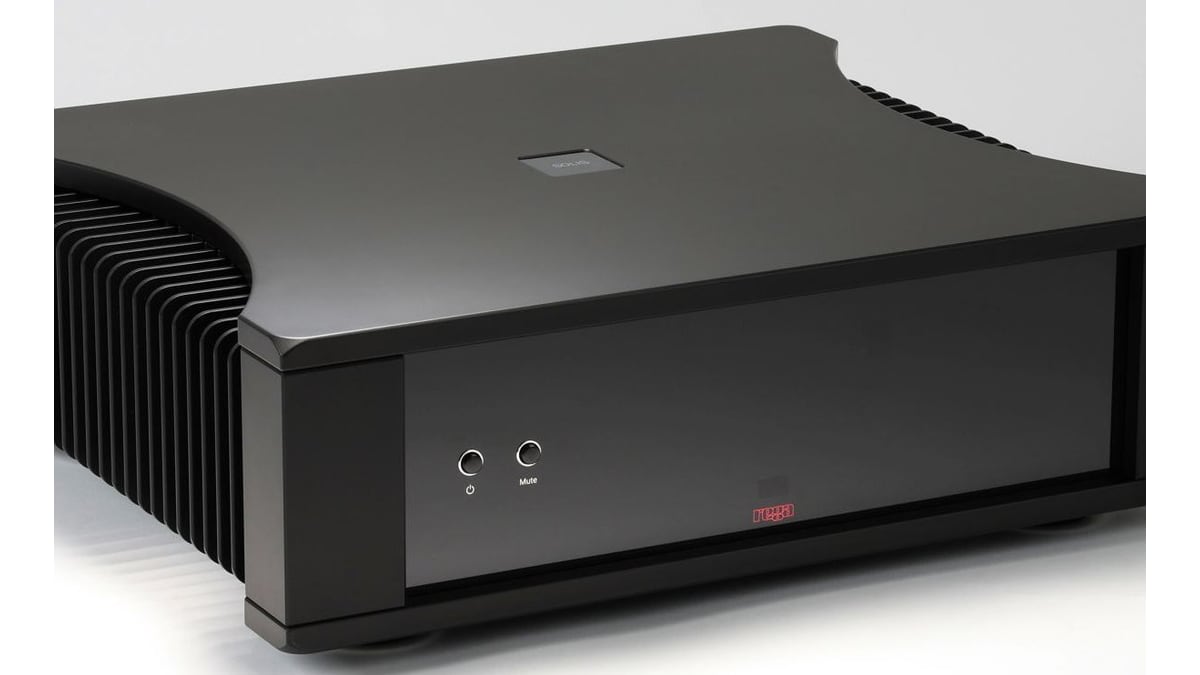 Rega's first high-end pre/power in years debuts with the Solis power amplifierRega unveiled the Solis power amp and Mercury preamp at Bristol 2026 — the British brand's first genuine reference amplification in years. Here's what it means.
 FiiO's new discrete Class A desktop headphone amplifier targets high-end cansFiiO teased a fully discrete, pure Class A desktop headphone amp ahead of Vienna High End 2026. Marcus Vale breaks down what it means for serious headphone listeners.
 Pro-audio brand Ultrafide enters hi-fi with the music-first Enso INT-125 integratedBritish pro-audio specialist Ultrafide debuts its first home integrated at Bristol 2026 — the 125W Enso INT-125, priced at £3,500.
 Dirac Live 3.14: The Legacy Calibration Tool Is Gone, and ART Just Got a Lot More AccessibleDirac's 3.14.1 and 3.14.3 releases retire the old DLCT and expand ART support. Here's what changed, why it matters, and what AU buyers need to know.
 miniDSP Tide16: a 16-channel immersive processor that ships with the full Dirac Live suite as standardminiDSP's Tide16 bundles Dirac Live Room Correction, Bass Control and ART in a standalone 16-channel processor. Marcus Vale unpacks what that means.