Ultrafide Enso INT-125: a pro-audio brand enters hi-fi
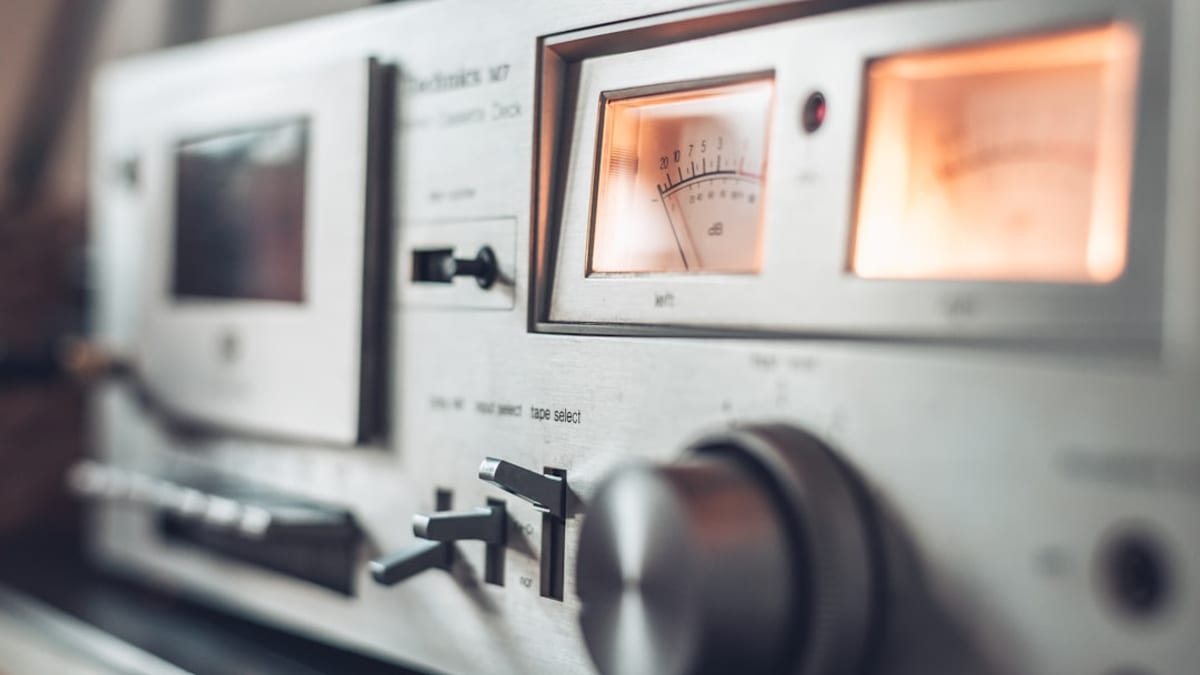
A pro-audio pedigree steps into your listening room
Every few years, a brand with serious professional credentials decides to bring its engineering discipline to the domestic hi-fi market, and the results are worth paying close attention to. British company Ultrafide has made that move, publicly unveiling its first-ever home integrated amplifier, the Enso INT-125, at the Bristol Hi-Fi Show between 20 and 22 February 2026. Priced at £3,500 including VAT, which lands somewhere in the vicinity of AU$4,000–$4,500 depending on the exchange rate and however the local distributor structures things, this is a genuinely interesting proposition from a brand that has spent its existence building equipment to survive the punishment of professional audio environments.
Bristol is, of course, one of the most important early-year shows on the global hi-fi calendar, and it has a history of serving as a launching pad for products that end up mattering. The fact that Ultrafide chose Bristol for the Enso's public debut, rather than a trade event like ISE or a larger consumer show, tells you something about their intent. This is a product aimed squarely at serious home listeners, not at installation integrators or broadcast engineers. That's a strategic pivot, and it's one worth unpacking properly.
What exactly is the Enso INT-125?
Let's start with the numbers, because for a publication that takes measurements seriously, the specifications are where the conversation begins. The Enso INT-125 delivers 125 watts per channel into 8 ohms, and doubles down to 2 x 250 watts into 4 ohms. That near-perfect doubling as impedance halves is the hallmark of a well-designed, sturdy power supply and output stage. It tells you that the transformer is generously rated, the reservoir capacitance is adequate, and that the designers haven't simply tuned the amplifier for an 8-ohm bench measurement and hoped nobody would ask too many questions about real-world speaker loads.
This matters enormously in practice. Many loudspeakers, particularly the standmounts and floorstanders that populate the £2,000–£5,000 price bracket that naturally pairs with an amplifier at this price point, present complex, reactive loads that can dip well below 4 ohms at certain frequencies. An amplifier that clips or goes into protection under those conditions is useless to you regardless of what its rated power figure says. Our explainer on amplifier current delivery into low-impedance speakers shows why this matters. Ultrafide's claimed output capability suggests they've engineered for the real world, not the data sheet.
The topology behind this performance is what Ultrafide calls their UltraSigma output stage. The company hasn't released detailed circuit schematics at this stage, which is entirely normal for a product fresh off a show floor, but the naming convention and the measured-looking power delivery suggest a Class AB design with particular attention paid to the output device configuration. Understanding the distinctions between amplifier operating classes is worth your time if you're evaluating products at this level; our Amplifier Classes explainer covers the territory well, and the general background on the different types of electronic amplifier is a handy reference. Class AB is a mature, well-understood topology, and in the right hands it remains capable of extraordinary performance. The question with any new entrant is always execution, not concept.
The feature set: practical and considered
Beyond the power amplifier section, the Enso INT-125 is loaded with features that suggest Ultrafide has been paying close attention to how real people actually use integrated amplifiers today. Let's go through them.
Built-in MM phono stage
The inclusion of a moving-magnet phono stage is a pragmatic decision that I respect. The vinyl revival has plateaued somewhat in terms of breathless media coverage, but the actual number of people running turntables in their listening rooms continues to grow, and many of them are doing so at a serious level. An adjustable MM stage (and the word "adjustable" is doing real work there; it implies more than a fixed-gain, fixed-load implementation) means the Enso can be tuned to work optimally with a wider range of cartridges. If you're running something like a Rega Planar 3 with a decent cartridge, having a properly voiced phono stage built in rather than relying on a budget add-on box can make a meaningful difference to what you hear. The Rega Planar 3 (check price) is the kind of good front end that deserves amplification able to do it justice.
Class AB headphone amplifier
The headphone amplifier is specified as Class AB, which immediately distinguishes it from the charge-pump or op-amp-based headphone outputs that are bolted onto many integrated amplifiers as an afterthought. A discrete Class AB headphone stage suggests genuine attention to this output, which is useful given the quality of headphones that sit in the same price ecosystem as this amplifier. Whether it has the grunt to drive genuinely difficult loads remains to be seen from measurements, but the architecture is the right starting point. If you want to know what to look for, our piece on headphone impedance and power output explains why the amp's output matters more than the watts on the box.
Tone controls
Tone controls on a high-end integrated amplifier remain slightly controversial in some audiophile circles, though the argument against them has always been more theological than technical. A well-implemented tone control that can be bypassed entirely when not in use adds flexibility without subtracting anything from the signal path when disengaged. In the context of Australian listening rooms, many of which are acoustically challenged by hard floors, large glass surfaces and open-plan layouts, the ability to make a modest, controlled shelf adjustment to compensate for room-induced brightness or bass build-up is a genuinely useful tool. It's not a substitute for proper acoustic treatment, but it's a practical concession to real-world listening environments.
OLED display
An OLED display at this price point is a nice touch. It suggests the user interface has been considered as a product element rather than an engineering afterthought. OLED panels render cleanly at viewing angles and consume less power than equivalent LCD panels, and they look considerably more premium in a dark listening room. Small detail, but the right call.
Where the Enso sits among its rivals
At roughly AU$4,000–$4,500, the Enso INT-125 enters one of the most competitive segments of the integrated amplifier market. It's a price point where buyers are discerning, where compromises are noticed, and where brand reputation matters, which makes Ultrafide's task both harder and more interesting than it might be at a less crowded price level. For a wider view of the field, see our guide to the best integrated amplifiers.
The obvious comparators are the established British and European names that own this territory. The Marantz Model 40n (check price), for instance, sits nearby and brings streaming capability along with its analogue amplifier credentials. The Naim Uniti Atom, a product we respect, occupies a slightly different space as an all-in-one streaming solution, but it competes for the same buyer's budget and attention. What separates the Enso from both of those products is immediately apparent: Ultrafide is not trying to build a streaming amplifier. There is no network connectivity mentioned, no streaming module, no DAC.
The power output figure of 125W into 8 ohms also positions the Enso interestingly against the competition. This is more headroom than many rivals at the price offer, and it speaks to the pro-audio origins of the brand. Professional engineers are accustomed to designing with margin; they don't size transformers and output stages to the minimum required for a specification sheet. Whether that translates into a sonically distinct character, typically more control in the bass and more composure at high volumes, is something we won't know until we get a review unit on our bench. But the architecture is promising.
No streaming: a brave and deliberate choice
If you want to understand the streaming amplifier category more broadly, our guide to the best streaming amplifiers covers the field well, but the Enso is deliberately not playing that game. That's an interesting and somewhat brave strategic choice today, when streaming-first functionality has become almost table stakes for new integrated amplifier releases.
Ultrafide appears to be betting that a meaningful cohort of buyers either already have a separate DAC and streamer they're happy with, or actively prefer the modularity of keeping source components separate from amplification. It's a legitimate position, and there's a strong engineering argument for it, but it does mean the Enso buyer needs to budget for a source component alongside it. If you're in the market for a capable network streamer to pair with it, our DACs and network streamers guide is a sensible place to start that research.
Pro-audio DNA: asset or liability in a domestic context?
This is the central question that any pro-audio brand crossing over to the consumer market has to answer, and the history here is genuinely mixed. Some crossover attempts have produced excellent results, with products that brought real technical discipline to a market that can sometimes prize romance over rigour. Others have produced amplifiers that measure beautifully but sound clinical in ways that don't suit long-form domestic listening. The disciplines are related but not identical.
The feature set of the Enso suggests Ultrafide understands this. The inclusion of tone controls, an MM phono stage and a headphone output speaks to domestic use cases, not rack-mount studio applications. The OLED display and the product name itself, with Enso referencing the Japanese Zen circle symbolising wholeness and the creative act, signal that someone in the design process was thinking carefully about the product's identity and its context. That's not nothing. Brands that approach crossover products with genuine humility about the differences between professional and consumer listening contexts tend to fare better than those who simply rebadge studio equipment and expect audiophiles to be impressed by the spec sheet.
What the UltraSigma stage needs to prove
The UltraSigma output topology is the piece of this puzzle I'm most curious about. Novel or proprietary output stage architectures announced at trade shows tend to fall into two categories: genuine engineering innovations that deliver measurable performance advantages, or marketing nomenclature applied to relatively conventional circuit implementations. Without measurements, it's impossible to know which this is.
I'd want to see THD+N figures across the frequency range at various power levels, output impedance, damping factor, and noise floor before forming a firm view. Those numbers will tell the story far more accurately than any press release.
Australian context and availability
For Australian buyers, the pricing reality is that £3,500 at prevailing exchange rates, factoring in GST, freight and the margin structure of Australian distribution, will almost certainly land above the AU$4,500 mark when the product becomes formally available here. That's not a criticism of Ultrafide. It's simply the reality of the Australian import market, and it applies to every UK and European brand operating in this space. Worth budgeting conservatively until local pricing is confirmed.
Australian distribution arrangements for Ultrafide have not been announced publicly at this stage. For buyers who are serious about the product, reaching out to distributors who handle comparable British brands is probably the most productive approach while the brand establishes its local presence. Bristol was a European launch; getting into the Asia-Pacific market will require additional groundwork, and that takes time.
What to pair the Enso with, if you do end up with one? At the AU$4,000–$5,000 amplifier price point, the speaker pairing conversation naturally gravitates toward the better standmounts and entry-level floorstanders. Our guide to the best standmount speakers covers the field and includes options that would work well with an amplifier of this power output and apparent character. The 125W into 8 ohms rating gives you meaningful flexibility: you're not constrained to high-sensitivity designs, and you have the headroom to drive more demanding speakers properly. Our primer on matching speakers and amplifiers by sensitivity, impedance and power shows how to check a pairing before you buy.
Verdict on the announcement
The Ultrafide Enso INT-125 is a genuinely interesting debut product from a brand entering a new market with apparent confidence and a clear point of view. The power output specification with its near-ideal 8-to-4-ohm doubling, the pro-audio heritage of the UltraSigma output topology, and the practical feature set (adjustable MM phono, Class AB headphone amp, tone controls, OLED display) all point to a product designed by engineers who understand both their craft and their target market.
The decision to forgo streaming functionality is bold and will limit the audience in the short term. The lack of a streaming module also means the total system cost for a new buyer is higher than the amplifier price alone suggests. But for the buyer who already has a source component they're happy with, or who actively prefers separates-style modularity, the Enso offers what looks on paper like a compelling combination of power, features and pro-pedigree engineering at a competitive price point.
We'll be pursuing a review unit. Until the Enso is on the bench and through our measurement suite, any sonic assessment would be speculation, and that's not how we operate. But as debut products go, this one has earned its place on the watch list.
Common questions
- What is the Ultrafide Enso INT-125 and when was it announced?
- The Ultrafide Enso INT-125 is a British-made home integrated amplifier — the first such product from pro-audio specialist Ultrafide. It was publicly unveiled at the Bristol Hi-Fi Show between 20 and 22 February 2026, priced at £3,500 including VAT.
- How much power does the Enso INT-125 deliver, and why does the 4-ohm figure matter?
- The Enso INT-125 is rated at 125 watts per channel into 8 ohms and 250 watts per channel into 4 ohms. The near-doubling of power as impedance halves indicates a robust power supply and output stage design, which is important because many real-world loudspeakers present loads well below 8 ohms at certain frequencies.
- Does the Enso INT-125 include streaming functionality?
- No. Based on the announced specifications, the Enso INT-125 does not include built-in network streaming or a DAC. It is a purely analogue integrated amplifier with an MM phono stage, Class AB headphone amplifier and tone controls. Buyers wanting streaming capability would need to add a separate network streamer or DAC/streamer combination.
- What will the Enso INT-125 cost in Australia?
- No official Australian pricing has been announced. The UK price is £3,500 including VAT, which at current exchange rates translates to roughly AU$4,000–$4,500 before accounting for Australian distribution margins and GST. Real-world Australian retail pricing is likely to be somewhat higher once a local distributor is appointed.

I'm Marcus, and I'll be honest up front: I trust a measurement before I trust my own ears, because my ears lie to me daily. I spent fifteen years designing audio electronics before I started writing about them, so when a brand tells me a number, I want to see the graph. That doesn't make me cold about this hobby — I love a system that disappears as much as anyone — it just means I'll tell you when an expensive box is selling you confidence rather than performance.
Former audio electronics engineer; objectivist; runs the test bench
More from Marcus Vale
 Why your turntable's earth wire isn't optionalTurntable earthing fixes most phono hum problems. Here's how grounding actually works, why it fails, and how to track down a noisy connection.
 Why your AVR runs cool on music but throttles on AtmosAVR thermal throttling explained: why nine-channel Atmos mixes push receivers into protection mode that two-channel music never triggers.
- Subwoofer delay settings: why your AVR's number is a guessAVR auto-calibration estimates subwoofer delay from distance, not timing. Here's how to measure and correct it properly for tighter bass.
- AVR auto-calibration: what Audyssey, YPAO and Dirac actually measureAudyssey, YPAO and Dirac Live all run a mic sweep and spit out numbers, but they're not measuring the same things or fixing the same problems. Here's what's actually happening.
- Cartridge break-in: what actually changes in the first 40 hoursDoes a new cartridge really need 40 hours to "open up"? I measured one to find out what's mechanical fact and what's audiophile folklore.
- DAC output stages: what the chip doesn't tell youThe DAC chip gets all the marketing attention, but the analogue output stage after it does most of the work shaping what you actually hear.