HDMI 2.2 and the Ultra96 cable arrive, doubling bandwidth to 96 Gbps
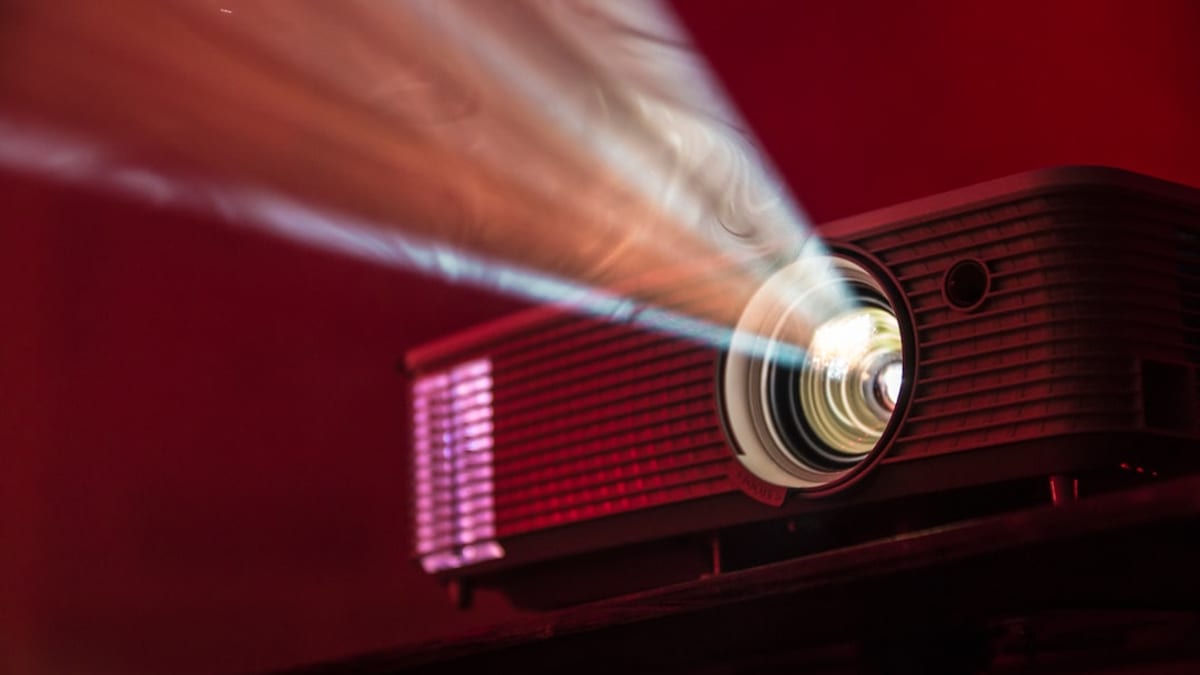
On 25 June 2025, the HDMI Forum quietly dropped what is, by any measure, the most significant revision to the HDMI specification in years. HDMI 2.2 doubles the available bandwidth from 48 Gbps to 96 Gbps, introduces a new cable tier called Ultra96, and brings a latency synchronisation protocol that should — finally — make A/V sync in complex home cinema chains a more predictable affair. Prototype Ultra96 cables were shown at CES 2026, giving the industry its first tangible look at the hardware side of the equation. For Australian home cinema enthusiasts, this matters both immediately and in the medium term, and I want to break down exactly why.
Let me be upfront about something: big bandwidth announcements have a history of arriving well ahead of content and hardware that actually exploits them. HDMI 2.1 itself sat in the specification for years before displays, sources, and cables caught up with its 48 Gbps headroom. HDMI 2.2 will follow a similar adoption curve. But that does not make this a non-event. Understanding the architecture of the new spec — and what it means for real buying decisions right now — is genuinely useful if you are planning a projector room, upgrading a receiver, or running cable in the wall during a renovation.
What has actually changed: the bandwidth story
The headline figure is 96 Gbps, delivered via a next-generation Fixed Rate Link (FRL) implementation. To put that in context: HDMI 1.4 topped out at around 10.2 Gbps. HDMI 2.0 pushed that to 18 Gbps. HDMI 2.1 doubled it again to 48 Gbps. HDMI 2.2 doubles 2.1's ceiling once more. Each of those generational leaps has, over time, unlocked display and source capabilities that would have been impossible at the previous tier — and 96 Gbps is no different.
The practical resolution targets the HDMI Forum is citing are 12K at 120 Hz and 16K at 60 Hz. Those are not resolutions any consumer display ships with today, and realistically we are years away from anything at that pixel density being commercially viable at a price point that lands in an enthusiast's home. But bandwidth ceilings are not just about raw resolution. Higher bandwidth also enables higher refresh rates at existing resolutions, better colour depth (more bits per channel), wider colour gamuts at full chroma (4:4:4 subsampling rather than compressed 4:2:0), and headroom for the uncompressed transport of lossless audio formats. Every one of those factors matters to picture and sound quality in a well-set-up home cinema, even if you are running a 4K projector today.
The 96 Gbps figure also gives manufacturers room to implement features without being forced into compression trade-offs. One of the less-discussed frustrations with HDMI 2.1 in practice has been that not all devices implement the full 48 Gbps; many ship with 40 Gbps or lower subsets, and compressed video transport (DSC) has been used to push 4K/120 through chipsets that could not handle the full uncompressed stream. With 96 Gbps overhead, there is more latitude to deliver full-bandwidth signals without leaning on DSC as a crutch.
The Ultra96 cable: what it is and why it matters for installers
The new Ultra96 cable designation is the physical-layer story that ties everything together. It is designed to support all HDMI 2.2 applications, including those 12K and 16K resolutions, and prototype samples were on show at CES 2026. The Ultra96 sits above the existing Ultra High Speed HDMI cable (the 48 Gbps-rated cable introduced for HDMI 2.1) in the hierarchy.
For most people buying a new TV and a new receiver in the next twelve months, the existing Ultra High Speed cable they already have — or would buy — will continue to work perfectly well. HDMI 2.2 is backward compatible with existing HDMI gear, so there is no forced obsolescence event here. Your current source, your current AVR, your current display: they all continue to function exactly as they did. The new cable and the new spec only matter when both the source and the sink are HDMI 2.2 compliant and you actually need the extra bandwidth.
Where this becomes immediately relevant is in permanent cable runs. If you are currently planning a projector installation — running HDMI in conduit inside a wall or ceiling, which is very common in Australian home cinema builds — the calceat is straightforward: if you are putting cable in the wall today, put Ultra96 in the wall today. The marginal cost difference between cable tiers is trivial compared to the labour cost of opening up a wall later. This is exactly the kind of forward-proofing decision that separates a well-planned home cinema from one that needs expensive remediation in three years.
If you are considering a dedicated room build, our building a home cinema guide covers the core infrastructure decisions in detail — cable runs included. The advent of HDMI 2.2 adds Ultra96 to the checklist of things to consider at the rough-in stage.
Latency Indication Protocol: the A/V sync fix that matters right now
Of the HDMI 2.2 features, the one that is most likely to have a near-term audible and visible impact is the Latency Indication Protocol, or LIP. This is designed to improve audio/video synchronisation in chains where an AVR or soundbar sits between the source and the display — which is to say, virtually every serious home cinema setup.
To understand why LIP matters, you need to appreciate how A/V sync currently works — and often breaks — in these chains. A modern AVR receives an audio signal over HDMI, processes it (applying room correction, bass management, decoding an object-based format like Dolby Atmos), and then passes video through to the display. The display also processes the image — scaling, motion processing, local dimming calculations. Both the audio and video paths introduce latency, and those latencies are different and variable. The result can be audio that leads or lags the picture by a perceptible amount.
The current solution is a combination of Auto Lip-Sync (a feature in HDMI since 1.3), which allows the display to report its processing delay to the AVR so the receiver can buffer audio accordingly, and manual A/V sync adjustment in the AVR or TV menu when Auto Lip-Sync falls short. Anyone who has spent time calibrating a home cinema will know that manual A/V sync trimming is not an edge case — it is a routine part of setup, and the auto mechanisms are not always reliable, particularly when processing modes change dynamically.
LIP is a more sophisticated signalling protocol designed to communicate latency information more accurately and dynamically across the chain, reducing the gap between the auto-calculated sync and what you actually hear and see. In theory, this should mean fewer situations where you notice lips moving before sound arrives, or the whip-crack of an action sequence landing a frame before the visual. In a well-calibrated system, A/V sync is one of those invisible qualities — you only notice it when it goes wrong. LIP is about making that invisible quality more robustly automatic.
This is particularly relevant for soundbar users, where the audio path is typically: source → HDMI to AVR/soundbar → HDMI ARC or eARC back to TV (or passthrough to display). That chain has more handoff points where latency can accumulate inconsistently. LIP addresses those handoffs at the protocol level rather than relying on each device's implementation of older signalling.
What this means for the Australian market specifically
Australia sits in an interesting position relative to global AV gear rollout. We are not an early-priority market for most Japanese and American AV brands — we typically see product launches lag the US and European releases by weeks to months, and pricing reflects both currency exposure and the relatively small scale of the market. This has implications for HDMI 2.2 adoption timelines here.
Realistically, the first HDMI 2.2-compliant consumer products will appear internationally in late 2026 or 2027 at the earliest, with meaningful availability at Australian retail probably a year behind that. The cable ecosystem will need to mature, HDMI 2.2 chipsets need to be designed into products, and firmware support needs to catch up. This is not pessimism — it is the historical pattern for every major HDMI revision.
What this means practically: if you are buying a new AVR today, you are buying an HDMI 2.1 product, and that is completely fine. The current generation of receivers handles 4K/120, VRR, ALLM, and eARC — all the capabilities that actually matter for content that exists today. A receiver like the Denon AVR-X3800H (check price) represents the current state of the art in terms of HDMI 2.1 feature implementation, and HDMI 2.2 content will not materialise on that product's useful life horizon. Similarly, a projector like the Sony VPL-XW5000ES (check price) is a 4K LCOS projector that will deliver exceptional results for years before 8K, let alone 12K, is a realistic consumer proposition.
The buying implications, then, are nuanced: do not hold off on current HDMI 2.1 purchases waiting for 2.2 products. Do factor Ultra96 cable into any permanent installation work you do today. And keep an eye on firmware updates for existing devices — backward compatibility is confirmed, but feature support like LIP may require manufacturer updates even on current-generation hardware.
The audio bandwidth angle
As a DACs and streaming editor, I can't let this pass without addressing what 96 Gbps means for audio transport specifically. HDMI's audio channel has always been ancillary to video in terms of bandwidth allocation — audio is a small fraction of the total bitstream — but bandwidth headroom has implications for the uncompressed transport of high-channel-count, high-bitrate audio formats.
Current lossless audio formats, including the highest-bitrate Dolby TrueHD and DTS:X Master Audio streams used in Blu-ray and streaming, fit comfortably within HDMI 2.1's audio bandwidth. Object-based audio like Dolby Atmos is delivered within the TrueHD container and similarly presents no bottleneck. But future audio formats — whether higher spatial resolution, higher bit depth and sample rates, or new immersive formats we cannot yet fully anticipate — will have more room to breathe within a 96 Gbps envelope than within 48 Gbps.
There is also a secondary consideration for those who use HDMI as a pure digital audio transport path from a source to a DAC or integrated processor. Higher overall bandwidth on the link means less contention and more robust signal integrity for the audio sub-channel, particularly in long cable runs where signal degradation is a factor.
Looking ahead: what to watch for
The practical milestones worth tracking over the next eighteen months to two years are: first HDMI 2.2 chip announcements from the silicon vendors (Panasonic, Analogix, and others who supply the HDMI transmitter and receiver chips that go into consumer products); first HDMI 2.2 certifications from the HDMI Forum; and the announcement of Ultra96-certified cable products at retail. Cable should arrive first — it is simpler to certify and manufacture than a new silicon generation — and the CES 2026 prototype showing suggests the certification process is progressing.
For those who want to stay across this as it develops, our best DACs and network streamers guide is updated regularly and will reflect HDMI 2.2 connectivity as it becomes relevant to source device selection. Streaming front-ends and media players are typically the first consumer products to integrate new HDMI silicon, so that is where the first 2.2-compliant products are likely to appear.
The bottom line
HDMI 2.2 is a real and meaningful specification advancement, not marketing vapour. Doubling bandwidth from 48 to 96 Gbps via next-generation Fixed Rate Link gives the industry the headroom it needs for the next decade of display and source technology. The Ultra96 cable provides a certified physical layer for that bandwidth. And the Latency Indication Protocol addresses a genuine, persistent annoyance in multi-device AV chains in a way that existing Auto Lip-Sync never fully resolved.
But it is a specification, not a product. The translation of specification to shipping hardware takes time, and Australian availability will lag global availability. The correct response is not to delay purchasing decisions indefinitely, but to make smart infrastructure choices — particularly around cabling in permanent installations — and to understand that the HDMI 2.1 gear available today is excellent and will remain so for the realistic product lifespan you expect from it.
The next time you are running cable in conduit for a projector installation, pull Ultra96. For everything else, the clock on HDMI 2.2 consumer hardware has started — but it will be a while before it chimes.
Common questions
- What is HDMI 2.2 and when was it released?
- HDMI 2.2 is the latest revision of the HDMI specification, released by the HDMI Forum on 25 June 2025. It doubles available bandwidth from 48 Gbps (HDMI 2.1) to 96 Gbps via a next-generation Fixed Rate Link, introduces the Ultra96 cable tier, and adds a new Latency Indication Protocol for improved A/V sync.
- Do I need to replace my existing HDMI cables for HDMI 2.2?
- Not immediately. HDMI 2.2 is backward compatible with existing HDMI gear. Your current Ultra High Speed HDMI cables will continue to work. Ultra96 cables only become necessary when both your source and display devices are HDMI 2.2 compliant and you need the full 96 Gbps bandwidth — which requires new hardware not yet available at consumer retail.
- What resolutions does HDMI 2.2 support?
- The HDMI 2.2 specification supports resolutions up to 12K at 120 Hz and 16K at 60 Hz via the new Ultra96 cable. These resolutions are not yet commercially available in consumer displays, but the headroom also benefits existing 4K and 8K content through improved colour depth, higher refresh rates, and reduced reliance on compressed video transport.
- What is the Latency Indication Protocol (LIP) in HDMI 2.2?
- The Latency Indication Protocol is a new signalling mechanism in HDMI 2.2 that more accurately and dynamically communicates latency information across an AV chain — for example, between a source, an AVR or soundbar, and a display. It is designed to improve automatic audio/video synchronisation in setups where multiple devices introduce different processing delays.
- Should I wait for HDMI 2.2 products before buying a new AVR or projector?
- No. HDMI 2.2-compliant consumer products are not yet available, and Australian availability will realistically be a year or more behind initial international releases. Current HDMI 2.1 receivers and projectors are excellent products that will serve you well throughout their usable lifespan. The one exception is permanent cable installations — if you are running HDMI in a wall or conduit today, it is worth specifying Ultra96 cable as future-proofing against the eventual arrival of HDMI 2.2 hardware.

Theo here. By day I write software, by night I argue with people on forums about whether bit-perfect playback is "solved" (it mostly is, and then it isn't). I cover the digital end — DACs, streamers, servers, the whole messy ecosystem of getting a file to sound its best. My promise to you: I'll separate the genuine engineering from the audiophile folklore, and I'll never tell you a $500 streaming bridge sounds "blacker" unless I can explain why.
Software engineer; network-audio and DAC specialist
More from Theo Mensah
 Where to spend on a digital front end: the diminishing-returns curve, mappedA software engineer's take on where DAC and streamer money actually buys sound quality, and where the curve goes flat.
 Cartridge alignment: why the last half-millimetre matters more than the cartridgeOverhang, zenith angle and azimuth decide more about vinyl sound quality than the cartridge you buy. Here's the engineering, explained by a digital guy.
- Streamer output stage vs speaker sensitivity: matching the digital front end to your pairYour streamer's output impedance and gain structure interact with speaker sensitivity more than most buying guides admit. Here's how to actually match them.
- Bass management over network audio: why your streamer's DSP matters for subsModern streamers now carry crossover and room EQ duties that used to live in an AVR. Here's what that shift actually changes for your subwoofer.
 Digital source, analogue speakers: why your streamer choice still shapes the pairA DAC engineer's take on why speaker matching starts upstream — how digital volume, output stage and streamer choice interact with standmounts and floorstanders.
- Phono preamp gain and loading, explained by someone who'd rather not own a turntableGain and loading settings on a phono stage aren't optional extras. Here's what they actually do to your cartridge's signal, explained without the mysticism.