HDMI eARC and a separate DAC: your home cinema's digital compromise
I had a reader email me last month asking why his lounge room DAC — a genuinely excellent one, cost more than his TV — sounded flatter through his home cinema setup than it did on his desktop rig two rooms over. Same DAC chip, same file library, same NAS feeding both. The answer wasn't the DAC. It was eARC, and specifically what eARC does and doesn't let you do before your beautiful converter ever sees a bitstream.
This is a genuinely common point of confusion, so let's sort out what's actually happening when you try to slot a standalone DAC into a home cinema chain via HDMI eARC, and when it's worth the hassle versus when you're better off leaving the conversion to your AVR or processor.
What eARC actually carries, and what it strips out
Enhanced Audio Return Channel was designed to solve one problem: getting audio back up the HDMI chain from your TV to your AVR or soundbar, with enough bandwidth for lossless surround formats. It's a genuine improvement over the original ARC, which choked at compressed 5.1 and couldn't touch object-based audio at all. eARC, per the HDMI Forum's own eARC specification, supports uncompressed multichannel PCM up to 5.1 and, on paper, Dolby TrueHD and DTS-HD Master Audio bitstreams including their embedded Atmos and DTS:X metadata.
Here's where it gets messy for anyone wanting to insert a separate DAC into that chain. eARC is a bitstream and PCM transport built for one job: feeding a processor or AVR that can decode the object-based metadata and route it to eleven-plus channels. It was never built with "hand this off to a stereo or two-channel DAC" in mind. Most standalone DACs, even genuinely excellent ones like the RME ADI-2 DAC FS (check price) or Chord Electronics Mojo 2 (check price), have no Dolby or DTS licence and no multichannel decoding stage. Feed them an Atmos bitstream over eARC and you'll get static, silence, or your TV's own downmix — not a stereo fold-down done properly.
The two realistic paths through a theatre chain
If you actually want a separate DAC's conversion stage in the signal path of a proper home cinema — not just for two-channel music sources — there are really only two configurations that work reliably, and neither is what people assume going in.
The first: let your AVR or processor do all the decoding, bass management and channel routing, and accept that the DAC inside it is doing the actual digital-to-analogue conversion for every channel except maybe the front two, which you can sometimes pull out as a pre-out pair into an external stereo DAC/amp for two-channel-only listening. This is a "sometimes" mode, not an always mode, and it only really pays off if your AVR's built-in DACs are genuinely mediocre and you listen to a lot of stereo content through the same speakers.
The second, more honest path: accept that eARC plus a separate multichannel DAC is largely a non-starter for surround content, and instead route two-channel digital sources — a streamer, a network player, a disc transport in CD mode — directly into your separate DAC via coax, optical or USB, bypassing HDMI and the AVR's audio return path entirely for those sources. Your AVR then handles video switching and multichannel decoding for everything else. This is what most serious systems I've seen actually do, and it's less of a compromise than people expect once you see it laid out.
Why AVR DAC stages get an unfair rap
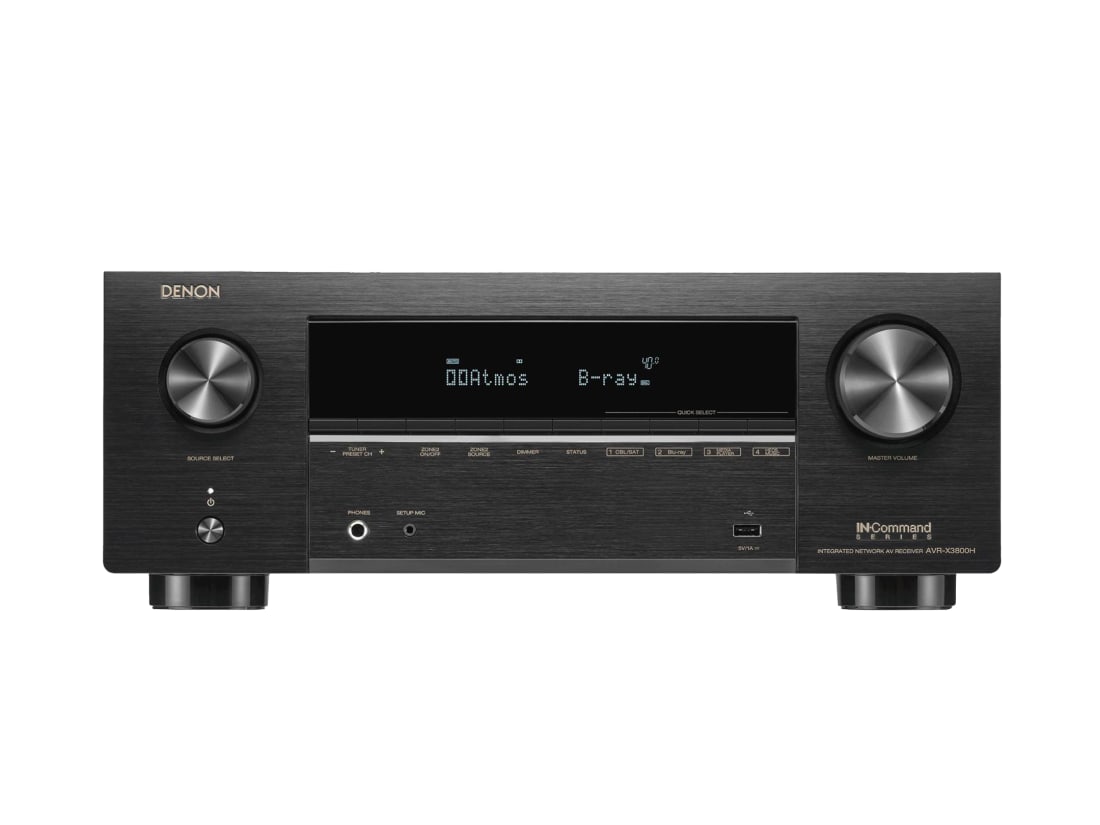
There's a persistent bit of forum folklore that says an AVR's internal DAC is automatically inferior to a standalone unit costing a third the price. I'd push back on that a bit — it's not wrong exactly, but it's overstated. Modern AVRs like the Denon AVR-X3800H (check price) use perfectly competent multichannel DAC chips, and for the vast majority of home cinema content — Atmos mixes, film dialogue, effects tracks — the conversion quality isn't the limiting factor in what you hear. Room acoustics, speaker placement, bass management settings and subwoofer integration matter enormously more. I've measured plenty of AVRs that null out cleanly to well below audibility on a stereo track, chip-for-chip similar to dedicated two-channel DACs at three times the price.
Where a separate DAC earns its keep is specifically in two-channel duty: streaming Spotify or Qobuz through your theatre speakers for background listening, or spinning CDs through a disc transport. That's genuinely a different use case from watching a film, and it's the one where a dedicated unit like the iFi Audio ZEN DAC 3 (check price) or even a FiiO K11 (check price) can make an audible difference, mostly through better output stage design and lower noise floor than a shared multichannel chip juggling eleven other jobs.
Bitstream versus PCM: the fork that decides everything
This is the bit that trips people up most. When your source device sends audio over HDMI to your AVR, it's typically sending either a compressed bitstream (Dolby Digital, DTS, Dolby TrueHD, DTS-HD MA, with Atmos or DTS:X riding inside as metadata) or decoded PCM. Streaming apps on a smart TV or streaming box will often decode internally and hand PCM to the AVR; Blu-ray players in bitstream mode send the raw compressed stream and let the AVR decode.
Either way, by the time that signal is heading out via eARC to a downstream device, it needs a full object-based decoder to make sense of it for immersive formats. This is a decoding job, not a wire-quality job, and it's a point I made when I wrote about DACs and network streamers generally — the industry conflates "getting a clean digital signal" with "getting a correctly decoded one," and in home cinema that distinction actually matters more than in two-channel audio. A separate DAC downstream of eARC, unless it's specifically built with Dolby/DTS decoding (vanishingly rare outside AVRs and processors themselves), simply can't do anything useful with a bitstream.
Practical wiring that actually works
For anyone building this from scratch, here's the layout I'd actually recommend rather than the one that looks tidiest on paper. Run your video sources — Apple TV, games console, disc player — into your AVR or processor via standard HDMI inputs, letting the AVR handle all decoding and channel output for film and TV content. That's non-negotiable for anything with height channels or discrete surrounds; there's no clean workaround, and I wrote more about the layout side of this in building a home cinema if you're starting the whole system from the ground up.
Then, separately, run your music streamer or network player's digital output — coax or optical, ideally not USB across a long run — directly into your standalone DAC, and feed the DAC's analogue output into a spare AVR input set to "direct" or "pure" mode if your AVR has one, which bypasses bass management and any DSP processing for genuine two-channel playback. This gives you AVR-grade multichannel decoding for movies and a proper external DAC's conversion for music, with a single switch (usually just picking the right input) to move between them. It's more cabling than the "just plug my DAC into the eARC port" fantasy, but it's the version that actually works every time rather than sometimes.
Lip sync, processing quirks and other side effects
One thing worth flagging if you do route audio outside the main AVR chain for any source: video and audio can drift out of sync if the paths have different processing delays, since your TV or projector is doing its own video processing lag while your separate DAC path has none. This shows up more with projection setups — I've seen it on Sony VPL-XW5000ES (check price) installs where the projector's own frame processing adds a noticeable delay that a straight-through audio path doesn't share. Most AVRs have a manual lip-sync delay adjustment buried in the audio menu, and it's worth dialling in by ear (or with a test tone and stopwatch app) rather than assuming auto-sync will catch it, particularly for any source not going through standard HDMI decode.
The other quirk: some AVRs apply DSP processing (room correction, loudness contouring) even in stereo direct modes unless you explicitly disable it, which partly defeats the purpose of routing music through a separate DAC in the first place. Worth checking the manual rather than assuming "direct" means what you think it means — on more than one AVR I've tested, "pure direct" still runs bass management if a subwoofer's connected, which is arguably correct behaviour but not what most people expect.
Is it actually worth doing at all
Honestly, for most home cinema builds, I don't think it is — and that's a slightly contrarian take for someone whose job is DACs. If your system is 80 percent film and TV and 20 percent background music, the AVR's internal conversion is good enough that a separate DAC buys you very little for the wiring complexity involved. It's a project worth doing if you're a genuine two-channel listener who happens to also want Atmos in the same room, not a general upgrade path for everyone with a theatre setup. If you're weighing up separates more broadly for a system that splits duties this way, our piece on the best DACs and network streamers covers units that suit this exact dual-purpose role, and it's worth reading before you commit to the extra cabling.
The reader I mentioned at the start ended up doing exactly this: AVR handling all film and Atmos duty, a WiiM streamer feeding his RME DAC via coax for music, output into a spare direct input. Two systems sharing one room, doing their own separate jobs properly, rather than one clever-looking cable pretending to do both.
Common questions on eARC and separate DACs
A few things readers ask often enough that they're worth answering directly here rather than burying in the body text above.
Can I use eARC to send audio out to a standalone stereo DAC at all? Only for PCM stereo or basic multichannel PCM sources, and only if your DAC accepts HDMI input in the first place — most don't, since HDMI audio-only receivers are a niche product category. Practically, no, this isn't a workable path for most gear.
Will a hi-fi HDMI cable improve eARC audio quality? No. eARC is a digital transport with error correction; a compliant cable either passes the signal correctly or it doesn't. Spend that money on room treatment or a better subwoofer.
Where this leaves your build
The short version: eARC is genuinely good at what it was designed for, moving lossless surround audio back to your AVR without a rat's nest of extra cabling. It was never designed to be a universal digital handoff to any DAC you own, and treating it that way is where people get disappointed. Split the duties properly — AVR for decoding, separate DAC for two-channel — and you get the best of both without pretending one wire does two jobs it was never built for.
— Theo Mensah, Digital, DACs & Streaming, Sound Technology
Common questions
- Can a separate DAC decode Dolby Atmos from an eARC connection?
- No. Standalone DACs don't carry Dolby or DTS decoding licences, so an Atmos bitstream sent over eARC to a stereo or basic multichannel DAC will produce silence, static, or a fallback downmix rather than a proper decode. That job needs to stay with your AVR or processor.
- Does it matter if I use USB, coax or optical to feed my separate DAC for music?
- For a source sitting right next to your rack, any of the three works fine assuming a compliant cable. Coax and optical avoid some of the driver and clocking quirks that can crop up with long USB runs, which is why I'd default to coax for a fixed home cinema install.
- Will running two-channel audio through my AVR's direct mode still apply bass management?
- It depends on the AVR — some genuinely bypass all processing in a pure/direct mode, others still apply bass management if a subwoofer output is active. Check your specific model's manual rather than assuming; I've measured real differences between AVRs on this exact point.
- Is upgrading my AVR's internal DAC worth it before buying a separate unit?
- For film and Atmos content, usually not — modern AVR DAC stages are competent and the room and speakers matter far more. A separate DAC earns its keep specifically for two-channel music duty, not general home cinema playback.

Theo here. By day I write software, by night I argue with people on forums about whether bit-perfect playback is "solved" (it mostly is, and then it isn't). I cover the digital end — DACs, streamers, servers, the whole messy ecosystem of getting a file to sound its best. My promise to you: I'll separate the genuine engineering from the audiophile folklore, and I'll never tell you a $500 streaming bridge sounds "blacker" unless I can explain why.
Software engineer; network-audio and DAC specialist
More from Theo Mensah
 Dongle DAC power limits: when a phone can't drive headphonesDongle DACs are brilliant until they aren't. Here's how to work out whether your phone-and-dongle rig actually has the current to drive your headphones.
 DNS and multiroom: why your streamer drops out at the worst timeMultiroom dropouts are rarely your Wi-Fi. Here's why DNS resolution quietly breaks streaming apps, and how to fix it for good.
- Parallel vs series IEM crossovers: why multi-driver in-ears sound so differentWhy do two IEMs with the same driver count sound nothing alike? The crossover topology is doing more work than the drivers themselves.
- Streaming a subwoofer's EQ filters: why your network player might be the bottleneckYour sub's miniDSP or app-based EQ can only act on a signal your streamer hasn't already mangled. Here's where network audio and bass management actually interact.
 Amplifier gain structure: the setting that decides your noise floorGain mismatches between DAC, preamp and power stage quietly wreck dynamic range. Here's how to actually set gain structure instead of guessing at the volume knob.
- Bass management by the numbers: what your AVR's crossover and slope actually doCrossover frequency gets all the attention, but slope, distance settings and speaker size flags quietly decide whether your bass management works or fights itself.