Hegel H150 keeps Class-AB alive with the 'Prodigy' amp
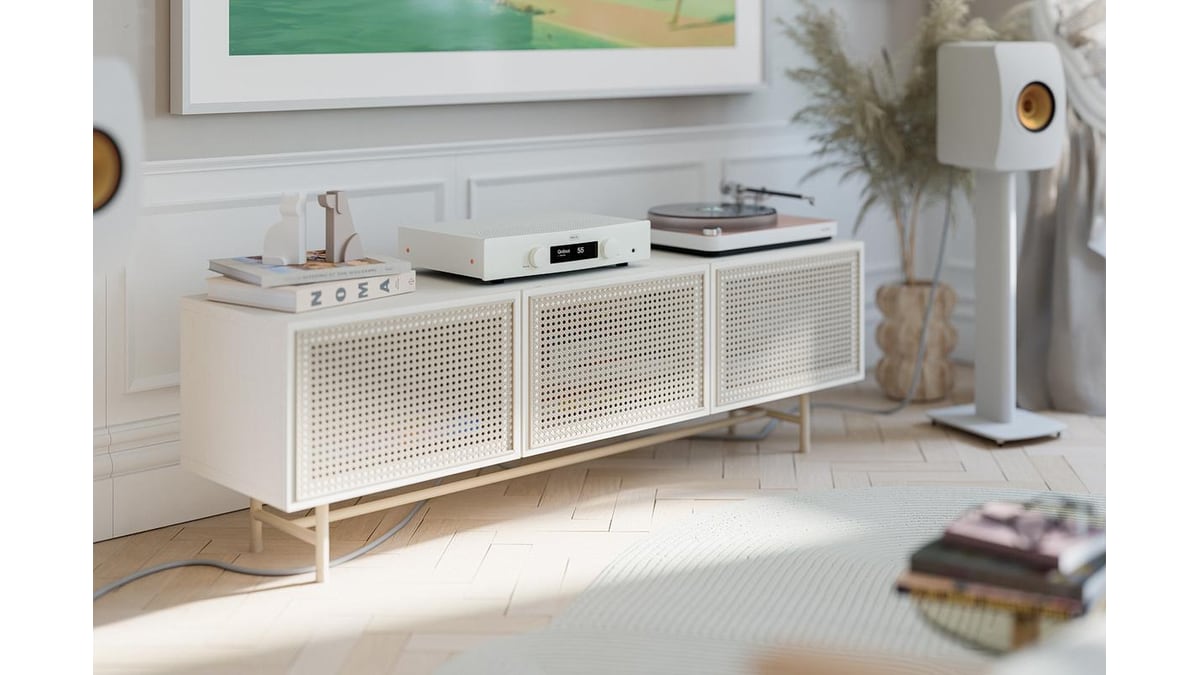
Not everyone is chasing the Class-D bandwagon
There is a certain kind of satisfaction in watching a company hold its ground. While much of the amplifier industry spent the back half of 2025 scrambling to announce GaN-based or Class-D designs (some of them genuinely impressive, many of them simply fashionable), Hegel Music Systems quietly completed the Hegel H150 'Prodigy' and sent it out to reviewers in the January–February 2026 window. The message embedded in that product decision is as clear as the amplifier's measured distortion figure: the Norwegians believe Class-AB still has a compelling case to make at this price point, and they are prepared to stake commercial reputation on it.
I find that admirable, and I find it worth examining in detail. The H150 sits at a curious junction in the market. It is priced at US$3,600, which translates, in the context of Australian importation and exchange rates, into territory that puts it squarely against a raft of well-regarded streaming integrateds, some of which have already made the switch to switching-mode output stages. Hegel has not. Rather than treating that as a limitation to apologise for, the company has leant into its proprietary SoundEngine 2 topology and added genuinely useful features, including one that is a first for the brand.
What SoundEngine 2 actually means
Before getting into the feature set, it helps to be precise about what Hegel means by SoundEngine 2, because the term gets used loosely in enthusiast circles. SoundEngine is Hegel's patented feed-forward error-correction system, first developed by founder Bent Holter in the early 1990s. The core idea is to sample the error signal at the output (the difference between what the amplifier is supposed to be doing and what it is actually doing) and use that information to cancel distortion before it reaches the speaker terminals, rather than correcting it after the fact via global negative feedback.
This distinction matters practically. Conventional negative feedback is reactive; it detects an error and corrects it, but the corrective action can itself introduce phase shifts and other artefacts, particularly at higher frequencies and under reactive loads. Feed-forward correction is, in theory, additive rather than subtractive, so the correction signal arrives at the same time as the error, not after it. When implemented well, the result is an amplifier that measures well on the bench and behaves gracefully with the difficult, phase-angle-heavy loads that real-world loudspeakers present. Our explainer on what negative feedback actually does covers the conventional approach in more detail.
The H150's published figures bear this out. Two channels, 75 watts each into 8 ohms, with THD of 0.01 percent at 50 watts into 8 ohms. That is a conservative and honest set of numbers; Hegel is not claiming heroic wattage and hoping you do not read the small print. More telling is the damping factor, which is specified above 2,000. A figure that high means the amplifier's output impedance is vanishingly low relative to a nominal 8-ohm load, which translates to tight, authoritative control over woofer movement. It is one of the reasons Hegel amplifiers have historically been praised for bass definition that belies their relatively modest power ratings. See our impedance explainer for why output impedance affects real-world performance in ways that wattage figures cannot capture.
The USB-A addition: a Hegel first
Now to the feature that stands out on the specification sheet. For the first time in Hegel's history, the H150 includes a USB-A input that supports direct playback from a thumb drive or portable storage device. No computer, no network, no streaming service: plug in a FAT32-formatted drive loaded with FLAC files and play. Full stop.
Why does this matter? Because it addresses a real-world use case that a surprising number of serious listeners maintain even in the streaming era. Some people keep local libraries of high-resolution files that they have ripped, purchased from Bandcamp or downloaded from HD Tracks. Some listen in rooms where network connectivity is unreliable. Some simply prefer not to have a listening session dependent on a third-party service's infrastructure. The USB-A input does not make the H150 a NAS or a music server, but it gives it a degree of self-sufficiency that competing streaming integrateds often lack. If you are weighing that trade-off, our piece on network storage versus streaming services is a useful read.
It also makes the H150 easier to recommend to one segment of the Australian market: the buyer who wants a single, clean component on the rack and is prepared to spend properly, but who is not yet fully invested in a streaming ecosystem. They might have a Spotify account and a drawer full of USB drives from a decade of file purchases. The H150 handles both without compromise.
Streaming support on the Hegel H150
For those who are fully invested in streaming, the H150 covers the major platforms: Spotify Connect, Tidal Connect, Qobuz Connect, AirPlay, Google Cast and UPnP. That is a comprehensive list. Tidal Connect and Qobuz Connect bypass the app's own signal path, handing off bit-perfect streams directly to the amplifier's internal DAC, which is the correct way to implement these services if you care about sound quality. See our network streamer glossary entry for why Connect protocols matter more than simple Bluetooth streaming, and our comparison of Roon, UPnP and proprietary streaming protocols if the alphabet soup is new to you.
If you are shopping in this category more broadly, our best streaming amplifiers guide provides a useful framework for understanding where the H150 sits relative to the competition.
Moving-magnet phono: welcome, if slightly overdue
The H150 also incorporates a moving-magnet phono stage, which is increasingly expected at this price point but no less welcome for being conventional. For Hegel buyers running a quality deck (a Rega Planar 3 is a natural match at the price, as covered in our Rega Planar 3 review (check price)), the onboard MM stage means one fewer box on the rack and one fewer power supply in the chain. Whether it competes sonically with a dedicated external stage in the $500–$800 range is a conversation for a full review, but its presence is a meaningful practical advantage.
What Hegel has not included, and what would push the H150 into genuinely different territory, is a moving-coil stage. MC cartridges require significantly higher gain and lower noise floors than MM designs, since the signal from an MC cartridge can be 20 to 30 dB quieter than an equivalent MM output. Including a competent MC stage in an integrated at this price adds meaningful cost and design complexity. The omission is understandable, and buyers running a higher-output MC through a step-up transformer will find the MM input perfectly workable. But for the buyer who arrives already committed to a low-output MC setup, a dedicated external phono stage remains on the shopping list.
Why the Hegel H150 stays Class-AB
I want to address the elephant in the room directly. The amplifier class debate has intensified considerably over the past 18 months. Gallium nitride (GaN) transistor technology has genuinely changed what is achievable from a switching output stage. Earlier generations of Class-D were measurably excellent but sonically variable, and the better GaN implementations of 2024–2025 have closed much of that gap in listening tests. Several brands that I respect have made the switch convincingly.
So why does Class-AB remain relevant? Several reasons, and none of them purely sentimental. First, thermal linearity: a Class-AB amplifier operating well within its power envelope has a well-understood, predictable distortion character that decades of engineering refinement have optimised. SoundEngine 2 was designed to exploit this characteristic, because feed-forward correction works most elegantly in a linear output stage. Second, output impedance control: a damping factor above 2,000 is genuinely difficult to achieve in a conventional Class-D topology without considerable output filter complexity, and output filters introduce their own phase anomalies. Third, compatibility: Class-AB amplifiers are generally more forgiving of unusual or difficult loudspeaker loads, particularly those with large impedance swings or significant capacitive components in the crossover.
None of this makes Class-D inferior; at its best, it is not. It does mean Hegel's engineering position is defensible on technical grounds, not merely on heritage or brand conservatism. For the wider picture, see our guide to choosing between valve, solid-state and Class D, and why some Class D amps still sound like a spreadsheet. The H150 is not a museum piece. It is a considered product from a team that has chosen to push the technology it understands most deeply rather than pivot to a platform it would be learning from scratch.
Price, positioning and the Australian context
The H150 is priced at US$3,600 internationally. Hi-Fi News reviewed it in February 2026 and, working from the GBP 2,750 UK price, called it 'a steal', which is significant coming from a publication that tends toward understatement on pricing. The Australian retail price has not been confirmed through official channels, but using standard importation margins and exchange rates as a guide, buyers should expect to sit somewhere in the $5,500–$6,500 AUD range depending on the importer's structure. That puts it in direct competition with a number of well-regarded streaming integrateds, including the Marantz Model 40n (check price), which represents a different but equally coherent design philosophy.
At that price, the H150 needs to justify itself against not just competing integrateds but also separates: a dedicated streamer/DAC paired with a conventional stereo power amplifier. The counterargument is system simplicity and single-box elegance. Hegel's internal integration of the digital and analogue stages is not accidental, and the company has put considerable engineering effort into keeping the digital section from introducing noise into the analogue output stage. Whether that integration is worth the premium over separates is a listener-dependent question, but it is at least an honest value proposition.
For speaker pairing, the H150's 75 watts and high damping factor make it well suited to a wide range of standmount designs. Something like the KEF R3 Meta (check price) would be a natural fit, offering a relatively benign impedance curve and a resolution level that would expose the differences between amplification choices clearly. Our best standmount speakers guide has further suggestions across a range of budgets if you are building around a new amplifier purchase.
What I make of all this
The H150 'Prodigy' is not a product designed to generate headline specifications or win benchmark shootouts. It is designed to be an honest, capable streaming integrated amplifier that does what Hegel does well, which is linear, controlled amplification with excellent damping characteristics, and adds the practical features a 2026 buyer reasonably expects: multi-service streaming, a phono stage, and now, for the first time, direct USB-A storage playback.
The Class-AB position is a statement, and Hegel knows it reads that way. In a market where the conversation has been dominated by efficiency arguments and switching-topology evangelism, there is value in a company saying that it has examined the alternatives carefully and believes its approach remains the right answer at this price. I'd argue that is engineering confidence rather than arrogance, and it is not common enough in the industry.
Whether the H150 is the right amplifier for you depends on your speaker load, your room, your source habits and your priorities. But it is clearly the right product for Hegel: a logical, feature-complete evolution of their integrated line that does not compromise the sonic foundation to chase a trend. In 2026, that kind of discipline deserves recognition.
Common questions
- What streaming services does the Hegel H150 support?
- The H150 supports Spotify Connect, Tidal Connect, Qobuz Connect, AirPlay, Google Cast and UPnP. The Connect implementations for Tidal and Qobuz deliver bit-perfect streams directly to the amplifier's internal DAC, bypassing the app's own processing chain.
- What is the USB-A input on the H150 used for?
- The USB-A input — a first for Hegel — allows direct playback from a USB thumb drive or portable storage device loaded with music files. This means you can play your local high-resolution library without a network connection or a computer, making the H150 more self-sufficient than most competing streaming integrateds.
- Is the H150's Class-AB design outdated compared to newer Class-D amplifiers?
- Not in any straightforward sense. Hegel's SoundEngine 2 feed-forward error-correction topology is specifically engineered to exploit the linearity advantages of a Class-AB output stage, and the H150's damping factor above 2,000 reflects a level of output impedance control that remains difficult to achieve in conventional Class-D designs. Whether Class-D or Class-AB sounds better in a given system depends on speaker load, room and listener preference — both technologies are capable at their best.
- Does the H150 include a moving-coil phono stage?
- No. The H150 includes a moving-magnet phono stage only. Buyers running a low-output moving-coil cartridge will need an external MC phono stage or a step-up transformer to interface with the H150's MM input.

I'm Marcus, and I'll be honest up front: I trust a measurement before I trust my own ears, because my ears lie to me daily. I spent fifteen years designing audio electronics before I started writing about them, so when a brand tells me a number, I want to see the graph. That doesn't make me cold about this hobby — I love a system that disappears as much as anyone — it just means I'll tell you when an expensive box is selling you confidence rather than performance.
Former audio electronics engineer; objectivist; runs the test bench
More from Marcus Vale
 Why your turntable's earth wire isn't optionalTurntable earthing fixes most phono hum problems. Here's how grounding actually works, why it fails, and how to track down a noisy connection.
 Why your AVR runs cool on music but throttles on AtmosAVR thermal throttling explained: why nine-channel Atmos mixes push receivers into protection mode that two-channel music never triggers.
- Subwoofer delay settings: why your AVR's number is a guessAVR auto-calibration estimates subwoofer delay from distance, not timing. Here's how to measure and correct it properly for tighter bass.
- AVR auto-calibration: what Audyssey, YPAO and Dirac actually measureAudyssey, YPAO and Dirac Live all run a mic sweep and spit out numbers, but they're not measuring the same things or fixing the same problems. Here's what's actually happening.
- Cartridge break-in: what actually changes in the first 40 hoursDoes a new cartridge really need 40 hours to "open up"? I measured one to find out what's mechanical fact and what's audiophile folklore.
- DAC output stages: what the chip doesn't tell youThe DAC chip gets all the marketing attention, but the analogue output stage after it does most of the work shaping what you actually hear.