Hisense debuts a 6,000-lumen tri-laser 4K flagship and a pro-grade UST at CES 2026
What just happened at CES 2026
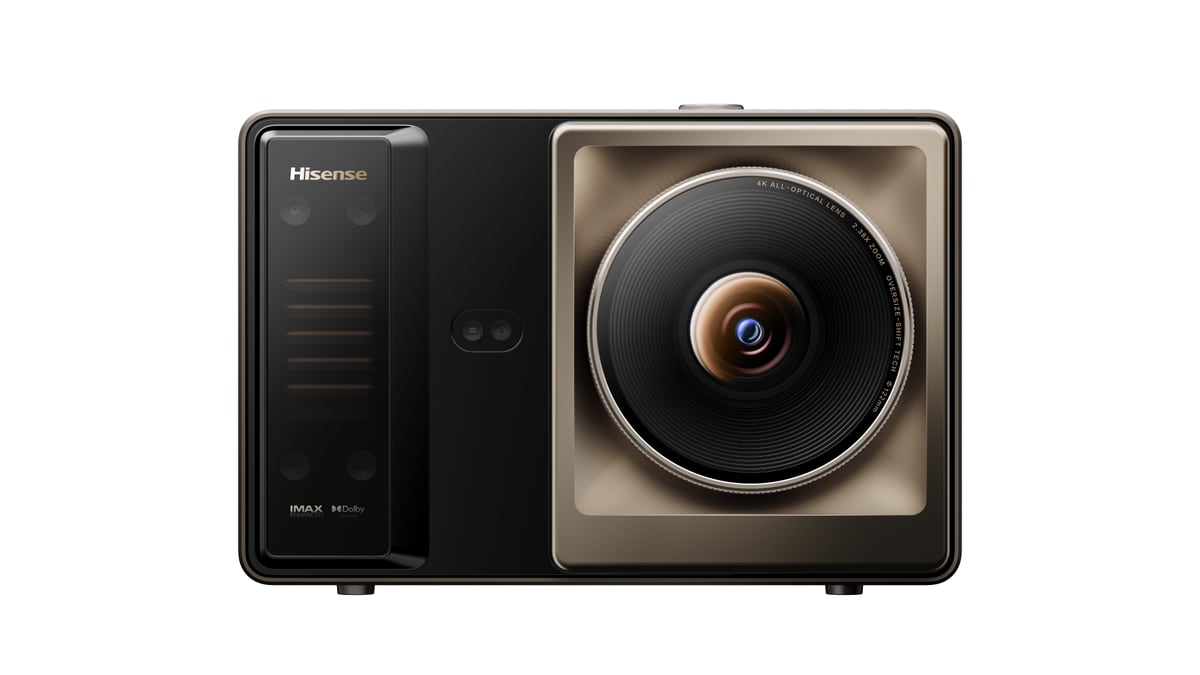
Every January, Las Vegas briefly becomes the most important city in consumer electronics, and CES 2026 was no exception for home cinema enthusiasts. Among the most significant announcements for projection fans — and I'd argue for the Australian custom install market specifically — was Hisense pulling back the curtain on two new laser projectors: the XR10, a long-throw 4K flagship, and the PX4-Pro, a new ultra-short-throw aimed squarely at the premium living-room and dedicated cinema space. Both sit within Hisense's TriChroma RGB tri-laser family, and both run on what the company is calling its new LPU 3.0 (Laser Projection Unit) engine.
Why does this matter right now? Because the laser projector category has been evolving at a genuinely exciting pace over the past couple of years, and the Australian market — where dedicated cinema rooms, open-plan living areas and the sheer scale of suburban homes make big-screen projection viable in ways that smaller European or Asian apartments often don't — is hungry for products that push image quality without demanding the complexity of a commercial install. These two projectors, at least on paper, are attempting exactly that. Let me break down what we know, what it means, and what you should be thinking about if you're planning a build.
The XR10: Finally, a serious lumen count for long-throw laser
The headline number for the XR10 is 6,000 ANSI lumens, which is a genuinely impressive figure for a consumer-positioned long-throw projector. To put that in perspective, the Sony VPL-XW5000ES — a projector I've spent considerable time with and reviewed on this site — delivers around 2,000 lumens from its SXRD laser phosphor engine, and it's considered excellent for a light-controlled dedicated room. The XR10's output is triple that, using a full RGB tri-laser light source rather than a laser-phosphor approach.
That distinction matters enormously. Laser-phosphor projectors use a blue laser to excite a phosphor wheel, which then generates the broader spectrum. They're efficient and long-lived, but the phosphor conversion process introduces limits on colour saturation, particularly in the red and green primaries. RGB tri-laser systems — sometimes called pure laser — use three discrete laser modules, one per primary colour, which means the light source itself is already sitting at or near the colour gamut target. The result, when implemented well, is colour that feels more saturated, more natural and more precisely controlled across the entire gamut.
Hisense is claiming 110% BT.2020 coverage for the XR10, which is an extraordinary number. BT.2020 is the wide colour gamut standard used in UHD Blu-ray and HDR streaming content — covering it at 110% means the XR10 is theoretically capable of reproducing every colour in the UHD specification and then some. Whether real-world calibration and the gamut mapping required to rein that in for Rec.709 or DCI-P3 content is handled elegantly will be something to test properly when review units arrive, but the raw capability is there.
Native contrast is specified at 6,000:1, which is a respectable figure for a laser projector at this brightness level. High-brightness projectors have historically struggled with black depth — pump out enough photons and shadow detail tends to wash out. The LPU 3.0 engine presumably incorporates iris or dynamic modulation to manage this, though again, the proof will be in a properly calibrated dark room. If Hisense has genuinely achieved both high peak brightness and controlled blacks simultaneously, that would be a significant technical achievement.
The optics are worth noting too. The XR10 offers a 0.84x to 2.0x zoom range, which is generous by any standard. This kind of zoom flexibility is enormously practical for installers — it means you can mount the projector at a range of throw distances and still hit your target screen size without relying entirely on digital zoom, which degrades image quality. The supported screen size range runs from 65 inches to 300 inches, covering everything from a modest lounge room install to a genuinely large dedicated cinema with a 270cm-plus screen. If you're building a serious cinema room, that upper limit is compelling — and it's worth reading our guide on building a home cinema to understand how throw distance, screen gain and room dimensions interact.
The PX4-Pro: Ultra-short-throw goes pro
The PX4-Pro is a different beast, designed for the ultra-short-throw category where the projector sits centimetres from the wall or screen rather than metres away. With a 0.2 throw ratio, the PX4-Pro will cast a large image from extremely close range — roughly speaking, a 0.2 throw ratio means you need about 20cm of distance per metre of image width. That's furniture-friendly in a way that traditional projectors simply aren't, and it's why UST projectors have become increasingly popular in Australian living rooms where a permanent screen or wall installation makes more sense than a ceiling-mounted long-throw setup.
The 3,500 ANSI lumens output is well-suited to a living room environment with some ambient light — more so than many competing UST designs — though if you're serious about picture quality you'll still want to manage your room lighting. UST projectors benefit significantly from a proper ALR (ambient light rejecting) screen designed to absorb light from high angles while reflecting the near-horizontal light coming from the projector. Without one, ambient light from ceiling fixtures can wash out the image considerably.
The maximum image size of 200 inches is genuinely vast for a UST. Most living rooms won't approach that figure, but the ability to fill a large dedicated wall with projected image from a unit sitting on a credenza or low cabinet is a serious practical advantage. For custom installers designing a cinema space around a clean aesthetic — no visible projector on the ceiling, no complex cable runs across the room — a UST of this calibre is increasingly the right answer.
What elevates the PX4-Pro above being merely a bright box, though, is the certification stack. IMAX Enhanced and Dolby Vision support together represent a compelling pair of endorsements. IMAX Enhanced brings with it the DTS:X audio licence and the IMAX-remastered content tier on supported streaming platforms, while Dolby Vision — for those unfamiliar — is a dynamic HDR format that carries scene-by-scene or even frame-by-frame tone-mapping metadata, allowing the display device to render HDR content with far more precision than the static HDR10 standard alone.
Dolby Vision on a UST projector is still relatively rare, and its presence here suggests Hisense is taking image accuracy seriously, not just brightness numbers. For a deeper understanding of how HDR metadata formats interact with your display, it's worth having a look at our Dolby Atmos explainer — and while that's primarily an audio format, the broader Dolby ecosystem context is useful for understanding why these certifications matter together.
Gaming credentials worth taking seriously
The PX4-Pro's gaming specifications deserve their own paragraph because they're notably aggressive for a projector at this tier. 4K at 120Hz is now the expected target for next-gen console gaming — both the PlayStation 5 Pro and Xbox Series X support 4K/120 over HDMI 2.1 — but Full HD at 240Hz is a specification that speaks directly to competitive PC gamers who prioritise frame rate over resolution. Seeing that kind of refresh rate headline on a UST laser projector signals that Hisense is deliberately targeting a younger, more gaming-centric demographic alongside the traditional home cinema buyer.
For custom installers, this is an interesting development. A client who wants a single large-screen solution for both movies and gaming — increasingly common in media rooms designed for a household rather than a dedicated cinephile — no longer has to compromise. The PX4-Pro could plausibly serve both use cases from one installation.
What the LPU 3.0 engine means for both units
Hisense hasn't published a detailed technical breakdown of the LPU 3.0 engine beyond what was presented at CES, but the implications of a shared next-generation light engine across both the XR10 and PX4-Pro are worth considering. In Hisense's previous TriChroma generations, the long-throw and UST variants shared light engine architecture at a high level but differed significantly in optical implementation. LPU 3.0 presumably brings improvements to laser module efficiency, thermal management, and the signal processing pipeline — all of which contribute to both brightness consistency over time and the quality of real-time tone mapping for HDR content.
Laser light sources in RGB tri-laser projectors do drift over their lifespan — the three channels don't necessarily age at identical rates, which can introduce white balance shift after many thousands of hours. Good manufacturers bake in compensation algorithms, and a new-generation engine is an opportunity to refine those. How well LPU 3.0 handles long-term calibration stability will be something to examine closely in extended testing.
Where do these sit against the competition?
The Australian projector market at the premium end has historically been dominated by Japanese and European brands. Sony's VPL-XW series, which I've reviewed including the Sony VPL-XW5000ES (check price), represents the benchmark for image accuracy in a consumer long-throw laser projector, though its lower lumen output and laser-phosphor design mean it's better suited to a properly light-controlled room than a more flexible install environment. JVC's e-shift DLA series continues to offer class-leading black depth through its e-shift pixel-shifting technology. Epson's LS series and BenQ's W and HT ranges cover the mid-to-high tier.
What Hisense is doing with the TriChroma line is attacking from the value angle without obviously conceding on technical capability. The 6,000-lumen output of the XR10 would be extraordinary in a competing unit at any price from a traditional projector specialist. If Hisense can price the XR10 aggressively — and their track record in the display category suggests they will — it could genuinely disrupt the long-throw laser market in Australia, particularly for larger-format installs where brightness is a practical necessity rather than a nice-to-have.
The PX4-Pro enters a more crowded UST space alongside Samsung's The Premiere, LG's CineBeam Qube and Epson's EH-LS range, but the combination of Dolby Vision, IMAX Enhanced and the 240Hz gaming mode gives it a genuinely distinct feature set rather than being a specification-matched alternative to existing units.
Australian availability and pricing
Both the XR10 and PX4-Pro are slated for release in the second half of 2026, which in practice likely means a Q3 or Q4 arrival for Australian retail. Pricing has not been announced, and I'd caution against reading too much into any early pricing speculation — the gap between a CES announcement and an Australian retail price sheet can involve currency fluctuation, local compliance costs and distributor margin, all of which affect what you'll actually pay.
What I'd suggest for anyone currently planning a cinema build or media room: don't hold up an entire project for these units, but do factor the H2 2026 arrival into your timeline if you're in the early planning stages. If you're commissioning a room around a long-throw projector and the XR10's brightness and gamut specs hold up in independent testing, it could represent a compelling alternative to units costing considerably more. For a comprehensive overview of what else you'll need to consider alongside the projector itself, our guide on building a home cinema covers the full system picture — from screen selection to bass management in a surround context.
The bottom line
CES announcements exist in a specific kind of purgatory — technically real, but practically untouchable until units arrive in reviewers' hands. That said, Hisense's TriChroma line has earned the right to be taken seriously. Their previous TriChroma projectors delivered on the headline specs in ways that earlier Chinese-branded projectors sometimes didn't, and the platform's maturation into LPU 3.0 suggests a company that's iterating on engineering rather than simply refreshing a marketing story.
The XR10's 6,000 lumens at 110% BT.2020 coverage is the kind of specification combination that, if validated, makes it genuinely useful in a wider range of installation environments than most competitors at any price. The PX4-Pro's Dolby Vision plus gaming specs combination targets two audiences simultaneously and could resonate strongly with the Australian market's appetite for flexible, multi-purpose home entertainment solutions.
I'll have more once review units arrive. Until then, these are the projectors to watch in 2026.
Common questions
- What is the difference between the Hisense XR10 and PX4-Pro announced at CES 2026?
- The XR10 is a long-throw 4K laser projector with 6,000 ANSI lumens, a 0.84x–2.0x zoom and support for screen sizes up to 300 inches, designed for dedicated cinema rooms or larger install environments. The PX4-Pro is an ultra-short-throw (UST) projector with a 0.2 throw ratio and 3,500 ANSI lumens, designed to sit close to the wall and project up to 200 inches — better suited to living rooms or media rooms where ceiling mounting isn't practical. Both use Hisense's TriChroma RGB tri-laser technology on the new LPU 3.0 engine.
- Does the Hisense PX4-Pro support Dolby Vision and IMAX Enhanced?
- Yes. Hisense confirmed at CES 2026 that the PX4-Pro carries both IMAX Enhanced and Dolby Vision certification. Dolby Vision enables dynamic HDR tone mapping for compatible content, while IMAX Enhanced covers remastered streaming content and DTS:X audio. This makes the PX4-Pro one of the more fully certified UST projectors in its class.
- When will the Hisense XR10 and PX4-Pro be available in Australia?
- Hisense has indicated both models are targeted for the second half of 2026. Australian retail pricing has not been announced. Given the typical gap between a CES reveal and local availability, a Q3 or Q4 2026 arrival is a reasonable expectation, though this may shift. Check with Australian Hisense distributors closer to the mid-year mark for confirmed pricing and availability.
- What does 110% BT.2020 colour coverage mean for the XR10's picture quality?
- BT.2020 is the wide colour gamut standard used in UHD Blu-ray and HDR streaming content. Covering 110% of BT.2020 means the XR10's RGB tri-laser light source can reproduce colours that exceed the full UHD specification — in theory, no colour in a UHD or HDR source falls outside what the projector can display. In practice, this means richer, more saturated and more accurate colour rendering compared to laser-phosphor projectors, which typically cover a portion of DCI-P3 rather than the full BT.2020 gamut.

G'day, Jonno here. I spent the better part of twelve years as a custom installer building theatres — everything from a media room squeezed into a Queenslander to a fully blacked-out, acoustically-treated cinema with a hundred grand of gear behind the screen. The thing nobody tells you is that the room matters more than the boxes, and I'll bang on about acoustics until you're sick of me. If you're planning a theatre, talk to me before you spend a cent on speakers.
Ex CEDIA-trained installer; dedicated-theatre and Atmos specialist
More from Jonno Fraser
 Atmos speaker placement: how to position every channel correctlyJonno Fraser breaks down how to correctly position every Dolby Atmos speaker channel — from the LCR front stage to overhead heights — in a real home cinema room.
 AWOL Vision Aetherion Max and Pro: A Serious UST Challenge to Hisense and the Laser TV Status QuoAWOL Vision's new Aetherion Max and Pro UST projectors bring tri-laser DLP, Dolby Vision Gaming and 240Hz to the laser TV fight. Here's what AU buyers need to know.
 BenQ W5850 Review: Laser Phosphor 4K for the Dedicated Cinema RoomBenQ's W5850 brings laser/phosphor to the W5800 formula at US$6,999. Is the step up worth it for serious Australian cinema rooms?
 XGIMI TITAN Noir Max headlines its CES 2026 lineup with a dual-iris contrast systemXGIMI's TITAN Noir Max debuts at CES 2026 with RGB triple-laser, a dual-iris contrast system and up to 100,000:1 dynamic contrast. Here's what AU buyers need to know.
 Epson QB1000 review: the sub-$12k laser cinema benchmark arrives in AustraliaEpson's Q-series flagship QB1000 is now established in Australia at AUD $11,900. We dig into whether it truly resets the benchmark below $12k.
 Yamaha trickles AVENTAGE anti-resonance tech into budget RX300A and RX500A receiversYamaha's new entry-level RX300A and RX500A AV receivers inherit the flagship AVENTAGE A.R.T. Wedge — a rare and meaningful trickle-down at under $600 USD.