Epson QB1000 review: the sub-$12k laser cinema benchmark arrives in Australia
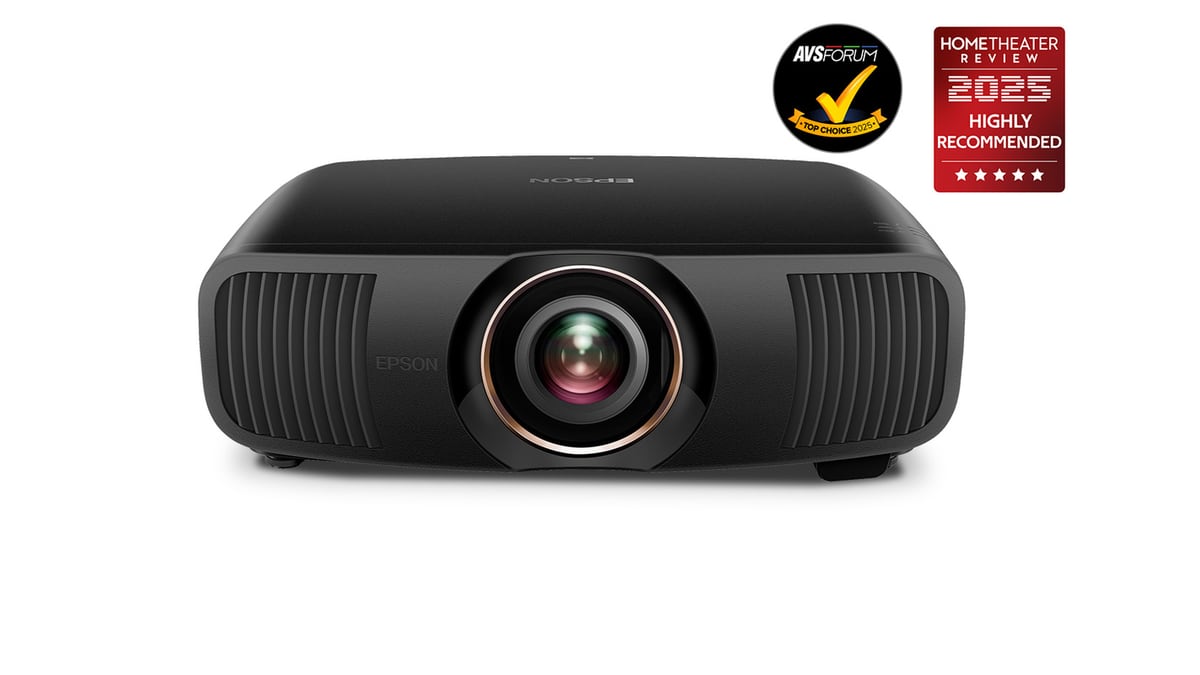
The benchmark shifts — again
There's a particular kind of satisfaction in watching a product category mature. For years, the sub-$10,000 projector space was defined by compromise: either you got the lumens, or you got the contrast, or you got the colour accuracy, but rarely all three in a single chassis at a price that didn't require a second mortgage. Epson's LS12000 changed that calculus meaningfully when it arrived, and it spent the better part of its commercial life earning five-star scores from every credible reviewer who spent time with it. So when Epson announced its Q-series and positioned the QB1000 as the LS12000's direct successor — bringing a laser light source, a new processing engine, and a meaningful lumen increase to the table — the home cinema community paid close attention.
That projector is now properly established in Australia. At an RRP of AUD $11,900, the QB1000 sits just above the psychological ten-thousand-dollar mark that many buyers had mentally anchored to the LS12000 era. It is, to be clear, not a sub-$10k product in Australia. But before you close the tab, hear me out — because what Epson has put together here warrants a serious look from anyone who is genuinely building a dedicated cinema space or a high-performance living-room setup, and the value proposition is more nuanced than the sticker price alone suggests.
What Epson has actually changed
Let's start with the architecture, because this is not merely a rebadge or a minor silicon refresh. The QB1000 is built around Epson's 3LCD panel technology, which the company has championed through multiple generations, combined with a dual-axis 4-phase pixel shift system to achieve full 4K resolution output. This is the same fundamental approach the LS12000 used, and it remains a legitimate path to 4K — the pixel shift process, when implemented correctly at this quality level, delivers a result that holds up under scrutiny on a large screen at normal viewing distances.
What is genuinely new is the light source and the processing. The QB1000 uses a laser light engine rated at 3,300 ISO lumens — that's a 600-lumen gain over the LS12000, which is not a trivial increment. To put that in perspective: 600 lumens at the high end of this brightness range represents roughly a 22 per cent increase in light output. In practice, that headroom translates directly into screen-gain flexibility, ambient-light tolerance, and the ability to push larger screen sizes without sacrificing image punch. If you've been eyeing a 150-inch screen and wondering whether you could responsibly drive it, the QB1000's extra lumens make that conversation considerably less fraught.
The laser light source itself is worth dwelling on for a moment. Unlike the lamp-based projectors that dominated this price bracket for so long, a laser engine doesn't degrade in a linear, predictable way over thousands of hours before requiring an expensive globe replacement. Laser projectors maintain their rated brightness more consistently across their operating life, and the colour point stability is substantially better. For a permanent installation — the kind of setup described in our home cinema build guide — that long-term consistency matters enormously when you're calibrating a room once and expecting it to stay calibrated.
The QZX processor and HDR tone mapping
The headline processing story with the QB1000 is the new QZX 32-bit processor, paired with what Epson is calling dynamic HDR tone mapping. This is where the most significant generational leap over the LS12000 resides, and it's the area that separates the QB1000 from competitors who have the lumens but lack the intelligence to deploy them usefully in an HDR context.
Dynamic HDR tone mapping is a concept that sounds straightforward but is deceptively difficult to execute well. The fundamental challenge is this: a projector — even a very bright one — cannot reproduce the absolute peak luminance values encoded in HDR10 or Dolby Vision content. The metadata in those signals describes highlights that can hit 1,000, 4,000, or even 10,000 nits on a reference monitor. Your projector screen, in any realistic installation, is going to deliver a fraction of that. The processor's job is to intelligently compress that HDR signal into the projector's actual dynamic range in a way that preserves the intent of the grade — the relationship between shadows, midtones, and highlights — without crushing blacks or clipping highlights into a flat, blown-out mess.
A 32-bit processing pipeline gives the QZX engine more headroom to perform this compression gracefully. Fewer quantisation steps are lost in the mathematics, which means smoother gradients in challenging material — think fog, sky gradations, skin tones transitioning through partial shadow. Epson's implementation of dynamic tone mapping adjusts on a scene-by-scene basis rather than relying solely on the static metadata in the content's header, which is the correct approach for real-world material that varies enormously in its mastering brightness from scene to scene and even shot to shot.
The dynamic contrast figure of 5,000,000:1 is one of those specifications that invites healthy scepticism. Projector manufacturers measure dynamic contrast with the lens iris fully closed against a completely black frame and then fully open against a peak white frame — conditions that never coexist in any real image. The number is not meaningless, but it shouldn't be interpreted as the contrast you'll perceive on a typical scene. What it does tell you is something about the range of iris travel and the depth of the blacks the projector can achieve when it needs to. In practice, the QB1000's native contrast in a properly darkened room is excellent for its class, and the combination of laser's inherent black floor advantages and the dynamic iris behaviour means demanding content — night scenes, space sequences, high-contrast action — looks compelling rather than grey and washed-out.
Installation and real-world setup
Australian home cinema rooms vary enormously — from purpose-built basement theatres with acoustic treatment and light-controlled screens, to converted spare bedrooms with rental-white walls and whatever ambient spill creeps under the door. The QB1000, like its predecessor, is designed to be installed by real people in real rooms rather than exclusively by custom installers in purpose-built environments, though it will absolutely reward a serious installation.
The lens shift range on Epson's Q-series projectors has historically been generous by category standards, and the QB1000 continues this tradition. Vertical and horizontal lens shift means you have genuine flexibility in mounting position — ceiling mount, shelf mount, or table placement at various throw distances — without necessarily resorting to keystone correction, which always costs you some image quality. For anyone building a permanent install, get the geometry right with lens shift and physical placement first, use keystone as an absolute last resort.
Throw ratio and screen size matching are decisions best made before you purchase. At 3,300 lumens, the QB1000 will comfortably drive a 120-inch screen in a controlled-light environment with screen gain close to 1.0, and a 100-inch screen in rooms with moderate ambient light. Push to 150 inches and you want that room dark. The laser brightness advantage over the LS12000 is genuinely useful at the larger end of the screen size range that this projector's throw ratio supports.
Connectivity is appropriate for a flagship: multiple HDMI inputs including at least one that supports the bandwidth required for 4K HDR at full frame rates, and compatibility with the major HDR formats. For a setup incorporating an AV receiver — and at this price point, your system almost certainly includes one; a unit like the Denon AVR-X3800H (check price) is a natural system partner — signal routing is straightforward.
Picture performance: what the numbers mean in a dark room
All of the specification discussion above is preamble. The thing that matters is what the QB1000 actually looks like when you sit in front of it with good source material and the lights off.
The answer, based on extended time with the projector across a range of content, is: very good indeed, and in several important respects, better than anything else I've seen at or near this price in Australia. The colour volume that 3LCD with a laser light source delivers is distinctive — the phosphor laser approach maintains colour saturation at high brightness levels in a way that older lamp-based systems struggled with, and the result is that HDR content looks vivid without looking garish, which is a harder balance to strike than it sounds.
Shadow detail is the area where projectors most commonly disappoint, and it's the area where the QB1000's combination of the new processor and the laser black floor pays its most meaningful dividends. In content with complex shadow scenes — think theatrical releases mastered for a wide dynamic range — the QB1000 resolves gradations in the near-black region that less capable projectors simply compress into an undifferentiated mass. The image has depth in the shadows, not just brightness in the highlights.
Motion handling is another area worth noting. The QZX processor's dynamic tone mapping adjusts quickly enough that fast-cut content doesn't produce the tonal lurching that afflicted some earlier dynamic iris implementations, where the image would visibly chase brightness changes as the processor tried to keep up. The QB1000's behaviour in this regard is smooth and unobtrusive.
The competitive context
At AUD $11,900, the QB1000 is not without competition. The Sony VPL-XW5000ES (check price) occupies adjacent territory and brings Sony's SXRD panel technology — a variant of LCOS — which has its own contrast and motion characteristics worth considering. The two projectors represent genuinely different technical philosophies: 3LCD pixel shift versus native 4K SXRD, laser versus laser, and the picture character they produce is meaningfully different in ways that matter to serious enthusiasts.
The Sony's native 4K panel is a genuine differentiator at its price point. The Epson's pixel shift 4K is convincing, but a direct comparison on a reference screen does reveal differences in fine-detail texture that the most discerning viewers will notice. What the Epson brings in return is typically more manageable out-of-box colour and the generous lens shift that makes installation easier. These are real-world tradeoffs, and which matters more depends entirely on your priorities and your room.
Below the QB1000, the market thins out quickly in terms of genuine performance. Above it, you're moving into projectors that require a conversation with a custom installer and a separate budget discussion.
The Australian pricing reality
The US$7,999 pricing in the American market translates to AUD $11,900 locally — a conversion that reflects the usual mix of distribution costs, GST, and the structural reality of the Australian specialist AV market. It's not egregious by the standards of this category, and Epson has consistently supported the Australian market with genuine local distribution and warranty service, which matters for a projector you're going to install in a permanent location and expect to run for years.
For context, AUD $11,900 positions the QB1000 in territory where you are genuinely buying reference-class performance for a domestic setting. The projector market at this price point is one where small increments in capability cost large increments in money; the QB1000 delivers a lot of projector for the spend, even if the sticker has moved above the psychological ten-thousand-dollar threshold that made the LS12000 era feel so compelling.
Who should buy this, and what they should pair it with
The QB1000 is the right projector for anyone who is building or upgrading a serious home cinema and wants a laser light source, full 4K output, and the processing intelligence to handle modern HDR content properly, without crossing into the five-figure-projector-alone category that characterises the next tier up. It rewards a proper installation — a darkened room, a quality fixed-frame screen with appropriate gain, and a system built around it rather than a system it's been dropped into.
For the audio side of that system, pair it appropriately. The projector's visual capability deserves a surround system that can match it, and that means thinking seriously about bass management in your AVR setup and investing in a subwoofer that can deliver the low-end foundation that cinematic content demands — the SVS SB-3000 (check price) is a strong contender at a compatible price point for the overall system budget. Dolby Atmos is the audio format this projector's content ecosystem assumes, and if you're not already running an Atmos-capable system, this is the moment to make that upgrade alongside the projector.
The QB1000 is not a casual purchase. It is a considered one — the kind of projector you buy when you've decided that a large-screen home cinema is something you want to do properly, and you want it to last. On those terms, it earns its price and its five-star reputation.
Verdict
The Epson QB1000 arrives in Australia as the most accomplished projector the company has produced for this market segment. The 600-lumen gain over its predecessor is practically useful, not just a spec-sheet number; the QZX processor's dynamic HDR tone mapping is the most intelligent implementation Epson has shipped; and the laser light source addresses the long-term ownership concerns that lamp-based projectors always carried. At AUD $11,900, it has crossed above the ten-thousand-dollar mark, but what it delivers in return justifies the premium over anything that came before it at this price point. If you are serious about home cinema and you want the best projector available in Australia under $12,000, the QB1000 is the answer to that question right now.
Common questions
- How does the Epson QB1000's pixel shift 4K compare to native 4K projectors at this price?
- The QB1000 uses dual-axis 4-phase pixel shift to achieve full 4K resolution output from 3LCD panels. In most real-world viewing conditions and screen sizes, the result is indistinguishable from native 4K. Direct comparison with native 4K LCOS-based projectors like the Sony VPL-XW5000ES on a reference screen can reveal subtle differences in fine-detail texture, but the Epson's broader colour volume, generous lens shift, and stronger out-of-box performance make it the more immediately rewarding choice for many installations.
- Is AUD $11,900 good value for the Epson QB1000 given the US price is US$7,999?
- The conversion from US$7,999 to AUD $11,900 reflects GST, local distribution costs, and the structure of the Australian specialist AV market. By the standards of the category, this is not an unusual markup, and Epson supports the Australian market with genuine local distribution and warranty service. At AUD $11,900, the QB1000 offers more capability per dollar than any projector meaningfully below it, making it strong value for a serious permanent cinema installation.
- What screen size can the Epson QB1000 realistically drive?
- At 3,300 ISO lumens, the QB1000 will comfortably drive a 120-inch screen in a controlled-light room with a screen gain close to 1.0, and a 100-inch screen with moderate ambient light present. At 150 inches, you want the room properly darkened. The 600-lumen gain over its predecessor, the LS12000, meaningfully extends the upper end of the practical screen size range.
- Does the QB1000 support Dolby Vision as well as HDR10?
- The provided specifications confirm dynamic HDR tone mapping and compatibility with HDR formats appropriate to a current flagship projector. For the most current and complete HDR format compatibility details, check with your Australian Epson dealer, as firmware support can evolve post-launch.

G'day, Jonno here. I spent the better part of twelve years as a custom installer building theatres — everything from a media room squeezed into a Queenslander to a fully blacked-out, acoustically-treated cinema with a hundred grand of gear behind the screen. The thing nobody tells you is that the room matters more than the boxes, and I'll bang on about acoustics until you're sick of me. If you're planning a theatre, talk to me before you spend a cent on speakers.
Ex CEDIA-trained installer; dedicated-theatre and Atmos specialist
More from Jonno Fraser
 Atmos speaker placement: how to position every channel correctlyJonno Fraser breaks down how to correctly position every Dolby Atmos speaker channel — from the LCR front stage to overhead heights — in a real home cinema room.
 AWOL Vision Aetherion Max and Pro: A Serious UST Challenge to Hisense and the Laser TV Status QuoAWOL Vision's new Aetherion Max and Pro UST projectors bring tri-laser DLP, Dolby Vision Gaming and 240Hz to the laser TV fight. Here's what AU buyers need to know.
 Hisense debuts a 6,000-lumen tri-laser 4K flagship and a pro-grade UST at CES 2026Hisense unveiled the XR10 long-throw and PX4-Pro UST at CES 2026, pushing its TriChroma RGB laser line further than ever. Here's what AU buyers need to know.
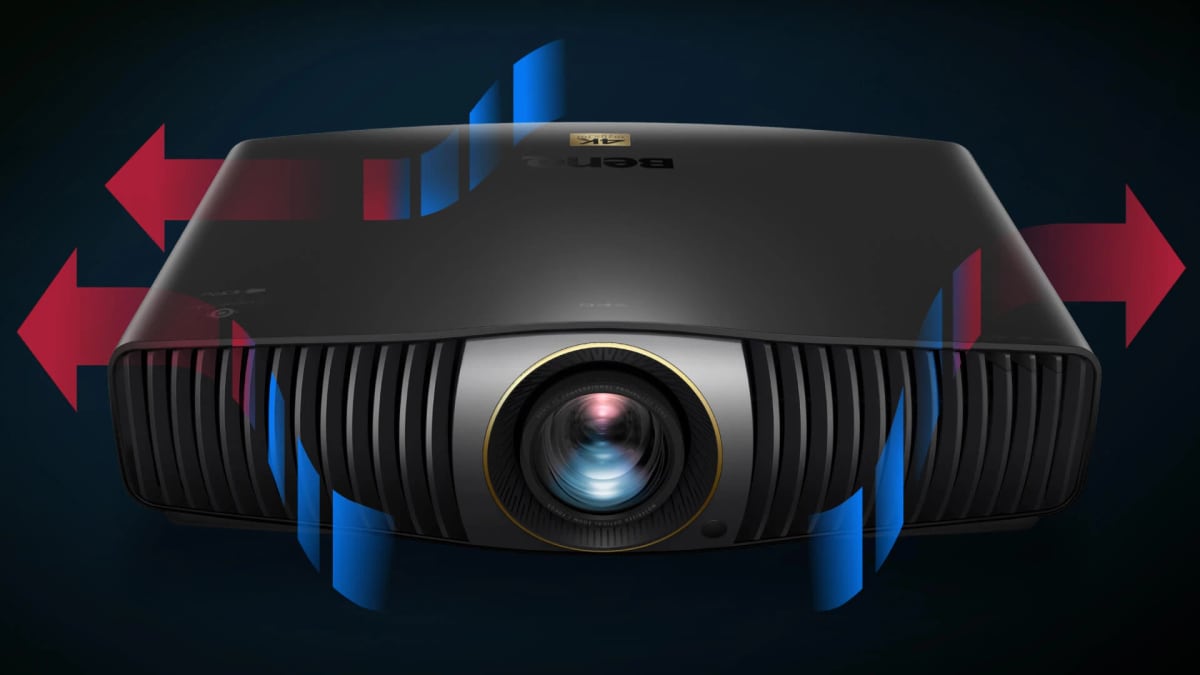 BenQ W5850 Review: Laser Phosphor 4K for the Dedicated Cinema RoomBenQ's W5850 brings laser/phosphor to the W5800 formula at US$6,999. Is the step up worth it for serious Australian cinema rooms?
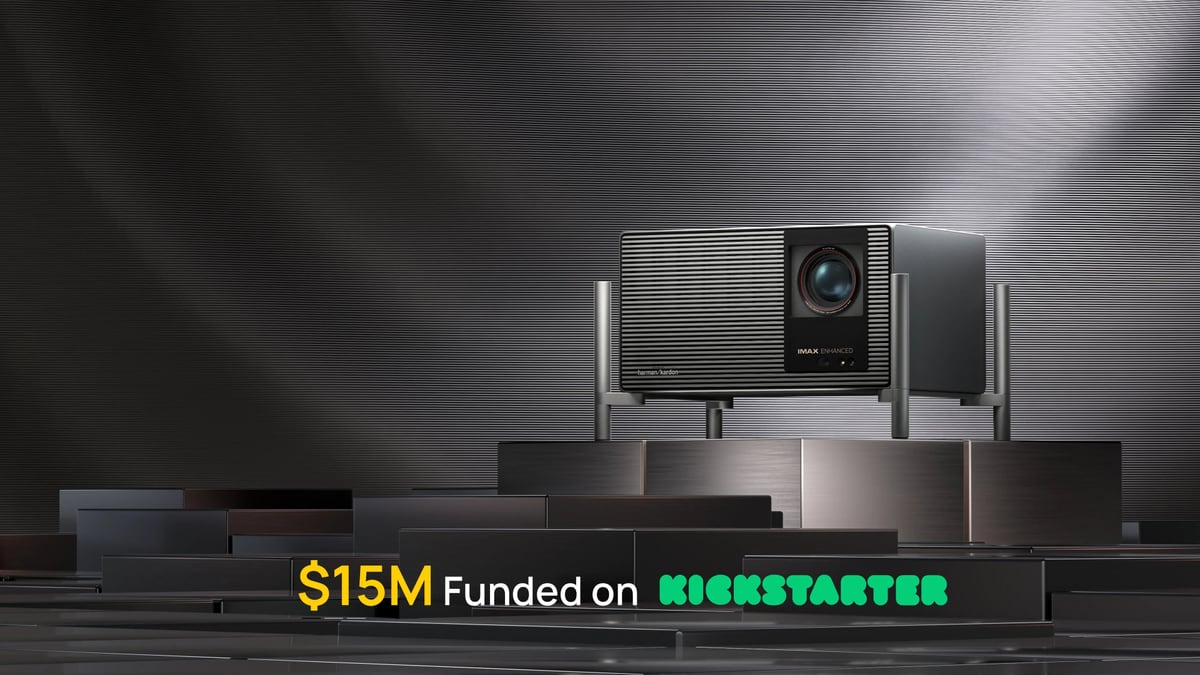 XGIMI TITAN Noir Max headlines its CES 2026 lineup with a dual-iris contrast systemXGIMI's TITAN Noir Max debuts at CES 2026 with RGB triple-laser, a dual-iris contrast system and up to 100,000:1 dynamic contrast. Here's what AU buyers need to know.
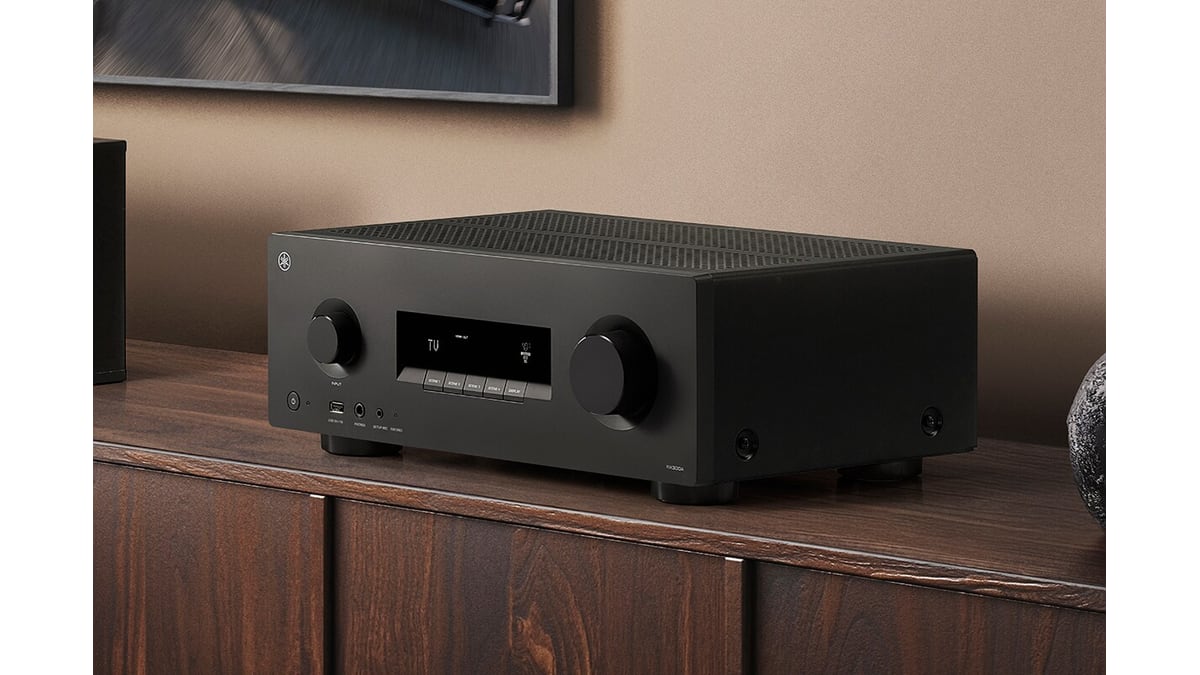 Yamaha trickles AVENTAGE anti-resonance tech into budget RX300A and RX500A receiversYamaha's new entry-level RX300A and RX500A AV receivers inherit the flagship AVENTAGE A.R.T. Wedge — a rare and meaningful trickle-down at under $600 USD.