XGIMI TITAN Noir Max: dual-iris contrast at CES 2026
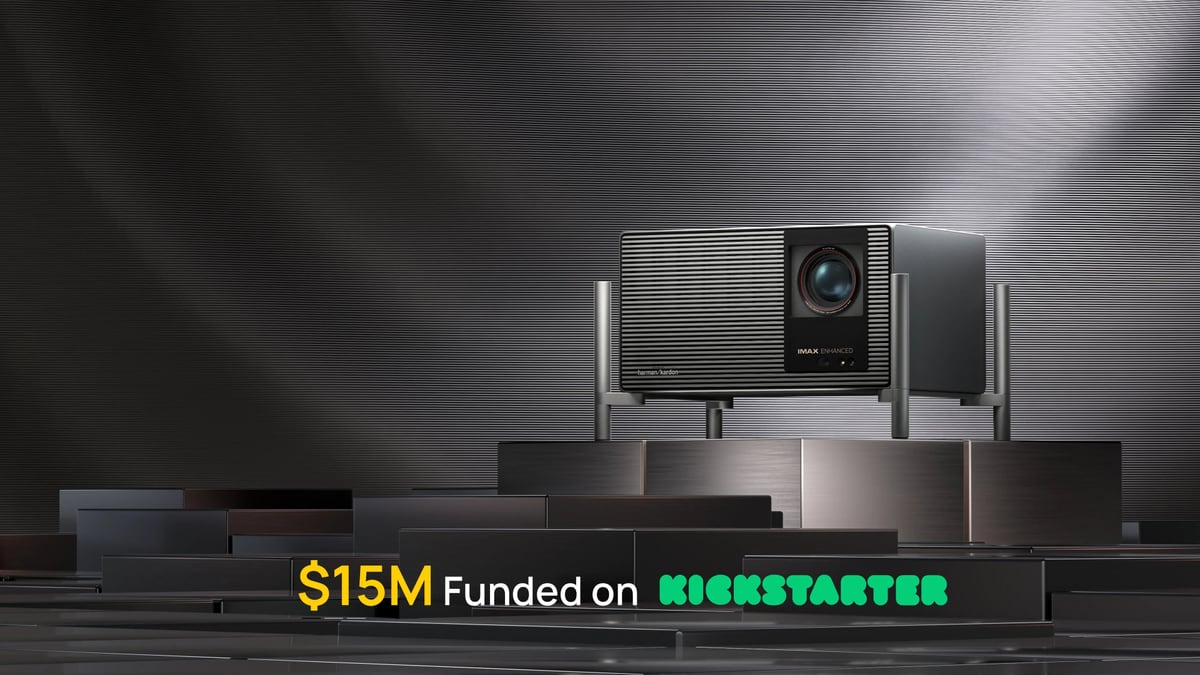
TITAN Noir Max goes all-in on contrast at CES 2026
CES has a long history of being the place where projector manufacturers throw down their most ambitious hardware, and CES 2026 was no different. XGIMI arrived in Las Vegas with a full lineup reveal, but the centrepiece, the machine everyone with a dedicated screening room is going to be talking about for the next several months, is the TITAN Noir Max. It's the company's most technically ambitious 4K projector to date, and if the specifications hold up in real-world use, it represents a genuine step forward for the consumer laser projector category rather than another incremental spec-sheet bump.
What makes the TITAN Noir Max genuinely interesting, rather than just loudly marketed, is the combination of two distinct technologies working together to address what has historically been the single biggest weakness of the consumer projector market: black-level performance and contrast. XGIMI has built this projector around an RGB triple-laser light source, so far so expected at this price point, but they've coupled it with a dual-iris contrast system that does something a little different from the single dynamic iris arrangements most of us have been putting up with for years. Let's unpack what that actually means, and then look honestly at what Australian buyers should make of it.
The dual-iris system: why it matters more than the spec numbers suggest
The headline contrast figures are 10,000:1 native and 100,000:1 dynamic, the latter achieved through XGIMI's DBLE (Dynamic Brightness and Light Engine) processing. Those numbers will get attention, and they should, but raw contrast ratios have always been a tricky way to evaluate projectors. The more meaningful question is how the system behaves during actual content, particularly in mixed-luminance scenes where bright highlights and deep shadows coexist in the same frame.
That's exactly where a single dynamic iris tends to get you into trouble. A traditional dynamic iris works on a scene-by-scene basis, throttling light output down when the system detects a predominantly dark frame. The problem is that it's a blunt instrument: the entire optical path is either opened up or restricted based on a whole-frame analysis. The result is that familiar pumping or breathing artefact, shadows that shift in density when something bright enters the scene.
The TITAN Noir Max uses a 5-step manual iris plus a continuously self-adjusting second iris. The manual iris gives you a fixed baseline aperture; think of it as setting the overall contrast floor for your room conditions. The continuously variable second iris then works on top of that baseline in real time, modulating light output based on dynamic scene analysis. The theory is that you're getting finer-grained control without the abrupt transitions that make single-iris systems obvious. Whether the implementation actually eliminates that artefact in practice is something we'll need to assess in a proper review, but the architecture is sound, and it's the kind of engineering decision that suggests XGIMI's engineering team has paid attention to the complaints enthusiasts have levelled at competing products.
For context, if you've been following our coverage of native-contrast laser projectors, including our Sony VPL-XW5000ES review (check price), you'll know that native contrast is ultimately more important than dynamic contrast for real-world image quality. The Sony's SXRD panel architecture gives it a significant native contrast advantage over DLP-based competitors, which is part of why it commands the price it does. The TITAN Noir Max's 10,000:1 native figure is competitive, but where it sits relative to the Sony and other high-end laser projectors will depend heavily on how XGIMI measures that figure and under what conditions. These numbers are not standardised across the industry.
RGB triple-laser: the right call for a serious 4K projector
The choice of an RGB triple-laser light source over the more common single blue-laser-plus-phosphor wheel arrangement is significant and worth dwelling on. Phosphor-wheel systems are cost-effective and reliable, but they introduce a yellow-green cast that has to be corrected in processing, which costs you both colour gamut and, to varying degrees, efficiency. An RGB triple-laser system generates red, green and blue light independently, which means the colour primaries are purer, the colour gamut is wider, and there's no phosphor conversion loss in the chain.
For a home cinema projector targeting the enthusiast market, RGB triple-laser is simply the right architecture. You get broader coverage of the DCI-P3 colour space, the standard used for theatrical content and, increasingly, for HDR streaming masters, without the compromises of phosphor conversion. It also tends to deliver better colour consistency over the life of the light source, since you're not relying on a phosphor wheel that can drift in calibration as it ages.
Paired with a well-implemented tone mapping and HDR processing pipeline, an RGB triple-laser source gives a calibrator real tools to work with. Whether you're setting this up as part of a full dedicated room or integrating it into a multipurpose living space, the colour foundation matters enormously when you're watching HDR10 or Dolby Vision content. Speaking of which, XGIMI hasn't confirmed Dolby Vision licence status at the time of announcement, which is worth watching ahead of the formal Australian release. You can read how the format works on the Dolby website.
Installation flexibility: this is where Australian buyers should pay attention
Specifications like lens shift and throw ratio rarely generate the excitement of contrast figures and laser specifications, but for anyone who has actually tried to install a projector in a real Australian home, where rooms are not always square, ceilings are not always at the right height, and the lounge room doubles as a cinema three nights a week, these numbers are arguably more practically important than anything else on the sheet.
The TITAN Noir Max offers a 1.0–2.0:1 optical zoom ratio, which gives you considerable flexibility in how far back the projector can sit relative to screen size. At 1.0:1 minimum throw, you can push the projector relatively close to the screen for a given image size, which is useful in shallower rooms. At 2.0:1 maximum throw, you've got room to move the projector further back without needing an ultra-short-throw alternative. That's a 2x zoom range, which is genuinely generous for this category.
The lens shift figures are where this gets really interesting for AU installs: 130% vertical lens shift and 50% horizontal lens shift. For anyone who has had to resort to extreme keystone correction on a projector with limited optical shift, effectively degrading image quality and introducing geometric distortions, these numbers represent real installation freedom. You can rack the projector significantly above or below the screen centreline and correct optically rather than digitally. The 50% horizontal shift adds further flexibility for off-centre placements, which is a common reality in retrofit installations where you can't always mount the projector precisely where the geometry demands.
This level of lens shift, combined with a 2x optical zoom, puts the TITAN Noir Max in a different practical category from projectors with modest or fixed-lens arrangements. If you're building a home cinema from scratch, this flexibility gives your installer real options. If you're retrofitting a projector into an existing room, it could be the difference between a clean installation and an ugly compromise.
Positioning in the market: who is this for?
XGIMI has historically occupied a mid-market position: smart, integrated projectors with good out-of-box performance but not necessarily the hardware for a serious dedicated cinema room. The TITAN Noir Max appears to be a deliberate move upmarket. The dual-iris contrast system, RGB triple-laser source, and generous optical specifications all point toward a product aimed at buyers who are currently considering high-end single-chip DLP laser projectors or entry-level 3LCD and SXRD laser options.
That's a fiercely competitive segment. At the premium end of the consumer market, you're competing with Sony's native-contrast SXRD projectors, JVC's e-shift-enhanced D-ILA projectors, and a range of established DLP laser products. XGIMI's advantage, if it can execute on these specifications, is likely to be value, delivering a technically sophisticated dual-iris RGB laser projector at a price point that undercuts the established premium names. Full Australian pricing hasn't been confirmed, and pre-orders are scheduled for Q1 2026, so we're still working with incomplete information on that front.
RGB light engines are also showing up well beyond projectors. If you're weighing a big screen against a projector, our look at Samsung's Micro RGB LED lineup shows how the same colour approach is reshaping large-format displays.
Why raw spec comparisons can mislead
What I'd caution against is reading too much into raw specification comparisons before independent reviews are available. The 100,000:1 dynamic contrast figure is attention-grabbing, but dynamic contrast numbers across the industry are measured under conditions that rarely reflect actual viewing. The 10,000:1 native figure is more meaningful, and competitive, but again the measurement methodology matters. I'll be looking closely at how the dual-iris system handles mixed-scene content, a dark night scene with a single bright practical light in frame, for example, because that's the scenario that exposes the limitations of most dynamic contrast implementations.
What to pair it with: the rest of your system matters
A projector this capable deserves a thoughtful supporting system. The image quality on offer from an RGB triple-laser source with genuine dual-iris contrast is going to expose weaknesses elsewhere in your chain, not least in your audio setup. A cinema-grade image paired with mediocre surround sound is a frustrating mismatch that experienced home cinema enthusiasts know all too well. Our piece on the system-building order of operations is a handy way to decide where the next dollar should go.
If you're building or upgrading around a projector at this level, your AV receiver or processor deserves attention. Our Denon AVR-X3800H review (check price) covers one of the stronger mid-market options currently available in Australia, and it's worth reading in the context of a full system build. Subwoofer integration is another area worth getting right. Our SVS SB-3000 review (check price) is a useful reference point for sealed-box subwoofer performance at a realistic price, and our guide to subwoofer placement in a real room covers where to put it.
Screen selection will also be critical. A high-gain screen can compensate for projector brightness limitations but introduces hotspotting and narrow viewing angles. A unity-gain grey screen can enhance perceived contrast and works well with a bright RGB laser source. Given the TITAN Noir Max's contrast architecture, I'd lean toward exploring an ALR (ambient light rejecting) or high-contrast grey screen material to complement what the dual-iris system is trying to achieve optically.
Acoustic treatment in your room will directly affect your perception of both picture and sound quality. A technically strong projection system in an acoustically untreated room is always going to feel like something is missing. Our acoustic treatment explainer is a good starting point if you haven't gone down that path yet.
The bottom line from CES 2026
The XGIMI TITAN Noir Max is a genuinely interesting announcement rather than a marketing exercise dressed up in laser specifications. The dual-iris contrast architecture is a legitimate engineering approach to a problem the industry has been fudging with single-iris systems and inflated dynamic contrast claims for years. The RGB triple-laser source is the right foundation for a serious 4K projector. The installation flexibility, a 2x optical zoom and unusually generous lens shift figures, addresses practical realities that Australian buyers encounter constantly.
The unknowns are significant: final Australian pricing, the behaviour of the dual-iris system under real mixed-scene conditions, HDR format support, and how the measured native contrast figure holds up against competing products measured under comparable conditions. Pre-orders are scheduled for Q1 2026, and we'll be pushing for a full review unit as soon as they're available in Australia.
For now, if you're in the market for a high-performance 4K laser projector and you've been watching the XGIMI range with cautious interest, the TITAN Noir Max is worth adding to your shortlist, and worth waiting for independent reviews before pulling the trigger. The specification sheet is promising. The engineering rationale is sound. Whether it delivers in a darkened room is the question that matters, and that's what we'll find out.
Common questions
- What is the difference between the TITAN Noir Max's 10,000:1 native contrast and 100,000:1 dynamic contrast?
- Native contrast is measured with the projector's iris fully open and fixed — it reflects the optical system's inherent ability to distinguish between the brightest whites and deepest blacks without any electronic assistance. Dynamic contrast, in this case XGIMI's DBLE figure of 100,000:1, is achieved by the projector actively reducing light output during dark scenes using the dual-iris system. Native contrast is generally considered the more reliable indicator of real-world black-level performance, particularly in scenes that contain both bright and dark elements simultaneously.
- What does 130% vertical and 50% horizontal lens shift mean for installing the TITAN Noir Max in my room?
- Lens shift allows you to move the projected image up, down, left or right optically — without distorting the image geometry the way digital keystone correction does. 130% vertical shift means you can offset the projector significantly above or below the screen's centre axis, which is useful if ceiling height or shelf placement prevents a perfectly centred install. 50% horizontal shift provides left-right flexibility for off-centre ceiling mounts. Together with the 1.0–2.0:1 optical zoom range, these figures give installers and DIY enthusiasts considerable freedom in positioning the projector within a real room.
- Why does an RGB triple-laser light source matter compared to a single blue laser with phosphor wheel?
- A single blue laser with a phosphor wheel generates white light by converting blue laser energy through a yellow phosphor, then filtering the result into RGB primaries. This conversion process introduces efficiency losses and limits colour gamut. An RGB triple-laser system generates each primary colour directly from a dedicated laser, resulting in purer colour primaries, broader coverage of the DCI-P3 colour space used for HDR content, and better colour consistency over the projector's lifespan. For a home cinema projector targeting serious enthusiasts, RGB triple-laser is the technically superior architecture.
- When will the XGIMI TITAN Noir Max be available in Australia and how much will it cost?
- At the time of the CES 2026 announcement, XGIMI confirmed that pre-orders are scheduled for Q1 2026. Full pricing has not been confirmed, and Australian-specific pricing and availability details had not been announced. We recommend checking with Australian XGIMI distributors or the XGIMI Australia website for updates as the launch date approaches.

G'day, Jonno here. I spent the better part of twelve years as a custom installer building theatres — everything from a media room squeezed into a Queenslander to a fully blacked-out, acoustically-treated cinema with a hundred grand of gear behind the screen. The thing nobody tells you is that the room matters more than the boxes, and I'll bang on about acoustics until you're sick of me. If you're planning a theatre, talk to me before you spend a cent on speakers.
Ex CEDIA-trained installer; dedicated-theatre and Atmos specialist
More from Jonno Fraser
 Guest Wi-Fi and audio: why visitor networks break multiroomGuest Wi-Fi networks isolate devices by design, which quietly breaks multiroom audio. Here's why it happens and how to fix it properly.
 Ceiling speakers vs upfiring Atmos modules: what actually worksCeiling speakers vs upfiring Atmos modules compared for real rooms: when in-ceiling wins, when upfiring is the better call, and why.
- Why your home cinema amp runs hotter on movies than musicFilm soundtracks push amplifier channels harder and longer than stereo music ever does. Here's why that matters for topology, power supplies and what actually fails.
- Screen-wall speaker placement: building around a UST projector properlyUltra short throw projectors sit right where your centre channel wants to be. Here's how I actually solve that in real theatre builds, not in theory.
 Headphone isolation vs room noise: why your desk setup fights youOpen-back headphones and a noisy home office don't mix. Here's how to actually diagnose room noise before you blame the gear.
 Toe-in and rake: the free speaker tuning most owners never touchToe-in angle and cabinet rake cost nothing but change tonal balance and imaging more than most upgrades. Here's how I set both on site.