Open-back headphones and a shared house: when the leak actually matters
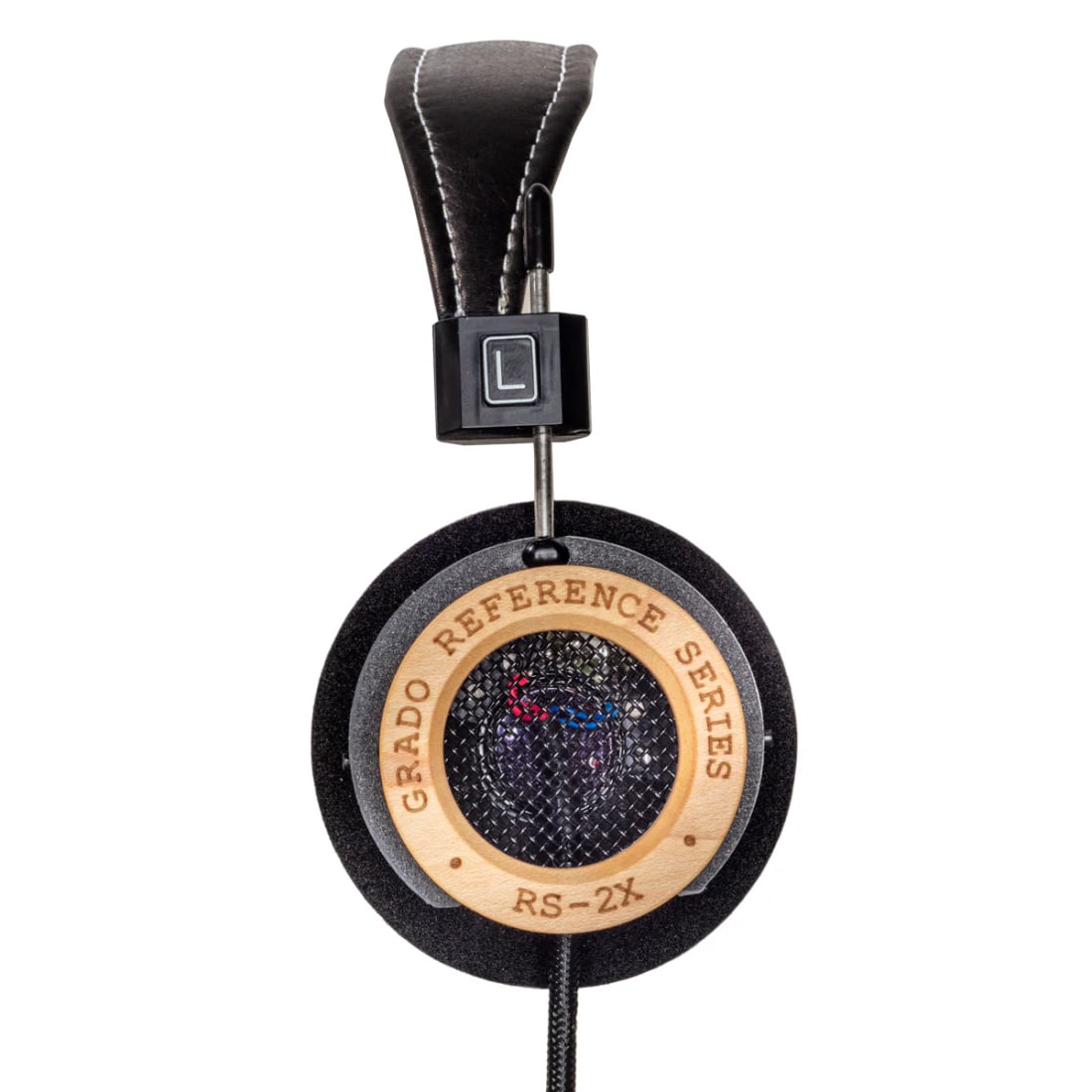
Had a bloke message me after a job in Fortitude Valley last year, asking whether his new open-back Sennheisers were going to get him in trouble with the flatmate. He'd read three forum threads, none of which agreed, and wanted a straight answer before he spent six hundred bucks. Fair question. The honest version is: it depends on how thin your walls are, how quiet the room is, and how loud you actually listen — and most people overestimate the first problem and underestimate the second.
I've fitted acoustic treatment into enough Brisbane Queenslanders and inner-city apartments to know that "leak" gets thrown around as if it's one fixed number. It isn't. Open-back headphone sound leakage is real, measurable, and in most domestic situations, a lot less dramatic than the internet makes it sound. But there are specific situations — thin-walled apartments, night shifts, shared studies — where it genuinely matters and closed-back is the smarter call. Let's separate the physics from the folklore.
What "open-back" actually means, mechanically
An open-back driver has a perforated or vented rear housing instead of a sealed cup. The idea is to let the driver breathe on both sides, which reduces the pressure build-up that causes resonances and colouration inside a closed chamber. That's why open designs like the Sennheiser HD 660S2 (check price) or the Grado RS2x (check price) tend to sound more natural and less boxy than a sealed equivalent at the same price. You're hearing less of the enclosure and more of the driver itself.
The trade-off is obvious once you say it out loud: if air can move freely out the back of the cup, sound moves with it. It's the same principle as a speaker cabinet — the more open the design, the less isolation you get, in both directions. Open-back headphones don't just leak your music into the room. They also let room noise into your ears, which is the part people forget until they try to use open-backs on a train.
How much sound actually escapes
This is where I want to be precise rather than vibes-based, because I've seen wildly different claims. Independent measurement data — the sort published by sites like Rtings and referenced in AES papers on headphone leakage — generally puts open-back leakage in the range of 15-25 dB lower than what's hitting your eardrum, depending on the model and the frequency. That's not nothing, but it's also not a phone on speaker across the room.
At a sensible listening level, say 70-75 dB SPL at the ear (which is a fairly normal listening volume, not quiet), leakage from a decent open-back sits somewhere in the 45-55 dB range measured a metre away. For context, a quiet suburban bedroom at night sits around 30-35 dB ambient. So in a still room, someone standing close will hear a thin, hissy version of your music — mostly the upper midrange and treble, because low frequencies don't radiate as efficiently through a small open grille. It's genuinely audible. It is not the same as playing music through a speaker.
Where it becomes a real issue is cumulative and directional. Turn the volume up another 10 dB chasing detail on a quiet acoustic recording, sit close to a study desk shared with a partner, or have a paper-thin apartment wall backing onto a neighbour's bedhead, and the maths changes fast. I measured a client's home office in a renovated Toowong duplex a few years back — party wall was original brick veneer with a stud wall retrofit, nowhere near what you'd get from anything built to current acoustic separation requirements under the National Construction Code. Sound transmission through that wall was the real problem, not the headphones. The headphones just made it obvious.
The direction people forget: leakage in, not just out
Everyone asks "will my partner hear my headphones." Almost nobody asks "will I hear everything else." An open-back design has essentially no passive isolation — maybe 3-5 dB at best, compared to 15-20 dB for a well-sealed closed-back or considerably more for a decent in-ear with a good tip seal. If you're working from a share house with someone vacuuming, a dog that barks at the postie, or a housemate who likes their music loud through a soundbar, open-backs let all of that straight into your listening.
This is the bit I actually think matters more day to day. I've had clients buy a lovely open-back set expecting a private listening bubble and get frustrated within a fortnight because they can hear the fridge compressor cycling on and off through every quiet passage. If your listening environment is genuinely noisy — shared office, apartment near a road, kids in the house — closed-back buys you something open-back structurally cannot: quiet. The Beyerdynamic DT 1990 PRO MK II (check price) is interesting here because it's technically open but voiced and cupped in a way that leaks less than most; worth a listen if you want some of the open-back sound signature without the full leak.
Where closed-back genuinely earns its keep
I'll say the mildly unpopular thing: I think a lot of the audiophile snobbery against closed-back headphones is overstated. Yes, on average, open designs tend to sound more airy and less resonant. But a well-executed closed-back — the Focal Clear MG (check price) or Audeze's planar closed models — closes most of that gap through driver engineering rather than venting. The isolation-versus-sound-quality trade-off used to be much starker than it is now.
If you're in a genuinely shared environment — flatmate on the other side of a hollow-core door, night-shift partner asleep at 2pm, open-plan office — closed-back or a good IEM isn't a compromise. It's the correct tool. I'd rather see someone buy a closed-back they can actually use at 11pm without guilt than an open-back they end up leaving in the drawer because they feel self-conscious every time they put it on.
IEMs solve leakage almost entirely, but they're a different instrument
In-ear monitors with a proper tip seal give you the best isolation of any category, often 25-35 dB of passive attenuation, and they leak almost nothing outward because the driver is millimetres from your eardrum with a sealed chamber in between. If leakage is your actual problem — not tone, not comfort, just "I need this to be private" — IEMs solve it more completely than any over-ear closed-back.
The catch is fit. A loose seal defeats the whole purpose; sound leaks both ways around a bad tip fit, and you lose most of the bass response too, since low frequencies depend entirely on that seal holding pressure in the ear canal. This is worth its own conversation about nozzle size and ear anatomy, and it's not a minor detail — I'd say fit matters more to an IEM's final sound than the driver inside it.
Matching the amp to the decision, not just the headphone
One thing that gets skipped in these conversations: your choice between open and closed changes what you need from the amplifier, because impedance and sensitivity vary a fair bit between the two categories, and planar closed-backs in particular can be power-hungry. If you've settled on an open-back like the Audeze LCD-X (check price), don't assume your laptop's headphone jack or a budget dongle will drive it properly — check our guide to the best desktop DAC/amps before you commit, because an underpowered amp will make a great open-back sound thin and lifeless regardless of the leakage question. Pairing headphones with the wrong amplifier topology is a separate rabbit hole entirely, but it's one you'll fall into fast if you buy the headphone first and think about power second.
For anyone building a proper desktop rig rather than just grabbing a dongle, it's worth reading through our roundup of the best audiophile headphones with both open and closed options side by side, because the practical listening-environment question should come before the tonal preference question, not after.
My actual rule of thumb
After enough installs and enough late-night emails from people second-guessing a purchase, here's where I land: if you're listening in a room with a closed door, decent wall mass, and nobody sleeping or working within a few metres on the other side of it, open-back is fine at sensible volumes and you're not going to cause domestic drama. If you're in a share house with hollow-core doors, an apartment with party walls that predate modern acoustic separation standards, or you listen late at night next to someone trying to sleep, buy closed-back or a well-fitted IEM and don't torture yourself over it. The sound quality gap has narrowed enough that it's not the sacrifice it used to be.
And if you're not sure which category your situation falls into — borrow a mate's open-back for an evening and just listen at your normal volume with someone else in the next room. You'll know within about ten minutes. It's cheaper than finding out after you've bought the headphones.
Common questions
- Do open-back headphones leak more bass or treble?
- Mostly upper midrange and treble. Low frequencies need a larger radiating area to move air efficiently, so bass tends to stay contained even through an open grille, while vocals and cymbals carry further.
- Can I use open-back headphones on public transport?
- Technically yes, but you'll hear everything around you since open designs offer almost no passive isolation, and people nearby will hear a thin version of your music. Closed-back or IEMs are the better choice for transit.
- Are closed-back headphones always quieter for people nearby?
- Generally yes, closed designs typically offer 15-20 dB more isolation than open-back, though the seal quality of the earpads and headband clamping force both affect how well that isolation actually holds in practice.
- Will a better amplifier reduce leakage from open-back headphones?
- No, leakage is a function of the driver and housing design, not the amp. A better amp changes drive quality and headroom, not how much sound escapes through the open rear chamber.

G'day, Jonno here. I spent the better part of twelve years as a custom installer building theatres — everything from a media room squeezed into a Queenslander to a fully blacked-out, acoustically-treated cinema with a hundred grand of gear behind the screen. The thing nobody tells you is that the room matters more than the boxes, and I'll bang on about acoustics until you're sick of me. If you're planning a theatre, talk to me before you spend a cent on speakers.
Ex CEDIA-trained installer; dedicated-theatre and Atmos specialist
More from Jonno Fraser
 Guest Wi-Fi and audio: why visitor networks break multiroomGuest Wi-Fi networks isolate devices by design, which quietly breaks multiroom audio. Here's why it happens and how to fix it properly.
 Ceiling speakers vs upfiring Atmos modules: what actually worksCeiling speakers vs upfiring Atmos modules compared for real rooms: when in-ceiling wins, when upfiring is the better call, and why.
- Why your home cinema amp runs hotter on movies than musicFilm soundtracks push amplifier channels harder and longer than stereo music ever does. Here's why that matters for topology, power supplies and what actually fails.
- Screen-wall speaker placement: building around a UST projector properlyUltra short throw projectors sit right where your centre channel wants to be. Here's how I actually solve that in real theatre builds, not in theory.
- Headphone isolation vs room noise: why your desk setup fights youOpen-back headphones and a noisy home office don't mix. Here's how to actually diagnose room noise before you blame the gear.
 Toe-in and rake: the free speaker tuning most owners never touchToe-in angle and cabinet rake cost nothing but change tonal balance and imaging more than most upgrades. Here's how I set both on site.