Desktop headphone setups: getting the desk itself right first
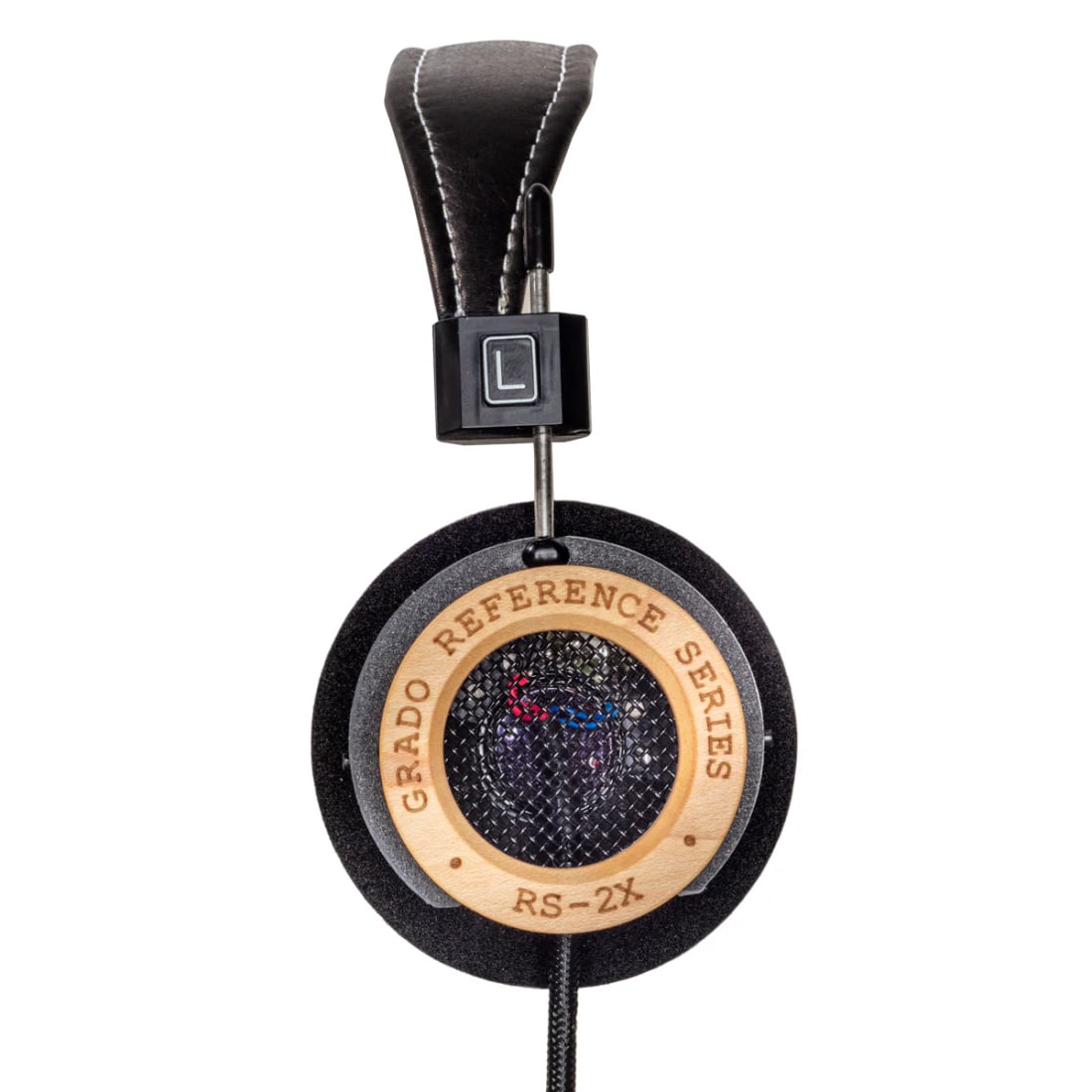
I was setting up a client's home office in Paddington a few months back — nothing flashy, a decent closed-back pair and a mid-tier DAC/amp stack — and he kept asking me which cable would "open the soundstage up." Meanwhile his headphone cable was looped tight around a monitor arm, yanking the earcups sideways every time he leant forward, and his desk was a glass slab bouncing every reflection straight back at his skull. Nobody sells you a "desk treatment kit." But I'd argue the desk does more to a desktop headphone rig's sound than the last two upgrades most people buy.
I've spent twelve years building theatres where the room got treated before a single speaker went in. Desktop headphone rigs get none of that discipline, mostly because people assume headphones bypass the room entirely. They don't, not fully — and the desk itself introduces its own set of physical problems that have nothing to do with acoustics and everything to do with mechanics, ergonomics and signal integrity. This is the desktop setup guide I wish existed before I started doing this properly at home, not just for clients.
Open-back headphones still hear the room
The obvious point first, because people skip it: open-back headphones leak sound in both directions. A glass desk, a hard wall behind the monitor, a window right at ear height — all of that reflects some of what leaks out of the cups straight back at your ears, arriving a few milliseconds late. It's subtle. You won't call it an echo. What you'll notice is a faint smearing on cymbals and vocal sibilants that you can't quite place, and it disappears the moment you swap to a closed-back pair or move to a couch with soft furnishings nearby.
If you're on an open-back like the Sennheiser HD 660S2 (check price) or the Focal Clear MG (check price) at a hard desk against a bare wall, try angling the desk away from the nearest reflective wall by even 30 degrees, or drape something soft — a doona over the back of the chair, a rug on the wall behind — and listen for the change. It's a genuinely free upgrade. I did this in a client's granny-flat studio on the Gold Coast and the difference on female vocal was bigger than the amp upgrade he'd budgeted for.
Monitor height and headband angle aren't separate problems
Here's something nobody measures: the angle your head sits at relative to your headphones changes clamping force distribution, and that changes tonal balance — not hugely, but enough to hear on a good pair. If your monitor is too low and you're tilting your chin down for hours, the headband shifts forward on your skull and the front of the earcup seals tighter than the back. On a lot of dynamic-driver headphones that shows up as a slightly stuffy midrange, because the driver-to-ear distance and seal geometry aren't symmetrical anymore. Get your monitor to eye height first — top third of the screen at eye level, standard ergonomic advice, and it happens to help your headphones too. Chase that before you chase pads.
Cable routing is a mechanical problem, not a sonic one
I'll say the unpopular thing: cable "upgrades" for tone are mostly not real at desktop distances, but cable routing absolutely is a real problem. A headphone cable dragging over the edge of a desk, looped around a monitor arm, or clipped under a keyboard tray puts constant micro-tension on the jack and the cup swivel joints. Over a year or two that's what actually kills headphones — not driver fatigue, mechanical fatigue at the strain points. Run the cable up and over the back of the desk to a hook or a small stand, not across the surface. If you're using a desktop DAC/amp like the iFi Audio ZEN DAC 3 (check price) or the FiiO K11 (check price), position it close enough that the cable has slack, not tension, in every position your head naturally moves to. This one costs nothing and saves you a headphone jack repair down the track.
Where the DAC/amp actually sits matters more than which one you buy
People obsess over which DAC/amp to buy and then jam it behind the monitor where they can't see the volume knob, plugged into a powered USB hub three metres from the laptop. Two things go wrong here in practice. First, ergonomically you stop adjusting volume properly because it's a reach, so you either leave it too loud or ride the source volume instead — which on some setups reintroduces digital volume control you were trying to avoid by buying an analogue-stepped amp in the first place. Second, long USB runs through hubs are the most common cause of dropouts and clicking I see in support calls, more than any driver or format issue. Put the amp within arm's reach, on the same side as your dominant hand, with a short direct USB cable to the source if at all possible. If you need length, a well-made active USB extension beats a cheap passive one every time — but check the run length is actually needed before buying one. Our best desktop DAC/amps guide covers a few units built with the volume knob and headphone jack right up front for exactly this reason.
IEMs at the desk: a different set of problems entirely
If you've moved to IEMs for desktop use — plenty of people do now, chasing isolation from a noisy household or open-plan office — the desk problems change shape completely. Cable microphonics become the enemy: any cable rubbing against a shirt collar or resting on the desk edge transmits handling noise straight up the wire into your ear canal. Route the cable up and over your ear (most IEM cables are shaped for this already) and clip it if your cable has a chin slider, rather than letting it hang loose across your desk. Fit matters more at a desk than anywhere else, because you're in and out of the IEMs a dozen times a day rather than doing one long critical listening session. A tip that's slightly wrong will nag at you by 3pm. We've covered the fit side properly in our piece on IEM fit and nozzle size — worth reading before you buy a third set of eartips hoping the fourth one fixes it.
Desk material and surface-borne vibration
Glass and thin MDF desks resonate. Put a desktop amp with a transformer in it — something like the RME ADI-2 DAC FS (check price) or a small tube amp — directly on a hollow glass desk and you can sometimes feel a faint buzz through your forearms when the desk itself starts sympathetically resonating with mechanical hum, particularly with cheaper linear supplies. It's rarely audible in the headphones themselves, but it's an annoyance that people misdiagnose as "amp noise" when it's actually the desk. A cheap rubber isolation pad or even a folded microfibre cloth under the unit kills this dead. I keep a stack of cork placemats in the van for exactly this — feels ridiculous writing it down, works every time.
Two desks, two very different rigs — what I'd actually do
Say you're on a budget, working from a rented apartment with thin walls, closed-back or IEMs are non-negotiable for the flatmates' sake. In that case I'd spend on isolation and fit before I spent on the amp — a well-sealing closed-back like something in the Beyerdynamic DT 1990 PRO MK II (check price) family (switchable pads, so you can go semi-open on weekends when nobody's home) paired with something compact and clean like the FiiO K11, positioned properly on the desk as above. The desk discipline buys you more than the difference between that amp and one twice the price. If you've got a dedicated room and open-back is fair game, that's when desk angle and reflections genuinely start to matter, and it's worth the twenty minutes it takes to test moving the desk 30cm from the wall. I did this in my own study in Paddington — moved the desk off the party wall by about the width of a monitor stand — and the improvement in perceived width on orchestral recordings through the Focal Clear MG was not subtle.
The one thing I'd genuinely skip
Desktop headphone stands that double as "acoustic isolation platforms" with foam or gel feet, marketed as improving sound quality — I'm sceptical. A headphone stand isn't in the signal path and isn't touching a resonating chassis the way a turntable or a component with a transformer is. Buy one because it stops you leaving £400 of headphones face-down on a hard desk where the pads get crushed, not because foam feet are doing anything to the sound. That's the one bit of desktop-audio spruiking I'd push back on directly.
None of this replaces a good source chain, obviously — a genuinely revealing setup still benefits from a clean DAC and a well-matched amp, and our audiophile headphones guide and desktop DAC/amp guide are good starting points for that side of the ledger. But I've watched enough people throw money at the electronics while their desk actively works against them that I reckon this is the cheaper, faster fix nine times out of ten. Sort the desk first. The gear will sound better than you expected once it's actually got a fair go.
Common questions
- Does desk material actually change what I hear through headphones?
- Not directly through the drivers, but indirectly yes. Glass and thin desks resonate with amp transformers and can introduce a faint mechanical buzz you feel more than hear, and reflective surfaces near open-back headphones add subtle early reflections that smear transients. Neither is huge, but both are free to fix.
- Should my headphone amp be visible on the desk or tucked away?
- Visible and within reach, on your dominant-hand side if it has a physical volume knob. Tucking it out of sight usually means you stop adjusting volume properly and either leave the source at a fixed level or introduce unwanted digital volume control upstream.
- Do I need a headphone stand for sound quality reasons?
- No — a stand protects the pads and headband from getting crushed on a hard desk, which is a real durability benefit, but claims that stand materials or feet change the sound aren't something I'd back. Buy one for longevity, not tone.
- Is cable routing really a bigger issue than cable quality at desktop distances?
- In my experience, yes. At the lengths involved on a desk, cable tension and strain at the jack and cup swivels cause more real problems — intermittent connections, mechanical wear — than any tonal difference between cable types. Route it with slack, not tension, in every head position you actually use.

G'day, Jonno here. I spent the better part of twelve years as a custom installer building theatres — everything from a media room squeezed into a Queenslander to a fully blacked-out, acoustically-treated cinema with a hundred grand of gear behind the screen. The thing nobody tells you is that the room matters more than the boxes, and I'll bang on about acoustics until you're sick of me. If you're planning a theatre, talk to me before you spend a cent on speakers.
Ex CEDIA-trained installer; dedicated-theatre and Atmos specialist
More from Jonno Fraser
 Building a home cinema budget: the spending order that actually pays offWhere to put the first dollar in a home cinema build, and why most people spend it on the wrong box first. A spending order from twelve years of installs.
- Open-back headphones and a shared house: when the leak actually mattersOpen-back headphones leak sound both ways. Here's how much, when it genuinely matters in a share house or apartment, and when it's a non-issue.
 Subwoofer crawl vs measurement: how to actually find the right spotThe subwoofer crawl is a good starting point, not a finish line. Here's how I actually locate sub placement on real jobs, and when to trust the numbers instead.
- Headphone listening rooms: why the space around your head still mattersHeadphones bypass room acoustics for the direct sound, but the room you sit in still shapes fatigue, focus and what you hear. Here's why.
 Speaker format by room: when standmounts beat floorstanders (and vice versa)Choosing between standmounts and floorstanders isn't about budget or looks. It's a room-shape and listening-distance decision, and I've watched it wreck good systems.
 Clock sources and jitter in home cinema: what actually mattersJitter gets blamed for everything from harsh treble to flat soundstages. Here's what clock sources actually do in an AV receiver and where the worry is misplaced.