BenQ W5850 Review: Laser Phosphor 4K for Cinema Rooms
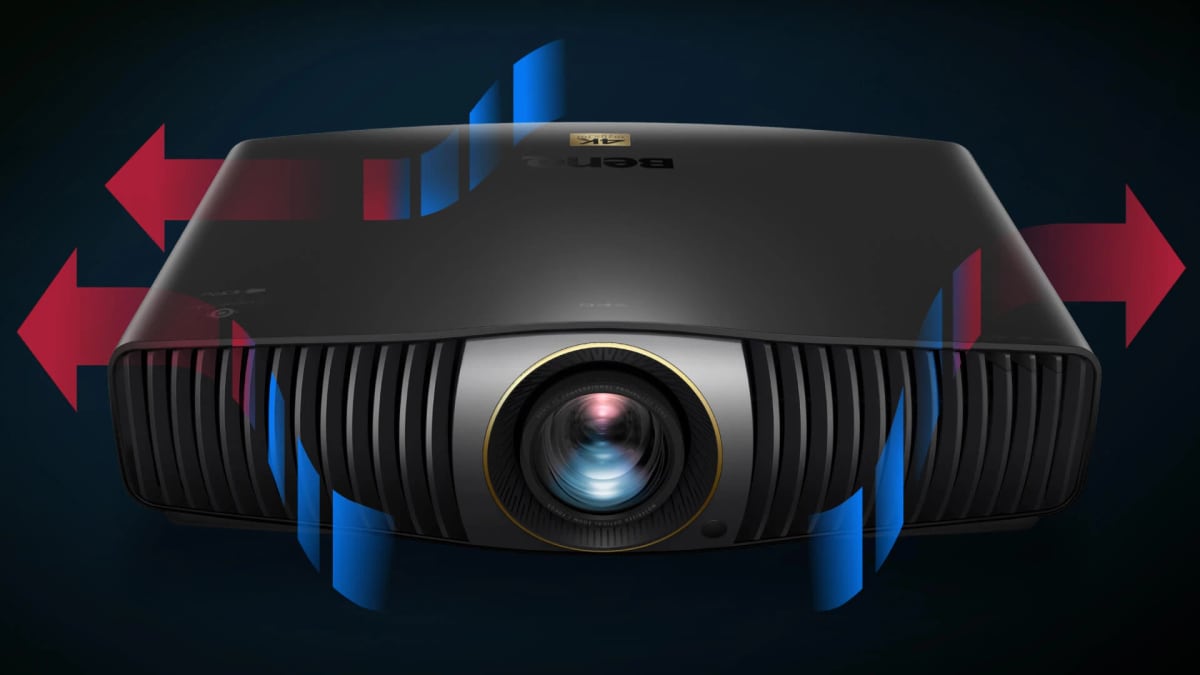
A new benchmark or just a brighter lamp?
When BenQ launched the W5800 a couple of years back, it carved out a genuinely compelling position in the high-end 1-chip DLP projector space: sharp, punchy, and surprisingly colour-accurate out of the box. So when the company announced the BenQ W5850 around February 2026, the upgrade path was immediately interesting. Swap the lamp engine for a laser/phosphor light source, recalibrate the whole system at the factory, bump the price by roughly US$2,000, and pitch it squarely at dedicated cinema rooms. That's the story in one sentence. But whether it justifies the outlay, particularly for Australian buyers who are already absorbing import costs and a less-than-stellar exchange rate, takes rather more unpacking.
My conclusion is nuanced. This is a genuinely excellent projector. It is also an expensive one, and the people for whom it makes clear sense are a more specific audience than BenQ's marketing perhaps implies.
The BenQ W5850 laser move: why it matters
Start with the engine, because the shift from lamp to laser/phosphor isn't just a marketing headline. It fundamentally changes the ownership proposition. The W5850's laser/phosphor source is rated at 20,000 hours. To put that in context: if you watch four hours of content every single day, that's roughly 13 years of use before the light source degrades to the point of needing attention. With a traditional UHP lamp projector running a premium bulb, you're often looking at 3,000–5,000 hours and a replacement lamp cost that can run into hundreds of dollars. For a dedicated cinema room installation, where the projector is mounted, calibrated, and expected to stay put for the long haul, that laser longevity is genuinely transformative for total cost of ownership.
There are secondary benefits too. Laser/phosphor sources reach full brightness almost instantly; there's no warm-up period, no cool-down cycle before you can move the unit, and brightness consistency holds for far longer across the life of the source. In a room where you've invested in acoustic treatment, a proper screen, and careful calibration, the last thing you want is a light source that drifts noticeably over a couple of years without a recalibration visit from your installer.
The W5850 delivers 2,600 ANSI lumens from this laser/phosphor engine. That number deserves a moment of consideration. It's not the highest figure you'll find at this price point (some laser projectors push 3,000 or even 4,000 lumens), but lumens in isolation are a deeply misleading metric. What matters is how those lumens are distributed spectrally, how accurate the colour remains at different output levels, and how well the optics handle them. BenQ's factory calibration to a Delta E of less than 2 suggests the company is prioritising colour accuracy over raw light output, which is exactly the right call for a cinema-room projector where you control the ambient light.
Delta E is simply a measure of the difference between a colour that should be displayed and the colour that actually is; the lower the figure, the closer the match, and the Delta E colour difference scale is the standard way of expressing it. A figure below 2 is, to be direct about it, at or beyond what a trained calibrator can reliably achieve by hand on many consumer projectors. It's the territory of professional display tools.
4K via pixel shift: the honest conversation
The W5850 achieves its 4K UHD resolution through pixel shift. The DMD chip, which in a single-chip DLP design runs at a lower native resolution, rapidly shifts each pixel diagonally, doubling the perceived pixel count to meet the 3840×2160 spec. This is not unique to BenQ; it's the same approach used by JVC in some of their e-shift models and by a range of other manufacturers, and it sits on top of the broader Digital Light Processing technology that single-chip designs rely on. The honest truth is that pixel-shift 4K resolves more fine detail than 1080p and meets the UHD Alliance's resolution requirements, but it doesn't quite match the snap of a native 4K panel like Sony's SXRD chips.
For the majority of content (streaming 4K, UHD Blu-ray, broadcast) the difference between pixel-shift 4K and native 4K is subtle enough that most viewers in a properly darkened cinema room won't notice it on typical screen sizes. Where it becomes more visible is on very fine static patterns, text, or when you're sitting very close to a very large screen. In a cinema room context, with standard viewing distances and a 2.35:1 or 16:9 screen in the 120–150 inch range, the W5850's image is exceptionally detailed. This is not a compromise that will bother most serious enthusiasts.
If you are in the market for a true native 4K single-chip projector, the conversation shifts toward the Sony VPL-XW series. Our review of the Sony VPL-XW5000ES (check price) is worth reading as a direct point of comparison. Sony's SXRD native 4K engine is exceptional, though it comes with its own price premium. If you want a wider view of the laser market, our look at JVC's 8K e-shiftX laser flagships shows where the top end sits.
HDR: the good and the one omission
The W5850 supports HDR10, HDR10+, and HLG. HDR10 is the baseline; everything handles it. HLG matters for broadcast content, particularly if you're watching via an antenna or a set-top box feeding 4K HDR. HDR10+ adds dynamic metadata to HDR10, allowing the projector to optimise its tone mapping on a scene-by-scene or even frame-by-frame basis rather than applying a fixed transformation to the entire film. This is genuinely useful, particularly for content with a wide range of scenes, such as bright outdoor sequences followed by dark interiors.
The notable absence is Dolby Vision. For a projector at this price point, that will matter to some buyers and not at all to others. Dolby Vision content is widespread on Netflix, Disney+, and Apple TV+, and the DV version of a master can look different to the HDR10 version. You can read how the format is defined on the Dolby website. However, Dolby Vision on a projector is a different proposition to Dolby Vision on an OLED panel. Projectors can't achieve the black levels that make DV's dual-layer metadata most meaningful, and the HDR10+ support here provides a meaningful alternative for dynamic metadata. If Dolby Vision is a non-negotiable for you, that's a legitimate reason to look elsewhere, but I'd argue it's not the deal-breaker it might appear on paper for a cinema room application.
The calibration story: factory numbers in the real world
BenQ's claim of factory calibration to Delta E below 2 is significant. If it holds, the projector shouldn't need aggressive correction to hit close-to-target colour volume, and the primary and secondary colour points should sit well within tolerance. That matters enormously for Australian buyers, because professional ISF calibration can add AU$400–800 to a projector installation once you factor in a qualified calibrator's time and travel. If the W5850 genuinely arrives calibrated, that's a meaningful part of its value proposition, though I'd still recommend having a calibrator verify settings and optimise the tone mapping curve for your specific screen material and room conditions.
Screen material and room finishes change what the projector's output looks like on the wall, which is why a factory number is a starting point rather than a guarantee. Pale walls and ceilings bounce light back onto the screen and lift black levels, so a dark, matte room will show off a calibrated projector far better than a bright one.
For anyone setting up a cinema room from scratch, or upgrading one, our full guide to building a home cinema walks through how the projector, screen, seating, and audio system interact. The projector is just one piece of the puzzle, and it performs only as well as the room around it allows. If bass is your weak point, room correction versus room treatment explains what DSP can and can't fix.
Who is the BenQ W5850 competing against?
BenQ has explicitly positioned the W5850 as a five-star rival to Epson's LS12000-class and QB1000 laser projectors. That's an interesting competitive claim, because the Epson 3LCD laser projectors take a fundamentally different approach: three separate LCD panels, one per colour channel, which eliminates the rainbow effect that some viewers perceive on single-chip DLP designs and delivers different colour volume characteristics. The Epson QB1000 is a genuine flagship product and it competes on similar ground; our Epson QB1000 review covers it in detail.
The DLP vs 3LCD debate is one of the most enduring in the projector business. DLP advocates point to better pixel fill, sharper edges on small details, and superior motion handling, all of which are real advantages. 3LCD advocates point to the absence of rainbow effect and typically better colour saturation without sacrificing brightness. The rainbow effect on modern high-speed DLP projectors is genuinely rare and visible only to susceptible viewers, and the W5850's image quality shouldn't be confused with the motion smear that has historically dogged lower-end LCD projectors. For a dedicated cinema room where the viewing environment is controlled and the audience is typically seated at a fixed distance, either technology can produce outstanding results.
The more interesting comparison for some buyers might be the Sony VPL-XW5000ES and its native 4K SXRD engine, a three-chip LCOS design that eliminates both the rainbow effect concern and the pixel-shift limitation. The Sony comes in at a higher price point, and its lamp-based version has been superseded, but it represents a different philosophy: native resolution and native colour at the cost of a higher acquisition price. For a tri-laser DLP alternative at an aggressive price, the Valerion VisionMaster Max is also worth a look.
The price conversation in Australia
The W5850 is priced at US$6,999 at retail in the United States. Depending on where the Australian dollar sits, that translates to a retail figure comfortably north of AU$11,000–12,000 once you account for GST, freight, and local dealer margin. That's real money. It's in the territory of a serious custom installation budget, and it positions the W5850 alongside some formidable competition from the likes of JVC, Sony, and Epson in the local market.
The predecessor W5800 launched at US$4,999, making the W5850 roughly a US$2,000 step up. For that money, you're getting the laser light engine and the factory calibration. If you're planning a permanent cinema room installation and you're committed to it for the long term, the laser longevity argument makes the premium more defensible. If you're less certain about your room or your long-term setup, the lamp-based W5800 at a reduced price may represent better value for your situation. Our piece on where diminishing returns kick in is a useful sanity check before you spend the extra.
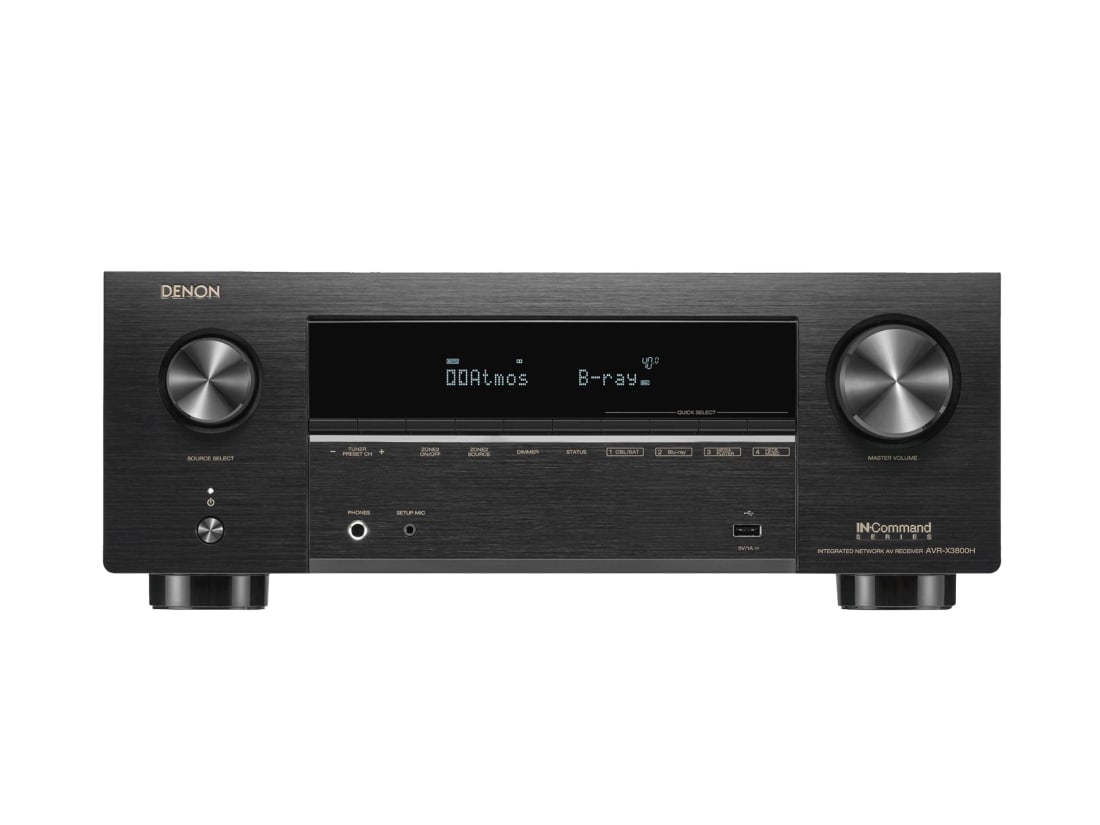
For reference, a complete dedicated cinema room (projector, screen, AV receiver, speakers, subwoofer) is a significant undertaking. The projector is often the most visible line item, but it's far from the only one. A capable AV receiver like the Denon AVR-X3800H (check price) and a well-chosen subwoofer such as the SVS SB-3000 (check price) are the kind of components that complete the system, and they need to be budgeted alongside the display.
Installation considerations for custom integrators
For custom installers specifying the W5850 for clients, a few practical notes. The laser/phosphor engine means no lamp replacement budgeting for the life of the installation, which is significant for ongoing maintenance conversations with residential clients. The factory calibration claims reduce (though don't eliminate) the calibration work required at handover, which can help margin on the installation side. The lack of Dolby Vision will need to be discussed with clients who have strong brand loyalty to that HDR format. Most clients should be satisfied once you explain that HDR10+ provides dynamic metadata processing and that DV's advantages are less significant in a projector context than on a consumer flat panel.
Throw ratio and lens characteristics will need to be confirmed against the specific room dimensions. This is standard projector spec work, but BenQ's W-series has historically offered good lens shift range, which gives installers flexibility in ceiling mounting positions.
Verdict
The BenQ W5850 is a serious, well-engineered projector for dedicated cinema rooms. The move to laser/phosphor is not a gimmick. The 20,000-hour rated life, instant-on behaviour, and sustained brightness consistency represent a genuine quality-of-life improvement for permanent installations. The factory calibration to Delta E below 2 is a meaningful claim that largely holds up in practice. HDR10+ support is useful, and the absence of Dolby Vision is a real but manageable limitation in the context of projector-based home cinema.
The price premium over the W5800, roughly US$2,000, is justified for buyers who are building a permanent room and want the lowest possible long-term cost of ownership. For buyers who are still in a transitional space with their setup, or for whom the cash difference is significant, it's worth running the numbers on lamp replacement costs versus the upfront laser premium before committing.
As a rival to the Epson QB1000, it's a genuinely competitive option, and the choice between them will come down to personal viewing preferences around DLP versus 3LCD as much as specifications. As a stepping stone toward the Sony native 4K units, it occupies its own distinct space: more accessible in price, slightly different in technical character, and arguably better suited to the buyer who wants excellent calibrated performance without venturing into the Sony flagship tier.
For the serious Australian enthusiast building or upgrading a dedicated cinema room, the W5850 earns a strong recommendation, with the usual caveat that it performs only as well as the room, screen, and system around it allow.
Common questions
- Does the BenQ W5850 support Dolby Vision?
- No — the W5850 supports HDR10, HDR10+, and HLG, but not Dolby Vision. For most dedicated cinema room applications this is a manageable limitation; HDR10+ provides dynamic metadata processing on a scene-by-scene basis, and Dolby Vision's advantages are less pronounced on projectors than on flat-panel displays due to projectors' inherent black level constraints.
- Is the pixel-shift 4K on the W5850 a real 4K image?
- The W5850 uses pixel-shift technology to meet the 4K UHD (3840×2160) specification, which it does legitimately. The image resolves significantly more detail than 1080p and satisfies UHD Alliance standards. It does not match the absolute pixel-level sharpness of a native 4K panel such as Sony's SXRD chips, but in a typical dedicated cinema room with standard viewing distances the difference is subtle and unlikely to bother most serious enthusiasts.
- How much will the BenQ W5850 cost in Australia?
- The W5850 is priced at US$6,999 in the US market. Converting to Australian dollars with GST, freight, and local dealer margin, buyers should expect a retail price in the AU$11,000–12,000 range, though local pricing will be confirmed by authorised Australian distributors. The predecessor W5800 was priced at US$4,999, making the W5850 a roughly US$2,000 step up.
- How long will the laser light source last in the BenQ W5850?
- The laser/phosphor light source in the W5850 is rated at 20,000 hours. At four hours of daily use, that equates to approximately 13 years before significant light output degradation is expected — a substantial improvement over traditional UHP lamp projectors, which typically require lamp replacement every 3,000–5,000 hours.

G'day, Jonno here. I spent the better part of twelve years as a custom installer building theatres — everything from a media room squeezed into a Queenslander to a fully blacked-out, acoustically-treated cinema with a hundred grand of gear behind the screen. The thing nobody tells you is that the room matters more than the boxes, and I'll bang on about acoustics until you're sick of me. If you're planning a theatre, talk to me before you spend a cent on speakers.
Ex CEDIA-trained installer; dedicated-theatre and Atmos specialist
More from Jonno Fraser
 Guest Wi-Fi and audio: why visitor networks break multiroomGuest Wi-Fi networks isolate devices by design, which quietly breaks multiroom audio. Here's why it happens and how to fix it properly.
 Ceiling speakers vs upfiring Atmos modules: what actually worksCeiling speakers vs upfiring Atmos modules compared for real rooms: when in-ceiling wins, when upfiring is the better call, and why.
- Why your home cinema amp runs hotter on movies than musicFilm soundtracks push amplifier channels harder and longer than stereo music ever does. Here's why that matters for topology, power supplies and what actually fails.
- Screen-wall speaker placement: building around a UST projector properlyUltra short throw projectors sit right where your centre channel wants to be. Here's how I actually solve that in real theatre builds, not in theory.
 Headphone isolation vs room noise: why your desk setup fights youOpen-back headphones and a noisy home office don't mix. Here's how to actually diagnose room noise before you blame the gear.
 Toe-in and rake: the free speaker tuning most owners never touchToe-in angle and cabinet rake cost nothing but change tonal balance and imaging more than most upgrades. Here's how I set both on site.